As a composer and poet, I’m interested in cultural perceptions and assumptions that influence beliefs. In monotheistic religions as well in some types of more recent spiritual thought, the assumption has been to equate Darkness with evil and Light with good. “Love and light!” we hear often, or maybe “I’m surrounding you in light.” But this assumption feeds a form of prejudice that infuses all of society. The mind hears “darkness” and associates it negatively with Earth, female, skin color, dirt.
Yet another of my great spiritual teachers has died. Buddhist monk, peace activist, author, and teacher Thich Nhat Hanh died on January 22nd at Tu Hieu Temple in Hue, Vietnam. I have found wisdom in so many of his books, but it is his The Miracle of Mindfulness that has become almost a daily guide. I discovered it sometime in my four-year wait for a new heart after being put on the transplant list following my second cardiac arrest in my 30s. In that time of living with the ever-present fear of sudden cardiac death, it probably saved my life, and certainly my sanity and spiritual well-being.
I am passionate about sharing the image, essence and energy of the sacred feminine. Having presented this material to thousands of men and women at universities, conferences, corporations, expos and theaters across the US, Canada, from Kauai to Dubai, to the Parliament of the World’s Religions, and twice to the UN Commission on the Status of Women, I have humbly witnessed its healing effect. (I return to UNCSW on March 21, and welcome you to join this free online event, which you can find here.
When I first encountered the word, “Goddess,” I didn’t like it. Using it felt strange, and I wondered why I should bother. The word “Goddess” felt uncomfortable and unnecessary.
Recently, I wrote a novel about the Buddha’s wife disguising herself as a man to join his religious community. When I showed the manuscript to a Buddhist friend, whose knowledge and practice I respect greatly, he expressed apprehension that it violated the basic myth of Buddhism. I assumed he meant that my storyline of gender deception strays too far from the versions of the Buddha’s life as recorded in the traditional canon, which adherents regard as the Buddha’s inviolable teachings. The last thing I wanted to do was to misrepresent these teachings.
What does it mean “to violate a myth”? If I had portrayed the Buddha as a psycho-killer or wife-beater, I could appreciate this charge, but I had presented an enlightened Buddha whose values were in alignment with standard scripture and the mores of his day. The change I made was to tell the story from a woman’s point of view, and to do so, I modified some of the traditional legends and created new material to make my choices plausible. Predictably, my modifications came up against many of the stories’ misogynistic elements.
For instance, in the canon, the Buddha initially refuses to admit women to the monastic order. Eventually his attendant Ananda persuades him, but then the Buddha adds 104 extra rules for nuns, eight of which (the Garudammas) clearly put women in an inferior position. One rule states: “A nun who has been ordained even for a hundred years must greet respectfully, rise up from her seat, salute with joined palms, do proper homage to a monk ordained but that day.” The Buddha also told Ananda that thanks to the admission of women, the Dharma (the teachings and practices of Buddhism) would die out after only 500 years.
A warm summer sun smiles down upon the British coastline, the low tide reflecting jewels which are wash up and dispersed upon fine sand. A welcome breeze dances around a gathering of Goddess devotees encircling a small bonfire. Amongst them stands a banner and statue depicting and imitating Botticelli’s Venus and bouquets of roses. Just before the sun sets, those gathered lovingly collect these assembled artifacts, holding them aloft, and begin to process barefoot towards the sea.
Aphrodite-Venus’s banner and sculpted face shines in the low afternoon sunlight. As the procession slowly steps, weaves, and dances, towards the sea to the beat of a drum, the sun reaches further behind the hills, casting a long shadow upon the beach. The Goddess’s image dances with them, banner swaying and statue bobbing with the dance of its carrier. By the time the procession reaches the sea, the sun has dipped behind the now black silhouette of the hills bathing the beach ahead in dusky oranges and brilliant blues. At the shoreline, a priestess steps forward and turns the Goddess’s statue to face the procession, which has now fanning out into a semi-circle.
As a society, we are not good at grief. Three days max, then we are expected to be back to work, keep the economy humming – shop, go to the movies and the mall, “put on a happy face.” Required to wear a cheery countenance, we deny our suffering and the suffering of others. However, loss unacknowledged compounds its effects. Grief will unleash itself somewhere, whether manifesting in excessive consumption – of food, alcohol, Netflix, stuff; or in unquelled anger, violence, hatred, enemy-making, and scapegoating — all of which have been erupting onto our world in devastating ways; or in the unmetabolized pain we pass on to the next generations. It is essential to our individual and collective well-being that we welcome grief, and tend it.
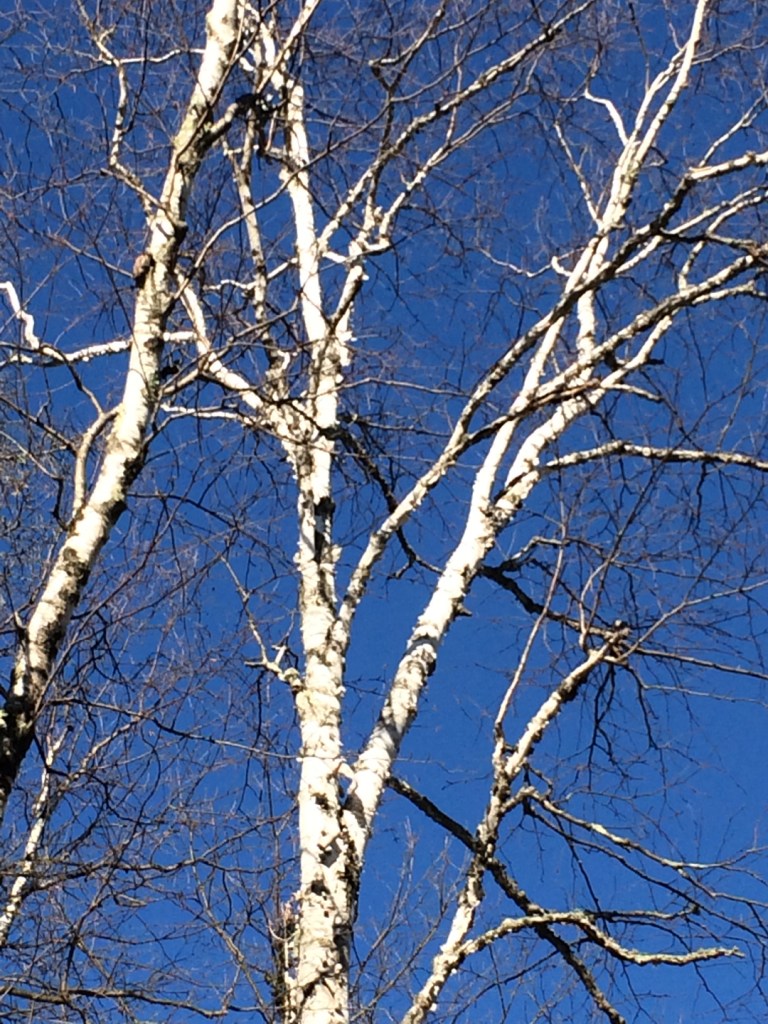
Strains of “In the Bleak Midwinter” have been accompanying me on my wintertime walks. Yet “bleak” is the last word I would use to describe these glorious winter days. The sparkling snow, dazzling sunshine, and deep blue of the sky against white birch branches offer solace to my soul. Still, the carol rings true, for in this midwinter, bleakness – a sense of desolation, loss, and despair — shrouds the land. Many dear to me have suffered tragic losses – of brothers, mothers, sisters, children, friends, partners and spouses – to cancer, suicide, alcohol, a hit-and-run driver, injury from a fall, dementia, sudden death, and sheer despair. An aggrieved world spins out tendrils of affiliated losses — of community and country, safety and security, watersheds and wild places, touch and tenderness and trust; family and faith — whether in god or humanity or the future. Thousands have lost the tangibles of jobs, shelter, savings, and physical capacity, and millions more the intangibles of dreams deferred, hopes for a nation, and belief in the basic decency of our fellow humans. And then there are the ordinary, everyday losses. As a friend recently posted, “I am grieving. I miss Sunday breakfasts at the cafe. Live music. Dinner parties. I miss seeing people smile in the grocery aisle.”[i] We are all suffering utter and ongoing loss.
Moderator’s note: This marvelous FAR site has been running for 10 years and has had more than 3,600 posts in that time. There are so many treasures that have been posted in this decade that they tend to get lost in the archives. We are beginning this column so that we can all revisit some of these gems. Today’s blogpost was originally posted February 1, 2014. You can visit it here to see the original comments.
Brigid, Goddess of the Fire, greets us on Brigid’s Day, February 1. She is a Celtic sun goddess whose light burns brightly, illuminating the darkness of the land, of a heavy heart, and the dark night of our soul. With her shining light to guide us, we are lifted out of the Underworld darkness where we tend to descend in Winter, to the light of the World above, teeming with life as Spring begins to unfold her wet wings.
Brigid is a beloved goddess throughout the British Isles, particularly Ireland, where she is seen as the Mother of the Land and Her people. As a feminine archetype, she activates our solar, active nature. Much like the sun rising from below the Earth’s horizon, she urges us to come out of hiding and shine our light on the world. This may be done in a quiet manner, such as sitting by the hearthfire and doing needlework, finding inspiration by a walk in nature and writing a poem, moving about the kitchen making soup, getting busy with an art or craft project, or in big ways by taking on new roles as healers, artists, and leaders and calling others to join us.
In a world where the words of black women writers, even our very names are often soon forgotten, it is essential and necessary that we live through writing and teaching the words of our great and good writers, whose voices must no longer be silenced, even by death.[i]
– bell hooks
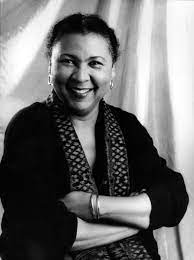
On December 15, 2021, the world lost the great feminist theorist, teacher, activist, and writer bell hooks. As a white feminist theorist, I valued immensely the ways her work widened my partial perspective, challenged my blind sports, and gave me important viewpoints on everything from sexism, racism, classism, pedagogy, militarism, work, and parenting. Her piece on feminist solidarity is the best I know — examining not just the ways we are divided by classism and racism, but also by sexism, addressing the very real and destructive ways that women undermine, abuse, and disregard each other, and how important it is to unlearn this with each other. She used the term “feminist movement,” rather than the feminist movement, knowing it not to be one thing, but rather a verb, a process of moving, changing, and transforming. Championing the power of coming to voice, she spoke truth to power, engaging in honest exploration of often difficult and divisive topics. It was this honest, liberatory voice that spoke throughout her work and made her voice so compelling, and so valuable.
Reading Elizabeth Ann Bartlett’s beautiful post inspired me to share the following poem. I wrote it many years ago for my friend Lynette Eldridge to honor her love of the darker shorter days of winter.
As a devotee of the Divine Feminine, I have received many gifts that have enhanced and enriched heart, mind and soul. The greatest of these is the friendship of women. I became friends with Nettie during the hours-long drives we made together once a month for nine months from Nevada City, CA to Santa Cruz, CA to prepare for a Vision Quest in the Mojave Desert. Our journeys began in January, in the early morning dark of the short days following winter solstice.






 Feminism and Religion