From the Archives: The Tree of Life and the Forest of Friendship: Circle Dance to Restore our Hope by Laura Shannon

This was originally posted on May 6, 2017

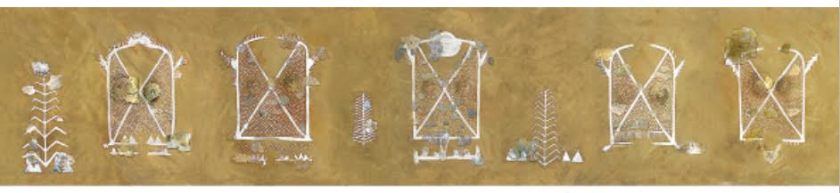
Tree and Goddess motifs on the ‘Wall of the Foremothers’ (Ahninnenwand), Bodensee, Germany, 4th Millenium BCE

Yes, times are tough. But a better understanding of our interconnectedness can help us move beyond the cynicism, frustration, and despair we may be feeling in the modern world. A closer look at trees, and at women’s traditional circle dances, can offer valuable lessons about friendship, community, and the interconnectedness of all life.

Continue reading “From the Archives: The Tree of Life and the Forest of Friendship: Circle Dance to Restore our Hope by Laura Shannon”

Dancing for Rain: Life-Giving Gift from Heaven to Earth by Laura Shannon 

Since ancient times people have danced for rain, the life-giving gift from heaven to earth. Rain rituals were seen as important work and were usually performed by women, traditional bringers of life and fertility. Both bearing and raising children, and cultivating the land to nourish the community, are activities dependent on, and psychically equated to, rainfall. Women’s ability to bring rain when necessary was a key belief of indigenous European culture and is found in many places today. Many women’s dances, songs and rituals in Eastern Europe and the Near East express this connection, and women’s folk costumes often feature long fringes representing water. 

Continue reading “Dancing for Rain: Life-Giving Gift from Heaven to Earth by Laura Shannon “

Woman’s Sacred Hand – and Handkerchief by Laura Shannon

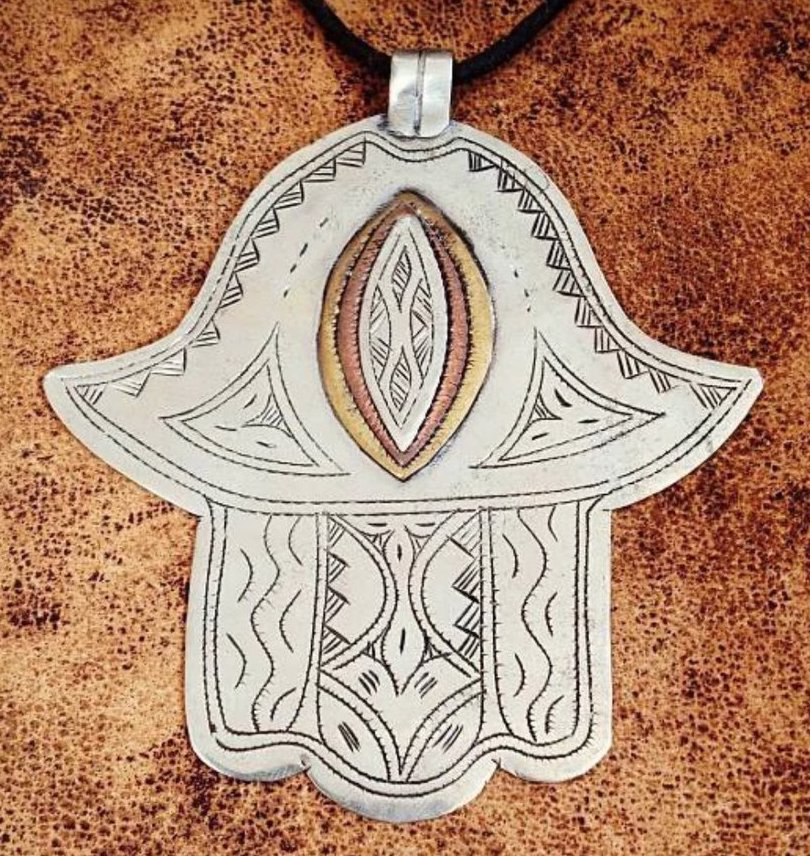
Berber Hamsa. Photo: public domain.

In my recent post ‘Forty Days After Childbirth, Mary Returns to the World,’ I wrote that ‘the woman’s power to bless and protect, as well as to create, is shown in the symbol of her hand.’ We see expressions of this power in the Orthodox Christian icon of the Three-Handed Madonna, whose third hand is over her womb, and the Hamsa, the hand-shaped talisman common to Jewish, Christian, and Islamic traditions. Also known as the Hand of Fatima, Miriam, or Mary, the Hamsa often incorporates eye or vulva motifs, which also offer protection.

Hand, womb, and eye all signify female creative power, personified in the image of Goddess and revered in Neolithic Old Europe. This life-giving principle is expressed in many ways apart from childbearing: as Carol Christ affirms, early technologies of spinning, weaving, pottery, and agriculture, along with Neolithic religion, were most likely invented by women. 

Continue reading “Woman’s Sacred Hand – and Handkerchief by Laura Shannon”

From the Archives: Forty Days After Childbirth, Mary Returns to the World by Laura Shannon

This was originally posted on Feb 6, 2021

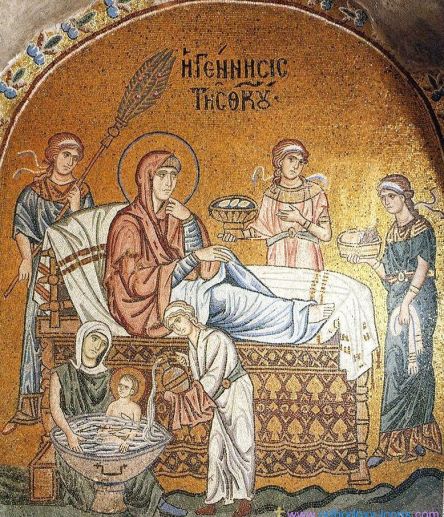
image of Mosaic of the Nativity

Mosaic of the Nativity

All week we have been warming our spirits at the sacred fire of Candlemas / Imbolc, the Celtic holiday in honour of Brighde, Irish saint and Goddess of poetry, smithcraft and healing. Imbolc falls approximately 6 weeks between the winter solstice and the spring equinox, one of the 8 festivals of the Celtic year.

In the Greek Orthodox Church, February 2 is celebrated as Ypopantis, the presentation of Jesus at the Temple, 40 days after his birth, in accordance with Mosaic law. This day also marks Mary’s ritual return to the world after forty days of postpartum seclusion. This practice was known in the Western Church as ‘churching’ or blessing a new mother after 40 days; Hindu tradition also recommends women spend up to 40 days in rest and isolation after childbirth.

Continue reading “From the Archives: Forty Days After Childbirth, Mary Returns to the World by Laura Shannon”

Goddess Pilgrimage to Crete – Reborn! by Laura Shannon

Thirty years ago, Carol P. Christ founded her Goddess Pilgrimage to Crete, which she wrote about in her book A Serpentine Path: Mysteries of the Goddess (original 1995 title Odyssey with the Goddess) and in numerous posts on this site over the years. She led over 40 groups of women Pilgrims to encounter the history and sacred sites of the peaceful, egalitarian civilisation of Bronze Age Crete. 

Here, the Goddess-honouring culture of Old Europe survived the longest, when patriarchal Indo-Europeans were taking over in the ‘Kurgan waves’ Marija Gimbutas has described. The sophisticated artworks of ‘Minoan’ Crete show women in positions of honour and authority, and do not depict violence, slavery, or war. People celebrated at ceremonial centres, made offerings at cave and mountain shrines, and worshipped the Goddess in sacred trees and stones.

Snake Goddess, Knossos, Crete, ca. 1600 BCE [photo: Heraklion Archaeological Museum]

As many readers know, before Carol passed away, she asked me to take on the leadership of her Goddess Pilgrimage, and to serve as her literary executor and the director of her Ariadne Institute for the Study of Myth and Ritual. Deeply moved by her trust in me, and guided by very clear dreams I received around the time of her death, I accepted Carol’s request. In October 2022, after a three-year delay due to the pandemic, the Goddess Pilgrimage to Crete was reborn. 

Continue reading “Goddess Pilgrimage to Crete – Reborn! by Laura Shannon”

From the Archives: Serpent Healing by Laura Shannon

This was originally posted on October 38, 2014

Snakes have been considered sacred in Greece and the Balkans, as well as other cultures, since at least 7000 BCE. They are symbols of rebirth and regeneration, as they travel between our world and the world below, disappear and re-emerge from the earth in spring, and shed their skins in seasonal renewal.

The Cretan Snake Goddess from Knossos (ca 1600 BCE) stands serenely with serpents wrapped around her body, showing how snakes were considered benevolent and were revered, not feared. Snakes are also powerful symbols of healing. Recently, I had an extraordinary experience of ‘serpent healing’ after a serious injury.

Knossos Snake Goddess

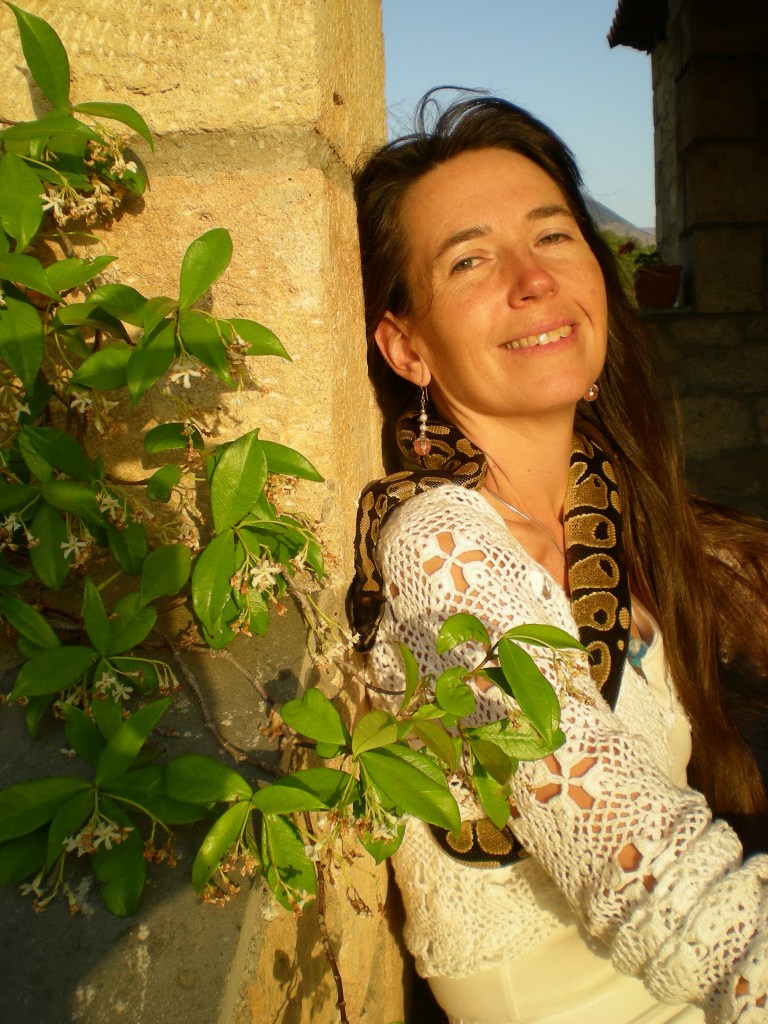
Friends of mine run a yoga retreat centre in Mani, Greece, called The Spirit of Life, where their son keeps a number of snakes including a beautiful Royal Python named Monty. Monty and I have met on several occasions over the years, and whenever I have spent time holding him, I have felt a sense of great peace and calm. More than that, Monty has shown an uncanny ability to move directly to places of tension in my shoulders, and to gently yet firmly massage sore muscles in a soothing way.

Continue reading “From the Archives: Serpent Healing by Laura Shannon”

From the Archives: Medusa and Athena: Ancient Allies in Healing Women’s Trauma by Laura Shannon

This blog was originally posted on June 24, 2017

Rather than being a bleeding image of female disempowerment, Medusa may be read as…one of the most ancient European symbols of women’s spiritual abilities… [and] an empowering image of feminine potential.’

–Patricia Monaghan, O Mother Sun! (1994:244)

The name Medusa means ‘sovereign female wisdom,’ ‘guardian / protrectress,’ ‘the one who knows’ or ‘the one who rules.’ It derives from the same Indo-European root as the Sanskrit Medha and the Greek Metis, meaning ‘wisdom’ and ‘intelligence.’ (1) Metis, ‘the clever one’, is Athena’s mother. Corretti identifies Athena, Metis, and Medusa as aspects of an ancient triple Goddess corresponding respectively to the new, full, and dark phases of the moon. (2) All three are Goddesses of wisdom, protection, and healing.

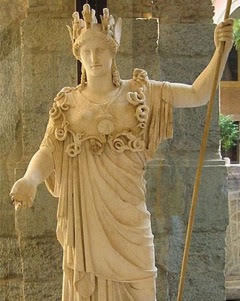
Athena with Gorgoneion in her heart. 5th C BCE.

Athena and Medusa are particularly linked: indeed, one may have been an aspect of the other, ‘two indissociable aspects of the same sacred power.’ (3) Their many common elements include snakes, wings, a formidable appearance, fierce eyes and powerful gaze. The serpent, like the Goddess, has been cast as an embodiment of evil in patriarchal retellings; yet as Merlin Stone points out, serpents were ‘generally linked to wisdom and prophetic counsel’, associated with ‘the female deity’ and ‘entwined about accounts of oracular revelation…throughout the Near and Middle East.’ (4) According to Ovid, the poisonous vipers of the Sahara ‘arose from spilt drops of Medusa’s blood.’ (5) Although this is presented as a further sign of Medusa’s horrifying character, the original Berber inhabitants of North Africa – where Herodotus reports that the Medusa myth began – viewed snakes as bringers of luck and portents of joy. (6)

Continue reading “From the Archives: Medusa and Athena: Ancient Allies in Healing Women’s Trauma by Laura Shannon”

Goddess Embroideries of Ukraine as Prayers for Peace by Laura Shannon

I imagine many of you share my feelings of anger, grief and dread about this invasion of Ukraine. It is hard to know what to do and terrible to feel so powerless. I would like to offer a practice which I am finding very helpful: to meditate on Ukrainian Goddess embroideries as a prayer for peace.

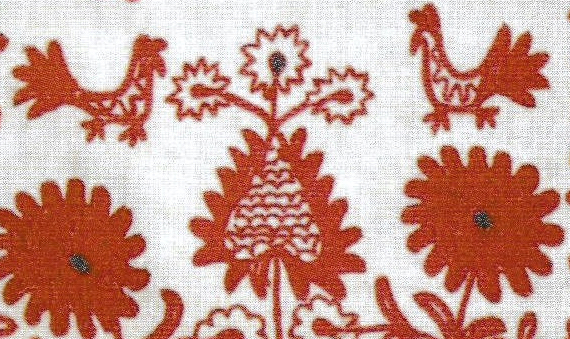
 Early 20th C. Goddess embroidery, central Ukraine. Photo: Ukrainian Museum. In The Tree of Life, the Sun, the Goddess: Symbolic Motifs in Ukrainian Folk Art, p. 99

Goddess figures are ubiquitous in Ukrainian folk art, in woven and embroidered clothing, ritual textiles, pottery, painting, and pysanky, ceremonially decorated Easter eggs (which I will explore in a future post). Goddess embroideries are also found throughout the entire Slavic world, Eastern Europe, the Near East and North Africa, and even farther afield, as Mary Kelly and Sheila Paine have diligently shown.

Continue reading “Goddess Embroideries of Ukraine as Prayers for Peace by Laura Shannon”

Remembering Carol P. Christ: Online Memorial Gathering, December 20, 2021

Dear FAR community,

It’s been wonderful to read so many posts remembering Carol Christ. The FAR community was so important to Carol: as has been pointed out, she not only offered her own posts each Monday, she also read and responded to every post, every day. Through the FAR ‘family’ I feel comforted by connecting with others who knew and loved her and miss her as as I do.

Online Memorial Gathering On December 20, Carol’s birthday, all friends of Carol and friends of FAR are warmly invited to an online Memorial Gathering and ritual in Carol’s honour. Many of Carol’s friends will share cherished memories (please email me if you would like to say a few words) and I will show some photographs from her personal archive. (If you have photos of Carol you would like to share, please email them to me at laura@laurashannon.net.) We’ll also talk about the future of Carol’s Goddess Pilgrimage in Crete. Please register with your email address at this link.

Continue reading “Remembering Carol P. Christ: Online Memorial Gathering, December 20, 2021”

Farewell to Carol Christ at the Kamilari tholos tomb, Crete by Laura Shannon

September 7, 2021

1. Tholos tomb of Kamilari

1. At the gate

On a hilltop between the horned peak of Mount Psiloritis and the wide blue expanse of the Libyan Sea, Ellen Boneparth, Tina Nevans and I prepare to enter the Kamilari tholos tomb. This round vaulted structure served as a communal and egalitarian burial site for thousands of years, from Neolithic through late Minoan times, and Carol brought more than 40 groups of Goddess Pilgrims here to honour those who have gone before. This is where Carol asked the three of us to perform a farewell ritual for her; she wanted no other ceremony. We each don a scarf and necklace which belonged to Carol and enter the sacred space. Kostantis stays behind to guard the gate, in case any other visitors arrive during our ritual.

2. Invocation

On this spot, hundreds of women have honoured thousands of ancestors. We ask for the benevolent presence and the blessing of all those who knew and loved Carol, living and dead. We ask permission of the spirits of the place to enter for this ceremony. We ask Carol’s own ancestors, and the Minoan ancestors of this place, to bless and welcome Carol as a beloved daughter and granddaughter of both lineages.

Continue reading “Farewell to Carol Christ at the Kamilari tholos tomb, Crete by Laura Shannon”