Toadwise: A Tale for a Life Lover – Part II by Sara Wright

Read Part I here

In the Americas I found more recent Indigenous mythology on the Toad as Goddess. Tlaltecuhtli is a Pre–Columbian (1200–1519) goddess belonging to the Mexica. Although Tlaltecuhtli’s name is masculine modern scholars interpret this toad figure as female because she is squatting giving birth. Some see her as crouching under the earth, mouth open waiting to devour the dead. Since the Aztec culture was a warring male dominated Patriarchal one I think it’s perfectly reasonable to assume that the Earth Goddess/Toad was seen as masculine to the Mexica.

In Mesoamerica we find Toad widely represented in art, often with feline or other non-naturalistic attributes, including jaguar claws and fangs. These images can be regarded as versions of Tlaltecuhtli. In contemporary Mexico, as in Guatemala, and throughout South America toads play a role in myth, sorcery, shamanism, and in curing/healing. Continue reading “Toadwise: A Tale for a Life Lover – Part II by Sara Wright”

Toadwise: A Tale for a Life Lover – Part I by Sara Wright


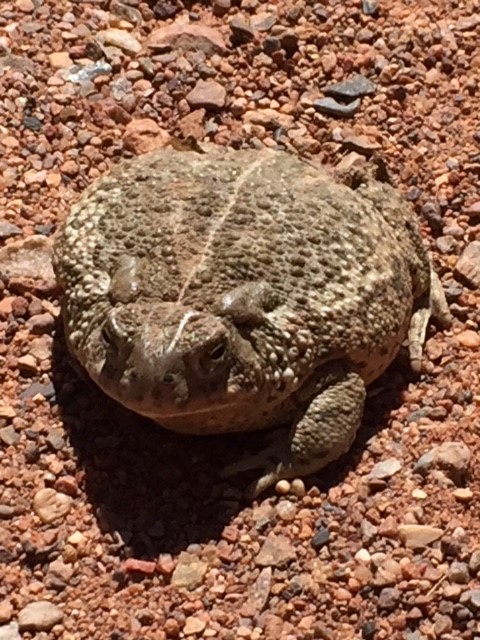
Last night I was thinking about the giant western toad that is living in my garden when I had a peculiar thought: Write a story about the Toad and an Old Woman and call it A Tale for a Life Lover. At this very moment I heard my toad’s rasping guttural cry outside my window. I was so shocked I got up and went out on the porch, hoping to hear the call again, but the toad only spoke once. Afterwards, I wondered if I had imagined it.

When the giant western toad appeared in my yard last week I had been in a state bordering on despair over baffling health issues and the ravages of Climate Change. Maybe it is no longer possible for me to separate the two? After the visitation I sensed that the toad’s abrupt appearance meant something beyond the amazing fact that I had met a giant toad who apparently had been living here all along. Continue reading “Toadwise: A Tale for a Life Lover – Part I by Sara Wright”

Uncovering What’s Hidden by Sara Wright

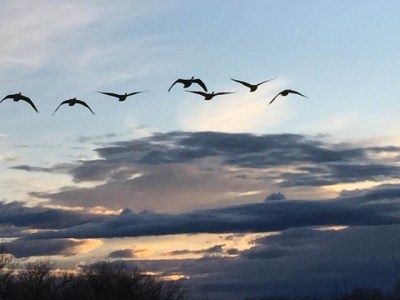
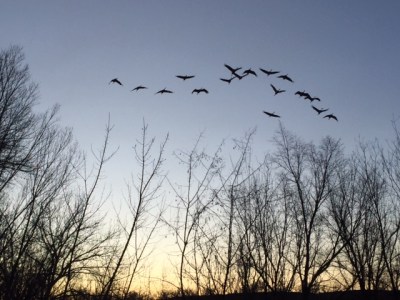
Picture of a group of cranes flying in the dusk sky

Shame
is the shadow
of being unloved,
unwanted,
rejected,
strung out on need.

Shame paralyzes;
slamming into reverse
actions that would
create new intentions
including hope
of love.

Shame blots out
Personhood,
snapping the thread
of interdependency.
Plant Consciousness
restores it to life.

Continue reading “Uncovering What’s Hidden by Sara Wright”

Running with Hares, a Personal Reflection by Sara Wright


An overturned bowl
of starflakes,
lays down a new
pearl white blanket.
Earthbound
I shovel –
Silvery showers obscure –
and some paths
are slippery
in the dark.
Grooming a circle
round and round
I attend to listening.

When day cares intervene –
naught but Silence
though I try
to feel –  to sense
pure Voices
rising from
frozen ground.
Instead,
monotonous
gray seeps
through me
like a sieve.
Prickling skin
grows taut.

Some days
lonely for
thrumming
I neglect
to stay present
for Silence
as an end
in Herself.
Seeking change
I forget
to breathe
into Now. Continue reading “Running with Hares, a Personal Reflection by Sara Wright”

The Abuser was Someone I Loved by Sara Wright

Dedication: I dedicate this writing to all animals, women, children who have been violated, brutalized or murdered by men.

I will never forget
the look in her eyes
when he kicked her
the ugly brown shoe
smashing the domed
brown skull –
the daze – vacant
uncomprehending
falling to the floor
her eyes glazed
still find mine
“What did I do?”

Is death stalking us both
Will she die?

I scoop her in
my arms
and flee
slamming a door
to get away
from him –
my terror – her fright
a matrix of confusion Continue reading “The Abuser was Someone I Loved by Sara Wright”

First Light: Brigid and the Bear by Sara Wright

Winter light pauses so briefly. Now Chickadees are chirping and wild doves are pairing up. Birds are starting to sing love songs to the earth as she turns towards the light. By early February light is streaming into the house with more warmth and for longer hours. It is no longer dark at 5 PM.

Each morning I stand at the window to glimpse a golden orb rising through the cracks of bare tree branches. Some days the sky is infused with deep rose, bittersweet orange or scarlet. When the sun star appears I watch what the light will do – will it reflect on the still open water of the brook, or turn night frozen branches into star-like crystals? Some days the sun has to climb out of the hooded clouds to rise into blue. Amazingly, this star at the center of our solar system literally transforms parts of its body into light every second, an astonishing thought that speaks more to sun as process than to an actual entity… First Light is upon us. Continue reading “First Light: Brigid and the Bear by Sara Wright”

The Navajo Mountain: A Feminist Perspective Chant by Sarah Wright

Mountain Chant image
Frighten Him On It – Sand painting used in the Mountain Chant, circa 1907″ by E.S. Curtis

Like the Navajo Night Chant celebrated at winter solstice the Navajo Mountain Chant is the last important winter ceremony, one that marks the shift in seasons and the return of the light. The Mountain Chant was once nine days in duration; today it has apparently been shortened to a four – day ceremony. It is celebrated in early February and each night different holy songs are sung.

The Mountain Chant is also a very complex healing series of ceremonies. Elaborate sand paintings are created and then destroyed after each healing. Disease may be diagnosed by either a woman or a man, but a Medicine man always leads the ceremonies. The intention is to cure a person of the disharmony that is creating the illness. The ceremonies are also enacted to pray to the holy people (Yei) for rain, and to receive assistance with the crops, and most importantly they are done to restore balance and harmony between the People and nature. Continue reading “The Navajo Mountain: A Feminist Perspective Chant by Sarah Wright”

Crane Song: Finding my way Home through Image, Myth, and Nature – Part 2 by Sara Wright


Read Part 1 here…  

Recently, I returned from the Southwest where I was introduced to the ceremonies of the Pueblo peoples, ceremonies that reflected my own spiritual practice reinforcing its authenticity. This interlude also allowed me to be part of a people who had never lost access to their roots. They had never given up their ceremonies or surrendered their way of life.

I returned to Maine with a much stronger sense of my Indigenous cultural identity than I had when I left. I hadn’t realized until I went to the Southwest how much this identity had been eroded by local people. Living in western Maine had brought me in contact with the frightening bias people have towards Indians; some are openly despised. Continue reading “Crane Song: Finding my way Home through Image, Myth, and Nature – Part 2 by Sara Wright”

Crane Song: Finding my Way Home through Image, Myth, and Nature – Part 1 by Sara Wright


The last gift I received from my very distant parents was a print of a Native American Medicine Wheel by Ojibway artist Joe Geshick. I received this present on my birthday in 1993.

When I opened the cardboard tube I was astonished by the image. A Medicine Wheel? As far as I knew neither of my parents had any idea that I had picked up the thread of my Native heritage and was studying Indigenous mythology. What could have motivated them to send me such an image? I was stunned by the seemingly bizarre synchronicity. Continue reading “Crane Song: Finding my Way Home through Image, Myth, and Nature – Part 1 by Sara Wright”

Guadalupe Rises Again by Sara Wright


I was in a Mexican store helping someone to choose tiles for the sink and bathroom of a new casita. I have always been drawn to Mexican art because the images tell stories, and many of those stories revolve around images in Nature – usually stylized. The tiles, for example portray flowers, birds, butterflies, and fish in brilliant colors. The child in me loves to see these stories. Artists who work with animal images in a respectful way honoring the spirit of the animal portrayed (either natural or stylized) allows me to bridge the world from animals to people.

Mexican art moves me. The expressive folk images, and the use of natural objects like gourds to create complex designs give me a sense of being at home in the world of people as well as Nature. The former has been my Muse since I was a child. As a life long naturalist I am deeply drawn to the world of animals, I think in part because aside from my brother, animals were my first real friends. Continue reading “Guadalupe Rises Again by Sara Wright”