


Two weekends ago, I had the pleasure of visiting the Jewish Museum on Fifth Avenue in Manhattan. The Jewish Museum has long been a favorite museum for me. My wife and I took our daughter to this particular exhibit because we knew she’d like it. The exhibit is entitled “Veiled Meanings: Fashioning Jewish Dress from the Collection of the Israel Museum, Jerusalem.” It consists of many, many garments created and worn by Jews, from Moroccan wedding clothes to German prayer shawls to Yemenite amuletic (meant to protect the wearer) dresses. Accompanying the garments were placards explaining the folk traditions giving rise to the various garments. What I realized (again) after viewing the exhibition was how much I could learn about the culture of Jewish women, and Jewish culture in general, by looking at things, not texts.
The sacred texts and laws central to Jewish life, while they certainly discuss Jewish women, tend not to be created by or for Jewish women. This means many aspects of how Jewish women thought or acted (before the present day) are obscured. However, these garments were created by and often for Jewish women, and their shapes and symbols tell a great deal. For example, the Moroccan Jewish wedding clothes I mentioned were embroidered with spirals, representing (according to the accompanying written material) the spiral of life. These spirals were also found on Jewish tombstones. The spirals resembled, to me, the spirals I’d seen carved on stone at Newgrange and Knowth in Ireland—the ancient symbols of life and journey. I was amazed to see them in a Jewish context. Another dress that mixed Sephardic and Moroccan style also had spirals featured prominently.
Continue reading “Jewish Folklore and Women’s Clothing: When Things are the Text by Jill Hammer”
 On Rosh haShanah and Yom Kippur (the Jewish New Year and the Day of Atonement), and on the festivals throughout the year, traditional Jewish liturgy includes the Thirteen Attributes of the Divine. Exodus 34:6-7 is the first to mention these thirteen attributes, or thirteen names really, for God. This Rosh haShanah, as part of my work as a creative liturgist, I offered a new meditation on these thirteen attributes, dedicated to the Shekhinah, the Divine Presence.

 Isaac Luria, a Jewish mystic in the city of Sfat, told this tale of creation in the seventeenth century. It caught the Jewish imagination and has been wildly popular as a Jewish creation myth ever since. It captures our longing for wholeness and our experience of brokenness. It also offers a parallel with the Big Bang (a hot seed of light that expands into the universe as we know it) that many find quite compelling. I have loved this story for a long time. To me, it is reminiscent of the story of birth: an empty space that becomes full, then leaks out into the world as a new being. Yet as a feminist who is also committed to sustainability, as more news of our planet’s scorching rolls in, I find this myth is beginning to crack.
 In my last post, I discussed the uses of
 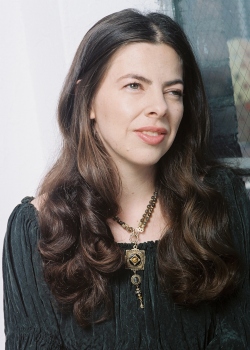 Even after I was ordained as a rabbi, I longed to be a priestess.
  Feminism and Religion