Son of Man: An Updated Gospel Story of Jesus Set in South Africa by Michele Stopera Freyhauf

January 12, 2012

Son of Man is an updated story of the life of Jesus set in the fictional State of Judea that is modern day South Africa – complete with warlords and child soldiers.    It could easily be mistaken for modern day Rwanda or Darfur with its modern issues and political overtonesRoger Ebert stated, “The secret of the movie is that it doesn’t strain to draw parallels with current world events – because it doesn’t have to.”  The director draws parallels between the gospels and 21st century Africa.  According to Dartford-May, “we wanted to look at the Gospels as if they were written by spin doctors and to strip that away and look at the truth.”  The director “captures the rhythms of African life in both rural settings and sprawling townships.”  “Feather-clad young angels offer an eerie echo and reminder of Africa’s lost generations.”

The movie also sticks with what Eric Snider calls “Traditional African trial music, dance, and costumes” as a type of worship or or allusion to Jesus’ godhood.  Judea is in flux; warlords and corruption take center stage.  Poverty, violence, and oppression affect the all of the people.  The key idea is that Jesus is a freedom fighter – one that fights injustice and oppression.  The director does not emphasize “Jesus’ divinity so much as his leadership, good sense and compassion.”  Jesus is not violent and his followers, most of whom were former child soldiers, are encouraged to respond non-violently, which goes against their upbringing and training. Continue reading “Son of Man: An Updated Gospel Story of Jesus Set in South Africa by Michele Stopera Freyhauf”

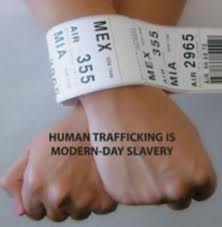
January 11th is National Human Trafficking Awareness Day

This information was originally distributed by WATER:

January 11th is National Human Trafficking Awareness Day. Human trafficking, referred to as modern-day slavery, is the fastest growing and second most profitable criminal industry in the world. More than 27 million women, men, and children have become victims of human trafficking for labor and sexual exploitation. Trafficking can and does occur in all parts of the world, including the U.S. Large sporting events like the Super Bowl attract human trafficking, especially for sexual exploitation of women. Read Mary E. Hunt’s new article on human trafficking entitled “Women and Children First.”

Stories of Trafficking
Excerpted from www.polarisproject.org

Amanda learned that her cousin was with a pimp who was advertising her for commercial sex on various websites.

A teacher became concerned about one of her students, a 14 year-old girl, and spoke with classmates who directed the teacher to multiple postings advertising the young girl for commercial sex on backpage.com. Continue reading “January 11th is National Human Trafficking Awareness Day”

Occupy Wall Street Denver and the Birth of a Lunchtime Consciousness by Cynthia Garrity-Bond

Over the post-Christmas holiday I helped move my middle daughter to a suburb outside of Denver, (releasing my 28 year old to the Universe should be a blog post in-and-of-itself.)  While exploring the downtown area of Denver, Em and I noticed an unusual number of strategically parked police cars with an equal number of unmarked police cars speeding past us. Between the two of us we arrived at the conclusion that 1) a bank-robbery/get-away was in progress; 2) Barack Obama was in downtown Denver or 3) a multiple murder/homicide had taken place very close to us (I might add Em and I both love T.V. shows focused around women as police/detectives).  As we approached our restaurant we heard what appeared to be random chanting and yelling.  As we turned the corner we discovered a group of perhaps 50+ people who were the focus of the police in 1) riot-gear and 2) police on horseback with batons at the ready.  The “dangerous” peaceful gathering turned out to be the Occupy Wall Street Denver movement. My desire to watch and engage those gathered lost out to Em’s need for food.  No worries I thought.  I’ll have time to engage the OWS participants after our lunch, which proved to be the wrong decision.  Within the hour or so it took us to eat, the peaceful gathering had vanished.  But the conversation between my daughter and her activist mother proved to be the most interesting event of that day.  Continue reading “Occupy Wall Street Denver and the Birth of a Lunchtime Consciousness by Cynthia Garrity-Bond”

(Non-Human) Animals on the Agenda by Grace Yia-Hei Kao

“[E]thical interest in nonhuman animals is flourishing.”

To my delight, the New York Times recently chronicled the growing scholarly interest in human/non-human animal interactions in a story entitled “Animal Studies Cross Campus to Lecture Hall.” There are now more than 100 courses in colleges and universities in the burgeoning field of animal studies. At least 40 U.S. law schools now routinely offer courses in animal law. A growing number of formal academic programs, book series, journals, conferences, institutes, and fellowships are also dedicated to (re)examining human-animal relations from a variety of disciplinary perspectives—“art, literature, sociology, anthropology, film, theater, philosophy, [and] religion,” to name a few.

Continue reading “(Non-Human) Animals on the Agenda by Grace Yia-Hei Kao”

A Next Wave of Scholarship By Kwok Pui Lan

I came to the United States in 1984 to begin my doctoral studies at Harvard Divinity School. It was an exciting time to do feminist theology and religious studies. Womanist ethics just began to emerge, as Dr. Katie Geneva Cannon has just completed a dissertation on the subject at Union Theological Seminary in 1983. I count it as a blessing that she was teaching at the Episcopal Divinity School, just on the other side of the Cambridge Common.

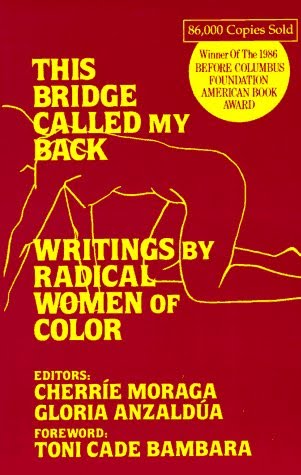
The mid-1980s saw the paradigm shifts in feminist studies in religion, as womanist, mujerista/Latina, Asian and Asian American women began to articulate their own theological understanding. If Womanspirit Rising (1979) was a reference text for our field, which contained essays by white women, we had the first reader by radical women of color, This Bridge Called Our Back(1981).

We began to discuss multiple oppressions and multiple identities, and the need to integrate race, class, and gender into our analyses. We challenged white women who have universalized their middle-class, white experience as if women were all the same. Continue reading “A Next Wave of Scholarship By Kwok Pui Lan”

Pushing Boundaries: Learning to be a Reformer By Jared Vázquez

When I consider the role of women in the social reforms of the late 19th century and early 20th century, I am struck by the boldness of those women in a society that is often essentialized as a quintessential model of patriarchy where all the women were too busy swooning under the pressure of corsets into the hands of handsome gentleman callers. But if we take the time to read closely about what activist women did during the late 19th century I believe that it becomes apparent that they developed much of the model by which we not only operate but also judge social reform; those reforming women set the standard by which we measure change. The reforming women of the 19th and 20th centuries altered the landscape of theU.S.in the way that they challenged the status quo of acceptability for the roles that women could play, both in the home and in public, and in the way that they challenged normative gender roles. In these we not only see the impact that was affected on their own societies, but also the legacy that has guided and continues to guide women and men who work for social reform today.

The women of that era challenged gender roles in various ways, in both public and less public ways. Utopian orders, for instance, that began to form in the mid 19th century were not only founded by women, like the Shakers, but were also directed by them and women enjoyed equal status with men in all affairs. The Salvation Army is another group in which women reinterpreted ‘womanly’ behavior in order to advance what they saw as their call to mission and evangelizing  and took to the streets, going into areas that were “unsuitable” for women. The reforming women of the second half of the 19th century were boldly questioning and challenging the notions of social ordering that dictated the ways in which women were “allowed” to behave. Reading the contemporary responses of non-Protestant faiths in the ways that they sought to “properly feminize” their own female membership gives clues to the level to which the challenge on gender roles had reached. Continue reading “Pushing Boundaries: Learning to be a Reformer By Jared Vázquez”

Well-Behaved Women Seldom Make History, But Obedient Ones are Rewarded in Heaven: An Examination of the Re-Invention of the Bengali Tradition of Sati By Michele Stopera Freyhauf

Well-Behaved Women Seldom Make History is a book authored by Laurel Thatcher Ulrich.  This has become a well-known phrase used by most feminists to imply a meaning of disobedience or stance against the patriarchal structure of society.  Often in error, the credit of the invention of this phrase is attributed Eleanor Roosevelt and Marilyn Monroe.  Their image, and especially the image of Monroe, will often appear with the slogan on merchandise as a means of marketing and raising revenue.  Ironically, reinvention or reuse is prevalent in history when it comes to tradition or ritual for the same reason – monetary gain.  This practice is common and the benefit of reinventing or reinterpreting an old tradition is an automatic connection to the past giving continuity, which, according to Eric Hobsbaum, instills strong “binding social practice,” (p. 10) including loyalty and duty in the members of the group.  This is especially effective in manipulating the poor and uneducated who usually display strict obedience and blind acceptance of tradition. The Bengali reinvented tradition of satî is an example of this. Continue reading “Well-Behaved Women Seldom Make History, But Obedient Ones are Rewarded in Heaven: An Examination of the Re-Invention of the Bengali Tradition of Sati By Michele Stopera Freyhauf”

A Reflection of What Influences and Controls My Ideologies: An Examination Of Althusser’s Ideological State Apparatus By Michele Stopera Freyhauf

 Michele Stopera Freyhauf:  Feminist scholar, activist, and graduate student in religion and biblical studies at John Carroll University, Michele is the student representative on the Board for Eastern Great Lakes Biblical Society (EGLBS) and author of several articles including “Hagia Sophia: Political and Religious Symbolism in Stones and Spolia.”  Her research interests involve Feminism, Sexuality, the influence of Goddess imagery, Myth, and Rhetoric especially in the Old Testament, Ancient Egypt and Early Christianity.  She also focuses her research in feminism, migration studies, and genocide as it relates to women, especially in the Middle East and Latin America.

Exploring the new world of historiography this semester has been an adventure.  In my studies, I came across an interesting person named Louis Pierre Althusser.  He is considered a structuralist Marxist and in 1970, he wrote an essay titled Ideology and Ideological State Apparatuses (Notes towards an Investigation).  The basis of his argument explores how various institutions control the working class.  We have our ideas taken from or given to us because we were essentially molded by various institutions that are being controlled by an agency of power, like government or church.  Someone has told us what it is to be moral and ingrained that definition.  Someone has influenced our idea of what it means once you graduate from high school then college.  Someone else has defined the benchmark for wealth and happiness or when we have enough “stuff.”  Ideologically we are controlled by so many outside factors.  It is this point that I want to reflect an explore as a Feminist, a mother, a graduate student, and part of the proverbial 99%. Continue reading “A Reflection of What Influences and Controls My Ideologies: An Examination Of Althusser’s Ideological State Apparatus By Michele Stopera Freyhauf”

Running for the President of the American Academy of Religion By Kwok Pui Lan

Dr. Kwok Pui-Lan is an internationally recognized scholar and pioneer in Asian feminist and postcolonial theology. She teaches at the Episcopal Divinity School and is the 2011 president of the American Academy of Religion. Dr. Kwok has published extensively and is the co-editor of two volumes Off the Menu: Asian and Asian North American Women’s Religion and Theology (Westminster) and Empire and the Christian Tradition: New Readings of Classical Theologians (Fortress). Her other publications include Postcolonial Imagination and Feminist Theology (Westminster), Discovering the Bible in the Non-Biblical World (Orbis), and Introducing Asian Feminist Theology (Pilgrim).

“Pui Lan, would you be willing to run for the Vice-President of AAR?” the chair of the Nominations Committee of the American Academy of Religion (AAR) called and asked me back in April 2008.

The AAR, with 10,000 members, is the world’s largest professional organization of scholars in religion. The majority of its members are from the U.S., but approximately 17 percent are international scholars from over 70 countries.

It was a great honor to have been nominated—for the Vice-President would be in line to become the President in 2011. The problem was that there would be an election and I would have to compete with another candidate, who happened to be a professor at Harvard University.

I thought, “If I win, that’s good. But what happens if I lose?”  Continue reading “Running for the President of the American Academy of Religion By Kwok Pui Lan”

ADVENT: THE ACTIVE-WAIT, PART II, By Cynthia Garrity-Bond

On Nov. 14 I posted Part 1 of Advent: The Active-Wait. What follows (in Part II) is a rereading or exegesis of Mary’s encounter with her cousin Elizabeth as an Advent waiting with hope, anticipation and trust, but also with action.

The second form of waiting, illustrated in verse Luke 1: 39, reads: “In those days, Mary set out and went with haste to a Judean town in the hill country, where she entered the house of Zechariah and greeted Elizabeth.”  The verse before this has Mary in complete surrender,  “Here I am” Mary proclaims, “the servant of the Lord; let it be with me according to your Word.”  Continue reading “ADVENT: THE ACTIVE-WAIT, PART II, By Cynthia Garrity-Bond”