Birthing God at the Edges of Life, Death, and Beyond: Reflections on Mary, Motherhood, and Kali Part II By Tracy Sayuki Tiemeier

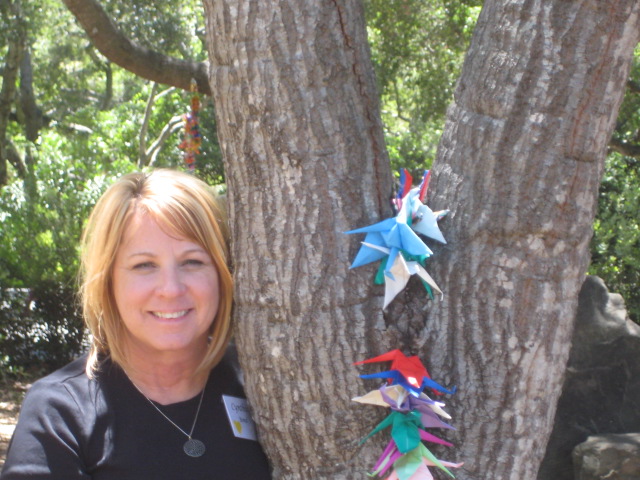
Tracy Sayuki Tiemeier, Ph.D., is Assistant Professor of Theological Studies at Loyola Marymount University in Los Angeles, CA. She teaches and researches in the areas of women and religion, interreligious dialogue, comparative theology, Asian and Asian American theology, and Hindu-Christian studies. Tracy also co-chairs the Los Angeles Hindu-Catholic Dialogue.

Mary, her purity, and her role as Virgin Mother have become the primary language for talking about women and women’s place in the Church. The late Pope John Paul II held up Mary, both virgin and mother, as the perfect model for women. For the Pope, women’s sexuality and spirituality are united in a vision of woman’s personhood as that of nurturing self-gift. The calling of physical and spiritual motherhood is connected to women’s more receptive and nurturing nature. Men lead the Church, as Christ did, while women receive Christ and others in their homes and in the world, as Mary did. Mary’s receptive openness to God is manifest from the beginning in her consent to Jesus’ conception. Such receptivity is both biologically natural and spiritually essential. Mary as Virgin Mother shows both women and men the value and depth of the receptive, self-giving reality of womanhood. Continue reading “Birthing God at the Edges of Life, Death, and Beyond: Reflections on Mary, Motherhood, and Kali Part II By Tracy Sayuki Tiemeier”

Birthing God at the Edges of Life, Death, and Beyond: Reflections on Mary, Motherhood, and Kali Part I By Tracy Sayuki Tiemeier

Tracy Sayuki Tiemeier, Ph.D., is Assistant Professor of Theological Studies at Loyola Marymount University in Los Angeles, CA. She teaches and researches in the areas of women and religion, interreligious dialogue, comparative theology, Asian and Asian American theology, and Hindu-Christian studies. Tracy also co-chairs the Los Angeles Hindu-Catholic Dialogue.

I grew up in St. Louis, MO, in the decades following Vatican II. My parish, like many at the time, was an odd mash-up of old and new. Contemporary praise music co-existed with smells and bells, informal homilies by hip priests with solemn novenas. It was an exciting time to grow up Catholic. I was on fire for God, but the opportunities for ministry as a little girl were limited. Boys were taught to follow Christ and were groomed to be priests. They got to skip class to receive training as altar boys. We all knew that boys were special. Girls were taught to be like Mary.  While shut out of most ministries at the church, we were essential for the yearly May crowning. Every year, I prayed I would be chosen to crown Mary. I was never chosen; but I nevertheless became incredibly devoted to Mary, talking with her often and leaving little gifts outside my door for her to take to heaven. My favorite game was to pretend to be Mary.  Continue reading “Birthing God at the Edges of Life, Death, and Beyond: Reflections on Mary, Motherhood, and Kali Part I By Tracy Sayuki Tiemeier”

Privileged Feminist By Xochitl Alvizo

 I have the privilege of having radical lesbian feminism ‘work’ for me. I can’t explain why it does – but it does – it just works for me. I am not of the same generation as most feminists who experienced and awakened to radical feminism during the women’s movement of the 70s and 80s in the United States. I am not white nor was I middle-class when I encountered it (though I probably am middle class now). But nonetheless, as I encountered radical lesbian feminist writing, and eventually some of the women who wrote them, it spoke to me in the depths of my being and rattled my very core. Radical lesbian feminism liberated me and birthed me into a whole new way of Be-ing…and that is a privilege I must not take for granted and must hold loosely. Continue reading “Privileged Feminist By Xochitl Alvizo”

Engaging Twilight By Lisa Galek

The following is a guest post by Lisa Galek, a professional writer and editor who earned her master’s degree Religious Studies from John Carroll University. In her spare time, she loves to read and write young adult fiction. She is currently hard at work on several novels, none of which involve vampires.

It would be easy to write a post bashing Twilight. As we await the release of Breaking Dawn: Part 1, the penultimate chapter in the Twilight movie saga, countless feminist critics, reviewers, and bloggers have weighed in the troubling messages in the series. The books are poorly-written.  They reinforce antiquated, patriarchal gender norms.  They have a not-so-thinly-veiled abstinence message.

I read all four books over the course of a week and I can tell you, every single one of these criticisms is dead on. I can also tell you
that, upon finishing the last book in the series, Breaking Dawn, I stumbled dizzily into my local bookstore, my head spinning with thoughts of sexy, sparkly vampires, and breathlessly asked the clerk, “Do you have anything else like Twilight?” Continue reading “Engaging Twilight By Lisa Galek”

KARAI KASANG: Rebirthing the Non-Patriarchal Image of God in Kachin Culture by Zau Sam

This  post is written in conjunction with the Feminist Ethics Course Dialogue project sponsored by Claremont School of Theology in the Claremont Lincoln University Consortium,  Claremont Graduate University, and directed by Grace Yia-Hei Kao.

Zau Sam is a first year MA student in Feminist Studies with interests in process theology, ecotheology, feminist and ecofeminist theologies.  He is ethnically Kachin (Jinghpaw) and from Myanmar (Burma). Zau is a minister at Yangon Kachin Baptist Church (in Myanmar) and Academic Dean of the Church-based Bible School there.  

Throughout our Feminist Ethics class, I have been thinking about Mary Daly’s concept of “Goddess” in her Gyn/Ecology: The Metaethics of Radical Feminism.  I don’t believe that there is any sound theological argument that the term “God” itself represents patriarchy. Theologically speaking, if we study the Bible systematically, particularly Genesis 1:27, it is unquestionable that God is associated with both feminine and masculine imagery.  God is imaged as both mother and father. In contrast to this nature, Mary Daly does not merely seek to erase masculine imagery from the term “God,” but the word “God” itself.  However, “Goddess” without the masculine imagery can no longer be the Perfect Goddess, just as “God” without the image of the feminine also remains imperfect.

Continue reading “KARAI KASANG: Rebirthing the Non-Patriarchal Image of God in Kachin Culture by Zau Sam”

Enduring the Trials of Graduate School: From Conception to Labor Pains and Birth By Michele Stopera Freyhauf

Going back to school at 30-something to complete a B.A. in a completely different field (from accounting to Religious Studies and Theology) was an interesting endeavor.  After many years of legal and business writing as well as crunching numbers, learning how to write academically, including formatting citations and using new technology was quite an undertaking that has proven to be rewarding.  All the searchable databases in the library no longer included card catalogues and microfiche.  This was amazing!  No more correction ribbon and electric typewriters (am I showing my age yet?!)  Going to college in 1985 is different then going back to college in 2006.

The transition did not stop with technology and formatting papers.  With each class and each instructor, a new transition was introduced on my way to the finish line.  It was a very large transition and more difficult when you sit in classes with students your own children’s ages. Add to that the reintroduction of the grammar game; in-text citations or footnote citations, semi-colons or dashes, commas or no comma, etc.  With the help of great mentors and patient professors, I prevailed and moved on to my next task (I mean transition) – Graduate School.  New professors, new demands, different writing styles, scholarly growing pains in abundance.  The research and writing intensified (which is an understatement).  Then there is the addition of critical reviews, peer reviews, and multiple presentations.  Each professor with his or her own format and requirement. Each with their own style of subjectivity or, if you are lucky, a specific grading protocol with tangible prompts or goals.  It is a world of unexpected twists, but, in my opinion, better than undergraduate work.  Continue reading “Enduring the Trials of Graduate School: From Conception to Labor Pains and Birth By Michele Stopera Freyhauf”

Leadership As Risk And Open Dialogue By Xochitl Alvizo

Regardless of the context, leadership is too often simply an imitation and implementation of business management strategies that are designed to ‘lead’ people toward a predetermined goal. In business the goal is to maximize profits, minimize cost, and increase production, and as long as it is serves that purpose, employee satisfaction is sought and minimally maintained. I reviewed Ronald A. Heifetz classic text on leadership, Leadership Without Easy Answers, which does take the discussion of leadership into a different direction. And although it does not fall in the direction I want to eventually go, it does offer a solid place to start this conversation on leadership. [1]  Continue reading “Leadership As Risk And Open Dialogue By Xochitl Alvizo”

LGBT Saints: Feminism Leads to a Queer Theology of Sainthood By Kittredge Cherry

Kittredge Cherry

The following is a guest post written by Rev. Kittredge Cherry, lesbian Christian author and art historian who blogs about LGBT spirituality and the arts at the Jesus in Love Blog.  Her books include “Equal Rites” and “Art That Dares: Gay Jesus, Woman Christ, and More“.

Feminists have criticized saints as top-down tools of the dominant morality, but as a lesbian Christian I find that sometimes the opposite is true.  The desire for saints rises from the grassroots, and LGBT saints can shake up the status quo.  Feminist theology is helping me in a quest for new models of sainthood that lead to LGBT and queer saints.  The LGBT saints attract people with the quality of their love.  They show us not only THEIR place in history, but also OUR place — because we are all saints who are meant to embody love. Continue reading “LGBT Saints: Feminism Leads to a Queer Theology of Sainthood By Kittredge Cherry”

On being an imperfect feminist: releasing definitions built in shame By Sara Frykenberg

A few weeks ago, a very interesting and in some places, tense discussion arose from John Erickson’s post, “Hands Off,” some of which related to the difference between what it means to be a liberal feminist and what it means to identify as radical.  Since then, I have been thinking a lot about what the identification “feminist” means to me, what it means to be an ally and how I am defining these categories.  Rather, I mean to say, against what kind of a standard am I applying this definition.

I think I have asked myself these questions many times in my life, in different ways, but perhaps most significantly I asked myself “am I a feminist?” when I started graduate school.  I was sitting in a classroom, set up like a circle, and all the women and two men in my… I think, “Gender and Education,” class were introducing themselves.  “Hello, I am so and so, and I have been a feminist for X number of years and I do this, etc.”  “Hello, I am so and so, and I am a feminist ally and I do such and such, etc.”—as I remember, some classmates identified more as allies.  When it came time for me to introduce myself, I said, “Hello, my name is Sara, and I am not sure if I am a feminist or not.  I thought I was, but I don’t know now.” Continue reading “On being an imperfect feminist: releasing definitions built in shame By Sara Frykenberg”

Mistaken “Miss Representation”: Women in the Media and Necessary Comprehensive Conversations By Jaji Crocker

This post is written in conjunction with the Feminist Ethics Course Dialogue project sponsored by Claremont School of Theology in the Claremont Lincoln University Consortium,  Claremont Graduate University, and directed by Grace Yia-Hei Kao.

Jaji Crocker received her MFA in Creative Writing from Northwestern University, and is now pursuing a dual degree at Claremont Graduate University, studying for her PhD in English and MA in Religion.  Her research interests and approach are innately interdisciplinary as she explores the evolution of the ethics buttressing and changing religious philosophies and practices in North America and the Middle East, as well as the evolution of the theological imagination and feminist influences in post WWII American literature.  Jaji continues to write fiction and teach creative writing.

Last week, a program graced the Oprah Winfrey Network (OWN) entitled “Miss Representation.”  The piece discussed the damaging influence of the media on the psyches and behaviors of girls and women in North America, pointing to the media’s hypersexualized representation of women, emphasizing women’s bodies and clothing rather than their intellect and voice.  The message being, a woman’s message – the words she speaks – doesn’t matter; it is trivial and cute and even, sometimes, dangerous. Continue reading “Mistaken “Miss Representation”: Women in the Media and Necessary Comprehensive Conversations By Jaji Crocker”