Dealing with Despair by Carol P. Christ

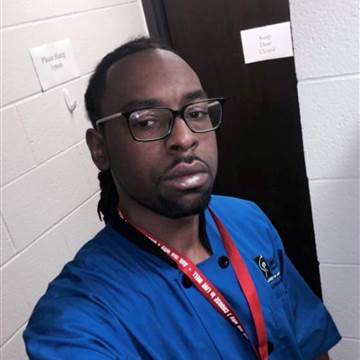
Philando Castile, school cafeteria worker, killed driving while black

In a state of shock after the police shootings of Alton Sterling and Philando Castile, I turned to my Facebook feed, looking for community in my grief and hoping to make sense of what had happened. The statement, “He would not have been shot if he had been white,” referring to Philando Castile, appeared several times. The first time I saw it, I responded, “He would not even have been stopped if he had been white.” Think about it if you are white: how many times have you been pulled over by the police?

I can answer that question: in the United States, only once, and that was because I made a second illegal U-turn at the same stop-lighted intersection as a teenager.  The policeman issued me two tickets, stating that he had been willing to let the first offence go. This is what white privilege means. Continue reading “Dealing with Despair by Carol P. Christ”

Islamophobia and Two Tales about Muslim Women by Vanessa Rivera de la Fuente

Woman in religion is a story. This means that all that is said about women in all religions, as well as from social and natural sciences, institutions and the media is a  story, a story that is the product of the interaction of mechanisms of power, authority, and performative actions. If gender is a discourse with cultural signifiers, then the “feminine” and “women” in the religious field are too. Speech about women has functioned in patriarchal structures historically, and still now, as a mechanism of control, discipline. and punishment.

In my experience, the situation of women in Islam is generally addressed from two opposing and dominant discourses that I call: The “Idealization of Inequality” and “Demonization.” The “Idealization of Inequality” view argues that the Quran elevated the position of women from a terrible condition of objectification in the pre-Islamic Arab society, also called the age of ignorance or Jahiliyya, a time in which many girls were killed at birth, to a state of full equality and recognition of rights. According to this approach, feminism has no place in Islam. Nothing should be changed. No new hermeneutics must be allowed, since the only differences between men and women stem from biology: women can conceive, men have more physical force. But this does not mean that one is below the other, because, under the “cosmological equality” established by the revelation, the lives of women and men are equal before Allah.

The “Idealization of Inequality” view represents a hegemonic discourse that lacks a strong and coherent response to the prevalence of discriminatory practices against Muslim women based on differences beyond their biological nature: such as the prohibiting women from entering or speaking in some mosques, not allowing women to hold positions of spiritual and administrative leadership, and requiring women to worship in segregated spaces with separate entrances. None of these are related to the “equality” they attribute to the Quran. Nor does the “Idealization of Inequality” standpoint provide real and concrete answers to the other issues affecting Muslim women: institutional violence, racism, stereotypes, and the sexist burden of common narratives.

The “Demonization” view, on the other hand, argues that, with respect to religion, it is not possible to speak of the liberation of women. So all kind of activism or feminist initiatives coming from or seeking background in religion are oxymorons. Accordingly, there would not be Catholic, Muslim, or Mormon feminism or the possibility to develop feminist hermeneutics that can be taken seriously. An important feature of the “Demonization” argument is the assumed axiom of a fundamental difference between East and West, pitting the rationality of “we” against the irrationality of “them,” and the analysis of “our” development versus “their” underdevelopment:  reaffirming the western identity as superior. And here lies its most egregious shortcoming: “Demonization” acts as judge and jury in regard to the description of the oppression of all women perceived as “other.” First, it places them in the category of otherness, and then it defines the causes of discrimination suffered by them in their societies. Finally, it gives “us” the messianic ability to save “those” women. Continue reading “Islamophobia and Two Tales about Muslim Women by Vanessa Rivera de la Fuente”

Reading for Fun and Compromise—My Ongoing Search for Feminist Literature by Sara Frykenberg

What I mean to say is, what if, when I wanted to read for fun or simply for the pleasure of reading, I were to put down any book that demonstrated buy-in to kyriarchal ideas, overtly or even in micro-aggressive ways? I have flippantly responded to this question, “then, I may never read any piece of fantasy literature again.”

Sara FrykenbergI love reading fiction, particularly science fiction and fantasy literature. However, since the birth of my daughter I have been pondering the stories we tell and the language we use a great deal; and I have begun to feel a little bit like my ‘fun’ reading almost always involves some kind of compromise. For instance, when I first started reading  Song of Ice and Fire by George R. Martin (the series which inspired the HBO hit series Game of Thrones), I greatly enjoyed the series. The five competed books are ripe with intrigue, complex interpersonal and political relationships, the rebirth of magic in a world, and characters you love to hate. But, continuing to read and watch this series unfold, I have grown to suspect that Martin may hate women because he seems to punish them over, and over, and over again. The most recent book, A Dance with Dragons is so full of sexual violence it is actually hard stomach.

Continue reading “Reading for Fun and Compromise—My Ongoing Search for Feminist Literature by Sara Frykenberg”

A Servant of God or a Lover of Life? by Carol P. Christ

Carol Molivos by Andrea Sarris 2Thus through an enormous network of mythological narrative, every aspect of culture is cloaked in the relationship of ruler and ruled, creator and created. . . . [Sumerian] legend endows the Sumerian ruler-gods with creative power; their subjects are recreated as servants. . . . [This new narrative was] deployed with the purpose of conditioning the mind anew.(20, italics added)

This provocative statement is found in a chapter titled “The First Major Sexual Rupture” in a collation of the writings titled Liberating Life: The Women’s Revolution by imprisoned Kurdish leader Abdullah Ocalan (pronounced Oh-cha-lan). According to Ocalan, who clearly had been reading authors like James Mellaart, Marija Gimbutas, and Heidi Goettner-Abendroth, the values of the societies that preceded Sumer in the Near East were entirely different. Continue reading “A Servant of God or a Lover of Life? by Carol P. Christ”

Gratitude by Esther Nelson

esther-nelsonI’ve been in the midst of moving for almost a year, yet am still not finished with that onerous task.  My youngest son and family recently moved into the place I’ve called home since 1980.  I bought a small house in the vicinity and have just settled in after spending four months painting, cleaning, and hauling box after box to my new dwelling.  At the same time, I’ve been traveling back and forth to New Mexico busy with painting, cleaning, and remodeling my “retirement house.”

I’m tired.  Am also experiencing emotions that I thought I was impervious to.  I never perceived myself as somebody having an attachment to place, but a month or so before moving out of my old home, I began to feel nostalgic.  There was so much I didn’t want to leave behind–the woods, birds nesting in bushes around the property as well as on top of the front porch light, the wildlife (deer, opossum, rabbits), and neighbors far enough away so I didn’t have to hang curtains at the windows.

Just days before the agreed-upon date to turn the old home over to my son and family, I became emotionally distraught.  A friend suggested I read Oliver Sacks’ book, Gratitude.  Oliver Sacks (1933-2015) was a British neurologist who spent his professional life in the United States caring for people with brain “disorders” such as aphasia, Tourette Syndrome, amnesia, autism, and a host of other neurological diagnoses.

Gratitude is a slim volume featuring four essays written during the last few months of Dr. Sacks’ life.  In the second essay, “My Own Life,” he writes: “I cannot pretend I am without fear.  But my predominant feeling is one of gratitude.  I have loved and been loved; I have been given much and I have given something in return; I have read and traveled and thought and written.  I have had an intercourse with the world, the special intercourse of writers and readers.”

I wanted to know more about Dr. Sacks’ life and promptly procured his memoir, On The Move  A Life, published just before he died in 2015.  I was struck by the apparent comfort he felt in his own skin as he went about living in the world.  He came from a fairly Orthodox Jewish family and realized during his teen years that he was gay.  When his mother discovered his homosexuality, she said, “You are an abomination. I wish you had never been born.”  He writes that she undoubtedly was referring to a text in Leviticus (Hebrew Bible) and although she never mentioned the incident again,” …her harsh words made me hate religion’s capacity for bigotry and cruelty.”

His mother’s view regarding his homosexuality didn’t seem to affect Dr. Sacks’ ability to get on with his adventures living on, what he calls, “this beautiful planet.”  He focused on his passions–medicine, literature, traveling, observing the natural world, swimming, lifting weights, and riding his motorcycle.  Along the way he met a wide variety of people (patients, colleagues, authors, and characters in books).  He squeezed gallons of nectar from those meaningful encounters.  Yet, I think his mother’s disgust regarding his sexual orientation must have cut him to the quick.  He included the incident in his last book, Gratitude.   Continue reading “Gratitude by Esther Nelson”

Toxic Masculinity: “Masculinity Must Be Killed” by Carol P. Christ

Carol Molivos by Andrea Sarris 2A few days ago I watched the movie An Unfinished Life starring Morgan Freeman, Robert Redford, and Jennifer Lopez. Though it was recommended as a sensitive psychological drama, and though on the surface level it criticizes (male) violence against women and animals, on a deeper level, it confirms the association of masculinity with violence, suggesting that violence is the way men resolve their problems with each other.

At the beginning of the film, Robert Redford, who lives on a ranch in Montana, picks up his rifle with the intention of shooting a bear who mauled his friend Morgan Freeman. This act of violence is stopped by local authorities who arrive to capture the bear. However, the bear is not removed to a more remote area, but rather is given to a local make-shift zoo where it is kept in a small cage. At the end of the movie, Redford frees the bear after Freeman realizes that it should not be punished for injuring him. The bear is last seen crossing a mountain ridge in the distance.

Redford is grieving the death of his only son who died in an automobile accident while his son’s wife (played by Jennifer Lopez) was driving. After being beaten by her current boyfriend, Jennifer Lopez escapes with her daughter and ends up on Redford’s doorstep, announcing that her daughter is Redford’s granddaughter.  Redford, who believes Lopez is responsible for his son’s death, grudgingly allows them to stay.

When Lopez’s boyfriend tracks her down in Montana, Redford drives him out of town, threatening to kill him with his rifle. When the boyfriend comes back, Redford shoots out the tires of his car, smashes the car’s windows with his rifle, and beats the boyfriend bloody before putting him on a bus out of town.

The movie asks us to condemn the boyfriend’s violence against Lopez and Redford’s desire to kill the bear, but it also asks us to condone and even to celebrate Redford’s violent acts against the boyfriend. After all, in this case, justice is done. Right?  Continue reading “Toxic Masculinity: “Masculinity Must Be Killed” by Carol P. Christ”

Khutba “A Call to Radical and Angry Women of Faith” by Vanessa Rivera de la Fuente

Sacred+Circle+home+page+image+oneI am grateful to the Interfaith Group of Feminist Theologians and Women of Faith for remembering my spiritual affiliation and giving me the opportunity to lead this service in this fully of blessings month of Ramadan and share with you a reflection in the form of a sermon or khutba. Perhaps you know that in orthodox Islam, tradition, without any theological basis, still forbids women to speak or lead rituals. So, this is a joyful occasion for me and I want to start with my usual invocation:

I thank God for this day. I praise Allah for the paths I had to walk that led me to its light and the present day. I ask the protection of the Divine that lives in the essence of everything. and I invite my female ancestors to walk with me in this journey.

A Call to Radical and Angry Women of Faith

My dear sisters, I want to invite you this evening to reflect on what it means to be a radical woman of faith, in a context of extreme upsurge of violence against women and minoritized groups we live in. What does mean being a radical woman? As we know, radical women are feared even by their activist and feminists peers. For the mainstream of society, a radical woman is a little crazy, a little witch, a little ugly, and especially, a very angry woman.

Well, they are right about anger. To be radical is to be as outraged enough to, fearlessly and tirelessly, claim and work for the total end of all kinds of oppression. You heard it right, the total end of all kinds of oppression. For women of faith, like us, who believe in social justice as the prior duty and principle of living in the creation, the current status of abuse, violence and exploitation to which a part of humankind is subjected must provoke us to rage, anger and outrage.

Aren`t you upset? Because I am. Religious patriarchy has historically exercised and endorsed, until today, violence against women and those group defined as “minority.” This religious patriarchy, composed for priests, imams, lamas and rabbis legitimize multiple forms of exclusion of women, sexism, control of our bodies, misogyny and rape culture.

This week we mourn the death of about 50 of our Latino siblings in Orlando. We have to add to this list the hate crimes against queer people in Veracruz, México, as well the slaughtering of women in thousands of gendercides that have become the standard cover of newspapers every day, and the violence against lesbians and trans women, crimes that fail to capture the visibility and solidarity of a homophobic and androcentric society.

Without denying the misogyny and homophobia existing in my community, I want to say that the specific religion of those criminals doesn´t matter, you know why? The pernicious influence of religious patriarchy extends beyond the limits of our assemblies. People blame misogyny and LGTBQphobia on religions as if this is something external to their lives. But each day, at the school, workplace and media our society reproduces all that hetero-sexist, colonial, racist, elitist violence. Heterosexuality as a political regime, validated by hegemonic religious narratives, present in all belief systems, is a source of violence and a form of terrorism itself. Continue reading “Khutba “A Call to Radical and Angry Women of Faith” by Vanessa Rivera de la Fuente”

Religion and the #StateofWomen by Gina Messina

Pledge PhotoThe White House Summit on Women was held this week on Tuesday, June 14, 2016 and it was a great privilege to be among those invited to participate in this inaugural event.  There was an incredible line up of speakers and so much was shared. It proved to be an overwhelming day – in a very good way.  Topics addressed included violence against women, economic empowerment, and education.  In addition to the main event, there were breakout sessions on a myriad of topics presented by the most preeminent authorities in their fields.  I walked away from the day with a sense of urgency to find news ways to engage gender issues and social policy.  However, I also wondered how to bring religion into the dialogue and give greater attention to its impact on women’s issues in the US. Continue reading “Religion and the #StateofWomen by Gina Messina”
The Tension of Opposites: Love, Chaos, & the Wild Vortex by Chris Ash

“Perhaps it shouldn’t be surprising that a high tolerance for ambiguity, ambivalence, and a tendency to think in opposites are characteristics researchers have found common among creative people in many different fields. But professional creators… come to understand that in order to be creative, they need to give themselves to sensations of ‘knowing but not knowing,’ inadequacy, uncertainty, awkwardness, awe, joy, horror, being out of control, and appreciating the nonlinear, metamorphosing features of reality and their own thought processes — the many faces of creative chaos.”

– John Briggs and F. David Peat, Seven Life Lessons of Chaos

Christy CroftAs someone whose interfaith, nature-based spirituality regularly draws inspiration from science, I experienced my recent read of the book Seven Life Lessons of Chaos as both an affirmation and a challenge. Throughout the book, one theme emerged over and over, each time in a different context: the creative impulse – that which generates nature and space, planets and stars, love and rage – emerges from within the tension of opposites.

Creation doesn’t burst forth from one opposite overtaking another, but rather as the direct outcome of the unending push-pull swirl of outward and inward, boldness and fear, light and dark. Living in creative authenticity regularly leaves me stewing in a mix of often-contradictory feelings, and while it’s easy for me to revel in my confidence when I’m feeling bold or in my wordy wit when I’m feeling brilliant, it’s far more difficult for me to sit with wonder in times when I feel rejected, unlovable, unaccomplished, insecure, or ugly. My inner dialogue frequently finds me alternating between the opposites that pull at my heart, mind, and way of being in the world.

Really, this is where many of us often find ourselves – be smart but not too intelligent, be beautiful but not vain, be sexy but not sexual. Madonna-whore, virgin-slut – choose a side, but know that once you do you will be judged. We are asked to choose between equally restrictive and caricatured forms that have been pre-fabricated for us by years of cultural control and legal oppression – forms that emphasize who we are in relationship to others, to men, and to our religious laws, rather than honoring who we are to ourselves, to our gods, and in our chaotic brilliance. Continue reading “The Tension of Opposites: Love, Chaos, & the Wild Vortex by Chris Ash”

Garden of Eden Retold by Trelawney Grenfell-Muir

Trelawney bio picture

Today, I came up with a less patriarchal Garden of Eden story:

Endelyn (age 7): “When I think of my soul, in my name “fire-soul,” I think of a powerful wind.”

Me: “That makes sense, since one of the names in the Bible for God/ess is Ruach, which means “breath” or “wind”, but we call it the Holy Spirit. God/ess is also symbolized by the other elements: fire, air, and earth – like when she shaped Eve and Adam out of clay.”

Endelyn, “What? I don’t remember that story.”

Me: “Oh, ok, I’ll tell you.” ……

Here’s the part where I froze momentarily, thinking “how can I tell my children that misogynist failed mentor story? how? how?” <deep breath>
Continue reading “Garden of Eden Retold by Trelawney Grenfell-Muir”