A Bombshell, Bogotá Style – Part 2 by Laura Montoya

The events of sexual harassment I shared with you in Part 1 of this post happened in my first paid-job experience. Just like Margo Robbie’s character in the movie Bombshell, my encounter with Mr. M. was like hitting the wall of the harsh world’s reality. It was a tough welcome  to the adult workplace. After my first experience of harassment, I thought that feeling uncomfortable and guilty due to a man’s behavior wouldn’t happen to me again; especially since my second job was in a Christian organization. Bombshell!

I grew up in a very conservative Christian family in the Pentecostal tradition. In my teenage years I was an active member and leader in a church in Bogotá’s downtown. After that, I was a student leader in a Christian group in my university for seven years. After leaving the first job, I was a very-VERY- Pentecostal girl in my twenties, ready to take on the world again! The main requirements for my new job with the Christian organization were to know the Pentecostal culture and to have experience leading groups in peace-building projects. I was proficient in both, so, hurray – welcome job number two into my life! But what I didn’t realize was that this job would require me to welcome this new boss to it too.

Continue reading “A Bombshell, Bogotá Style – Part 2 by Laura Montoya”

A Bombshell, Bogotá style – Part 1 by Laura Montoya

Last weekend I watched the 2019 movie Bombshell. I had not heard about it, and I ended up seeing it for the suggestion of Prime’s “you might enjoy this” algorithm. I had no idea about the story of Gretchen Carlson and Megyn Kelly’s legal battle for sexual harassment against Fox News’ master Roger Ailes. The movie was not very long, but it was intense. It portrayed really well the misogyny expected to be found in such a workplace led by a mighty, egotistic man like Roger Ailes.

Bombshell – 2019

A good part of the movie, we join Kayla Pospisil, Margot Robbie’s fictional character, in her quest to become a host in the news. So we go with her into Roger’s office and witness what an interview with that man was. It was about “loyalty” and intended to “prove” that she had what it took to earn a place in one of the most competitive work environments. **Content warning: description of workplace sexual harassment to follow** Obviously, it meant that she had to sleep with him because how else could a woman with a hot body prove she is competent? Immediately she was forced to show him her legs because legs sell good on T.V., and then we get to see her underwear because he was too turned on and couldn’t stop himself. **End Content Warning** Thanks to Robbie, we also feel the panic, surprise, and horror of a naïve girl trying to get a dream job in the real world.  

Continue reading “A Bombshell, Bogotá style – Part 1 by Laura Montoya”

Star Trek: Discovery Season Two: On Characters, Action, and Faith by Ivy Helman.


Season two of Star Trek: Discovery incorporates religion differently than season one.  While there are religious overarching themes running throughout, like how actions to shape the future and faith not as convictions but as empowerment, a more fitting and interesting way of addressing religion throughout this season is to look at the individual characters and what their stories have to stay about religion.  

Captain Pike knows and understands religion.  He also often believes.  Michael is the persistent skeptic.  The Red Angel plays many roles: an illogical mystery, a revelation, a savior or a intentional sign. Saru is the convert, physically transformed with a newfound confidence and power, while Hugh is the reincarnated, whose bodily existence begets loneliness and struggle.  Spock is the logic wrestler, who as Pike says asks “amazing questions.”  Finally, not a character per se, episode two, entitled “New Eden,” represents a typical Western understanding of organized religion, replete with sacred writings and a church.  

Like season one, religion is present in the opening scene of the season, this time in the form of mythology, as Michael tells a tale of an African girl who threw embers from a fire into the air creating the Milky Way.  Michael says that she left a message in the stars if one was willing and open to receiving it.  

Continue reading “Star Trek: Discovery Season Two: On Characters, Action, and Faith by Ivy Helman.”

About Bridgerton: A Different Feminist Perspective by Christine Irving


First of all, I’m grateful to Bridgerton for providing several spirited conversations between my friends and me, not to mention the POVs penned recently in these pages.  It was fun to take part in exchanges that did not highlight or veer off into either politics or the COVID-19 epidemic.

What first drew me to Bridgerton was the fun of it – the blatant over the top spoofery and satire so like the Commedia dell’arte it so brilliantly imitates.  The Commedia got away with its mockery of society because it disguised it beneath a froth of opulent, frippery, and coarse buffoonery that distracted the rich (but not the poor) from its real message about the foolishness and vanity of the ruling class.  So does Bridgerton, but in this case, the culture being satirized and unveiled is ours.  Unlike those earlier dramatists, in our age we fortunately and so far, at least in this country, still enjoy much greater leeway in making mockery.  “Huzzah!” I say. Continue reading “About Bridgerton: A Different Feminist Perspective by Christine Irving”

Let’s talk about Mary Magdalene and her new film by Anjeanette LeBoeuf

In keeping in line with my last month’s post, movies are on the docket, 2018’s Mary Magdalene. It’s fairly recent with not a lot of discussion around it. Here we go. The film written by two women, Helen Edmundson and Philippa Goslett, focuses on Mary of Magdala who encounters Jesus. The film stars American Rooney Mara as Mary Magdalene and Joaquin Phoenix as Jesus.

Continue reading “Let’s talk about Mary Magdalene and her new film by Anjeanette LeBoeuf”

Unorthodox: How Looking for “Truth” Misses the Point by Ivy Helman.


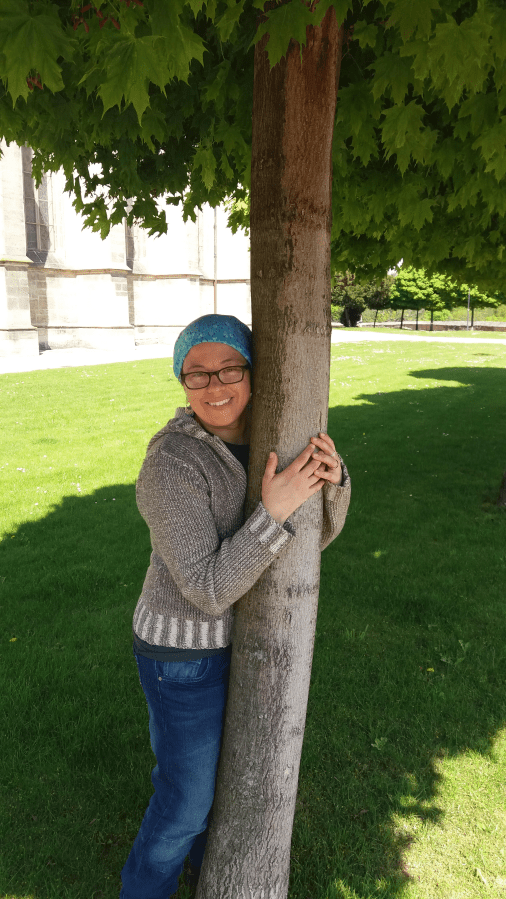
ivy tree huggingA few weeks ago a Slovak journalist reached out to me about the new Netflix four-part series entitled Unorthodox.  In the email, the journalist wrote that they had read about my work as a Jewish feminist and wanted some insight into the new series.  Their main question was: how accurate is the portrayal of the Satmar community?

I was slightly surprised.  The journalist wasn’t looking for my opinion on Esty as a young Jewish woman who takes control over her life and works tirelessly to quite literally have her voice heard.  Rather, the questions were: is the Satmar community really like that; do they not use the internet or have smart phones; is quality education so lacking; is marriage arranged; would a woman really be that clueless about her own body; is sex like that; and, do they really have no privacy?  

Fast forward.  I did the interview.  I figured that if I could offer the article’s Slovak and Czech readers a better understanding of Jewish life, my efforts were worth it.  I tried to focus the interview toward those  goals and my feminist take on the story.  The piece was published, and somewhat proud of my efforts, I posted a link to the article on my Facebook page.  Continue reading “Unorthodox: How Looking for “Truth” Misses the Point by Ivy Helman.”

Reviewing Current Holocaust Popular Culture Materials By: Anjeanette LeBoeuf

AnjeanetteI contemplated doing a post on the current rising issues of the Coronavirus but as so much of life has been stopped, altered, and/or rearranged, that I figured I would embody the proverbial statement of “Just Keep Calm and Carry On.” So, this month’s post is a mixture of observation/product review on recent Holocaust narratives, especially found in movies, TV shows, and books.

Continue reading “Reviewing Current Holocaust Popular Culture Materials By: Anjeanette LeBoeuf”

Frozen 2: Can the Christian Church Hear its Gospel Song? by Trelawney Grenfell-Muir

The first time I saw Frozen 2, I was impressed by the ecofeminism and the efforts to respect the Sami culture. The second time, I thoroughly enjoyed the superb music and the character development. The third time… was a religious experience.

Other contrubutors have written wonderful reviews of Frozen 2, and I agree wholeheartedly that its animation reinforces the sexist idea that females should be tiny compared to males, except for our eyes, which should be larger than our wrists. These disempowering representations saturate today’s media, and I regularly spend a whole lot of time deconstructing them with my daughters.

However, there is a lot to love about Frozen 2, and as a Christian, I found myself resonating with several of the symbolic truths the film offers. I spent some time looking into the Sami religion, to see how much of it was incorporated into portrayals of the Northumbra. I knew that Disney had consulted with Sami representatives to portray their culture with respectful accuracy. The Sami history is an all too familiar tale of violent imperial conquest allied with Fundamentalist Christian Dominionism. The wounds of Sami history certainly give me terrible grief as a white American and a Christian, and I hope that the anti-colonialist messages of the film spread awareness of such violence in my country Continue reading “Frozen 2: Can the Christian Church Hear its Gospel Song? by Trelawney Grenfell-Muir”

Beth March and the Courage of the Gentle Giver by Cathleen F

As someone who spent my prepubescent years watching director Gillian Armstrong’s “Little Women”, I was eager to see Greta Gerwig’s newly released version. Previously unexplored contours of each character, and of my changed perceptions, were made visible through this iteration. The most difficult and touching part of the film that lingers with me is the story of Beth, pianist and caretaker. Beth’s untimely death brings grief into the center of the March family narrative, and Gerwig’s portrayal brought up grief in me about my experiences with invisibility as a paced introvert in a culture that celebrates speed and extroversion.

I grew up wanting to be like Jo March, the outspoken, reactive protagonist. Jo was the rebel, the obvious feminist, and, mostly importantly to me, the brave one. Beth seemed to me to be boring, relegated to a life at home, bound by illness and a preoccupation with the needs of neighbors. Her steadiness looked to me like obedience; she could not fight away the disease that eventually killed her, and I wished to be everything besides her, the introvert who observed and cared and loved music and then died. As I grew into my own introverted, observant, caregiving tendencies, I began to wonder if I had been tricked by my culture, by my upbringing, to think I was Beth when I was really Jo! While social pressures certainly influenced my personality, as they do for us all, I didn’t want to believe that perhaps I was growing into my natural temperament, endowed by the Universe, expressed in my mind and body. As a woman in the 21st century, as a feminist, I was supposed to be like Jo, not the way I was (am). To have a deliberate or tender nature was, in my subconscious perception, to betray the spontaneous, assertive natures of those more worthwhile feminists who got things done. Continue reading “Beth March and the Courage of the Gentle Giver by Cathleen F”

Staying Un-Frozen by Sara Frykenberg

It is February 14th, Valentines Day. So, today I want to explore my daughter’s love affair with Frozen; a story that I did not like, but that I learned to love by watching it through her eyes. A story which through her eyes, has taught me a lot about how to stay and be un-frozen.

I did not understand the phenomenon that was Disney’s Frozen in 2013. I did not like film’s premier song Let it Go, which you could hear e-v-e-r-y-w-h-e-r-e. The film wasn’t even about Elsa; the queen with magical powers who sings this song while reveling in the new-found freedom of her isolation. It’s about Elsa’s sister, Anna, and her quest to find Elsa. So really, I thought, the song was misleading. I also didn’t like the ‘loveable Olaf;’ and while switching up the “true love’s kiss” narrative was a positive change for Disney (Anna saves herself and Elsa with her love, instead of that of a man), I just didn’t get the widespread appeal. Continue reading “Staying Un-Frozen by Sara Frykenberg”