

Sheep – soft-footed, fluffy creatures – graze and amble along with frolicking lambs by their sides. Know worldwide as docile and friendly, sheep – in particular the female ewes and their lambs – have come to symbolize innocence, gentleness and peacefulness. The symbolism of rams takes on a slightly different, more masculine tone and will be looked at separately.
Continue reading “Sheep – Gentle Wisdom by Judith Shaw”Category: General
The Bang Bang Boys by Sara Wright
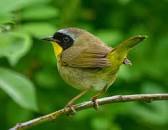
Mad wolf boys bay
a waxing solstice moon
to Bloom
PTSD
Violence
is the Gateway
Nowhere to hide
Bang Bang
Warblers sing on
Fright
fragments
innocence
Nerves strung too tight
contract
Guns batter
Forest Peace
Bang Bang
Continue reading “The Bang Bang Boys by Sara Wright”The Legacy of Carol P. Christ: June 25th or “June Unteenth”: A Sad Day For All Americans
This was originally posted on July 1, 2013
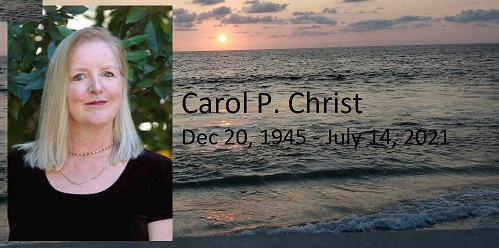
Kelly Brown Douglas wrote recently on Feminism and Religion about the celebrations in black communities on Juneteeth when the emancipation of slaves became a reality in the formerly Confederate states. Sadly, on June 25th 2013 the Supreme Court announced its decision striking down section 4 of the Voting Rights act of 1965, the most important Civil Rights legislation of the 20th century. The Supreme Court gave a “green light” to states with previous and on-going records of introducing laws with the effect of preventing minority voters from voting to “proceed straight ahead.” I name this day June Unteenth and call on all Americans to mourn it in sackcloth and ashes.
For every American concerned with Civil Rights this indeed is a sad day. It means states and municipalities—particularly those in the former Confederacy—will in the days following the decision be introducing new legislation which will have the effect of disenfranchising black voters. Those of us who consider the right to vote fundamental in a democracy must rise up, with time, with money, and if necessary with our bodies in peaceful protest.
Continue reading “The Legacy of Carol P. Christ: June 25th or “June Unteenth”: A Sad Day For All Americans”From the Archives: The Story of Juneteenth by Kelly Brown Douglas
This was originally posted June 18, 2013
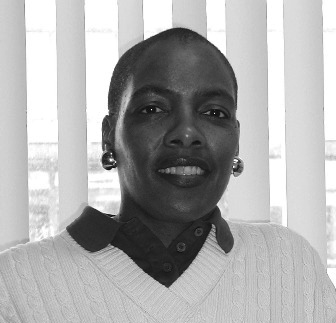
Tomorrow is a special day for me. It is Juneteenth. On June 19, 1865, news finally reached Galveston, Texas that slavery had been abolished. This was of course two and a half years after Lincoln issued the Emancipation Proclamation. While the actual impact of the emancipation for the enslaved remains a source of historical discussion if not debate, the fact of the matter is that the proclamation of emancipation and the reality of freedom for black women and men did not necessarily coincide. To be sure, for a variety of reasons, the Emancipation Proclamation did not have an immediate impact on the daily lives of enslaved women, men and children. While the “official” historical records marks January 1, 1863 as a day of emancipation, the historical record for the descendants of enslaved men and women marks June 19, 1865 as the day of freedom. For, it was on this day that the last slaves were free
.
Continue reading “From the Archives: The Story of Juneteenth by Kelly Brown Douglas”In Memoriam: Rosemary Radford Ruether by Elizabeth Ann Bartlett

Yet another of my great feminist and spiritual teachers has died. Rosemary Radford Ruether, ecofeminist Catholic theologian, died on May 21st. Her work challenged my thinking and gave me new understandings and perspectives. She was a prolific writer, authoring hundreds of articles and 36 books, and was the quintessential scholar and historian of world religions and ecofeminist thought and theologies. A scholar of the scholastics, she examined the three strains of Western thought: the Hebraic tradition; Platonic-Gnostic; and Pauline-Augustinian in all their complexities to develop an understanding of the nature of Western thought and its implications for the domination of women, nature, and colonized others. As she described her own approach, she drew out the contradictions and complexities in these theologies, careful “to see both negative and positive aspects . . . and to be skeptical of exclusivist views on either side.”[i] Her thought and writing was ever-expanding, and always striving “to see the dominant system of patriarchy, including its racism, classism, and colonialism, in critical perspective,” and to put herself “in places where in solidarity with its victims, I can see it from its underside.”[ii]To this end, she brought together the ecofeminist theologies of women from around the globe, particularly the global south.[iii] Her thought also grew to include critiques of militarism and corporate globalization. Needless to say, I cannot begin to encompass all of her contributions here. So I will focus on the ways her thought has most deeply influenced and inspired my own, as well as my students’.
Continue reading “In Memoriam: Rosemary Radford Ruether by Elizabeth Ann Bartlett”Return to the Wild by Caryn MacGrandle

Everything is connected.
My son is into Alan Watts. He was speaking about him to me yesterday. It made me think of an old blog I had from 2014 where I quoted Alan Watts.
“Advice? I don’t have advice. Stop aspiring and start writing. If you’re writing, you’re a writer. Write like you’re a goddamn death row inmate and the governor is out of the country and there’s no chance for a pardon. Write like you’re clinging to the edge of a cliff, white knuckles, on your last breath, and you’ve got just one last thing to say, like you’re a bird flying over us and you can see everything, and please, for God’s sake, tell us something that will save us from ourselves. Take a deep breath and tell us your deepest, darkest secret, so we can wipe our brow and know that we’re not alone.”
– Alan Wilson Watts | 29 Best Quotes about Writing: We are Legion
Continue reading “Return to the Wild by Caryn MacGrandle”Oakness as a Metaphor for the Wild Soul: the Dance Between Life Force, Personality and Original Nature by Eline Kieft
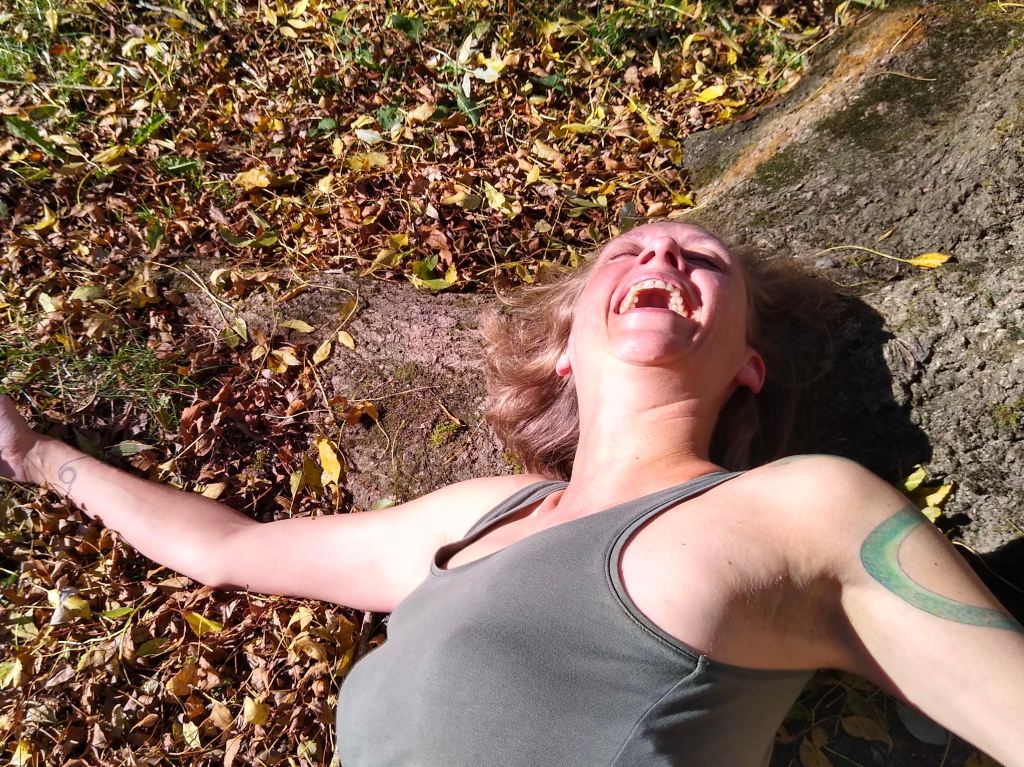
The process of fitting in and learning what is required to participate in society teaches us many useful skills such as math and language. All too often, this happens at the expense of developing expressive and intuitive abilities and trust in our unique contributions and points of view, or what I call the ‘Wild Soul’. This represents our original blueprint or essential spark that makes us into who we are.
Drawing on the well-known metaphor of the acorn that already carries the majestic fullness of the oak tree inside it, I distinguish three characteristics in the process of acorn becoming oak:
Continue reading “Oakness as a Metaphor for the Wild Soul: the Dance Between Life Force, Personality and Original Nature by Eline Kieft”Fern Hollow by Sara Wright
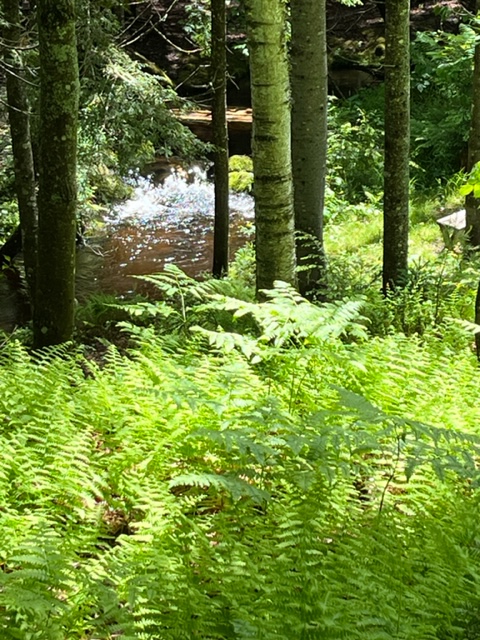
I awaken to the common yellowthroat warbler’s song. A light breeze wafts through the open window intensifying the scent of wild honeysuckle. Phoebe chimes in followed by Ovenbird, another warbler. Mama phoebe takes flight from her nest as I open the door. I peer out into emerald green – sweetly scented hay ferns define the edges of the mixed conifer and deciduous forest that overlooks a mountain brook. My home. A canopy of leafy limed branches protects the house from what will become fierce heat from the noonday star… summer is almost upon us. But not just yet. For now I am still living in the space in between. Fern hollow is an edge place, etched out of olive and jade.
Seduced by moist air, stillness and dove gray cloud cover I follow my Forest Muse wandering down to the protected field through the pines. The mountains are still shrouded in mist. Lupine spires and lemon lilies peek out above a raft of sensitive ferns. Deep blue iris startle sensitive eyes. I breathe in the intoxicating aroma of the last flowering crabapple as I examine unfurling ostrich ferns. Always the spiral. The Wild Goddess lives here. Once, just after I moved here, She rose up out of the field to embrace me, told me that I was loved… She spoke through pure feeling in that place beneath words. Now She comes to me through the trees…
Continue reading “Fern Hollow by Sara Wright”The Legacy of Carol P. Christ: WHEN THE OLYMPICS CELEBRATED THE STRENGTH OF GIRLS AND THE RENEWAL OF LIFE
This was originally posted on July 30, 2012

The first “Olympics” were races of girls of various age-groups around a 500 foot stadium in ancient Olympia. The races of girls were held every four years on the new moon of the month of Parthenios (September/October). They were dedicated to Hera Parthenos who renewed her virginity in the river Parthenias. The winners of the races wore olive crowns and feasted on the flesh of Hera’s sacred cow.
These “Olympics” for Hera and for girls came before the more celebrated Olympics for men that were dedicated to Olympian Zeus. The temple of Hera at Olympia is older than the temple for Zeus and the girls’ Olympics were tied to the more ancient lunar calendar.
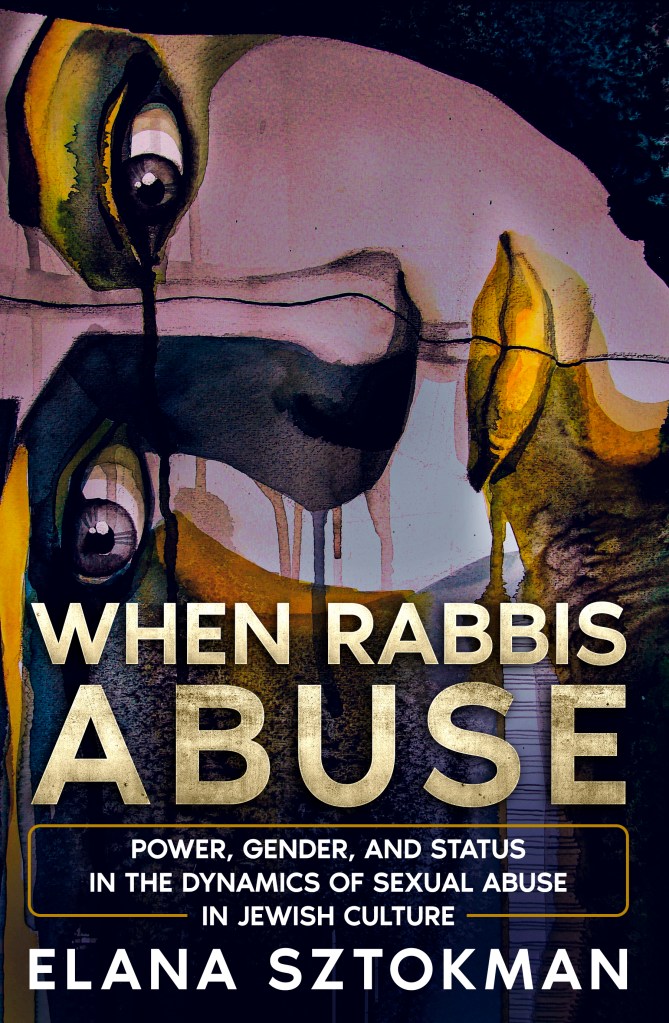
Continue reading “The Legacy of Carol P. Christ: WHEN THE OLYMPICS CELEBRATED THE STRENGTH OF GIRLS AND THE RENEWAL OF LIFE”When Rabbis Abuse: Power, Gender, and Status in the Dynamics of Sexual Abuse in Jewish Culture, Part 2 by Dr. Elana Sztokman
Moderator’s note: This is a book excerpt in 2 parts. Part 1 was posted yesterday. When Rabbis Abuse will be published on June 14th, information on ordering below.
Grooming tactics: Targeting the victim
Although there are many ways to target a victim, there is a particular type of grooming that is available to rabbinic figures and other clergy, which comes in the form of pastoral care. Many stories involve glaring examples of this—funeral, bat mitzvah class, depression, or other moments of emotional vulnerability. Often the rabbi-abuser will target people who are going through a divorce—or even worse, recovering from sexual abuse. …
Brenda, for example, says that the rabbi targeted her when she was at a very stressful time in her life and having what she described as “emotional issues”:
I was making my son’s bar mitzvah, and it was a lot of work. I was having some emotional issues because I’m more observant than my family and most of my family is pretty secular and it’s always challenging to get my family to be engaged, and I was feeling stressed and hurt because a lot of my relatives had decided not to come.
Continue reading “When Rabbis Abuse: Power, Gender, and Status in the Dynamics of Sexual Abuse in Jewish Culture, Part 2 by Dr. Elana Sztokman” Feminism and Religion