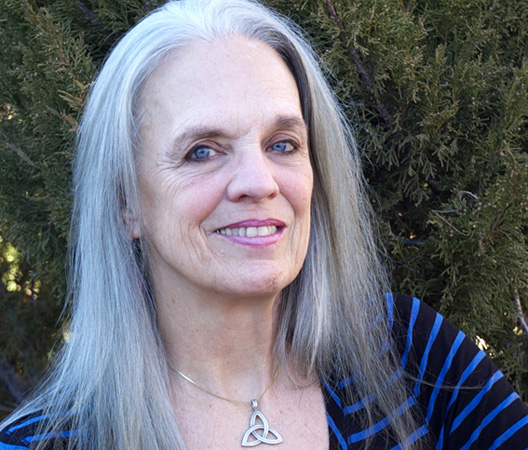
Mirroring Loss, Part 1 by Elizabeth Ann Bartlett

Strains of “In the Bleak Midwinter” have been accompanying me on my wintertime walks. Yet “bleak” is the last word I would use to describe these glorious winter days. The sparkling snow, dazzling sunshine, and deep blue of the sky against white birch branches offer solace to my soul.  Still, the carol rings true, for in this midwinter, bleakness – a sense of desolation, loss, and despair — shrouds the land.  Many dear to me have suffered tragic losses – of brothers, mothers, sisters, children, friends, partners and spouses – to cancer, suicide, alcohol, a hit-and-run driver, injury from a fall, dementia, sudden death, and sheer despair. An aggrieved world spins out tendrils of affiliated losses — of community and country, safety and security, watersheds and wild places, touch and tenderness and trust; family and faith — whether in god or humanity or the future. Thousands have lost the tangibles of jobs, shelter, savings, and physical capacity, and millions more the intangibles of dreams deferred, hopes for a nation, and belief in the basic decency of our fellow humans. And then there are the ordinary, everyday losses.  As a friend recently posted, “I am grieving. I miss Sunday breakfasts at the cafe. Live music. Dinner parties. I miss seeing people smile in the grocery aisle.”[i]  We are all suffering utter and ongoing loss.


Continue reading “Mirroring Loss, Part 1 by Elizabeth Ann Bartlett”

Passionflower: Women and Plants, and a Crown of Thorns by Sara Wright

I have always had a relationship with plants. All the women in my family were gardeners and I had my first garden when I was about four year old. But it wasn’t until mid-life that I began to sense that this woman-plant relationship might be more complicated than I realized. Blurred boundaries. Intimacy. Weavings underground. My dreams were full of vines that hugged the earth and spiraled like serpents sliding on bellies through deep green forests. I could grow plants that others could not. Was it the attention I gave plants? Love? I saw them as friends, as equals. I loved touching and caring for them.

When I saw my first passionflower blossom at a neighbor’s house I practically swooned. I fell in love with the flower and its scent. Not the generous type, I had to beg for a cutting for two whole years before this woman finally relented. Thrilled, I brought the cutting home. It was spring. I put it in water. To my joy it rooted in a few weeks warmed by the April sun, and within three months I was able to pot the cutting.

Continue reading “Passionflower: Women and Plants, and a Crown of Thorns by Sara Wright”

From the Archives: Brigid, Archetype of Inspiration and Activation by Stephanie Anderson Ladd

Moderator’s note: This marvelous FAR site has been running for 10 years and has had more than 3,600 posts in that time. There are so many treasures that have been posted in this decade that they tend to get lost in the archives. We are beginning this column so that we can all revisit some of these gems. Today’s blogpost was originally posted February 1, 2014. You can visit it here to see the original comments.

Brigid, Goddess of the Fire, greets us on Brigid’s Day, February 1. She is a Celtic sun goddess whose light burns brightly, illuminating the darkness of the land, of a heavy heart, and the dark night of our soul. With her shining light to guide us, we are lifted out of the Underworld darkness where we tend to descend in Winter, to the light of the World above, teeming with life as Spring begins to unfold her wet wings.

Brigid is a beloved goddess throughout the British Isles, particularly Ireland, where she is seen as the Mother of the Land and Her people. As a feminine archetype, she activates our solar, active nature. Much like the sun rising from below the Earth’s horizon, she urges us to come out of hiding and shine our light on the world. This may be done in a quiet manner, such as sitting by the hearthfire and doing needlework, finding inspiration by a walk in nature and writing a poem, moving about the kitchen making soup, getting busy with an art or craft project, or in big ways by taking on new roles as healers, artists, and leaders and calling others to join us.

Continue reading “From the Archives: Brigid, Archetype of Inspiration and Activation by Stephanie Anderson Ladd”

Carol P. Christ’s Legacy: Patriarchy As An Integral System of Male Dominance Created at the Intersection of the Control of Women, Private Property, and War, Part 3

Moderator’s Note: We here at FAR have been so fortunate to work along side Carol Christ for many years. She died from cancer in July, 2021. Her work continues through her non-profit foundation, the Ariadne Institute for the Study of Myth and Ritual and the Goddess Pilgrimage to Crete. To honor her legacy, as well as allow as many people as possible to read her thought-provoking and important blogs, we are pleased to offer this new column to highlight her work. We will be picking out special blogs for reposting. This blog was originally posted March 4, 2013. You can read it long with its original comments here. This is the 3rd of an important 3 part series. Carol has links to her original Part 1 and Part 2 at the bottom of the post. They are all well worth reading in their totality.

Patriarchy is a system of male dominance, rooted in the ethos of war which legitimates violence, sanctified by religious symbols, in which men dominate women through the control of female sexuality, with the intent of passing property to male heirs, and in which men who are heroes of war are told to kill men, and are permitted to rape women, to seize land and treasures, to exploit resources, and to own or otherwise dominate conquered people.

As the discussion of patriarchy* I began last week and the week before shows, patriarchy is not simply the domination of women by men. Patriarchy is an integral system in which men’s control of women’s sexuality, private property, and war (including violence, conquest, rape, and slavery) each play a part. These different elements are so intertwined that it is impossible to separate one as the cause of the others.  Patriarchy is an integral system of interlocking oppressions, enforced through violence, and legitimated by religions.

Continue reading “Carol P. Christ’s Legacy: Patriarchy As An Integral System of Male Dominance Created at the Intersection of the Control of Women, Private Property, and War, Part 3”

Sacred Food for Body and Soul by Carolyn Lee Boyd

Soon it will be Wives’ Feast Day, a holiday celebrated in Ireland and northern England on February 2, the same day as Imbolc, Candlemas, and St. Bridget’s Feast Day. On this holiday, women (in Old English, “wife” meant simply woman) would gather together and enjoy making and sharing delicious foods with each other, honoring themselves and their work providing nourishment and other aspects of making a “home.”

When you think about it, this delightful tradition is quite remarkable. Feast days are generally associated with saints, so, in a way, this feast day recognizes the sacredness of all women and also their daily labor. This echoes to me Old European cultures that connected women’s baking and weaving to divinity by placing workshops in goddess temples and associating goddesses with these tasks. Today, women work in many jobs not directly associated with food production, but still labor to make our communities and planet better “homes” in many other ways. 

Continue reading “Sacred Food for Body and Soul by Carolyn Lee Boyd”

This is What Democracy Looks Like by Marie Cartier

Tell me what democracy looks like! This is what democracy looks like!

PHOTO ESSAY: January 6th protest in support of voting rights

Governor George Deukmejian Courthouse, Long Beach, CA

January 6, 2022

Continue reading “This is What Democracy Looks Like by Marie Cartier”

From the Archives: The Way We Are Created: Eco-feminist Explorations of Bodily Hair by Tallessyn Grenfell-Lee

Moderator’s note: This marvelous FAR site has been running for 10 years and has had more than 3,600 posts in that time. There are so many treasures that have been posted in this decade that they tend to get lost in the archives. We are beginning this column so that we can all revisit some of these gems. Today’s blogpost was originally posted May 29, 2012. You can visit it here to see the original comments.

In the last few years, I’ve been thinking a lot about hair. It’s hard to avoid thinking about it when you are the greyest, hairiest woman in your suburban, north shore town.  Myself and the other two ‘all natural’ women in town stand out like beacons among a sea of smooth, streaked, glossy manes of gorgeously cut and styled hair. And each spring, I stare at my shorts and tank top a little longer before wearing them around town. I’ll be perfectly honest – I don’t blame those slaves to fashion one bit. Although I try to avoid what I call the ‘crazy witch woman’ look, there’s no getting around it – smooth legs look slick, and dye smooths out those grey frizzies and takes a good ten years off your age!

Continue reading “From the Archives: The Way We Are Created: Eco-feminist Explorations of Bodily Hair by Tallessyn Grenfell-Lee”

Andraste, Celtic War Goddess – a Non-violent Approach, by Judith Shaw

Mythology can be a helpful lens through which to view the march of history. The goddesses and gods are archetypes, illustrating the many facets of human experience for us, while at the same time lighting the path of connection between all Earth’s creatures and Earth herself – helping us understand ourselves and our place in this beautiful, yet often difficult, world of duality.  

Continue reading “Andraste, Celtic War Goddess – a Non-violent Approach, by Judith Shaw”

A New Year’s Story: La Bafena by Sara Wright

Ever since I was old enough to comprehend that New Year’s Eve represented the end of one year and the beginning of the next a holiday requiring NOISE, drunkenness, and joyful (?) merry making, I experienced a profound sense of alienation. This celebration seemed hollow and meaningless to me. As an adolescent even though I went on dates the night depressed me. As an adult I endured ignoring the whole thing.

Once I surrendered Christianity to the fire and began creating my own rituals based on the Celtic calendar I began to think of the Winter Solstice as the Turning of the Wheel into the new year, although powerful dreams that forecast the future usually came around Epiphany, the last day of the Christian/pre Christian twelve days of Christmas celebration. This celebration had roots in the deep past. This peculiar dream habit of mine baffled me and I resisted it because of its Christian overlay until this year when I finally surrendered to what my dreams had been reflecting all along. Epiphany was a day to glimpse the future. My new year begins on the night of January 6th, a day of Awakening. Apparently my dream life believes that an ancient script needs to play out with or without my cooperation.

Continue reading “A New Year’s Story: La Bafena by Sara Wright”

Carol P. Christ’s Legacy: Patriarchy as a System of Male Dominance Created at the Intersection of the Control of Women, Private Property, and War, Part 2 by Carol P. Christ

Moderator’s Note: We here at FAR have been so fortunate to work along side Carol Christ for many years. She died from cancer in July, 2021. Her work continues through her non-profit foundation, the Ariadne Institute for the Study of Myth and Ritual and the Goddess Pilgrimage to Crete. To honor her legacy, as well as allow as many people as possible to read her thought-provoking and important blogs, we are pleased to offer this new column to highlight her work. We will be picking out special blogs for reposting. This blog was originally posted February 25, 2013. You can read it long with its original comments here. It was the second in an important 3 part series. We will be posting part 3 next week (or you can read it earlier by going to the original post). Part 1 can be read here:

Patriarchy is a system of male dominance, rooted in the ethos of war which legitimates violence, sanctified by religious symbols, in which men dominate women through the control of female sexuality, with the intent of passing property to male heirs, and in which men who are heroes of war are told to kill men, and are permitted to rape women, to seize land and treasures, to exploit resources, and to own or otherwise dominate conquered people.*

In last week’s blog, I explained patriarchy as a system in which men dominate women through the control of female sexuality with the intent of passing property to male heirs. How did a system that identifies a man’s essence with his property and the ability to pass it on to sons come about? I suggest that the answer to this question is war and the confiscation of “property” by warriors in war. Patriarchy is rooted in the ethos of war which legitimates violence, and in which men who are heroes of war are told to kill men, and are permitted to rape women, seize land and treasures, to exploit resources, and to own or otherwise dominate conquered people.

Continue reading “Carol P. Christ’s Legacy: Patriarchy as a System of Male Dominance Created at the Intersection of the Control of Women, Private Property, and War, Part 2 by Carol P. Christ”