On Staying and Leaving by Katey Zeh

Katey HeadshotThe pastor couldn’t have been more than five minutes into his sermon when I starting getting antsy. I leaned over to my husband and whispered, “He needs to be careful with this.” We were visiting a new church, an experience that nearly always puts me on edge. Whenever I attend a worship service for the first time, I come prepared with my mental checklist of liturgical offenses, ready to check each one off, so I can tally them up later and justify why we need to eliminate yet another congregation from our list of possibilities.

I recognize that my attitude about church is downright terrible, and that if I want to participate in a faith community, I have to find a way to deal with this impulse to judge so quickly and fiercely. Up until that point I had been working really hard that morning not to go to that negative place in my mind. If that meant cutting the pastor some slack, then so be it. “Give him a chance,” I said to myself.

The sermon was the first in a series about church membership and was loosely inspired by the story found in both Mark and Matthew in which a man is healed of demons which Jesus casts into a herd of pigs.  When the man begs to stay with Jesus, Jesus says that he must go back to his community and share about how God had healed him. The pastor spoke about this as an example of when God calls us not to a new place, but to remain where we are. To stay put.

The pastor spoke about his own affinity for fleeing,  how almost like clockwork every four years he gets the itch to move to a new place. Speaking to a congregation of mostly young adults, he talked about the generational shift among millennials who unlike their older counterparts no longer expect to live in a single place for their entire lives, nor to work for a single employer for their entire careers. Millennials, of which I am technically a part, have grown so accustomed to upheaval and transition that fleeing has become our default mechanism for coping with boredom, conflict, and discomfort. When the going gets tough, the millennials get going…out the door.

This trend among young people is particularly alarming for institutions like the church, so it’s no wonder that a pastor preaching a sermon on church membership would focus on it. He talked about how over the last few decades our collective understanding of what it means to be a regular church attendee has shifted from showing up weekly to showing up a few times a year. To commit to a church, the pastor continued, means that we agree to show up and stay put.

Remain where you are.  Commit. 

Gazing  around the packed room I looked at all of the women, men, and children taking in his words. How many of them, I wondered, were in situations of abuse that they are trying to flee? What were these words on the virtue of staying put doing to them? Didn’t the pastor know that this was the first Sunday in October, and that it was Domestic Violence Awareness Month? I prayed a quick prayer that his words wouldn’t cause them harm.

Stay put.  Commit. 

As he continued talking, I couldn’t help but return to that my mental checklist of typical church behavior that irritates me: a white, privileged man not acknowledging his bias, referencing only biblical men, male scholars, and other male ministers. Check. Check. Check! The more he talked, the more agitated I became. But since the sermon was about staying, I stayed even though his words made me squirm. I listened even though I wanted to disengage completely. I tried my best to give him the benefit of the doubt. I waited patiently for the caveat that would surely come. But it never did.

Resist the urge to flee. Commit.On Staying

I’ve grown weary of the notion that church decline is due solely to my generation’s fear of commitment and nomadic tendencies. It’s also that we no longer subscribe to the notion that we ought to preserve the institution for the institution’s sake. As I’ve journeyed with my sisters and brothers who have made the decision to leave the church, I have witnessed their arduous struggle to break free. Sometimes leaving is a moment to be both grieved and celebrated at the same time.

Over the last few weeks I’ve had difficult, important conversations with close friends and colleagues  who are in the midst of huge transitions in their lives.  In their own ways, each of them has mustered up the strength to move on from their present circumstances, either to seek something they desperately need or to leave behind something that is sucking them dry. None of them is doing so without tremendous courage.

I know that this pastor had every good intention. In many ways his words were a much needed counterbalance to a culture that lures us into a perpetual search for “elsewhere.” But I also know that “for everything there is a season,” and there is both a time to stay and a time to leave. We must honor both.

Katey Zeh, M.Div is a strategist, writer, and educator who inspires intentional communities to create a more just, compassionate world through building connection, sacred truth telling, and striving for the common good. In 2010 Zeh launched the first and only denominationally-sponsored advocacy campaign focused on improving global reproductive health for The United Methodist Church. She has written extensively about global maternal health, family planning, and women’s sacred worth for outlets including Huffington Post, Sojourners, Religion Dispatches, Response magazine, the Good Mother Project, Mothering Matters, the Journal for Feminist Studies in Religion, and the United Methodist News Service.  Find her on Twitter at @ktzeh or on her website www.kateyzeh.com.
Not a Woman of the Cloth- an excerpt from Murder at the Rummage Sale by Elizabeth Cunningham

Elizabeth Cunningham headshot jpegWhen I finished writing The Maeve Chronicles, I returned to a mystery novel, abandoned thirty years earlier. I was finally ready to write about the small town Episcopal Church where I grew up in the 1950s and 60s and to explore the points of view of characters based on my late parents. When I began seeing through my mother’s eyes, the intensity of her suppressed fury took me by storm. Trapped in the role of minister’s wife, Anne Bradley strikes me as an embryonic feminist. In the scene below, Anne is hanging up laundry when she is approached by a pesky parishioner who makes a veiled reference to the death of Anne’s son.

*********

“Hello there, Mrs. Bradley,” Mildred Thomson said, adding some obligatory remarks about the weather. “I was hoping to find Father, I mean *Mr. Bradley in today. Do you know when he might be back?”

Anne did not. In fact, she realized she did not even know where he was. Hospital calls? A diocesan meeting? Surely she would have remembered if he’d gone all the way to New York. He had probably told her, and she had probably not listened. He was not there most of the time, or if he was, he was not available, not to her or the children. He stayed in his study in the parish house where no doubt Mrs. Thomson had hoped to ambush him.

“I’m afraid I don’t, Mrs. Thomson,” said Anne, feeling for her cigarettes in her apron pocket. Hell’s bells. She must have left them in the back hall on the shelf above the washer.

Anne turned back to the clothesline. Three children meant a lot of laundry, though in the summer the load was a little lighter, shorts and short sleeves, not so many filthy elbows and knees. There were always Gerald’s shirts. Short or long-sleeved, they had to be ironed, something she could not even contemplate till the cool of the evening.

“Did you have an appointment with him?” Anne asked, hoping the question did not sound too much like a reproof.

“No, no,” Mrs. Thomson said vaguely. “I just happened by. I suppose I ought to make an appointment. I never did with Father Roberts. He never minded my popping in.”

That was definitely a reproach. Anne felt almost sorry for her husband, almost. But it was part of his job to listen to parishioners maunder on, as much as holding services on Sunday and galvanizing his congregation to do good works in the community.

“Mrs. Bradley, may I ask you a personal question?”

Could she say no, Anne wondered? Or at least, excuse me while I get a cigarette? But Mrs. Thomson took her hesitation for consent.

“Do you ever struggle with your prayer life?”

Anne bit back a bitter laugh. She could hear it in her head, a sound a dog might make, something between a yelp and a snarl.

“I suppose you don’t,” Mrs. Thomson said wistfully.

Continue reading “Not a Woman of the Cloth- an excerpt from Murder at the Rummage Sale by Elizabeth Cunningham”

It’s Mom’s Fault by Esther Nelson

esther-nelsonMy conservative, local newspaper ran an article recently titled, “Gun Control is Not the Answer.”  The author, Jay Ambrose, is a contributing columnist employed by the Independence Institute, a libertarian think tank based in Denver, Colorado.  The group’s stated mission according to Wikipedia is “…to empower individuals and to educate citizens, legislators and opinion makers about public policies that enhance personal and economic freedom.”

As expected from the title of his article, Mr. Ambrose is against gun control.  He writes, “…any move short of the absurdity of confiscation would unlikely reduce killings.”  He cites Russia as an example, noting that Russia’s murder rate, with its strict gun restrictions, is more than twice that of the U.S.  “Guns,” he writes, “undeniably facilitate murder…[but] do not make a culture.”  He contends that “culture is a prime mover of violence.”

And then he says it!  “…one cultural circumstance ceaselessly cultivating criminal conduct in offspring is the enormous growth of single-parent–usually single-mother–homes.” Continue reading “It’s Mom’s Fault by Esther Nelson”

Invisible Giants: On Women, Mosques, and Radical Activism by Juliane Hammer

hammerAt times, being ignored, erased, and made invisible, is more hurtful than open debate and disagreement. Such silencing and marginalization render the energy, activism, and work of so many people mute and, ultimately, they do not serve the communities and society we are attempting to change. In what follows I insist on uplifting and naming some of the radical Muslim activists and advocates for gender justice I saw ignored in a recent Muslim community event.
On Labor Day weekend, the Islamic Society of North America (ISNA) met for its annual convention in Chicago. On Friday evening, in a well-attended panel, ISNA unveiled (pun intended) its latest statement and campaign on “the inclusion of women in masjids” (places of worship) and issued a call and invitation to sign the statement and implement its central demands in mosques and community centers across the United States and Canada. Panelists at the launch included Hind Makki, the creator of Side Entrance, a tumblr collecting pictures of the various (good, bad and in between) accommodations for women in mosques, and member of the ISNA task force on the issue; Dr. Ingrid Mattson, professor of Islamic studies and former president of ISNA; Imam Mohamed Magid, also a former president of ISNA; Dr. Sarah Syeed, chair of the ISNA task force and Dr. Ihsan Bagy, another member of the task force. Continue reading “Invisible Giants: On Women, Mosques, and Radical Activism by Juliane Hammer”

Translating the Self by Vibha Shetiya

VibaOne of my favourite tasks is translating works from various Indian languages into English. I developed a love for this while enrolled in a graduate seminar on translation theory. The challenge of it all was mind-boggling – how do I reduce the jaggedness of despair running within the depths of someone’s soul into two-dimensional, Times New Roman, 12-point font? How do I convey an intangible phenomenon such as a believer’s union with god without losing the intensity of his or her experience? I loved the exercises, but it is only now I realize how much the concept of translation had also been intertwined with my own fiber of being.


When I lived in India and for many years afterwards, I went by Vib-ha, the usual pronunciation of my Indian name. I didn’t realize then that I didn’t identify with Vibha. A few years ago, I reverted to the Vee-bah of my childhood, the Anglicized pronunciation. It wasn’t so much as being picky, as it was about getting involved in the search for who I really was.

Growing up in an English environment since not quite the age of two, I automatically internalized the label of Vee-bah that my teachers and friends addressed me by, along with developing a “foreign” set of ideals and sense of self. “I’m Veebah,” would be a natural extension of myself; without thinking I had adjusted the complexities of being a little brown girl into one neat word: Veebah.

But by the sixth grade something wonderful was happening. I began to literally feel more comfortable in my skin – I no longer felt like I had to hide my Indian snacks from the rest of the class. I no longer felt I had to apologize for looking different or having a weird sounding, albeit Anglicized, name. And by the time I turned twelve, my changing mind and body soon began to embrace Veebah. It was like I had finally begun to own Veebah.

A year later, however, I moved to India, the land of my birth. My parents had come back “home,” but I had just acquired newly found status of “alien.” Could years of growing up abroad simply be undone by a one-way ticket and an unsigned contract between my father and Zamefa Pvt Ltd.? It got worse as time progressed. There were too many things to deal with. I sounded different; my ideas about music and movies were different; I was too outspoken; I looked much older than I was, and worst of all, I had a certain precociousness about me when it came to the birds and the bees. By the time I was fifteen, however, I managed to figure it all out. With a bit of help from others, I smoothened myself, rough edges, “over-smartness” and all into a two-dimensional being who, in turn, was soon transformed into an echo of everyone around her. An echo called Vib-ha. I was now in India, and had to go by Vib-ha, was what I told myself. With that label, I found myself pushing Veebah more and more into the background; I smothered her with my Indian sounding name and all the Indianness I thought ought to go with it. Continue reading “Translating the Self by Vibha Shetiya”

Reform? Progress? By Elise M. Edwards

Elise EdwardsIn my class yesterday (a survey of Christian thought and practices), I was lecturing about monastic life in the Middle Ages. Among other points, I mentioned that medieval religious orders provided settings where women could be educated and assume leadership roles (primarily among other women), thinking of Hildegard of Bingen (1098-1179) who was the Abbess of a monastic community in Rupertsberg. Other women medieval writers who developed influential writings, like Mechtild of Magdeburg (ca. 1210-1282) and Catherine of Siena (1347-80), belonged to tertiaries or third orders, which were monastic community for laypersons. This part of the lesson emphasized that monastic reforms around the 12th century opened religious orders more extensively to women and laity.

Still speaking of medieval reforms, I displayed a picture of Francis of Assisi on the screen at the front of the room. I mentioned that Francis was concerned about the poor and the animals and that he has inspired some contemporary Christians, including the current pope who took Francis as his name. We talked about how both St. Francis and Pope Francis are seen as reformers.

Because earlier in my lesson I’d made a point of speaking of women’s experience, when I spoke about the Pope’s name as a possible sign of renewal or reform, Gina Messina-Dysert’s question “What about the women?” came to mind. In her recent post, she responded to the Pope’s exclusion of many issues that concern women in his address to the US Catholic Bishops. Like Gina, I applaud many of the Pope’s reforms but I am confused about how rarely he is criticized for maintaining the long-held Catholic view that disallows women to be ordained as priests.

Let me provide an example: During the Pope’s visit to the US, one of my students described Pope Francis as “very liberal.” When I interjected that he has not supported the ordination of women, the student laughed and said the pope would be accused of heresy for supporting that! While that may be true, my more immediate concern was that in a classroom of students who are mostly supportive of women in ministry, the Catholic restrictions on the priesthood were seen as a part of the tradition not worth challenging. Why is it that preserving male leadership is excused as a part of the tradition while preserving exclusive marriage practices is something to be challenged? They are interrelated.

As we know from blogs and social media sites, many people who support LGBTQ rights were upset over news stories about the Pope meeting with Kim Davis, the county clerk who was jailed for refusing to issue marriage licenses to same-sex couples. Certainly such a meeting is disturbing to same-sex marriage advocates. But is it surprising? At least one womanist ethicist I know, Eboni Marshall Turman, pointed out in a Facebook discussion that the church has long since been public in its support of male privilege and heteronormativity. My intent is not to single out Catholicism for sexist practices. When recently asked about women’s ordination and leadership in Baptist churches in my own town of Waco Texas, I had to admit that even though ordination of women is permissible and practiced in many of the churches, the number of churches that have called women to the position of senior pastor is shockingly few.

My point is this: When we find teachings in particular religious traditions that justify the exclusion of one group, we should expect to find justifications for excluding other groups, too. In the same discussion I referenced above, Eboni Marshall Turman said, ”Oppressions are compounded and intersectional. If they come for me, it is just a matter of time before they come for you. This is basic theological ethics.”

The experiences of varied groups are not the same; our oppressions and marginalizations also differ. But practices of exclusion are constructed on the same logic that values some persons (the in-group) more than others (the outsiders). Therefore, feminists have a responsibility to advance the well-being and interests of other groups (besides women) who are being marginalized.

Another reason for this advocacy is that many women are included in other marginalized groups. To ignore the intersectionality of oppression is to deny its pervasiveness and the realities of women’s lives. This is why feminists of color are often critical of white feminism. (The recent debate over the photo shoot for the movie Suffragette is a new instance of a persistent critique of white or mainstream feminism. See Rebecca Carroll’s piece on “Suffragette’s Publicity Campaign and the Politics of Erasure”).

To counter the limitations of our own experiences and be consistent in our pursuit of equality, feminists should intentionally cultivate practices of solidarity and coalition-building in our work. I, like everyone else, am often unable to see the inconsistencies in my own practices and teachings without others’ experiences to expand my view. This is one reason I value this Feminism and Religion community. Thank you for the wisdom and practices you offer from your own religious traditions and your own experiences of marginalization. You make me a better feminist through your writings and comments.

Perhaps working together, we can bring about religious reforms that our descendants will recognize in the centuries to come.

Elise M. Edwards, PhD is a Lecturer in Christian Ethics at Baylor University and a graduate of Claremont Graduate University. She is also a registered architect in the State of Florida. Her interdisciplinary work examines issues of civic engagement and how beliefs and commitments are expressed publicly. As a black feminist, she primarily focuses on cultural expressions by, for, and about women and marginalized communities. Follow her on twitter, google+ or academia.edu.

The Reaper by Natalie Weaver

elizabeth-taylorI have begun to call my mother the “Reaper,” which I understand could be to some mums sort of insulting. Images of the Reaper are typically not terribly flattering, you know, with all that sunken skin and stringy black cloth flying around. My mom looks nothing like that, by the way. In fact, she has at all stages of her life borne a striking resemblance to Elizabeth Taylor, causing many a stranger to run up to her over the years, exclaiming, “Oh my goodness, do you know who you look like?” And, let me add, often much to the consternation of those in Mom’s company, such as, well– me, for example– when I was trying to deliver my first baby and the attending nurse ignored me in order to chat with my mom about her resemblances. But, I digress here.
Mom is the Reaper because she is at that point in her life when she rather unabashedly tells it like it is, “reaps truth” as I have come to think of it. Though she may look all violet eyes and white diamonds, she is beyond mincing words.

Is this a feature of aging? I once read that the decreased estrogen and increased testosterone levels in post-menopausal women may contribute to a personality shift where women are more inclined to report on what they are thinking. This may be a factor, but I would find it likelier that many women, menopausal or not, simply get to a point when they have seen/heard/experienced/endured enough that they find little merit in putting up fronts, regardless of hormonal predisposition.

Plus, I am wildly unimpressed by some of the material out there on menopause. It seems like a lot of conflated nonsense that correlates every aspect of female sexual maturation with hormonal imbalance and impending doom. I recently read a book by an “expert” named Dr. Miriam Stoppard – great last name for a menopause specialist, right? – that actually gave medical advice alongside hints about make-up tricks, relationship management tools for your depressed mid-life spouse, and what girdles to wear to help hold up your sagging flesh.

It is interesting that “women who speak their minds” are even an object of contemporary cultural commentary at all. I mean, would there be any talk at all about males who speak their minds? Young girls who speak their minds are cast as feminists, strong-willed, scary to boys, unfeminine, and so on. Of course, the embedded androcentric assumption is that they are doing something contrary to normative female behavior. Older women who “speak their minds” are cast as rude hags and crones, spreading around their venom and disappointment, especially if they swear. This blog on post-divorce dating, kind of says it all:

Continue reading “The Reaper by Natalie Weaver”

Christa Interview with Edwina Sandys by Nettie Reynolds

NettieDuring the summer I had the opportunity to interview Edwina Sandys, the creator of the sculpture, Christa. Initially, I was drawn to this sculpture during a seminary class with Whitney Bodman – “Jesus and His Interpreters.”

I came to seminary in 2013, a 47 year old single mom with two teenage kids in tow having left a very difficult sixteen year marriage. Seeing the picture of Christa during our class was a sacred moment for me. It echoed my journey and pain and yet also uplifted the beauty inherent in human suffering and our daily gift of grace and promise of resurrection. The debate over the cross itself and its center in Christianity, its usage to elevate patriarchal power, is ongoing, but for me, in that moment, seeing Christ as female was deeply spiritual. Continue reading “Christa Interview with Edwina Sandys by Nettie Reynolds”

Drowning in the Flood of Migrants and Refugees by Ellen Boneparth

ellen boneparthOn June 22, 2015 Carol Christ translated an article on the refugee crisis in Greece for her FAR blog. I have been visiting Carol in Lesbos this September and have been observing the crisis close at hand.  This blog describes what Carol and I have witnessed and our reactions.
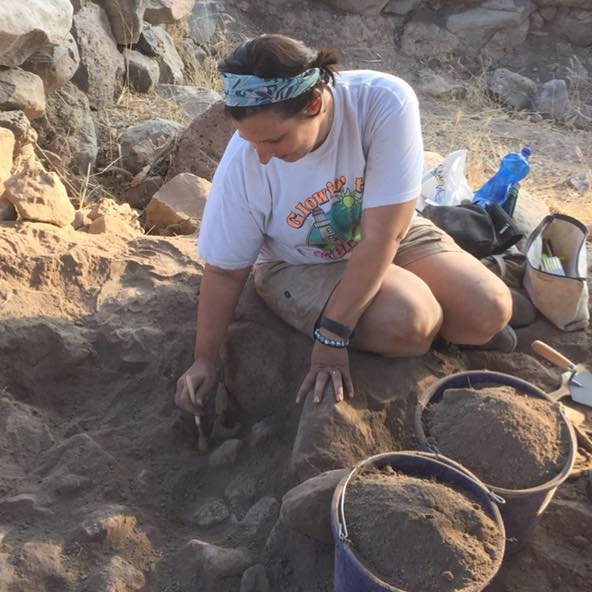
*****

It’s one thing to read about the flood of migrants and refugees to Greece and another thing to see it.

I have been in Lesbos for ten days this past September and have been stunned by the mass of humanity trying to escape war and destruction in Syria, Afghanistan, Iraq and other countries in the Middle East and Africa.

Continue reading “Drowning in the Flood of Migrants and Refugees by Ellen Boneparth”

Let My People Go! Modern Day Oppression and Exile by Michele Stopera Freyhauf

FreyhaufLet my people go!

Where is the humanity? Why are my sisters and brothers continuously subjected to persecution? Who will help and stop this madness?

I am a member of the human race. Collectively I identify with those who need help and are oppressed. I do not identify with the oppressors, for they are like Pharaoh whose heart was hardened. In identifying with this group, I will provide a label of humanity; for the oppressors do not show care or love but evil and sin towards my people – they cannot be part of this group. As my people flee the boarders from the oppressors, the world has opened their gates to let them in. The world has not turned their back on them. However the oppressors continue to mar their homeland, destroy their culture, and attempt to erase their history, their identity, their footprint on this earth. They are not oppressors but are in fact committing cultural genocide. They are committing genocide against humanity, against anyone who does not follow their ideology, their way of life.

Why should we care? Should we care? For this I say yes. My people need protection and help, but like the Israelites in the story of the Exodus, they yearn for their homeland – a place they were forcibly exiled from. They yearn for food and clean water. They yearn for safety and protection.  While you may think that my people were not forcibly exiled – they were. They fled for their own lives – for their own people, and the community’s hearts became hardened to their pleas for help.

The Syrian crisis is one that we have allowed to repeat over and over again. According to World Vision, nearly 12 million Syrians have been forced from their homes – half of which are children.  At least 7.6 million have been displaced within Syria and more than 4 million have fled the country.  Children affected by this crisis are at risk of becoming ill, malnourished, abused, or exploited.  Save the Children produced a video that shows what happens to a girl after three years of conflict:

Continue reading “Let My People Go! Modern Day Oppression and Exile by Michele Stopera Freyhauf”