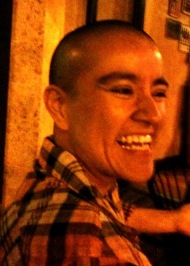
Seeing the Humanity in the Inner Child by Jameelah X. Medina

Jameelah Medina

Article 6

1. States Parties recognize that every child has the inherent right to life.
2. States Parties shall ensure to the maximum extent possible the survival and development of the child.

Article 37
States Parties shall ensure that:

(a) No child shall be subjected to torture or other cruel, inhuman or degrading treatment or punishment. Neither capital punishment nor life imprisonment without possibility of release shall be imposed for offences committed by persons below eighteen years of age;

(b) No child shall be deprived of his or her liberty unlawfully or arbitrarily. The arrest, detention or imprisonment of a child shall be in conformity with the law and shall be used only as a measure of last resort and for the shortest appropriate period of time;

(c) Every child deprived of liberty shall be treated with humanity and respect for the inherent dignity of the human person, and in a manner which takes into account the needs of persons of his or her age. In particular, every child deprived of liberty shall be separated from adults unless it is considered in the child’s best interest not to do so and shall have the right to maintain contact with his or her family through correspondence and visits, save in exceptional circumstances;

(d) Every child deprived of his or her liberty shall have the right to prompt access to legal and other appropriate assistance, as well as the right to challenge the legality of the deprivation of his or her liberty before a court or other competent, independent and impartial authority, and to a prompt decision on any such action.*

inner childIslam has taught me so many things over the years. One lesson, in particular, plays in my head throughout the day as a constant and necessary reminder: My soul has rights over my ego. I still remember the first time I read that. Over the years, I have expanded it to include the idea that my body has rights over my mind, my mind has rights over my body, and even that my inner child (she’s six) has rights over me (the 12-year old me and the adult me).

I was crushingly self-critical and dealt with devastating self-loathing for many years, but learning how to be compassionate helped me to be much kinder to others, and eventually, to myself. I had not really thought about making myself a recipient of my own kindness and compassion before. It was so natural to judge that kid in me who just wanted a chocolate chip cookie, to jump in a dirty puddle, to stick my tongue out and make faces at other little kids, and all the other odd things I felt urges to do as an adult. Continue reading “Seeing the Humanity in the Inner Child by Jameelah X. Medina”
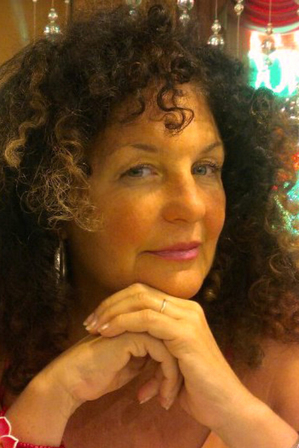
Feminist Bookstores and the Disappearance of Sacred Space by Marie Cartier

MarieCartierforKCETa-thumb-300x448-72405In my book Baby, You Are my Religion: Women, Gay Bars, and Theology Before Stonewall I talked about the importance of the gay women’s bar (and gay men’s bar) as sacred space for pre-Stonewall homosexuals—how the community space of the gay bar was the only public space for pre-Stonewall homosexuals and how it galvanized and concretized a community that had no other way of connecting. It was “home.”

I was so fortunate to do two readings and signings for People Called Women, the feminist bookstore from Toledo, Ohio — and Ohio’s only feminist bookstore — when they brought their “traveling bookstore” which goes to feminist events (they also have their mortar and brick store in Ohio J which I was thrilled to visit) to Michigan Womyn’s Music Festival last week. I was thrilled that we were able to sell out of all the copies of my book that People Called Women brought “to the land” (Michfest). I was thrilled that so many women showed up to our event, told stories about early bar life, cried, shared hugs and created community — and bought books. It felt radical and “old school” feminist. It felt like something I have missed – that connection with a feminist bookstore–for Los Angeles lost our women’s bookstore in 1999 —15 years ago.

people called women- front of store
Marie Cartier w/ Gina Mercurio, owner of People Called Women, Photo by: Megan Morris

For many of us who came of age post-Stonewall in the mid 70s, 80s and late 90s, the gay women’s bookstores—or rather feminist bookstores — were these sacred “home” spaces. They were our “alternate church,” as I so label the pre-Stonewall bars.

I “came out” as a lesbian and as a feminist — in 1979. One of the first places I visited was New Words Bookstore in Cambridge, MA. New Words really did feel like that—“new words,” like parting the curtain onto a brand new world where I had access to language that finally made sense—a new way of communicating—that is what feminism felt like — like being able to talk and be heard and understood for the very first time. Continue reading “Feminist Bookstores and the Disappearance of Sacred Space by Marie Cartier”

Anger is Not a Panacea: The “Next Stage” after Rage by Carol P. Christ

carol mitzi sarahIn a recent post Xochitl Alvizo cited Beverly Harrison’s much-loved essay “Anger as a Work of Love.” Harrison captured feelings that were in the air at the time of its writing several decades ago. Women were laying claim to the right to be angry at the silencing of our voices, the double standard, the media portrayal of women, income inequality, lack of access to good jobs, failure to prosecute rape and domestic violence, and a host of other injustices.

Most of all we were protesting the cultural stereotype that the “good woman” (understood to be white, Christian, and married or hoping to be) would not protest loudly or at all, would turn the other cheek, and would think about others rather than herself. (Jewish women and black women had to strive doubly hard to “live up” to this standard, as it was assumed that Jewish women were “overly assertive” and that black women were “too strong” and often “angry.”)

In this context Harrison’s essay and Mary Daly’s epithet “rage is not a stage” gave women—especially white women–permission to get in touch with our feelings of anger and to express them. We understood that “good women” had been hiding and repressing their feelings for centuries if not millennia with the result that the structures of injustice remained intact. Continue reading “Anger is Not a Panacea: The “Next Stage” after Rage by Carol P. Christ”

Coming to Consciousness: Eckhart Tolle and Yoga by Elisabeth Schilling

roadBoth Eckhart Tolle and yoga have helped me become more conscious lately. As a Christian, I had always been a bit of a spiritual hypochondriac. Believing in the ultimate external body that had an opinion about my body – how it should feel, how it should be positioned – left me self-doubting and scrutinizing every moment for possible infractions. Christianity is supposed to be the peace that passes all understanding, but I think I had turned it into a moral gage that would never land on perfect for very long.

Furthermore, it was always difficult for me to believe what I was supposed to without being filled with ego about it. But let us face it, as someone who had journeyed outside those fundamentalist leanings, I was still a hypochondriac (it was simply that grad school had given me more physical conditions to be suspicious of) and completely full of ego, perhaps even more so. Except here I mean ‘ego’ not in a reductive way, but in the broader, more all-encompassing way that Eckhart Tolle describes.

One good way to explain ego is to relate the story that is found in Eckhart Tolle’s A New Earth but that I first encountered in Yu Dan’s Confucius from the Heart: Ancient Wisdom for Today’s World. This makes me think it is a familiar story to many people, but perhaps even those people will enjoy reading it here once again. Dan narrates the story as such who also tells us it is a Buddhist tale: Continue reading “Coming to Consciousness: Eckhart Tolle and Yoga by Elisabeth Schilling”

Systemic Violence and the Killing of Michael Brown by Xochitl Alvizo


Xochitl
Photo by Chris Pinkham

Oppression is systemic. Injustice is systemic. It pervades the whole – it seeps into everyday actions and becomes habits and patterns that function as default. As a result, the actions that fall within these patterns hardly need justifying. If anything, the questioning of them is what is put on the defensive. And those who stand against injustice must usually do so in the face of militarized policing, before vast forces that serve to preserve the status quo.

I can’t help but see the similarities between the everyday existence of young black men, of boys in this country, and that of women. The lack of safety in public places; the need to always be aware of one’s surroundings; the lack of trust in the intentions of another; living with the knowledge that people like you experience violence at much higher rates than others. It is a racist, violent, patriarchal world we live in. And, yes, it is also other things, good and beautiful things, but sometimes the hard reality of everyday life blocks out that light. Continue reading “Systemic Violence and the Killing of Michael Brown by Xochitl Alvizo”

A Radical Conclusion: We Are Our Own Authorities by Carol P. Christ

Carol Christ in LesbosElisabeth Schussler Fiorenza articulated a widely held tenet of feminist theology when she stated that feminism places a question mark over all inherited texts and traditions. This means that feminists cannot and must not accept any teaching or traditional way of performing religious acts simply because “the Bible [or the Koran or the minister or the priest or the rabbi or the imam or the guru] tells me so.”

Instead, feminists must question every text and tradition and the words of every religious leader to see whether or not they promote the full humanity of women. The implication of this is that we must acknowledge and take responsibility for becoming our own authorities—as individuals and in communities.

A tongue –in-cheek letter that began circulating on the internet in 2000 under the title “Why Can’t I Own a Canadian?” makes the point that even those who claim to be adhering to every “jot and tittle” of the Holy Book are in fact choosing to accept some aspects of tradition while rejecting others. Continue reading “A Radical Conclusion: We Are Our Own Authorities by Carol P. Christ”

Woman – The Essential Other by Natalie Weaver

Natalie Weaver editedI am writing from Oxford, England, where I am privileged to be staying this summer while attending an institute on the theme of “Otherness” in medieval Judaism.  Our readings have focused on a variety of topics, including: the development of Christian anti-Jewish polemics; the development of Jewish anti-Christian polemics; the development of medieval Christian visual representations of Jews; and the European medieval expulsions of Jews.  The well-planned program, sponsored by the National Endowment for the Humanities, has been illuminating for all – speakers and participants alike, I think.  It has also been, at least for me, an occasion of intellectual sadness.  It is not that I am surprised by how ugly polemics, pictures, and history can be.  It is that I feel myself coming to a deeper appreciation of the dangerous power dynamics in religion, driven by political and economic aims, that strike me as the underlying cause of practical conflict, yet cloaked as principally theological tensions.

If it were not manifestly obvious that procurement and retention of resources, goods, and position drive personal/familial commitments and tribalistic frameworks for meaning and ultimacy, one of the clues – at least for me – has been the repetition of charges and accusations across polemical perspectives.  And, what is more, one unmistakable commonality in the charges and indictments seems to be the accusation of effeminacy.  This accusation need not be directly stated, such as, “Your people think like women,” or the like.  It comes across in the overlap, speaking specifically concerning Christian writings, between discussions of women and discussions of Jews.  The phenomenon, though, is not unilaterally Christian.  Continue reading “Woman – The Essential Other by Natalie Weaver”

Postcolonial Feminist Theology and… Deep Space Nine by Sara Frykenberg

Sara FrykenbergIt’s no secret here that I am a big fan of science-fiction and fantasy. Discussing the NASA Space Program, the shuttle Curiosityvideo gaming and cosplay is fun for me, and I assert that there is transformative and hopeful potential in these kinds of imaginative fictions. I also find that when done well, science fiction offers soci-political critique and encourages us to critically engage our own world without (no pun intended) alienating some part of its audience completely, as many political debates are apt to do. For example, I use a clip from Star Trek: Deep Space Nine (DS9) in my ethics classes to discuss issues of motivation, intention and end result–as these concepts relate to war and violence. (The clip is from the episode In the Pale Moonlight, and you can see it here.) Episodes like this one can be used to refigure issues we struggle with today, projecting them into a future struggle from which we can draw comparisons to our own time.

Recently I have been reading Kwok Pui-lan’s book Postcolonial Imagination & Feminist Theology; at the same time, I have been re-watching some episodes of DS9. Powerfully addressing the ways in which Western theology helps to reinscribe colonial ideology and practice, Pui-lan argues for (and exemplifies) the creation of new, emancipatory, postcolonial feminist theological discourses. Reading these “texts” together, I was struck with how powerfully DS9 illustrates many of the postcolonial politics and tensions Kwok Pui-lan considers in her book. She describes a “contact zone” as “the space of colonial encounters where people of different geographical and historical backgrounds are brought into contact with each other, usually shaped by inequality and conflictual relations.”[i] DS9 explores this place of contact, imagining how the different parties involved are changed by the encounter. Continue reading “Postcolonial Feminist Theology and… Deep Space Nine by Sara Frykenberg”

Transcendence, Immanence, and the Sixth Great Extinction by Carol P. Christ

carol christIn my recent blog “The Flourishing of Life and Feminist Theology” I discussed Grace Jantzen’s view that theology should focus on “natality” or birth and life, rather than life after death or life apart from this world. This week Tikkun magazine published its summer issue with a feature called “Thinking Anew about God.” In it two male thinkers, one Buddhist and one Christian, argue for a similar turn toward the world in their traditions. Their calls for religions to focus on this world were published the same week scientists warned that the world stands on the brink of the sixth great extinction.

I have come to believe that any religion espousing cosmological dualism (devaluing this world in favor of a superior reality such as heaven) and individual salvation (the idea that what ultimately happens to me is disconnected from what ultimately happens to you) is contributing to our world’s problems rather than offering a solution. … [Religions should] stop emphasizing the hereafter and focus instead on how to overcome the illusion that we are separate from this precious, endangered earth. –David Loy, Buddhist, writing in Tikkun Summer 2014

My aim in this regard is to reawaken in each of us an emotionally felt and primordial sense of spiritual belonging within the wider natural world. In turn, my hope is that this deep sense of belonging to the earth — to God’s body, as it were — will en-flame our hearts and empower our wills to commit us to healing and saving the earth.—Mark I. Wallace, Christian, writing in Tikkun Summer 2014 Continue reading “Transcendence, Immanence, and the Sixth Great Extinction by Carol P. Christ”

Uppity Women Unite by Barbara Ardinger

Barbara ArdingerI have a poster on my wall: UPPITY WOMEN UNITE. In big, red, capital letters. I don’t remember where I got this poster, but I know I’ve had it since the late 70s or early 80s. I’m sure it comes from the raggedy late 60s, when second-wave feminism got up a head of steam and uppity women began getting our attention. That’s when Betty Friedan said being a proper 50s housewife was like having a mental illness. It’s when Gloria Steinem founded Ms. Magazine, which (oh, horrors!) did not give us recipes or home-making tips and did not tell us how to dress to lure our men into bed. It’s when Mary Daly started giving us a whole new, original take on the English language. Ahhh, yes, those were the good ol’ days. And the bad ol’ days, too, when the Equal Rights Amendment was not ratified.

“Uppity” can be a troublesome word. In the olden days, if someone called you uppity, it means you were inferior to them and weren’t staying in what they thought was your proper place. If you were a black person, for example, and if you didn’t step off the sidewalk when white men were coming, you were uppity. If you were a woman who wanted equal pay for doing the same work a man did, you were uppity. Those women in the 1980 movie, 9 to 5, were majorly uppity. And they won the battle.

Uppity women didn’t stay in the kitchen or the bedroom. They used—oh, horrors—the Pill. They marched to Take Back the Night. They got up on stage and played their own drums and guitars and didn’t sing like proper ladies should. They shouted. And they got into politics. Bella Abzug said that a woman’s place is in the House. Shirley Chisolm became the first black female member of congress in 1968 and in 1972 ran for president. (And I voted for her.)

B292_UppityWomenUnite_0

The English teacher in me wants to get in a word or two here. Look at the phrase “uppity women unite.” It might be a front page headline that says strong women who won’t stay on the bottom are getting together. Or maybe it’s a simple declarative sentence. But add punctuation and we get more punch. “Uppity women, unite.” Now the verb is imperative. We must unite. Let’s make it stronger: “Uppity women—unite!” Now it’s a command.

So, uppity sisters, and uppity brothers, too, you know how to multitask. Push the on button in your corpus callosum and let your imagination run while you read this. Let’s consider what the planet might look like if we had equal rights (and rites) in all things. Please understand that I’m not saying women should be the ones on top. I’m not talking about “power over,” but about what Starhawk calls “power with.” That’s shared power, which leads to shared magic.

Points of lightImagine yourself as one of a huge crowd of flying people joined as points of light above the earth. Float peacefully up there for a few minutes. Think about the power of people joined together, the energy of people working together. Now let’s get down to earth. Floaty energy is fun, but it doesn’t get much done. Imagine yourself as a member of a group with a goal. Touch down. Stand on the earth and consider the fact that everything on the planet is alive—not just people and animals and plants, but rocks, too. Even things we constructed have some life force. Embrace panentheism for a little while. Now here’s something to do: Find a church that doesn’t accept uppity women or uppity brothers. You’re united. As united, uppity people, go to that church and stand in a circle around it. Send friendly but firm energy into that church so that, even if a whole denomination or religion won’t change right now, that individual church might change. The next time you go to that church, radiate the same energy when you go inside.

You can also find a church that appreciates uppity folks. Send grateful energy to the church and all the people in it.

UPPITY WOMEN UNITE. If enough of us uppity women and our uppity brothers get together, we will eventually build up to a critical mass. A critical mass can lead to an explosion. I’d prefer to see a spiritual, peaceful explosion. What do you want to see?


Barbara Ardinger, Ph.D. (www.barbaraardinger.com), is a published author and freelance editor. Her newest book is Secret Lives, a novel about grandmothers who do magic.  Her earlier nonfiction books include the daybook Pagan Every Day, Finding New Goddesses (a pun-filled parody of goddess encyclopedias), and Goddess Meditations.  When she can get away from the computer, she goes to the theater as often as possible—she loves musical theater and movies in which people sing and dance. She is also an active CERT (Community Emergency Rescue Team) volunteer and a member (and occasional secretary pro-tem) of a neighborhood organization that focuses on code enforcement and safety for citizens. She has been an AIDS emotional support volunteer and a literacy volunteer. She is an active member of the neopagan community and is well known for the rituals she creates and leads.