

“Perhaps it shouldn’t be surprising that a high tolerance for ambiguity, ambivalence, and a tendency to think in opposites are characteristics researchers have found common among creative people in many different fields. But professional creators… come to understand that in order to be creative, they need to give themselves to sensations of ‘knowing but not knowing,’ inadequacy, uncertainty, awkwardness, awe, joy, horror, being out of control, and appreciating the nonlinear, metamorphosing features of reality and their own thought processes — the many faces of creative chaos.”
– John Briggs and F. David Peat, Seven Life Lessons of Chaos
 As someone whose interfaith, nature-based spirituality regularly draws inspiration from science, I experienced my recent read of the book Seven Life Lessons of Chaos as both an affirmation and a challenge. Throughout the book, one theme emerged over and over, each time in a different context: the creative impulse – that which generates nature and space, planets and stars, love and rage – emerges from within the tension of opposites.
Creation doesn’t burst forth from one opposite overtaking another, but rather as the direct outcome of the unending push-pull swirl of outward and inward, boldness and fear, light and dark. Living in creative authenticity regularly leaves me stewing in a mix of often-contradictory feelings, and while it’s easy for me to revel in my confidence when I’m feeling bold or in my wordy wit when I’m feeling brilliant, it’s far more difficult for me to sit with wonder in times when I feel rejected, unlovable, unaccomplished, insecure, or ugly. My inner dialogue frequently finds me alternating between the opposites that pull at my heart, mind, and way of being in the world.
Really, this is where many of us often find ourselves – be smart but not too intelligent, be beautiful but not vain, be sexy but not sexual. Madonna-whore, virgin-slut – choose a side, but know that once you do you will be judged. We are asked to choose between equally restrictive and caricatured forms that have been pre-fabricated for us by years of cultural control and legal oppression – forms that emphasize who we are in relationship to others, to men, and to our religious laws, rather than honoring who we are to ourselves, to our gods, and in our chaotic brilliance. Continue reading “The Tension of Opposites: Love, Chaos, & the Wild Vortex by Chris Ash”
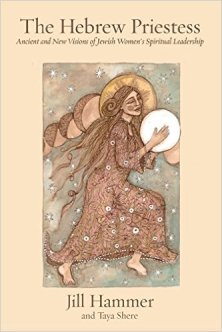 Weaver,
 On August 20, Alexandra Dyer, a Roman Catholic WomanPriest was the victim of a targeted acid attack to her face. Dyer had just left a meeting at
  Feminism and Religion