The Lost Is Found by Carol P. Christ

Since I wrote “Claiming the Power to Choose to Our Lovers” and “Choosing to End Love” in the spring, my beloved and I came back together and parted again, not once, but twice.  At the end of the summer, believing our separation to be final, I decided to drop a miniature copy of the Minoan bee pendant, symbol of my desire to “let go of a beautiful dream,” into a crevice in the Skoteino Cave while on the Goddess Pilgrimage to Crete.

I don’t believe in divine intervention, but something happened to stop me. The day before the ritual, the pendant disappeared. It was not in my jewelry case, not in my handbag, not anywhere in my suitcase or my hotel room: it was nowhere to be found. That same day I received a gift of a large jar of honey from a local shopkeeper. In the end, I dropped a sugar-coated almond into the crevice and poured every bit of the honey onto the altar of the cave, asking for transformation and love. Continue reading “The Lost Is Found by Carol P. Christ”

The Santa Goddess from The Goddess Project: Made in Her Image by Colette Numajiri

Frau Holda Poem

Hail to Frau Holda, the beautiful and bright,
Crowned and clothed, all in glistening Winter white.
Ay seeking and searching, She sweeps o’er the land,
Scourge for the slovenly, held firmly in hand.
As Holda fares forth, with Her own Holy Host,
May She deem distaffs full, befitting a Yule boast.
For when all is cleanly, content She shall be,
Thus Her bedding she flaps, with a whirlwind flurry.
Soon crisp snowflakes, come falling feather light,
Cleverly She shakes, cloaking the clutter with white.
‘Til Earth is enclosed, by a fine fluffy down,
A bedecked beauty, in Her sparkling snow gown.
Heed well and hear, when Holda’s housework doth end,
A faint satisfied sigh, for the mess Frau did mend.
© Rhonda Turner


Once I became a mother I found the demands as well as my own expectations for holiday gifting, decor and celebrations to be SO taxing that I quickly felt a bit of resentment toward Santa Claus for getting all of the credit. Now I tell my children that Santa Goddess is posing as homekeeping MRS. CLAUSE and that SHE and the elves do all of the work, and that “Santa” is merely their courier. Engulfed in modern society, I don’t think my young children hear me as they still dance with glee at any mention of Santa Claus.

Continue reading “The Santa Goddess from The Goddess Project: Made in Her Image by Colette Numajiri”

The Gifts of Life: Do We Remember? by Carol P. Christ

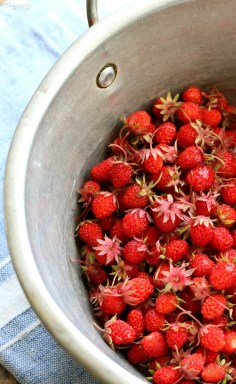
Strawberries shaped my view of a world full of gifts simply scattered at your feet. A gift comes to you through no action of your own, free, having moved toward you without your beckoning. It is not a reward, you cannot earn it, or call it to you, or even deserve it. And yet it appears.
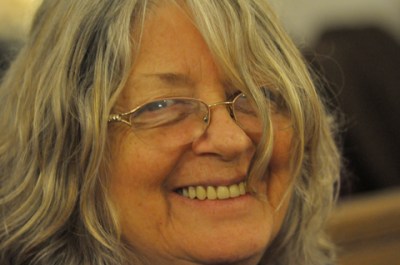
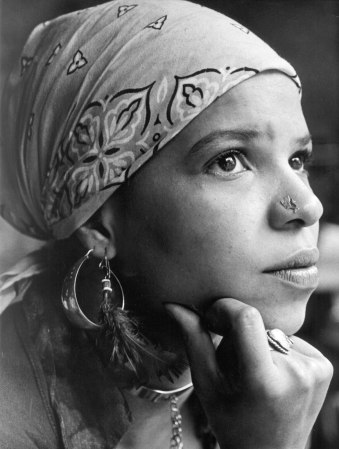
Sweetgrass belongs to Mother Earth. Sweetgrass pickers collect properly and respectfully, for their own use and the needs of their community. They return a gift to the earth.

That is the fundamental nature of gifts: they move, and their value increases with their passage. The fields made a gift of berries to us and we made a gift of them to our father. The more something is shared, the greater its value becomes. This is hard to grasp for societies steeped in notions of private property, where others are, by definition, excluded from sharing.

The essence of a gift is that it creates a set of relationships. The currency of a gift economy is, at its root, reciprocity.

Robin Wall Kimmerer, Braiding Sweetgrass, 27-28

Thanksgiving has come and gone. We gave thanks for the food placed on the table and for the family or friends who shared it with us.

In our culture giving thanks can feel forced: I remember how my brothers and cousins and I hated to be asked to say grace at Grandma’s house. When we have not been taught, it can be difficult for us to understand that nothing is ours by right. Continue reading “The Gifts of Life: Do We Remember? by Carol P. Christ”

My Original Uncultured Mother by Deanne Quarrie

Deanne Quarrie

In the earliest of times, I believe humans did not see themselves as separate from all that was around them.  All of life was interdependent.  I see this in my own practice today.  When we are born, we are born to a mother.  Our lives are solely dependent on her for survival.  We are birthed by her, nourished by her, protected by her, and sometimes forced out to experience on our own, by her.  She is at first, our own Original Uncultured Mother.  Once we move from her shelter, we begin to experience our world in the same way, looking not only for what nourishes, what protects and what shelters, but also for what we need to be mindful of for our own safety, those forces far out of our control.  Those forces, which were uncontrollable, the ancients held in high esteem, and honored with reverence.

Continue reading “My Original Uncultured Mother by Deanne Quarrie”

Let Us Proclaim the God Who Bleeds Now by Carol P. Christ

we need a god who bleeds now

we need a god who bleeds now
a god whose wounds are not
some small male vengeance
some pitiful concession to humility
a desert swept with dryin marrow in honor of the lord

we need a god who bleeds
spreads her lunar vulva & showers us in shades of scarlet
thick & warm like the breath of her
our mothers tearing to let us in
this place breaks open
like our mothers bleeding
the planet is heaving mourning our ignorance
the moon tugs the seas
to hold her/to hold her
embrace swelling hills/i am
not wounded i am bleeding to life

we need a god who bleeds now
whose wounds are not the end of anything

–Ntozake Shange

Continue reading “Let Us Proclaim the God Who Bleeds Now by Carol P. Christ”

Women’s Ritual Dances and the Nine Touchstones of Goddess Spirituality-Part Three by Laura Shannon

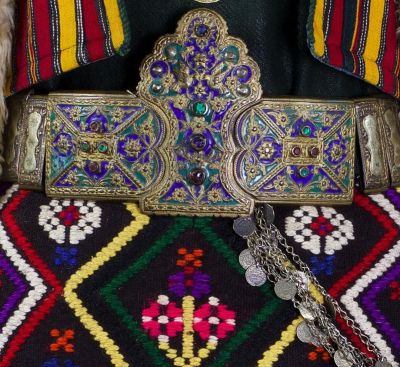
Women’s apron from Pentalofos, Greek Thrace

In Rebirth of the Goddess, Carol P Christ offered Nine Touchstones of Goddess Spirituality as an alternative to the Ten Commandments. The Nine Touchstones are intended to inform all our relationships, whether personal, communal, social, or political.[1] In this series of blogs I am exploring ways in which these Nine Touchstones are embodied in the traditional women’s ritual dances of the Balkans, which I have studied as a spiritual practice for more than thirty years.

Carol P Christ’s Second Touchstone is: ‘Walk in love and beauty.’ As she says, ‘love and beauty are the great gifts of bounteous earth’.[2] Dancing women of the Balkans walk in love and beauty each time they put on their festive dress to dance together in the courtyard or the village square. Their ceremonial costumes are created from the bounty of the earth – just a couple of generations ago, this was literally the case, as the women tended the sheep, prepared and spun the wool, wove, sewed, embroidered and ornamented their garments with the work of their own hands. Even now, the cloth they buy is purchased with money they have earned from working and harvesting the land.

Continue reading “Women’s Ritual Dances and the Nine Touchstones of Goddess Spirituality-Part Three by Laura Shannon”

Women’s Ritual Dances and the Nine Touchstones of Goddess Spirituality-Part Two by Laura Shannon

In the first part of this article, I looked at how Carol P Christ’s Nine Touchstones of Goddess Spirituality from Rebirth of the Goddess are related to traditional women’s ritual dances of the Balkans. After more than thirty years of researching and teaching these dances and the way that they pass on information in encoded symbolic ways, I have come to see them as an educational system, a women’s mystery school.[1] The main message which the dances convey is an ethic of community, partnership, mutual support, and other life-enhancing values aligned with the Nine Touchstones, which can be directly experienced in the dance.

We know from the research of Marija Gimbutas that these values were central to the Old European civilizations which honoured the Goddess, while Yosef Garfinkel and Elizabeth Wayland Barber show that circle dances have their roots in these same early Neolithic cultures of Eastern Europe and the Near East. This leads me to suggest that Balkan women’s circle dances surviving today may have their origin in early egalitarian matriarchal cultures of Neolithic Europe. The Nine Touchstones of Goddess Spirituality provide an perfect template through which to explore the ethics of women’s ritual dances.

Continue reading “Women’s Ritual Dances and the Nine Touchstones of Goddess Spirituality-Part Two by Laura Shannon”

Challenging Christian Feminists to Re-Imagine the Goddess by Carol P. Christ

From the 1993 Re-Imagining Conference:

Our mother Sophia, we are women in your image:
With the hot blood of our wombs we give form to new life.
With the courage of our convictions we pour out our life blood for justice.
Sophia-God, Creator-God
let your milk and honey pour out,
showering us with your nourishment.

From my reflections on the Re-Imagining Conference presented at Hamline University on Novemeber 1, 2018:

One reason the creative re-imagining of God as female has not taken hold in churches and synagogues is fear of paganism and the Goddess. The creators of the Re-Imagining Sophia ritual took great care to guard against this charge by connecting it to Bible and tradition. Commenting on the reasons for the backlash against the Re-Imaging Conference, Sylvia Thorson-Smith stated:

One was the liturgical use of the biblical image of Sophia – but blown up as evidence of Goddess worship. Second was the milk and honey ritual – an ancient part of early Christianity, but attacked as a pagan substitute for communion.

While I understand her reasons for doing so, “the lady doth protest too much, methinks.” Continue reading “Challenging Christian Feminists to Re-Imagine the Goddess by Carol P. Christ”

When the Gods Retire by Barbara Ardinger

Come with me in your imagination to an old land, a Demi-Olympus, a fabled and possibly invented land to the north of Mount Olympus, home and throne of the fabled Olympian gods. It is to this Other Olympus that the gods have retired. Now they reside in the Divine Rest Home whose proprietor is a black goddess. Not African black, She is as black as space, and if we look closely at Her, we can see galaxies and constellations and comets in Her. She is the Ur-Goddess, the Divine Creatrix, eldest of all, and She answers to the name Mama. (Note: many years ago, I actually saw this goddess after an all-day asthma attack that nearly killed me. She was in the ER with me.)

Helping Mama run the Divine Rest Home are Gaea, the mother of all life, and the Titans and Titanesses, who are older than all the gods who have come to the Divine Rest Home to…well…rest. The Titans and Titanesses held numerous important stations in the primeval universe and should probably retire, too, but they just keep going. That’s probably a good thing, as most of the retired gods need a great deal of attention.

Continue reading “When the Gods Retire by Barbara Ardinger”

Women’s Ritual Dances and the Nine Touchstones of Goddess Spirituality-Part One by by Laura Shannon

In Rebirth of the Goddess, feminist theologian Carol P Christ offered a list of ‘Nine Touchstones of Goddess Spirituality’.[1] She revisited the Nine Touchstones in an interview with Karen Tate on Voices of the Sacred Feminine titled ‘Gratitude and Sharing: Principles of Goddess Spirituality‘, and in an inspiring series of blogs on this site recently exploring each touchstone in depth.

In her incisive analysis of the ethics of Goddess religion, Christ argues that Goddess spirituality can offer the ‘ethical guidance that we need to combat the forces of evil in our world’, and that this ethic is not imposed from a set of rational principles nor from a transcendent God known through the prophetic traditions of the Bible, as suggested by Rosemary Radford Ruether.[2] Rather, the ethics of Goddess spirituality are discerned through intuition and reflection on the world of which human beings are a part.[3]

Continue reading “Women’s Ritual Dances and the Nine Touchstones of Goddess Spirituality-Part One by by Laura Shannon”