

 I have been asked to post my contribution to the Parliament of World Religions Webinar: Dignity of Women Across World’s Wisdom.
I am participating in this discussion as a representative of women who are on a Goddess path. I do not represent any established or newly formed religious or spiritual tradition. Rather I speak for an increasingly large number of women who are seeking alternatives to established traditions that celebrate and legitimate male power as power over or domination. We do not follow leaders or gurus and we place no trust in any sacred texts.
Most of us have grown up in cultures where the most prominent religious traditions feature male Gods, male teachers, and male religious leaders. We agree with Mary Daly who said that when God is male the male is God. In traditions where God is male, male teachers and religious leaders are viewed as reflecting or being in the image of the male divinity. We do not assume that images of God as male are never valid, but we do assert the need for images of God as female.
As I said in my often re-published essay, “Why Women Need the Goddess,” the most important meaning conveyed by the symbol of Goddess as the ultimate creative power in the universe is that female power is legitimate and good. This does not mean that female power is always good, but it clearly undermines the widely held view that female power exercised apart from male control is always evil or bad. This view is reinforced by images of women as evil in religious traditions, for example, Eve seduced by the snake. Continue reading “Dignity of Women Across the World’s Wisdom: Parliament of World Religions Webinar by Carol P. Christ”
 I have been facilitating women’s circles in Europe since 2006. This has involved years of deep, challenging, thankful, and fun teaching and learning. During that time, I have collaborated with different facilitators in the fields of art and spirituality and connected with different cultures, experiences that have reinforced a vision of SISTERHOOD.
 In “
In “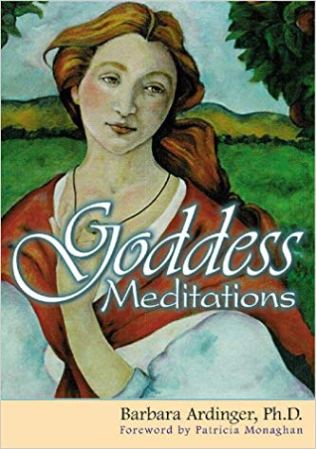
 Sixteen years ago, I was living alone in New Orleans in a lovely Craftsman’s Cottage I’d purchased the year before. In late December—just around now—a friend called to tell me about a kitten she’d seen at her Uptown veterinary office: “It’s time you got a familiar,” she declared. “I think this one’s perfect for you.” Grudgingly, I agreed to visit the vet’s office and take a look at the little black-and-white female tabby she’d seen. I wasn’t at all sure I was ready, but Mary was my priestess, the leader of our small coven, and I trusted her implicitly.

