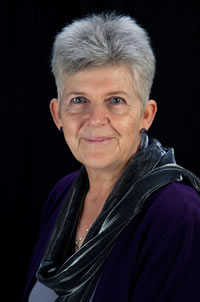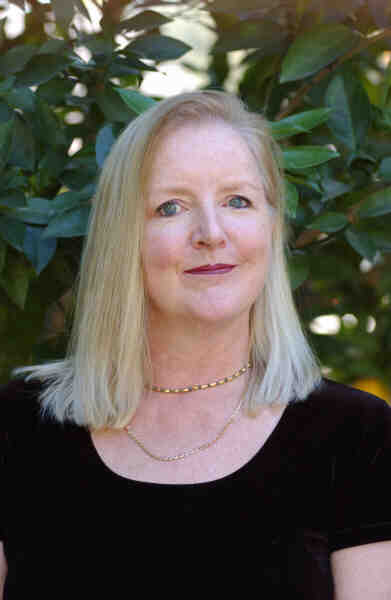
Embody the Sacred – Engaging Through the Senses by Deanne Quarrie

The human body is designed to utilize all senses. We, human beings, have drifted away from our natural state through which, at one time, we engaged with all of life through our natural senses, including the intuitive.  This change has come about through our active, stress filled lives in which we seldom slow down to even appreciate what is around us.  We have ignored much of our sensory ability due to a change-over from right brain functioning, which is more imaginative, creative and intuitive, to left brain functioning, which is linear and analytical. Two of our senses are developed out of proportion to the others.  Many people grow up in an environment lacking in exposure to the natural world.  With television, computers and video games we have become residents of an indoor and often sedentary world.

In early civilization, humans and all other animals depended on finely tuned sensory awareness for survival.  We walked the Earth, using those senses for protection, to find food and to move around.  We did not just see and hear our way around but we felt, touched, tasted and smelled in order to survive. Continue reading “Embody the Sacred – Engaging Through the Senses by Deanne Quarrie”

Inspiration by Jassy Watson

Jassy_Agora1-150x150This “Mountain Mother” painting is an ode to women’s earth wisdom and is my prayer for reclaiming of that wisdom to heal the earth and all her beings.
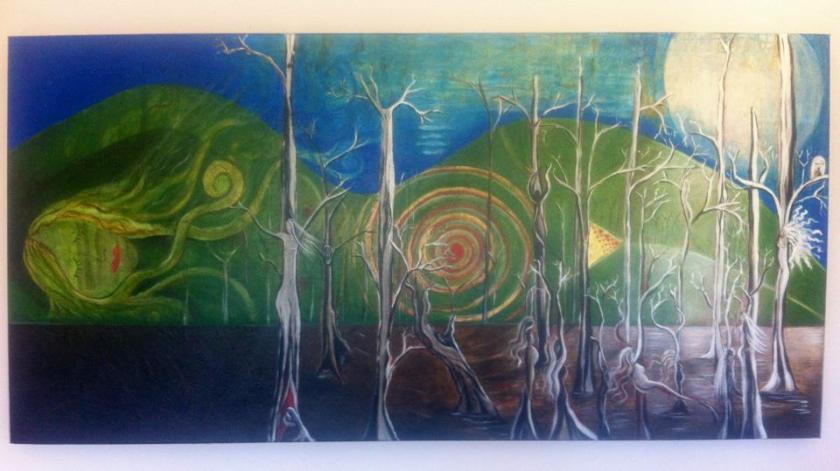
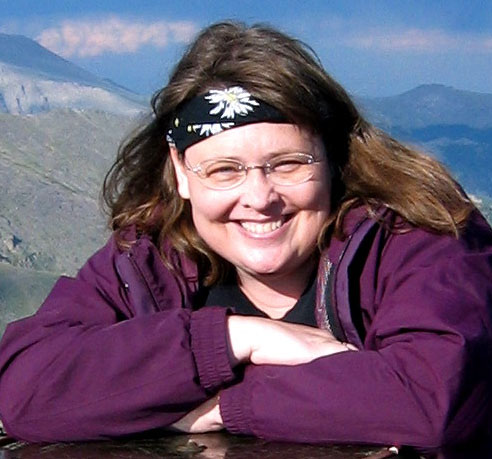
When I am inspired to paint I can think of nothing else, the desire to put brush to canvas takes over every ounce of my being, and it is difficult to be present in everyday life. There are other times where I’ve wanted to create but inspiration was lacking: I would start a painting and have no desire to finish it. I would often get quite frustrated at myself.  It’s only recently that I’ve had the realisation that down time is just as significant as the up time. Rather than get anxious about not creating a masterpiece, I have learnt to go with the flow, take pleasure in the time of rest, because I know it’s all part of the cycle.  My inspiration always returns with abundance. Presently I am bursting at the seams with creativity, and I can’t find enough hours in the day to let all this inspired energy out. I am overcome with a sense of urgency I can’t explain. I am committed to paint and write with the intention that my personal message becomes part of the global message for change as our sacred feminine wisdom is being called forth. I am determined and full of courage to be part of the movement that brings about a shift in all aspects of life.

My present state of inspiration can be attributed to my recent Goddess pilgrimage to Crete with Carol Christ. I am sure that anybody who has attended such pilgrimages will attest that these experiences are life-changing. Travel alone is profound, but to share the experience in a circle of twenty amazing women is even more so. We sang, danced, trekked through the Cretan countryside, delved deep into caves; the womb of our great mother, climbed mountains and cleansed in the sea. We prayed and communed with the goddess daily, participating in rituals that were meaningful, un-contrived and safe. While I have always known that the goddess is everywhere, within and without–encountering her ancient past in a present day context is a feeling I’m not sure I can adequately describe with words, hence my desire to express some of these feelings through my art.

 “Mountain Mother” Jassy Watson
“Mountain Mother” Jassy Watson

Continue reading “Inspiration by Jassy Watson”

In Memoriam Patricia Monaghan: The Goddess Community Remembers and Mourns by Dawn Work-MaKinne

Patricia Monaghan, scholar, author, poet, activist, artist, visionary and vice-president of the Association for the Study of Women and Mythology died early on November 11, 2012 after a two year journey with cancer. Patricia was one of the Founding Mothers of the Goddess Spirituality community in the United States, and her loss is a profound one for our spiritual and scholarly communities.

I was a very junior scholar when I first met Patricia in the 1990s. I had long admired her work, especially O Mother Sun!, her comprehensive study on sun goddesses. We were at a regional gathering, and Patricia had been deputed to lead a table of discussion devoted to Goddess scholarship. When we introduced ourselves, she simply said that she was Pat, from Chicago. Our discussion was rolling along when recognition hit. As I remember, I broke into the conversation. “You’re Patricia! From Chicago! “ I enthused. “Your work has been so important to me!” One of Patricia’s key characteristics was her generosity, especially with young and emerging scholars. I left that gathering with her email address, and I thought I was the richest young woman in the world. In the ensuing years, she encouraged me all the way through my doctorate. We had a long and joyous journey together. Continue reading “In Memoriam Patricia Monaghan: The Goddess Community Remembers and Mourns by Dawn Work-MaKinne”

Thank You, Goddess By Barbara Ardinger

Actually, it’s very hard to say what the Goddess is. She’s ineffable. She’s both abstract and concrete at the same time. She created the universe, but she also brings destruction to beings and things whose time has ended. Even as she is (perhaps) the earth embodied and is (perhaps) a sort of universal spirit of loving-kindness and is (perhaps) the powers of life, death, and rebirth, she is as global as the oxygen we must breathe to live.

I do my end-of-the-month spending tables and balance my checkbook and find that there’s enough for me to send donations to politicians and nonprofits I want to support, like the Brady Campaign to Prevent Gun Violence. I write a couple checks, put stamps on the envelopes, and as I drop them in the mailbox, I say, “Thank you, Goddess.” Everybody who lives in Long Beach knows there is no place to park in the whole city. I rent a parking space in a driveway across the street. Thank you, Goddess. I have nice little chats with strangers in adjacent seats during the intermissions of Les Miserables and Spamalot. Thank you, Goddess. I’m breathing every day, I live with two friendly cats, I earn my living doing something I enjoy doing and that’s useful to the people I do it with. Thank you, Goddess.

Does the Goddess run my life? Not the way you may be thinking. Please don’t think I think the Goddess is a big fat woman wearing a crown and sitting on a big fat throne up in the sky and sending little goddessettes and superheros and superheras down to earth to chase editing clients to me, puff my lungs full of oxygen, and carefully arrange that I sit next to nice folks at the theater or find places to park when I need them. (I have a Magic Parking Place Word for that last item.) That’s not the Goddess. She’s not the Boss of the Universe, she doesn’t live “up there,” she doesn’t dictate how I should live my life. Continue reading “Thank You, Goddess By Barbara Ardinger”

Death of a Priestess by Geraldine Charles

Dusk was falling and mist rising as I drove sadly across the Somerset Levels – a liminal place which once formed the huge marshy lake out of which the Isle of Avalon majestically rose.  When I rounded a bend to see a large swan walking straight up the centre of the road in the same direction I was going, my first thought was for its safety.  I expected it to take flight or veer off at any moment, but the swan continued on its path, seemingly determined to walk just where it was. The road was narrow and all I could do was respectfully follow until it widened a little, eventually managing to squeeze carefully past before starting to flash my headlamps at oncoming traffic to warn them of the swan’s unlikely presence.

Only later that evening did I remember the last time I saw such a stately walk in front of a moving vehicle – when a formally-dressed funeral director led off the hearse which carried my father from his home and on his last journey in this world.  I was thunderstruck. Could the swan be marking this new loss, making me mindful and slowing me down? Continue reading “Death of a Priestess by Geraldine Charles”

Translations of the Bible (and Translators) are Important to Women by Jennifer Sharp

One of the most interesting topics is the theory that YHWH’s roots may be found in information about the ancient Goddess IO, and that YHWH is an inclusive name for an inclusive deity.

Some years ago I read the Bible and objected to passages about women. That was when works by Ruether, Stone, Daly, Schüssler Fiorenza, Eisler, etc. became available. I read all of the feminist writers I could find. Because of this reading, I looked up biblical passages in different Bibles.  I began to notice something rather curious. A passage in one Bible would say “she did it” – the same passage in another Bible would say, “he did it.” “This,” my current minister would say, “This is the word of God. You can believe in it.” “Believe in it”? Which biblical passage was I supposed to believe – the “she” or the “he”?

Being a questioning person, I got serious. I searched the University of Wisconsin bookstore shelves for required reading in Hebrew and Semitic studies, acquired references listed in bibliographies of those books, read about the development of the biblical text, purchased interlinear Bibles, Hebrew and Greek grammars, analytical lexicons, concordances, commentaries, and more English versions of the Bible and eventually took a class in Hebrew. Continue reading “Translations of the Bible (and Translators) are Important to Women by Jennifer Sharp”

Why a Goddess Pilgrimage? by Carol P. Christ

What is a Goddess Pilgrimage and why are so many US, Canadian, and Australian women making pilgrimages to ancient holy places in Europe and Asia?  The simple answer is that women are seeking to connect themselves to sources of female spiritual power that they do not find at home.

Traditionally pilgrims leave home in order to journey to a place associated with spiritual power.  “Leaving home” means leaving familiar physical spaces, interrupting the routines of work and daily life, and leaving friends and family behind.  For the pilgrim, “home” is a place that has provided both comfort and a degree of discomfort that provokes the desire to embark on a journey.  The space of pilgrimage is a “liminal” or threshold space in which the supports systems of ordinary life are suspended, as Victor Turner said.  A pilgrim chooses to leave the familiar behind in order to open herself to the unfamiliar—in hopes that she will return with new insight into the meaning of her life.  Continue reading “Why a Goddess Pilgrimage? by Carol P. Christ”

Fun With Bumper Stickers By Barbara Ardinger

I was driving through one of the more conservative corners of Orange County, California, a couple weeks ago and went past a very pretty brick church with a tall, proud steeple and signs in the front yard giving times of worship services. I have no idea what kind of church it was, but as I went past, a car pulled out of the driveway and began following me. It’s a public street, I said to myself. Looks like a tony neighborhood. No need to worry about being followed. So I neither sped up nor slowed down. At the red light, the car behind me pulled up beside me and the driver, a young man, looked at me. As soon as the light changed, he sped ahead, changed lanes, then slowed down just a little. As I pulled up behind him at the next red light, a hand came out of the driver’s window. A finger was aggressively elevated.

Good grief! How had I insulted this driver? The guy made a right turn, I stewed and fussed a couple of miles…and then it dawned. My bumper stickers. I have four on my car. PROTECT OUR MOTHER EARTH—SHE’S THE ONLYONE WE’VEGOT. THANK GODDESS. BRIGHT BLESSINGS. And my current political bumper sticker: IMPEACH THE SUPREME COURT. (This last, of course, is a comment on the Citizens United decision, which many people think is doing incalculable damage to the political process.) For years, my friends have been telling me that at any gathering, they can always tell I’m there by the bumper stickers on my car. Continue reading “Fun With Bumper Stickers By Barbara Ardinger”

Theapoetics by Molly

I think there is a poet in me

she’s been hiding

I didn’t know she was there

I didn’t see her
I didn’t hear her

I didn’t watch for her
wait for her
listen to her
or know her

and yet, when I come to this place in the woods
and I sit down
and I open my mouth

poetry comes out

and I really think
she’s been here all along.

In the woods behind my house rest a collection of nine large flat rocks. Daily, I walk down to these “priestess rocks” for some sacred time alone to pray, meditate, consider, and be. Often, while in this space, I open my mouth and poetry comes out. I’ve come to see this experience as theapoetics—experiencing the Goddess through direct “revelation,” framed in language. As Stanley Hopper originally described in the 1970’s, it is possible to “…replace theology, the rationalistic interpretation of belief, with theopoetics, finding God[dess] through poetry and fiction, which neither wither before modern science nor conflict with the complexity of what we know now to be the self.” Theapoetics might also be described, “as a means of engaging language and perception in such a way that one enters into a radical relation with the divine, the other, and the creation in which all occurs.” Continue reading “Theapoetics by Molly”

SHADOWS OF THE GODDESS IN GREEK ORTHODOX TRADITION: EASTER AND THE DORMITION OF THE VIRGIN by Carol P. Christ

While I would not wish to argue that Greek Orthodoxy is in any way a “feminist” tradition, the shadow of the Goddess falls long over the two great festivals of spring and midsummer.

In Greek Othodox tradition, there are two major spiritual holidays– Easter in the spring and the Dormition/Assumption of the Virgin at midsummer.  The Panagia, She Who is All Holy, also known as Mother of God, Virgin, and Mary, is a central figure in people’s faith–dethroned neither by the Reformation nor by Vatican II.  Indeed when I speak of the need for the “rebirth of the Goddess” in Greece, I am often told, “the Panagia is our Goddess.”  This may not be theological orthodoxy, but it expresses a truth of practice. Continue reading “SHADOWS OF THE GODDESS IN GREEK ORTHODOX TRADITION: EASTER AND THE DORMITION OF THE VIRGIN by Carol P. Christ”