I am an American.
I am proud to be an American.
I am not proud of everything America does—
But I am proud of democracy—
of the idea of democracy.
And I do not want to waste my shot, either.

I am an American.
I am proud to be an American.
I am not proud of everything America does—
But I am proud of democracy—
of the idea of democracy.
And I do not want to waste my shot, either.
My introduction to Matilda Joslyn Gage (1826-1898) goes back to my long-standing interest in her son-in-law, L. Frank Baum. I regularly teach Baum’s The Wonderful Wizard of Oz in my children’s literature courses, and I always point out the book’s feminist qualities. I mention, for example, that Dorothy Gale, the central character in the novel, is one of the first female characters in American literature to go on a bona fide quest. When I first started teaching this book, I wondered what caused Baum, a male writing in the late nineteenth century, to write such a feminist book. One day, while preparing for class, I came across a reference to Gage. This reference stated that Gage was a leading suffragette during the second half of the nineteenth century and that she lived with Baum and his family in Chicago when Baum was launching his career as a children’s author. After reading more about Baum’s life, I realized that Gage played a major role in shaping his nontraditional views on gender roles. However, I was still not sure what role she played in the development of women’s rights.
Continue reading “The Connection between Matilda Joslyn Gage’s Woman, Church and State and L. Frank Baum’s The Wonderful Wizard of Oz by Mark I. West”
As I write this, it is August and very much high summer. This time of year always reminds me of my old life in New Orleans, before I moved to Maine. David, my first husband, and I were sailors. I never planned on becoming a sailor, but once I mastered the basic skills I found I quite enjoyed it. Furthermore it became an unexpected source of spiritual insight. I’m inspired to share a piece of that here.
One spring over 25 years ago, David and I and a group of sailing buddies made our usual summer passage in the Gulf of Mexico, from New Orleans, Louisiana to Pensacola, Florida. By car this trip was 200 miles. By sail it took two to three days. Around midnight, as we were entering the last leg of this journey, I took the wheel. We were exiting Mobile Bay, heading east, and this should have been a fairly simple passage. There was plenty of depth, adequate wind, the boat was sitting in the water well, and I had Barney, a dear and trusted friend, as my navigator. I’d been at the wheel for fifteen minutes or so when I noticed the many lights we were approaching and asked Barney what was going on.
Continue reading “Sailing For The Darkness by Mary Gelfand”
I live under a steep craggy mountain that is gushing with the sweetest mineral rich water that pours out of an old spring. On this piece of land feeder brooks stream down the mountain feeding hemlock and cedar before silvery clear water slides into a rushing brook (miraculously) still filled with trout. Sadly, the main artery of my brook comes from another mountain that has been brutally logged, dammed up for someone’s pleasure and is currently running amok. Silt ridden water floods this lowland routinely not only changing the course of the stream now riddled with dying trees, (collapsing trees must have soil to stay upright) but creating unusual vernal pools that are beginning to mature. As a result, this has been the best frog and toad year that I have had since my first magical year spent on this land before all the surrounding areas were chopped into parcels. Once I roamed free up and down this mountain through unbroken forests fields and fens, marshes, seeps, bogs and springs. I have never lost that feeling of belonging to this land not just the area I ‘own’ (oxymoron) but all of her.
It doesn’t surprise me that in most pre -christian traditions the Original Mother of Us All was and still is a mountain! When the other mountains all around me were first being raped by dirty yellow machines someone remarked to me quite sagely, “the bones of the mountains are still here”. And so they are, and so is She.
Continue reading “Lowlands: Who Will Answer the Call? by Sara Wright”From October 5, 2023. Joyce posted the blogpost which she titled: Nineteen months and Counting: Experiencing the Web of Life
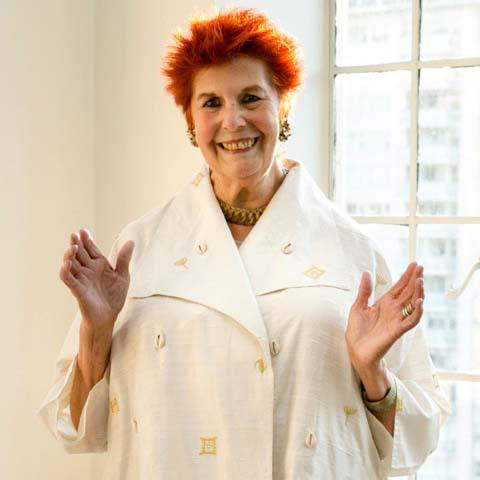
On February 28, 2022, I unknowingly drove into a deep snowbank, shortly after finding myself in a strangely unfamiliar landscape. Suspecting a TIA, my primary care physician urged me to go to an emergency room for a possible CAT scan. There, a lesion in my right parietal lobe was quickly discovered.
Continue reading “A Healing Shrine by Joyce Zonana”Moderator’s Note: This post is presented as part of FAR’s co-operation with The Nasty Women Writers Project, a site dedicated to highlighting and amplifying the voices and visions of powerful women. The site was founded by sisters Theresa and Maria Dintino. Part 1 was posted yesterday
Spiritualism began with two young girls, the Fox sisters, hearing knocking sounds in their home near Rochester, N.Y . They determined the knocking to be coming from a man who was murdered and buried under their home. The knocking was soon categorized into an alphabet out of which seances began. In seances groups of people gathered and put their hands on a table while asking questions of ancestors who made themselves known by rapping and knocking in response. Next, mediums in the form of young women speaking the answers of the dead as the bereaved asked them questions, emerged. Instructions were disseminated on how to be a medium and how to run a seance. The movement took off.
The movement was largely white, northern Protestants but other ethnicities were involved. The Black population may have influenced the arising of these practices with traditions brought with them from West Africa.
Continue reading “How the Nineteenth-Century Spiritualist Movement Gave Voice to American Women -Part 2 by Theresa Dintino”Moderator’s Note: This post is presented as part of FAR’s co-operation with The Nasty Women Writers Project, a site dedicated to highlighting and amplifying the voices and visions of powerful women. The site was founded by sisters Theresa and Maria Dintino.
Throughout history women have found power and position in spiritual communities. They have acted as leaders, priestesses, oracles, mediums, disciples, saints, preachers and more. And yet these roles and positions of power are often overlooked in the story of women, and the general story of humans.
Still today many women function as leaders in a variety of spiritual disciplines, yet they do not receive the attention, respect and clout that men in similar positions do. More often women who hold roles of power in spiritual communities are dismissed or discredited.
If their spiritual community is not considered a formally accepted religion where their position was bestowed to them by a man ranking above them, women spiritual leaders are often ignored. This marginalization goes unquestioned.
Continue reading “How the Nineteenth-Century Spiritualist Movement Gave Voice to American Women -Part One by Theresa Dintino”I met my best friend growing up in Third Grade. I moved around the country after high school, but regardless, her and I have managed to stay in touch. I spoke with her last weekend and asked about her parents. Even though its been years since I’ve seen them, I remember them as if it were yesterday. Going out to their cabin at Lake Texoma. Seeing them around the house.
You see Kim and I were tight. We saw each other pretty much daily for years. In some ways it was a much more innocent time. I remember summers leaving the house in the morning and not going back until sunset, muddy and barefoot. Crawdads and horse models. Playgrounds and baseball games.
But in some ways, it was a much less innocent time. We dabbled in quite a lot that we should not have as the term helicopter parent was unheard of. Our skies were wide open. The good and the bad. The large majority of us were latch key kids, and we raised ourselves. No apps to tell our parents where we were or check in. We went as the wind blew us.
Continue reading “Healing What Ails Us and Coming Together: Politics and Other Forbidden Subjects by Caryn MacGrandle”Spiraling In
I buried you today,
a fluff of earthly feathers
dipped in ebony
bronze
and gold.
He left you
on my road
innocent
already broken
Just a tiny bird
peeping pitifully
in fear and pain
cocooned in
deep distress.
I scooped you up
held you against
my heart
Instantly Still
I felt you knew…
Wild Mothering
kicked in
create a loving
space for
life or death
Above all
Be Present
for whatever
is ahead…
I dug a grave
where you were born
nestled under pines
fragrant roots
cradled what
was left
your bones are
made of light
Offering prayers
to Her
Our Bird Goddess*
I bowed my head
Ancient and Wise
She who Sees
She who holds
Abusers accountable
(as do I)
She watches
over us all
honoring the dead.
In my end is my beginning.
T. S. Eliot
This year two colleagues of mine died. And my heart roared. Tears aplenty accompanied me. Poet that I am. Word-lover. Image-seeker. Meaning-making-hound-dog. Doggedly seeking a place to plant myself so that the ache of these losses within the crucible in which I find myself grounded, honed, chiselled, challenged, challenging, writing, wording, rewording, sculpting relationship with my students, who are too my teachers, is soothed. By tiny shards. Soothed. And death finds home everywhere. In each nook. Cranny. Crevice. Concreted crenellation or grassy llano, there she be.
What research, I ask myself, can we do when the heart fails to cease its eking, leaking ache, and crushing sorrow? What academic skill need we birth, resurrect, divine in order to erase this over-whelming tsunami of acknowledging our finitude? Where to look? What book? What paper? What journal? To what podcast need we creep, crawl, scurry, bound, fling ourselves in order to quell brutal, blistering despair? Self-immolation cannot work, for too, too many teeming tears douse the flames.
Continue reading “In My End: My Beginning by Margot Van Sluytman”