I’ve noticed some growing trends in feminist spirituality. Recently, I’ve encountered several feminists who have attended “virtual retreats” from the comfort of their homes. I’ve also been overwhelmed by the number of clergy, scholars, and feministswho have begun coloring. Psychologists claim that coloring can soften stress, relieve anxiety, and be source of playful meditation for adults in an otherwise chaotic world. Similarly, doctors have long pointed to the emotional and physical importance of meditation, spirituality, or prayer in remaining balanced, relieving stress and anxiety. As feminists dwelling in a cisheteropatriarchal world, the need for such balance is even more important. It is these noticings that have led me to write this post.
A fabulous church that cares deeply about inclusion, social justice, and the arts is hosting an exhibition of myHoly Women Iconswith a folk feminist twistfor the month of October and throughout the month, I’m leading several retreats. While planning these retreats, I couldn’t help but think of the Feminism and Religion community. We are spread throughout the world, offering encouragement and challenge online every day. We have different struggles, spiritual paths, and backgrounds, but we gather on this blog to reconcile two seemingly paradoxical parts of our beings: feminism and religion. I have yet to develop these thoughts fully and I’d like to rely on you to share your input and ideas in the comments section about how we can “retreat” together virtually. With this in mind, I’d like share a bit about the Holy Women Icons Arts and Spirituality retreat I’m leading and invite you to participate at home. The entire retreat takes about 3 hours, or you can break it into 4 sections for shorter periods of time. So, if you’d like, play some music to set the mood, light a candle, and get out some paper, scissors, writing utensils, and crayons/markers, and let’s “retreat” together…
In my previous post, I wrote about the importance of rituals. The rituals of the Easter season helped me process some difficult emotions. The way that rituals mark time and demonstrate consistency has been a comfort for me when facing new challenges and settings. But I am quite aware that rituals can become empty. In one of the comments to that post, a woman named Barbara responded, “There came a time for me when familiar and meaningful ritual no longer made sense. I had changed in understanding of what the ritual symbolized and celebrated. And haven’t found new rituals that make sense for me now…or at least I’m not aware of any.” Barbara’s remarks capture not only the loss from no longer being able to relate to existing rituals after life changes, but also the difficulty in finding or creating new rituals to take their place. I thanked Barbara for her honesty and decided that this post would continue the discussion, focusing more on discovery and creation of new rituals.
As I was preparing that post, I watched an episode of Call the Midwife that prompted me to reflect on the need to create rituals when existing ones just don’t work. Call the Midwifeis a BBC-PBS show about nurses and midwives living in a convent in London’s East End at the end of the 1950s and early 1960s. The show is based on the memoirs of Jennifer Worth, and it does a better job than most primetime dramas of showing female characters’ experiences the joys and challenges of their professional lives and personal lives. As it is set in a convent with several characters who are both nuns and midwives, the show also explores the theme of vocation. What does it mean to be called to the religious life? Called to nursing? What does motherhood demand? Continue reading “The Importance of Rituals (Part 2) by Elise M. Edwards”
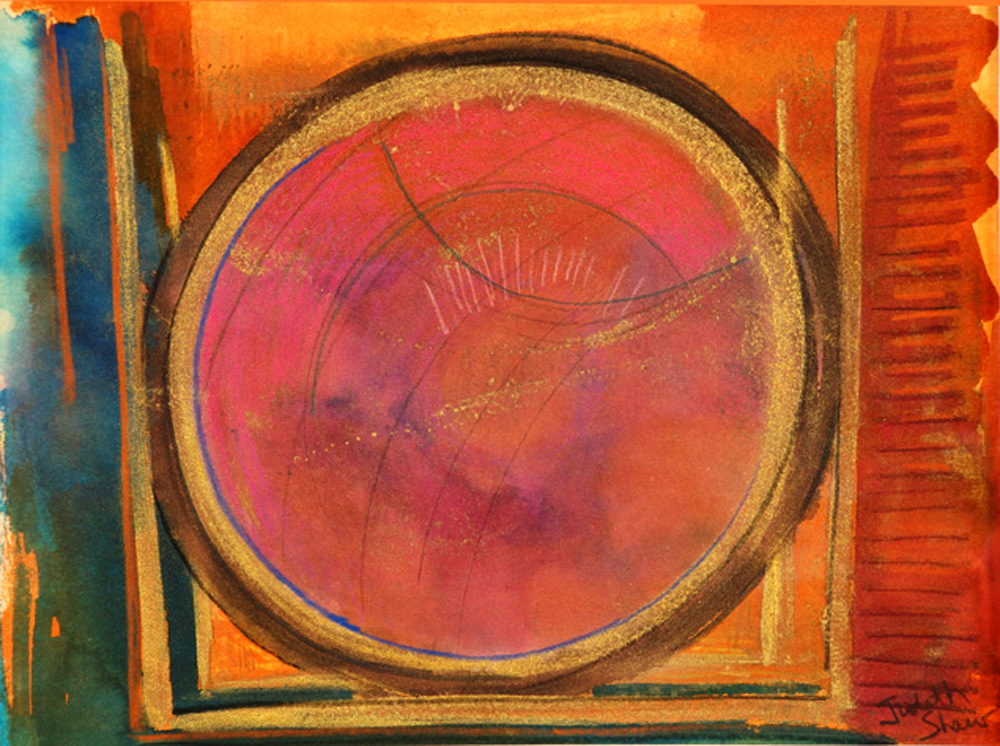
Dawn Mandala, ink and watercolor on paper, by Judith Shaw
Can geometry open our hearts and minds to spirit? Throughout time people around the world have thought so. Mandalas and Sacred Geometry symbols are found in many cultures both ancient and modern.
Mandala is a Sanskrit word which means “sacred circle.” In Buddhism, Hinduism and other ancient wisdom traditions of the East, the mandala has been used as a tool to facilitate contemplation and meditation. Through the process of studying and/or creating a mandala one can reach one’s center, one’s connection to Source. The circle, the first closed shape of Sacred Geometry, thus becomes a doorway to Oneness.
Traditional Hindu mandalas follow a strict form. Every mandala is created following the precise design of that form. One sees a further development of other Sacred Geometries within these traditional forms. First there is the squaring of the circle also known as “The Marriage of Heaven and Earth”, with the circle representing Heaven and the square representing Earth.
In the Hindu tradition, each design within this “Marriage of Heaven and Earth” is called a yantra mandala and functions as a symbol which reveals cosmic truths. Thus yantra mandalas become sacred geometric symbols of a particular Hindu deity.
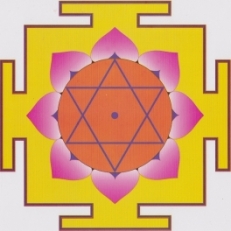
One of the most famous yantra mandalas is the Shri Yantra, a symbol of Tripurasundari, a supreme Hindu Tantric Goddess. It depicts a series of precisely interlocking triangles, half pointing downward and half pointing upward. It forms a state of perfect balance and harmony and represents the union of the female and male principles. Also known as the Yantra of Creation or the Cosmic Yantra it is the most honored of all the Hindu yantras. The Shri Yantra becomes a door which can lead to the experience of Oneness.
Another goddess whose divine truths are revealed through the mandala is Lakshmi, Hindu Goddess of fortune, light, luck, and beauty. Meditating on the Lakshmi Yantra encourages spiritual progress and helps to overcome internal blocks.
Christianity has also used the mandala to represent Divine Oneness and to teach the wisdom of its tradition. The magnificent rose windows of the Gothic cathedrals are luminous examples of western mandalas. Complex sacred geometries were used in the architectural designs of the buildings themselves and of the rose windows.
The rose windows are a western representation of our human aspiration towards wholeness and balance. The rose windows operate on various levels; spiritual, emotional and intellectual. The instructional aspect of the rose windows is clearly seen by the subject matter – biblical stories, lives of the saints, astrological calendars, and morality stories to name a few.
In much the same way that the Hindu yantras symbolize the aspects of a particular deity, the rose windows typically show Christ or the Virgin or some other combination in the central rosette of the window. The gates at the cardinal points of the yantras depict the many paths available to reach the divine. In a similar fashion, the saints shown in the petals of a rose window can be seen as paths to Christ.
More than likely, mandalas were reintroduced into western thought through the Carl Jung’s pioneering work on the unconscious. Jung wrote: “I sketched every morning in a notebook a small circular drawing,…which seemed to correspond to my inner situation at the time….Only gradually did I discover what the mandala really is:…the Self, the wholeness of the personality, which if all goes well is harmonious.”
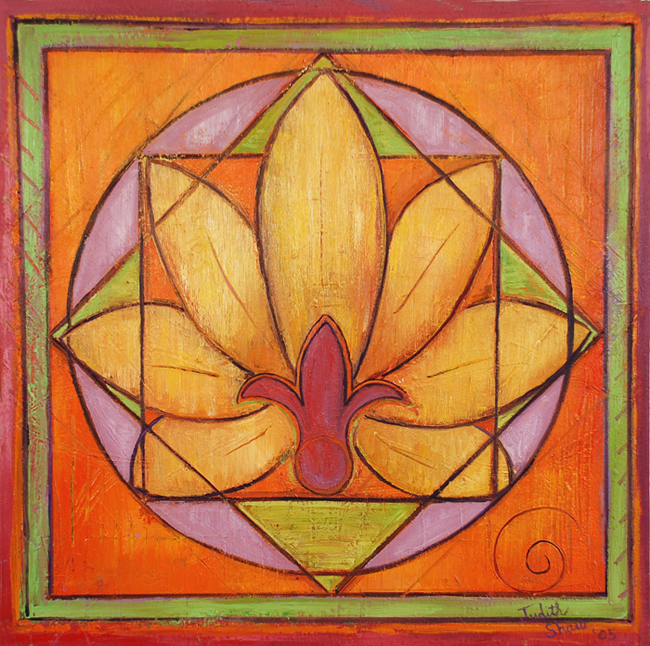
Lotus Mandala 1, oil on canvas, by Judith Shaw
Continuing in this tradition, artists and spiritual practitioners today have been exploring a more free-form style of the mandala. Within the basic foundation of the “squaring of the circle”, the artist then creates a personal, spontaneous design based on the concepts of balance, wholeness and oneness.
A quick google search reveals a multitude of mandala workshops being offered all around the world. Exploration of the mandala through these workshops offers a connection to your true self, an experience of sacred love, an opportunity to improve your life with intention, a deepening of your connection to nature, healing of emotional, mental, or physical pain, and a chance to be truly in the moment.
The mandala is a form that I have used in my own art since before I discovered the existence of Sacred Geometry. Even when not directly exploring the mandala, I find that often I want to draw a circle around the main image in my painting – seeking that experience of wholeness in the process of painting.
In future posts I will explore other elements of Sacred Geometry, all of which grow out of the mandala, the sacred circle.
Judith’s deck of Celtic Goddess Oracle Cards is available now. You can order your deck on Judith’s website. Experience the wisdom of the Celtic Goddesses!
Judith Shaw, a graduate of the San Francisco Art Institute, has been interested in myth, culture and mystical studies all her life. Not long after graduating from SFAI, while living in Greece, Judith began exploring the Goddess in her artwork. She continues to be inspired by the Divine Feminine in all of Her manifestations. Originally from New Orleans, Judith now makes her home in New Mexico where she paints and teaches part-time. She is currently hard at work on a deck of Goddess cards. Her work, which expresses her belief in the interconnectedness of all life, can be seen on her website.
When the wheel of the year turns towards fall, I always feel the call to retreat, to cocoon, to pull away. I also feel the urge for fall de-cluttering—my eyes cast about the house for things to unload, get rid of, to cast away. I also search my calendar for those things which can be eliminated, trimmed down, cut back on. I think it is the inexorable approach of the winter holiday season that prompts this desire to withdraw, as well as the natural rhythm of the earth which so clearly says: let things go, it is almost time to hibernate.
Late autumn and the shift toward winter is a time of discernment. A time to choose. A time to notice that which has not made it through the summer’s heat and thus needs to be pruned away. In this time of the year, we both recognize the harvest of our labors and that which needs to be released or even sacrificed as we sense the promise of the new year to come. Continue reading “Winter Solstice Meditation by Molly”
The visionary abbess Hildegard von Bingen (1098-1179) has long been regarded as a saint, with her feast day of September 17, yet she was only officially canonized in May 2012. Why did it take the Vatican over eight centuries to canonize this great polymath, composer, and theologian?
The first attempt to canonize Hildegard began in 1233, but failed as over fifty years had passed since her death and most of the witnesses and beneficiaries of her reported miracles were deceased. Her theological writings were deemed too dense and difficult for subsequent generations to understand and soon fell into obscurity, as did her music. According to Barbara Newman, Hildegard was remembered mainly as an apocalyptic prophet. But in the age of Enlightenment, prophets and mystics went out of fashion. Hildegard was dismissed as a hysteric. Even the authorship of her own work was disputed as pundits began to suggest her books had been written by a man.
Newman states that Hildegard’s contemporary rehabilitation and resurgence was due mainly to the tireless efforts of the nuns at Saint Hildegard Abbey in Eibingen, Germany. In 1956 Marianna Schrader and Adelgundis Führkötter, OSB, published a carefully documented study that proved the authenticity of Hildegard’s authorship. Their research provides the foundation of all subsequent Hildegard scholarship.
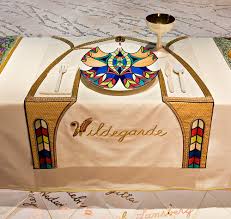
In the 1980s, in the wake of a wider women’s spirituality movement, Hildegard’s star rose as seekers from diverse faith backgrounds embraced her as a foremother and role model. The artist Judy Chicago showcased Hildegard at her iconic feminist Dinner Party installation.
Medievalists and theologians rediscovered Hildegard’s writings. New recordings of her sacred music hit the popular charts. The radical theologian Matthew Fox adopted Hildegard as the figurehead of his creation-centered spirituality. Fox’s book Illuminations of Hildegard of Bingen remains one of the most accessible and popular books on the 12th-century visionary. In 2009, German director Margarethe von Trotta made Hildegard the subject of her luminous film, Vision. And all the while, the sisters at Saint Hildegard Abbey were exerting their quiet pressure on Rome to get Hildegard the official endorsement they believed she deserved.
Pope John Paul II, who had canonized more saints than any previous pontiff, steadfastly ignored Hildegard’s burgeoning cult, possibly because he was repelled by her status as a feminist icon. Ironically it was his successor, Benedict XVI, one of the most conservative popes in recent history—who, as Cardinal Ratzinger, expelled Matthew Fox from the Dominican Order where Fox had served for thirty-four years—finally gave Hildegard her due. Reportedly Joseph Ratzinger, a German, had long admired Hildegard. He not only canonized her but elevated her to Doctor of the Church, a rare and solemn title given to only the most distinguished theologians.
But I believe the true credit for Hildegard’s triumph is due to the Benedictine Sisters at Saint Hildegard Abbey for keeping Hildegard’s flame burning.
Read Hildegard’s poem slowly as a prayer, contemplating how the Sacred Flame, however you envision it in your own spiritual tradition, relates to your life.


 I’ve noticed some growing trends in feminist spirituality. Recently, I’ve encountered several feminists who have attended “virtual retreats” from the comfort of their homes. I’ve also been overwhelmed by the number of clergy, scholars, and feminists who have begun coloring. Psychologists claim that coloring can soften stress, relieve anxiety, and be source of playful meditation for adults in an otherwise chaotic world. Similarly, doctors have long pointed to the emotional and physical importance of meditation, spirituality, or prayer in remaining balanced, relieving stress and anxiety. As feminists dwelling in a cisheteropatriarchal world, the need for such balance is even more important. It is these noticings that have led me to write this post.





 When the wheel of the year turns towards fall, I always feel the call to retreat, to cocoon, to pull away. I also feel the urge for fall de-cluttering—my eyes cast about the house for things to unload, get rid of, to cast away. I also search my calendar for those things which can be eliminated, trimmed down, cut back on. I think it is the inexorable approach of the winter holiday season that prompts this desire to withdraw, as well as the natural rhythm of the earth which so clearly says: let things go, it is almost time to hibernate.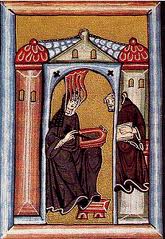
 Feminism and Religion