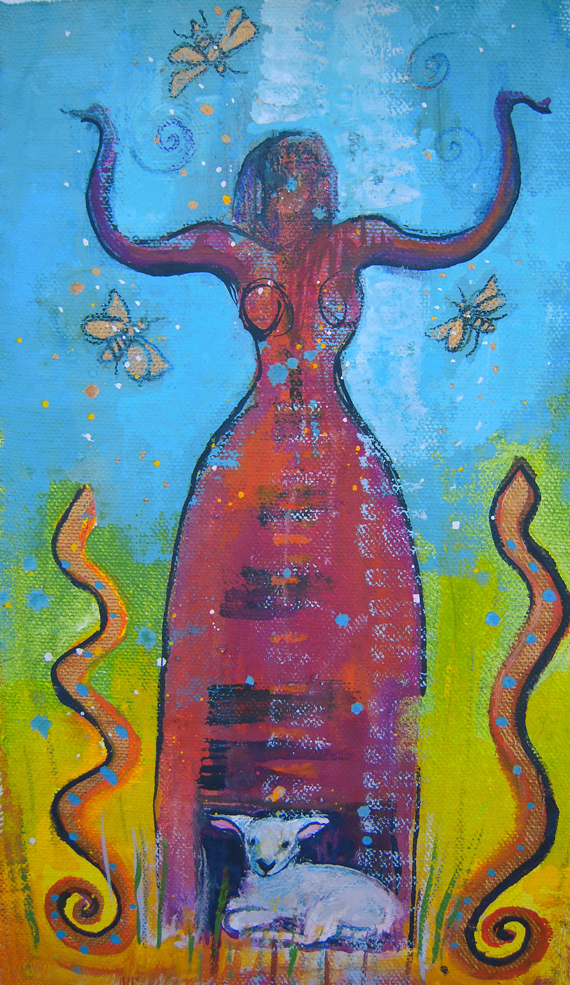
Brigid, Goddess of Healing, Poetry, and Smithcraft by Judith Shaw

judith Shaw photoBrigid, the Celtic Goddess of Healing, Poetry, and Smithcraft, begins her reign on Imbolic, February 2, the midpoint between winter solstice and spring equinox. On this day the ancient Celts held their Fire Festival in honor of Brigid and the growing light. In Scotland, as recently as the mid-twentieth century, houses were cleaned and the hearth fires rekindled on February 2, to welcome in  Brigid.  Remnants of this festival are found in America today on Groundhog Day.

Like the Cailleach, She existed in many places and  was known by many names.  The Irish called her Brighde; she was Bride in Scotland,  Brigantia in Northern Britain, and Brigandu in France.  Some called her Brid, Brig or Brighid.  Later she was transformed by Christianity into Saint Bridget.  Her older name was BREO SAIGHEAD.   Her name has various interpretations, many relating to fire – “Power,” “Renown” “Fiery Arrow of Power ” “Bright Arrow”, “The Bright One”, “The Powerful One”, “The High One” and “The Exalted One”.

Brigid, Celtic Goddess Continue reading “Brigid, Goddess of Healing, Poetry, and Smithcraft by Judith Shaw”

Brigit and Patricia: Comrade-Women by Elizabeth Cunningham

Brigit is my comrade-woman
Brigit is my maker of song
Brigit is my helping-woman
My choicest of women, my guide

Brigit, celebrated by pagans and Christians alike on February 1, is a goddess who knows how to incarnate. When Christianity came to Ireland, she became a saint without missing a beat and without giving up any of her reputation for healing, poetry, or smith crafting, for being the keeper of the sacred flames and wells. The verse above is one of my favorites from “The Blessing of Brigit,” several versions of which are recorded in Alexander Carmichael’s Carmina Gadelica, Hymns and Incantations Collected in the Highlands and Islands of Scotland in the Last Century (which is to say the nineteenth!)

I adapted the verse and sang it in memory of author, educator, priestess, and visionary activist Patricia Monaghan who died November 11, 2012. Dawn Work-Makinne offered a beautiful tribute to Patricia’s life and work. Today I want to reflect on Patricia in relation to Brigit, a goddess Patricia researched and celebrated (look for the forthcoming anthology she edited with her husband, Michael McDermott  Brigit: Sun of Womanhood)—and whose spirit she embodied as vigorously as the legendary Saint Brigit of Kildare. Continue reading “Brigit and Patricia: Comrade-Women by Elizabeth Cunningham”

Cailleach, The Queen of Winter by Judith Shaw

judith shaw photoThe Cailleach (KAL-y-ach), which literally translates as the “Veiled One” is an ancient Goddess whose origins are unknown.  When the Celts arrived in Ireland and Scotland she was there. Over time Her name came to mean “old wife” or “old woman”.  And yet she was thought to never grow old, an all powerful, ageless, Goddess of transformation.

In one of her stories, Cailleach, as an old hag, seeks love from the hero.  If he accepts Her, She then transforms into a beautiful young woman, symbolizing the transformation occurring in the depths of winter when the seeds lay dormant in the earth.  Yet alive within this dormancy is the promise of rebirth in the spring.  She is the guardian of the life force, finding and nourishing the seeds, commanding the power of life and death.  As the final phase of the Triple Goddess, she rules the eternal wheel of reincarnation. Cailleach personifies death and the transformative power of darkness.  She leads us through death to rebirth. Continue reading “Cailleach, The Queen of Winter by Judith Shaw”

Solstice Comes But Once A Year, Now It’s Here! by Carol P. Christ

carol p. christ 2002 colorActually it comes twice, once in midsummer, the longest day of the year, and once in midwinter, the longest night.  Winter Solstice is also known as the first day of winter.
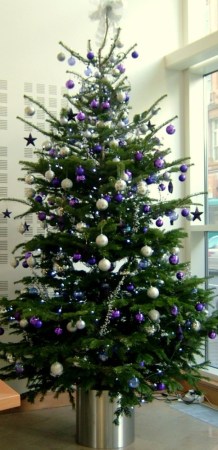
For those of us attuned to the cycles of Mother Earth, Winter Solstice is a time to celebrate the dark and the transformations that come in the dark. Many of the customs associated with Christmas and Hannukah, including candles, Yule logs, and trees decorated with lights were originally associated with Winter Solstice.  The extra pounds put on during winter feasting were insulation against the cold winter nights.

Those who fear that many of the customs of the Christmas season might be pagan are right.  As we learn again to honor our place within the cycles of birth, death, and regeneration, we can return these customs to their roots in the circle of life.

ChristmasTrees20060001

Continue reading “Solstice Comes But Once A Year, Now It’s Here! by Carol P. Christ”

Yom Kippur as Seen (With Respect) by a Pagan By Barbara Ardinger

No matter which or how many gods we believe in, thinking about what we’ve done wrong and how we can set it straight is useful. The Day of Atonement, the Talmud says, “absolves from sins against God, but not from sins against a fellow man unless the pardon of the offended person is secured.”

 Back in the Stone Age, otherwise known as the early 1980s, I had jobs as a technical writer and editor in five different industries, including aerospace and computer development. Hey, I was trained as a Shakespearean scholar, but in those days—pretty much like today—there were almost no jobs in the academy for newly-hatched Ph.D’s. So I tried technical writing. At one of the aerospace jobs, I sat in the “bullpen”—me and nineteen middle-aged white guys—whereas all the other women slaved—on typewriters in that pre-computer age—in the typing pool. There was a major class distinction in that aerospace firm, and I was glad to be with the guys. (Yes, shame on me.) Those were the days of 9 to 5. As far as I’m concerned, that movie is nonfiction. Continue reading “Yom Kippur as Seen (With Respect) by a Pagan By Barbara Ardinger”