Jesus, the Woman at the Well, and the Meaning of ‘Man’ by Stuart Dean

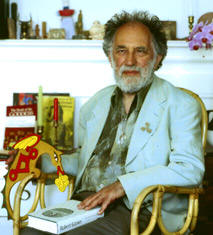
 Stuart WordPress photoThe story in the Gospel of John of the encounter Jesus has with a Samaritan woman (hereafter, ‘the Samaritan’) at Jacob’s well (4:7-29) has attracted considerable scholarly attention.  For an overview of some of the interpretive issues raised by it there is a video of a conversation about it between H. W. Attridge and D. L. Bartlett of Yale Divinity School available on Youtube here.  I intend to focus primarily on only four verses, John 4:16-19.

Here is my translation (the underlying Greek and links to interpretive resources can be found here):

16 [Jesus] said: “go tell your ‘man’ and come back here.”
17 The Samaritan answered, “I do not have a ‘man.”’ Jesus said to her “Beautifully you said ‘I do not have a man.’
18 You have had five ‘men,’ and the one whom you have now is not your ‘man.’  You spoke truthfully.”
19 The Samaritan said to him: “Sir, I see you are a wise listener.”

My translation is intended to bring out what I take to be a play on the meaning of the underlying Greek word for man.  Before I explain exactly what the play on meaning is about I want to justify the assumption that there is some sort of play in the first place. Some have argued that the reference to the bride and bridegroom at John 3:29 foreshadows the meeting of Jesus and the Samaritan as a spiritual wedding.  The theme of a spiritual wedding is arguably also foreshadowed in how John starts the book itself, for ‘beginning’ is a feminine noun in Greek and ‘word’ is masculine, making ‘in the beginning was the word’ sexually symbolic; that, in turn, suggests that the well before which Jesus and the Samaritan stand, or the water in it, symbolizes God, or at least the spirit of God. Continue reading “Jesus, the Woman at the Well, and the Meaning of ‘Man’ by Stuart Dean”

On Reading, Not Reading, and Disagreeing by Linn Marie Tonstad

Linn Marie TonstadThe theology blogosphere in all its glory has been alive in recent days with furor sparked by a blog post from Janice Rees at Women In Theology, where she discusses not reading Karl Barth, the heavyweight German 20th-century Protestant theologian, as an act of resistance against his dominance in the theological academy and his status as a litmus test for serious scholarship. Reminding myself repeatedly of the great xkcd comic, I’ve resisted my urge to comment on this and a number of other recent debates. (See here for a list of links if you wish to catch up on the discussion, however.) So this is not a post on whether to read Karl Barth.* Rather, the debate made me take a look at some of my own reading practices, and the visions of theological discussion that they encode. It also brought me back to the question of feminist disagreement, which continues to lurk in the back of my mind as I pursue disagreements with some prominent feminist theologians in my current book project.

I’ve written here before about reading authors that I disagree with, and indeed working on theologians I think are wrong about certain issues. On the simplest level, as a feminist and queer theologian, many of the theologians I work on would have questioned or outright resisted my participation in the discipline to begin with – although we cannot always know whether and how they would have done so today (since many of them are dead – yes, the dreaded dead white European males). But I often – not always – find projects that I sincerely disagree with utterly fascinating. From what perspective does the system being developed in such a project make sense? Where would one have to stand to see what that author sees? What do I come to understand about my current context, or the author’s context, from the perspective of the debates and decisions that the author finds pressing? One fairly trivial example: any interest I might once have had in historical Jesus debates was settled forever by reading Albert Schweitzer as an undergraduate. I simply do not find such debates compelling in themselves. (That does not mean I think they are valueless, of course!) But reading theologians who were engaged in such debates teaches me a great deal about how the commonsense assumptions many of us today operate with came to be. And seeing how such debates accompany disagreement over right social relations, over the nature of transmission of Christian traditions, and over what counts as scholarship in theology and religious studies is simply fascinating. Continue reading “On Reading, Not Reading, and Disagreeing by Linn Marie Tonstad”

Rescuing Martha from the Dishes: A Challenge of Retrieval and Proclamation by Mary Grey – Part III

Rescuing Martha – A Hermeneutic of Retrieval
This is the last part of a three part post. Read Part I here and Part II here

Discovering another tradition means being open not only to artistic witnesses but to myth, legend, and to feminist theory. But to begin with what is uncontested: both sisters, Mary and Martha, were friends of Jesus who loved them and their brother Lazarus. Martha seems to be the householder. We are told nothing about the parents of the three – perhaps they had been caught up and killed in one of the Zealot uprisings. The Church that sprang up at the site of Bethany was one of the earliest Christian pilgrimage places.  The legends that grew up held Lazarus and his 2 sisters in great respect. And this is a sharp contrast with the tradition I began with.

Secondly, to disparage responsibility for housework as a lowly role is an anachronistic viewpoint. It is likely, as in most poor agricultural communities today that domestic work goes alongside income- generating work either inside or outside the house. Many rural women in India and Africa cope with domestic work, child care and a full day’s work in the fields. In the life-time of Jesus, women would be involved in cleaning fish and mending nets – though the Gospels do not tell us this.  Nor was this the work of the sisters at Bethany who did not live near Lake Galilee. The public/ private split between unseen work in the household and public work belongs to a much later date. Thirdly, it is diakonia or service that is at stake here, and this was part of a creative tension in the early communities. Continue reading “Rescuing Martha from the Dishes: A Challenge of Retrieval and Proclamation by Mary Grey – Part III”

Rescuing Martha from the Dishes: A Challenge of Retrieval and Proclamation by Mary Grey – Part II

What do the Gospels of Luke and John tell us?
This is the second part of a three part post. Part I is here and Part III is to follow tomorrow. 

I now return to the story of Mary and Martha in the gospel of Luke: what was its purpose for the evangelist and his community? The text itself has been a subject of multiple interpretations. An abstract interpretation sees the sisters as representing two different principles, one as justification by works and one by faith. Augustine (d.430) saw them as symbolising either the labours of this world and the bliss of the world to come. Origen (185-254), famous for his allegorising interpretation of Scripture, understood them as life according to the flesh or according to the Spirit. So, as Elisabeth Schüssler-Fiorenza points out in But She Said: Feminist Practices of Biblical Interpretation (1992:58), this typologising contrast was already established by the end of the 2nd century.  In a contemporary context Martha and Mary continue to exemplify the two vocations that the church offers to women, contemplative love of God (Mary), or social activism through service of neighbour (Martha). Continue reading “Rescuing Martha from the Dishes: A Challenge of Retrieval and Proclamation by Mary Grey – Part II”

Rescuing Martha from the Dishes: A Challenge of Retrieval and Proclamation by Mary Grey – Part I

Introduction and Martha – Patron Saint of Housewives

Here I explore a troubling issue for feminist biblical interpretation, namely the interpretations of Luke 10, 38-42, with specific reference to the figure of Martha, and the questions that arise when we compare John’s story, the Raising of Lazarus (John 11.1-44).  At first sight Luke seems clear: Martha is troubled with the domestic task of preparing food, while Mary has gone to the heart of the matter, listening to the word of God at the feet of the Lord. Mary is always depicted at the feet of the Christ, while Martha is the active one and this is often interpreted negatively. (One interesting exception is Giotto’s fresco of the raising of Lazarus, where both sisters are prostrate at Jesus’ feet). A clear message seems given for Christian discipleship and this text has had an evocative power through history. But on reading John’s story, are the roles reversed? Martha runs to greet Jesus, Mary remains at home. From Martha comes the confession of faith in Jesus:

Yes, Lord; I believe that you are the Christ, the Son of God, he who is coming into the world. (John 11.27)

What we are given is a full confession of faith on Jesus as Son of God, the confession which is on the lips of Peter in the 3 Synoptic Gospels, (Luke 9.20, Mark 8.29, Matthew 16.15-17).

Why is it, then, that Christian Tradition has largely ignored the Johannine text and followed Luke, even a negative interpretation of Luke? Continue reading “Rescuing Martha from the Dishes: A Challenge of Retrieval and Proclamation by Mary Grey – Part I”

Imagine a Catholic Church that Loved as only a “Woman” Loves by Michele Stopera Freyhauf

Freyhauf, Feminism, Religion, Catholic Church I came across an abhorrent display of ignorance Saturday when reading an article quoting the Pope’s theologian, Dominican priest Wojciech Giertych, on why women cannot be ordained.  This man is in charge of reviewing speeches and texts submitted to the Pope to ensure that they are free of doctrinal error.  Once you read this, I am sure that many of you will have the same thoughts that I do ranging from – that explains a lot — to —  we are in serious trouble!

Giertych touted the common arguments made against ordaining women – Jesus was a man, Jesus chose only male disciples, etc.  However, then he put forth statements about, (1) the theologian’s task, (2) why maleness is essential to the priesthood, and (3) what the vocation of women is and is not.

What is the Theologian’s Task?

According to Giertych, the theologian’s task in determining the definition of priesthood:

 “In theology, we base ourselves not on human expectations, but we base ourselves on the revealed word of God” without the freedom “to invent the priesthood according to our own customs, according to our own expectations.”

According to CTSA (Catholic Theological Society of America), the theological task is described as follows:

Theologians throughout history have promulgated the riches of the Catholic tradition by venturing new ways to imagine and express the mystery of God and the economy of salvation revealed in Scripture and Tradition. This is a Catholic style of theological reflection that very many Catholic theologians continue to practice today. The teaching of the Second Vatican Council in its Pastoral Constitution on the Church in the Modern World (Gaudium et Spes) is especially eloquent on this responsibility” (See Gaudium et Spes #44).

Continue reading “Imagine a Catholic Church that Loved as only a “Woman” Loves by Michele Stopera Freyhauf”

The Ferryman by Daniel Cohen

 She’s changeable in Her ways. She is power, love, justice, mercy, and also rage, anger, sometimes even despair and misery, and more besides. She once said, “I am all that is, was, and ever will be”.

~~~~~~~~~~

Would I like a change from rowing this ferryboat? No, sir, I would not, and you folks wouldn’t like it if I did change. Why wouldn’t you like it? I was created for this job when the first human being came into existence, and I’ll continue in it till the last human dies – the way you people go on that may not be long.

Yes, many people do think they are going to go a different way, but they all take this boat in the end. What about near-death experiences? Those people may have been near Death, but they hadn’t got far enough to be anywhere near me.

Do I mind that they used to bring money for me but have stopped doing so? No, sir, I do not mind – that was just their own idea, that all ferrymen should be paid. Still, it was a nice thought, but they might have considered that there was nowhere for me to spend the money. In fact, getting rid of it used to be a bit of a bother. Continue reading “The Ferryman by Daniel Cohen”

There’s Something about Mary by Kecia Ali

Scholarly life – like life in general – requires balancing one’s own priorities with involvement in others’ project and plans. Say yes too frequently and you’ll never get anything written; say no too often and you miss the excitement give and take generates. A recent conversation at the American Academy of Religion annual meeting reminded me how enriching encounters in service to someone else’s agenda can be. I sat down with a scholar in another field working on a book for non-Muslims about how North American Muslims read and understand the Qur’an. We spent an hour talking about passages from Surat Al Imran (the third chapter of the Qur’an) that discuss Mary’s mother, Mary, Zacharias, John (“the Baptist”), and Jesus.

We had set up this meeting well in advance, but I suspect our talk would have been far less interesting had I not been primed by a panel I’d attended that morning, where one presenter spoke about the fluidity of Qur’anic descriptions of God’s participation in the creation of humanity and another read the story of Cain and Abel against the grain. The night before, I had also read a colleague’s work in progress on methodologies of feminist Qur’an interpretation so that she and I could discuss it that evening. Continue reading “There’s Something about Mary by Kecia Ali”

Translations of the Bible (and Translators) are Important to Women by Jennifer Sharp

One of the most interesting topics is the theory that YHWH’s roots may be found in information about the ancient Goddess IO, and that YHWH is an inclusive name for an inclusive deity.

Some years ago I read the Bible and objected to passages about women. That was when works by Ruether, Stone, Daly, Schüssler Fiorenza, Eisler, etc. became available. I read all of the feminist writers I could find. Because of this reading, I looked up biblical passages in different Bibles.  I began to notice something rather curious. A passage in one Bible would say “she did it” – the same passage in another Bible would say, “he did it.” “This,” my current minister would say, “This is the word of God. You can believe in it.” “Believe in it”? Which biblical passage was I supposed to believe – the “she” or the “he”?

Being a questioning person, I got serious. I searched the University of Wisconsin bookstore shelves for required reading in Hebrew and Semitic studies, acquired references listed in bibliographies of those books, read about the development of the biblical text, purchased interlinear Bibles, Hebrew and Greek grammars, analytical lexicons, concordances, commentaries, and more English versions of the Bible and eventually took a class in Hebrew. Continue reading “Translations of the Bible (and Translators) are Important to Women by Jennifer Sharp”

“From Teshuvah to Justice: Jonah’s Call to Change” by Ivy Helman

(I offer here an abridged version of the sermon I gave on Yom Kippur (5773) at Temple Emanuel in Lowell, MA.  The full version will be available on their website soon.  The book of Jonah is always read on Yom Kippur in the afternoon service as the Haftorah.  It is rather traditional that someone (usually the Rabbi) offer an interpretation of it.  Temple Emanuel asked me this year.  I thank the congregation for the honor and I hope my words offered them, and now you, food for thought.)

Scholars believe the Greek philosopher Plato lived between 428 BCE and 348 BCE.  The Allegory of the Cave is one of Plato’s most famous stories.  It illustrates the effects of a change in knowledge, education and experiences on the human being.  Some of you may know it or have read it at some point but for those of you who don’t, let me offer a very brief summary.

There are human beings shackled to a cave in a way that they can only see the wall directly in front of them.  Continue reading ““From Teshuvah to Justice: Jonah’s Call to Change” by Ivy Helman”