The Crafting the Wisdom Loom By Mary F. Gelfand


Over 20 years ago, I randomly came across the following passage from Sonnet X by Edna St. Vincent Millay:

Upon this gifted age, in its dark hour,
Rains from the sky a meteoric shower
Of facts . . . they lie unquestioned, uncombined.
Wisdom enough to leech us of our ill
Is daily spun; but there exists no loom
To weave it into fabric

I was just learning to spin and weave and so was struck by this passage. I’ve been contemplating Millay’s words ever since.

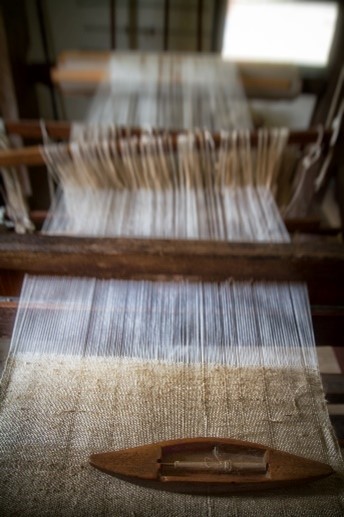
image of Loom
Photo by Nickolas Nikolic

Weaving is a fascinating process that the ancients in many cultures believed was a gift from the Goddess. Before the Industrial Revolution, clothing was valuable because of the sheer amount of both labor and skill necessary to create it—tasks that were primarily delegated to women.  The process of collecting, cleaning, and preparing plant or animal fiber to be spun into thread or yarn is a lot of work.  And all you have now is spun fiber.  It still needs to be dyed and used to warp the loom—a tedious and time-consuming process.  Next the weaving itself—dancing the shuttle in and out across the width of the warp—over one, under one, over two, under two—or some more visually appealing pattern which is also more complex to do. Finally, the woven fabric must be measured, cut, and sewn to make a garment.

Continue reading “The Crafting the Wisdom Loom By Mary F. Gelfand”

Coming Out of Quarantine by Angela Yarber

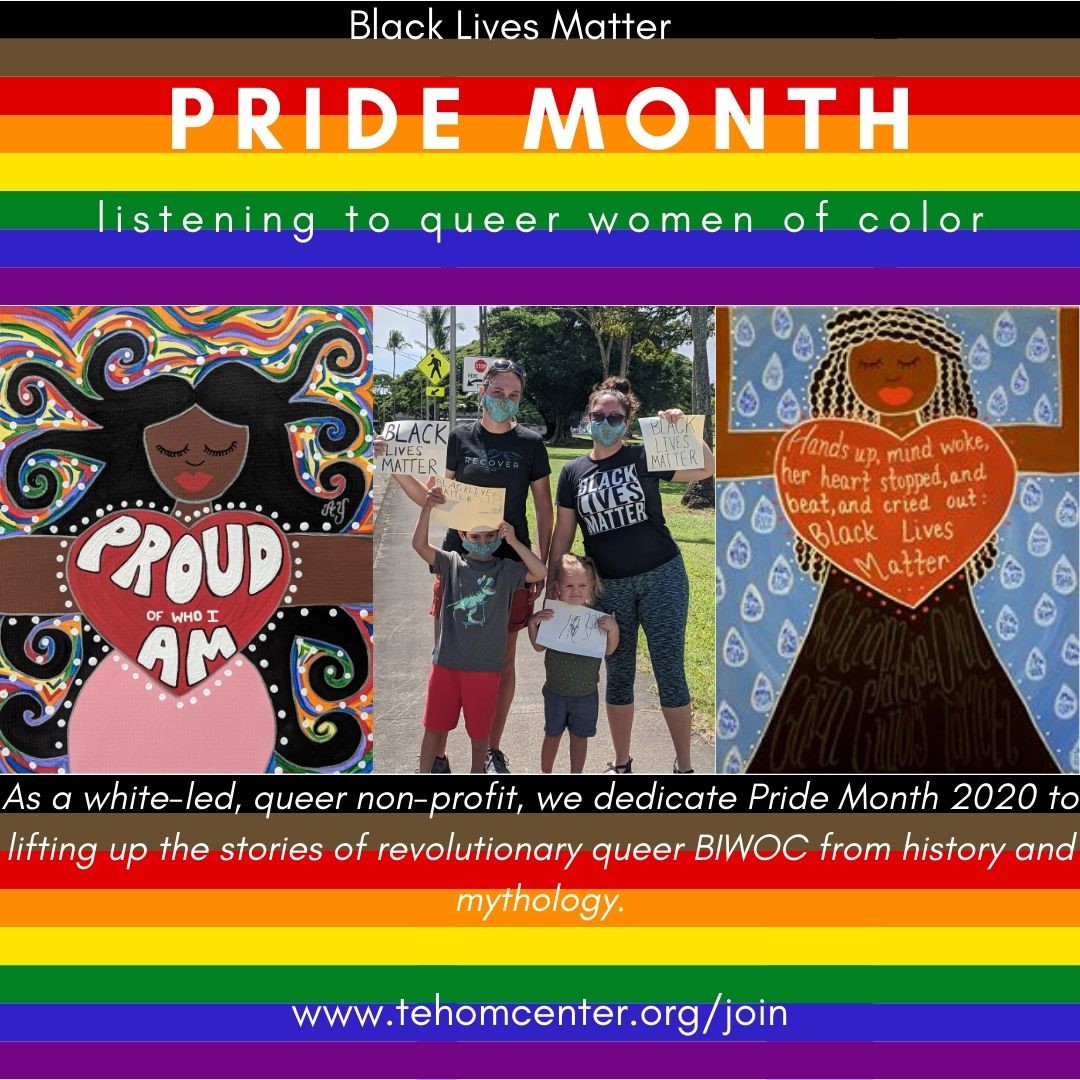
As Pride Month and Black Lives Matter protests co-exist, the spirituality of queer women of color teaches white allies how to listen.

After nearly eighty days of sheltering in place, I feel like I’ve stepped out and found the world on fire. June isn’t supposed to be this way. It’s Pride Month, after all, and I’m queer, eager to dance alongside my favorite drag queens, albeit reticent to embrace capitalism’s commodification of our beloved rainbows.

Most of our annual Pride events have been cancelled due to concerns of social distancing amid a global pandemic. I support these cancellations, though my first family outing since quarantine was a Black Lives Matter protest in Hilo, Hawai’i; we all stood six-plus feet apart, wore masks, and waved our signs beneath the King Kamehameha statue. As my six-year-old was complimented on how he wrote his own sign, I adjusted my three-year-old daughter’s face mask and thought about how queer BIPOC started the Stonewall riots only 51 years ago. I thought about how we queers would have every right to demand our Pride celebrations, storming capitals with glitter bombs, and demanding our civil liberties, not completely dissimilar to the myriad gun clad white dudes demanding haircuts only weeks ago. But we don’t. Continue reading “Coming Out of Quarantine by Angela Yarber”

The Practice of Bearing Witness by Stephanie Arel

She looked away and stared out the window, trying to hold back the tears in her eyes. “The tents,” she said and shook her head looking down at the ground. The tears were coming, but softly. I asked her what the tents represent. She shrugged her shoulders and said into the camera phone: “The bodies I guess. They don’t have enough room for the bodies.”
In this time of the coronavirus, as in Italy and Spain, New York City has room neither in the hospitals nor the morgue for the bodies that are dying. Up from 25 a week, to 24 a day, bodies are being buried on Hart Island, or City Cemetery, where the unclaimed and unidentified have been interred for decades. Others are waiting in refrigerated trucks for friends and family members to collect them. This New Yorker along with thousands of others have seen the stark reality, one that left even Trump sick at heart.

We are witnessing a global pandemic. Evidence of the ravages of the coronavirus lies all around us. The response to the virus has made physiological, economic, and psychological impacts on our lives. We have changed our working styles, dealt with lowered income, or lost our jobs. Staying secluded at home, we have taken on new roles for which we were not prepared; many of us have become sick, and some have died. We are together witnessing a major world disaster.

What does it mean to be a witness? What will it mean to carry that witnessing forward to future generations to mark this historic event so that when something like it happens again, future generations will have the tools they need to respond more quickly, adapt more easily, recover more rapidly? For this generation, just as those who researched and learned from the Spanish Flu, we bear witness. Continue reading “The Practice of Bearing Witness by Stephanie Arel”

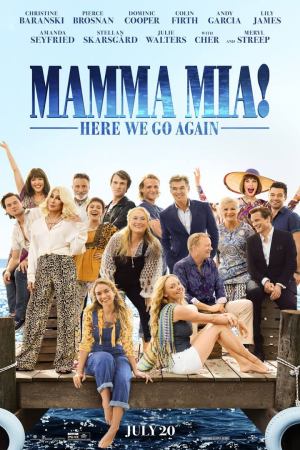
Mamma Mia and the Mother-Daughter Connection by Katie M. Deaver

A couple of weeks ago I went to see the new Mamma Mia: Here We Go Again! movie.  In addition to being a fan of movies inspired by musicals I also loved the emphasis that was placed on the mother/daughter relationship in the first Mamma Mia and had heard that this new installment would continue to focus on that relationship.  It definitely didn’t disappoint!

This second movie takes place five years after the original Mamma Mia, and roughly a year after the death of Donna Sheridan, with Donna’s daughter Sophie preparing for the grand reopening of the Hotel Bella Donna.  This second movie also features lots of flashbacks where we are able to see a young Donna arrive at the island of Kalokairi as well as see how she first meets Sam, Bill, and Harry, her daughter Sophie’s three possible fathers.

As one might imagine, even if you aren’t familiar with the movie there is a lot going on, but the part that I found most intriguing was the very end of the movie.  At this point Sophie has given birth to her own baby and is bringing the child to the church to be baptized.  During the ceremony Donna’s spirit is there at the font with her daughter and new grandchild and you could feel this amazing sense of connection and love between not only three generations but across the lines of physical and spiritual presence and space.

Continue reading “Mamma Mia and the Mother-Daughter Connection by Katie M. Deaver”

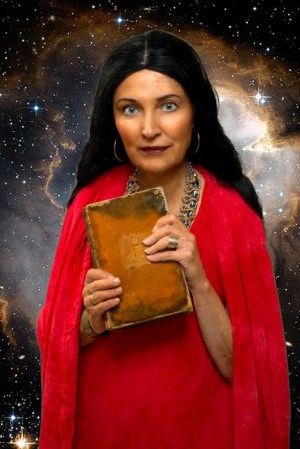
Sophia from The Goddess Project: Made in Her Image by Colette Numajiri

“Happy are those who find wisdom. . . . She is more precious than jewels, and nothing you desire can compare with her. . . Her ways are ways of pleasantness, and all her paths are peace. She is a tree of life to those who lay hold of her; those who hold her fast are called happy” (Proverbs 3: 13, 15, 17-18).

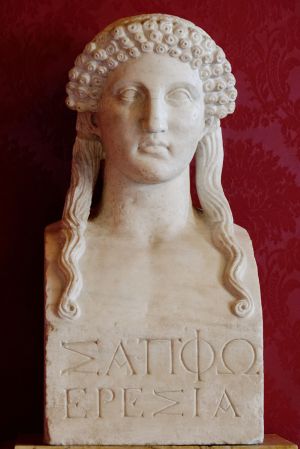
Sophia is DIVINE WISDOM, Her name comes from the feminine Greek word meaning Holy Wisdom. She is found all over the Bible (Proverbs, Sirach and the Wisdom of Solomon..) and in the Gnostic Gospels (unearthed at Nag Hammadi in 1947.) She has been called the MOTHER OF THE UNIVERSE, Mother of Yahweh and HOLY SPIRIT. The words: “Philosophy, theosophy and sophiology” all come from Sophia. The Bible links her to Christ: “Christ is the Wisdom (Sophia)” (1 Corinthians 1:24, 30). There is some evidence that Mary Magdalene was also called “Mary Sophia.”

Because She did not help advance the patriarchal scheme, Sophia was all but deleted from history. Hidden throughout the Bible and the Dead Sea Scrolls, knowledge of the DIVINE FEMININE all but went up in flames. Even a great cathedral build in Her honor in Constantinopole, Hagia Sophia (Holy Wisdom), was burned to the ground twice. It’s newest rebuild was a mosque and is now a museum. NOTRE DAME (Our Lady) has survived but they eventually claimed it was named after the Virgin Mary. (The famous Notre Dame rose windows are a common symbol of the Divine Feminine!). Some say there are secret societies that still exist to keep knowledge of Her alive.

Continue reading “Sophia from The Goddess Project: Made in Her Image by Colette Numajiri”

Women’s History Month: Painting and Empowering Adolescent Girls by Angela Yarber

In celebration of Women’s History Month, the Holy Women Icons Project is excited to launch Revolutionary Girls, a new program seeking to empower marginalized adolescent girls by telling the stories of revolutionary women through art, writing, and discussion. Partnering with local schools and other non-profit organizations in the Puna District of Hawai’i County, we are creating a curriculum that features often overlooked historical and mythological women whose lives, legends, and legacies embody empowerment, resilience, and emotional intelligence that can embolden adolescent girls to become socially aware revolutionary leaders.

Research shows that girls’ self-esteem plummets in early adolescence, due in part to unrealistic body images in media and casual (or even overt) sexism from parents, teachers, and peers. Our Revolutionary Girls project aims to counter these negative influences by offering girls aged 11-15 a space of empowerment. Prior to adolescence, many girls believe they are as smart, strong, and capable of leadership as boys. At the onset of puberty, girls are often taught that their only value is in their appearance, and that they are not as capable or valuable as men and boys. Simultaneously, girls are exposed primarily to the histories and myths of men in power while in the classroom, the revolutionary lives, legends, and legacies of countless revolutionary women altogether absent from their textbooks and lessons. Continue reading “Women’s History Month: Painting and Empowering Adolescent Girls by Angela Yarber”

Toil and Trouble (Part 1) by Barbara Ardinger

…and Ella can’t remember the last real meal she had. After supper with the refugees in the witch’s house, she and the witch put their heads together to begin making significant plans. She’s also been meeting all the refugees who now live on the witch’s farm. She knows first-hand why these people fled the capital and the other cities. “Oh, lordy, yes,” she says. “I used to know all the important people. My dear sisters and I went to all the big events, ate the finest cuisine—” suddenly remembering where she is, she looks down at the table “—oh, dear, but I don’t mean to criticize your cuisine.”

The ravens, all perched on the backs of chairs look straight at her. “Good food, this,” says Kahlil, “except these girls don’t serve eyeballs.” “Stop that,” Domina whispers (if ravens can be said to whisper). “Don’t be so picky. Everybody here gets enough to eat.”

Ella, who is more used to cats and dogs and the occasional parakeet than to ravens, blinks and continues. “I wish I knew where my sisters are now. Thanks to our ‘relationships’ with the princes, we were High Society and—”

Continue reading “Toil and Trouble (Part 1) by Barbara Ardinger”

In Light of Women by Mary Jane Miller

Why are so few women mentioned in the great feast days like Pentecost, the Last Supper, the Baptism of Christ, etc.? God made no commandment that they not be included.
Inquisitive women like myself have always been around Christ listening to His message. There they were, cooking and cleaning at the Last Supper, at the wedding at Canon and when He fed the five thousand. When Christ invited the children to come to him, you can be sure the mothers were there, too.
Beginning as early as the fourth century the dominant Christian leaders, all men, twisted and distorted Holy Scriptures to thwart the ascendant positions for women within the religious hierarchy and in christian societies in general. Yet, the underlying teachings of Jesus Christ, the Apostle Paul, Moses and the prophets, – all call for the proper and equitable treatment of God’s children. Without a doubt, God and Christ love all of humankind with no gender bias. When women listen to scripture we naturally fill in the gap, or adjust the gap knowing in our hearts and souls, we are not inferior to men.

Continue reading “In Light of Women by Mary Jane Miller”