How the Nineteenth-Century Spiritualist Movement Gave Voice to American Women -Part One by Theresa Dintino

Moderator’s Note: This post is presented as part of FAR’s co-operation with The Nasty Women Writers Project, a site dedicated to highlighting and amplifying the voices and visions of powerful women. The site was founded by sisters Theresa and Maria Dintino.

Throughout history women have found power and position in spiritual communities. They have acted as leaders, priestesses, oracles, mediums, disciples, saints, preachers and more. And yet these roles and positions of power are often overlooked in the story of women, and the general story of humans.

Still today many women function as leaders in a variety of spiritual disciplines, yet they do not receive the attention, respect and clout that men in similar positions do. More often women who hold roles of power in spiritual communities are dismissed or discredited.

If their spiritual community is not considered a formally accepted religion where their position was bestowed to them by a man ranking above them, women spiritual leaders are often ignored. This marginalization goes unquestioned.

Continue reading “How the Nineteenth-Century Spiritualist Movement Gave Voice to American Women -Part One by Theresa Dintino”
To Childless Cat Ladies by Janet Maika’i Rudolph

I feel you. In a patriarchy where women’s reproductive abilities determine our worth, to be childless is a curse. We can thank VP candidate JD Vance for revealing this truth in all its ugly fullness. He is a walking billboard for patriarchy. Bottom line: Patriarchy is all about women’s bodies, our reproductive abilities and men’s desire to control them. We saw this in the Dobbs decision where it was declared that women have no constitutional right to the basics of healthcare, in Texas where it’s pretty much illegal to have a poor pregnancy outcome, and in Ohio where raped children are expected to give birth to their abuser’s child. Its endless 

But it is JD who made it plainer than plain what this is all about. Besides childless cat ladies being an old trope, just think of the judgement involved. Who is JD to decide on anyone’s family constellation? Or their pets? He also made disparaging remarks about the “childless left,” who have no “physical commitment to the future of this country.” That is a statement that only a person who totally lacks empathy can make. He is making a sweeping generalization that people without children don’t care about the future. This statement is more confession than truth. He reveals that until he had children, he had no care about the future of our world. It’s beyond egocentric. If only his kids are the center of his “caring,” that shuts out most of the world’s other children.

Continue reading “To Childless Cat Ladies by Janet Maika’i Rudolph”

A House for the Goddess by Annelinde Metzner

For the past few years I’ve been contributing to FAR as a poet.  So grateful for the opportunity to connect with you wise women!  This month I realize I should share with you another side of me, my music.

      On June 8th, I produced, directed and composed the music for “A House for the Goddess” in Asheville, North Carolina, featuring 29 performers including two sopranos, a cellist, myself and another pianist, two dancers, an MC and a women’s choir.  The concert, whose venue was offered generously by Land of the Sky United Church of Christ, was a sellout, and over three thousand dollars was raised for the Linda Norgrove Foundation for the women and children of Afghanistan (https://lindanorgrovefoundation.org.)

      My compositions, both choral pieces and solo art songs, always find their birth through the inspiration of poetry.  At this venue, the texts of the poetry were displayed on two screens overhead as the songs were sung.

Continue reading “A House for the Goddess by Annelinde Metzner”

Priestesses of the Shtetl? The Jewish Women Spiritual Leaders of Eastern  Europe by Annabel Gottfried Cohen

‘Four thousand years ago, in the ancient Near East, women were poets, drummers, scholars, dancers, healers, prophets and keepers of sacred space.’ In The Hebrew Priestess (2015), Rabbi Jill Hammer argues that as the Israelite cult became more centralised, leadership roles were restricted to men and women’s spiritual leadership was gradually repressed. Yet, as Hammer and co-author Taya Shere demonstrate, ‘the remnants of the priestesshood remain for those who seek them out.’ Combining a close reading of biblical and rabbinic texts, alongside other contemporary sources and archaeological evidence, Hammer has identified thirteen models or netivot of feminine Jewish leadership, which she argues persisted, albeit in altered and marginalised forms, into the medieval, early modern and even modern periods. My own research supports these conclusions, suggesting that Hammer’s netivot framework provides a useful lens by which to better understand Jewish women’s traditions that, in a patriarchal culture, have often been marginalised.

Continue reading “Priestesses of the Shtetl? The Jewish Women Spiritual Leaders of Eastern  Europe by Annabel Gottfried Cohen”

MATILDA JOSLYN GAGE: IN HER NAME, AMERICAN WOMAN WRITER AND ACTIVIST (1826-1898), part 2 by Maria Dintino

part 1 appeared yesterday

Leila Brammer in her book Excluded from Suffrage History: Matilda Joslyn Gage, Nineteenth-Century American Feminist, explains the long-term impact of the dismissal of Gage:

“The loss of Matlida Joslyn Gage from the history of the woman suffrage movement and her ideas from the intellectual history of feminism speaks to the influence of exclusionary processes in social movements as well as their unfortunate consequences…we must remember that Joslyn Gage was intricately involved in the movement, wrote in newspapers and magazines, and published a book, but all these activities and her significant feminist thought had to be re-created and rediscovered nearly a century later”(120).

Continue reading “MATILDA JOSLYN GAGE: IN HER NAME, AMERICAN WOMAN WRITER AND ACTIVIST (1826-1898), part 2 by Maria Dintino”

MATILDA JOSLYN GAGE: IN HER NAME, AMERICAN WOMAN WRITER AND ACTIVIST (1826-1898), part 1 by Maria Dintino

Moderator’s Note: We are pleased to announce that we have formed a co-operation with The Nasty Women Writers Project, a site dedicated to highlighting and amplifying the voices and visions of powerful women. The site was founded by sisters Theresa and Maria Dintino. To quote Theresa, “by doing this work we are expanding our own writer’s web for nourishment and support.” This was originally posted on their site on January 5, 2021. You can see more of their posts here. 

A few weeks back, I came upon a term I had not heard before, the ‘Matilda Effect’. It’s defined as: a bias against acknowledging the achievements of those women scientists whose work is attributed to their male colleagues (Wikipedia). This term was coined by science historian Margaret W. Rossiter in 1993, in her essay The Matthew Matilda Effect in Science.

The Matthew Effect, labeled in 1948 and credited to Robert K Merton, and later to Harriet Zuckerman as well, refers to the way that: eminent scientists will often get more credit than a comparatively unknown researcher, even if their work is similar; it also means that credit will usually be given to researchers who are already famous (Wikipedia).

Continue reading “MATILDA JOSLYN GAGE: IN HER NAME, AMERICAN WOMAN WRITER AND ACTIVIST (1826-1898), part 1 by Maria Dintino”

A Feminist Reading of Saint Wilgefortis by Sofia Meskhidze

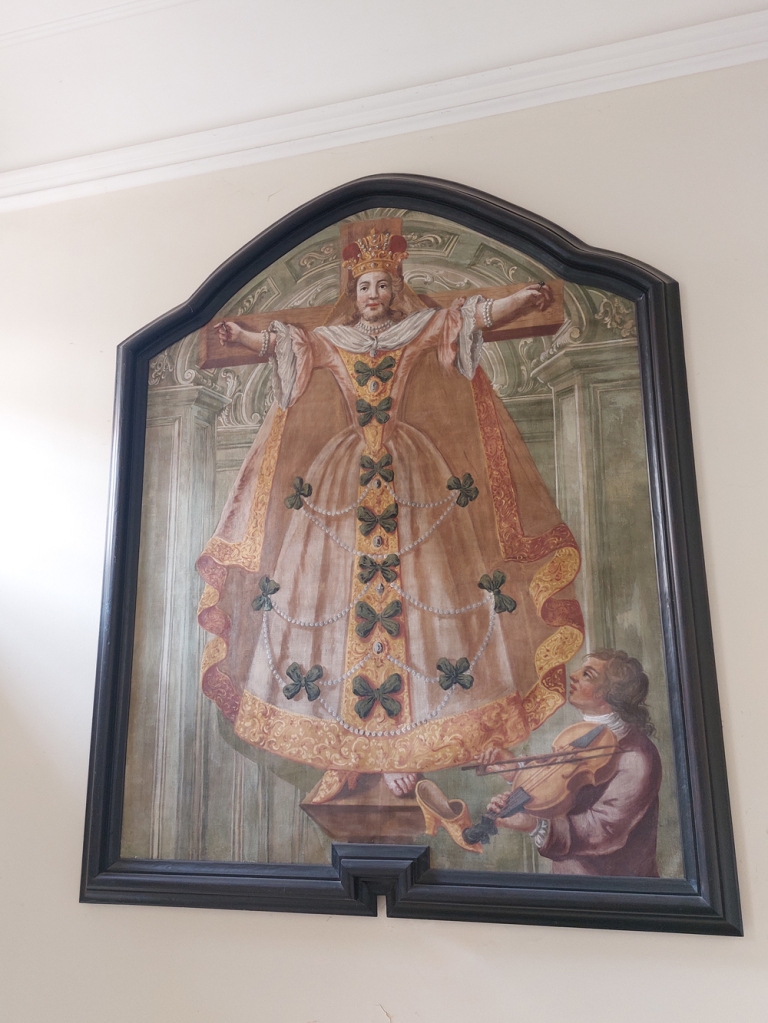
The legend of Saint Wilgefortis tells the story of a Christian woman who was martyred for her faith. While there are numerous women martyrs in the Christian tradition, Wilgefortis is distinguished by her gender non-conformity. She is often referred to as female Christ[1] and is almost always depicted with a beard, in a dress, and nailed to a cross. According to the legend, she was a Christian princess from Portugal whose father had promised her to the pagan king of Sicily. Wilgefortis, refusing to marry, prayed all night for God to make her unmarriable and as a result miraculously grew a beard, causing her father’s rage, after which he had her tortured and crucified[2]. The origin of the legend is thought to be the Volto Santo sculpture in Lucca, Italy, one of the most well-known examples of a clothed crucifix[3]. Misinterpretation or not, it is without doubt that the legend spread wide and Wilgefortis was in medieval times venerated almost as much as the Virgin Mary. In fact, this popularity displeased the Catholic Church, who actively discouraged it and even removed Wilgefortis from the official list of saints in 1969[4]. Here I argue for the importance of Wilgefortis to feminist theology, feminist and queer Christians, and her potential as a non-binary/gender non-conforming icon.

Continue reading “A Feminist Reading of Saint Wilgefortis by Sofia Meskhidze”

FRANCESCA CACCINI (1587-1646): THE FIRST WOMAN TO COMPOSE AN OPERA by Maria Dintino

Moderator’s Note: We are pleased to announce that we are forming a co-operation with The Nasty Women Writers Project, a site dedicated to highlighting and amplifying the voices and visions of powerful women. The site was founded by sisters Theresa and Maria Dintino. To quote Theresa, “by doing this work we are expanding our own writer’s web for nourishment and support.” This was originally posted on their site on January 19, 2024. You can see more of their posts here. 

The featured image above is from the 2018 performance of Caccini’s La Liberazioine at the Morgan Library & Museum’s Gilder Lehrman Hall in New York City. Photo credit goes to Vincent Tullo of the New York Times.

I’ve always been an insomniac and of late I’ve become a regular listener of the app Calm’s sleep stories. One night I listened to an enchanting story called Songbird, written by Eurydice Da Silva and narrated by May Charters. Songbird is about Francesca Caccini, who is said to be the first woman to compose an opera, a musical genius and wonder. The next morning, I set out to learn more about her.

Continue reading “FRANCESCA CACCINI (1587-1646): THE FIRST WOMAN TO COMPOSE AN OPERA by Maria Dintino”

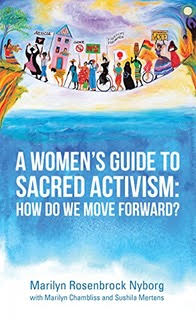
Time to Heal the Ancestral Wounds From the Burning Times by Marilyn Nyborg

My work has been in the areas of social justice and the empowerment of women. Until somewhere in 1990, I saw a series of films from women in Canada on the Early Modern European Witchcraft trials which included “The Burning Times”. (Still available on You Tube.)  The film talked about three centuries of Witch burnings. The narration and graphics really shocked me and awakened an interest.  Intuitively I recognized the way in which women have embedded the limitations and pain of that era from centuries ago.  I now know it to be called ancestral wounding. 

Not to say the abuse of women began there.  It didn’t.  But the intensity of three centuries of extreme violence on women have impacted us and cultures through time: sowing the limitations and lack of respect for women into cultures globally.

Continue reading “Time to Heal the Ancestral Wounds From the Burning Times by Marilyn Nyborg”

Thirst for Knowledge, Thirst for Rain: Women’s Seeds and Symbols in Southern Morocco by Laura Shannon

Last week, once again, I had the good fortune to bring a small group of dancing friends to southern Morocco. As always, our travels there unfolded in a blessed and beautiful way, rich in experiences of ancient Berber/Amazigh culture and encounters with local women.

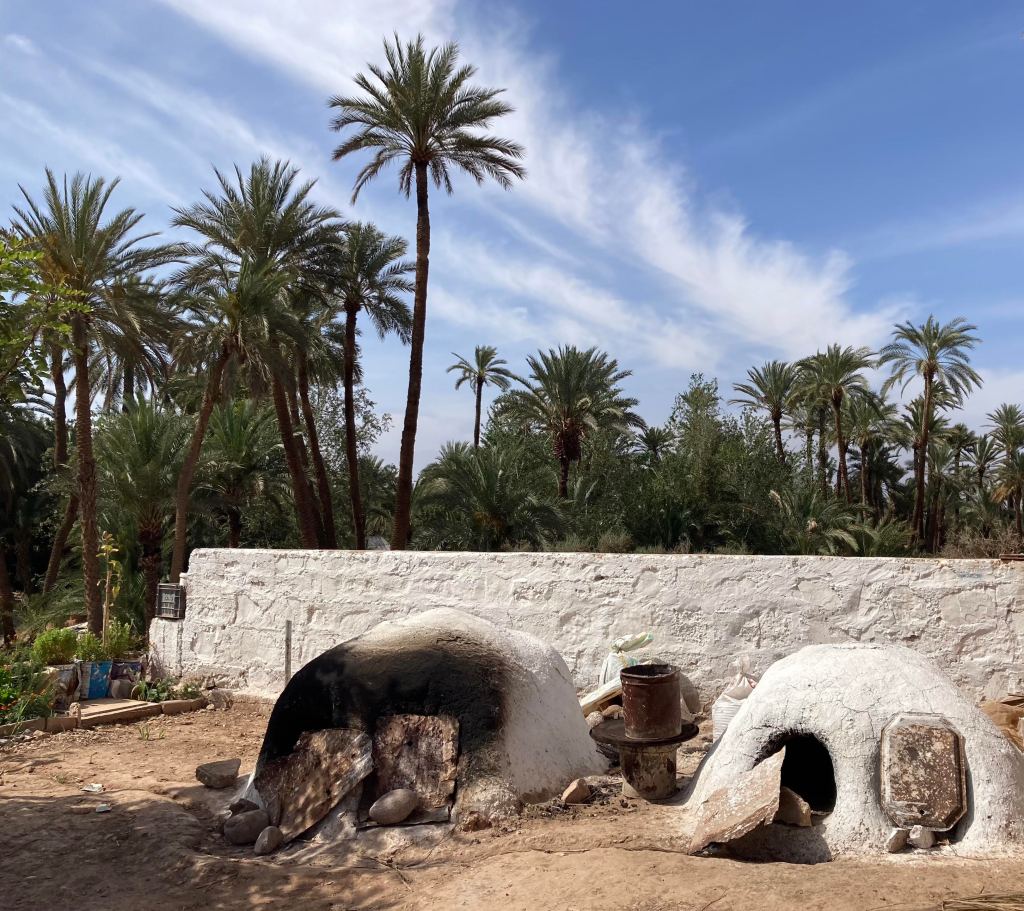
At Tioute oasis in the foothills of the Anti-Atlas mountains, we bought unleavened flatbread baked in rounded clay ovens. 

Bread ovens at Tioute oasis, southern Morocco. Photo: Laura Shannon
Continue reading “Thirst for Knowledge, Thirst for Rain: Women’s Seeds and Symbols in Southern Morocco by Laura Shannon”