Anne Brontë’s Agnes Grey: Lifting the Veil on Cruelty, part 2 by Maria Dintino

Part 1 was posted yesterday.

Here the reader further witnesses how young Tom treats his little sisters which is consistently cruel-hearted. Tom continues to describe how he will harm the helpless birds while Agnes desperately works to persuade him otherwise:

“But you shall see me fettle ’em off. My word, but I will wallop ’em? See if I don’t now. By gum! but there’s rare sport for me in that nest.”

“But, Tom,” said I, “I shall not allow you to torture those birds. They must either be killed at once or carried back to the place you took them from, that the old birds may continue to feed them.”

“But you don’t know where that is, Madam: it’s only me and uncle Robson that knows that.”

“But if you don’t tell me, I shall kill them myself—much as I hate it.”

“You daren’t. You daren’t touch them for your life! because you know papa and mamma, and uncle Robson, would be angry. Ha, ha! I’ve caught you there, Miss!”

“I shall do what I think right in a case of this sort without consulting any one. If your papa and mamma don’t happen to approve of it, I shall be sorry to offend them; but your uncle Robson’s opinions, of course, are nothing to me.”

This young charge of Agnes’s is threatening and manipulating her as he and the other children do often. Tom doesn’t realize he has hit a nerve with Agnes, where the brutal treatment of the most vulnerable is unbearable. This situation is indicative of the overall treatment she receives as a governess, as one less-worthy-than and stripped of power, yet blamed for the misbehavior of her charges.

“So saying—urged by a sense of duty—at the risk of both making myself sick and incurring the wrath of my employers—I got a large flat stone, that had been reared up for a mouse-trap by the gardener; then, having once more vainly endeavoured to persuade the little tyrant to let the birds be carried back, I asked what he intended to do with them. With fiendish glee he commenced a list of torments; and while he was busied in the relation, I dropped the stone upon his intended victims and crushed them flat beneath it. Loud were the outcries, terrible the execrations, consequent upon this daring outrage; uncle Robson had been coming up the walk with his gun, and was just then pausing to kick his dog.

“Tom flew towards him, vowing he would make him kick me instead of Juno. Mr. Robson leant upon his gun, and laughed excessively at the violence of his nephew’s passion, and the bitter maledictions and opprobrious epithets he heaped upon me. “Well, you are a good ’un!” exclaimed he, at length, taking up his weapon and proceeding towards the house. “Damme, but the lad has some spunk in him, too. Curse me, if ever I saw a nobler little scoundrel than that. He’s beyond petticoat government already: by God! he defies mother, granny, governess, and all! Ha, ha, ha! Never mind, Tom, I’ll get you another brood to-morrow.”

Uncle Robson’s appalling show of support and praise for Tom’s egregious behavior toward his governess underscores a deeply engrained and condoned misogyny. But here our usual grin-and-bear-it Agnes will not back down or be silenced.

“If you do, Mr. Robson, I shall kill them too,” said I.

“Humph!” replied he, and having honoured me with a broad stare—which, contrary to his expectations, I sustained without flinching—he turned away with an air of supreme contempt, and stalked into the house. Tom next went to tell his mamma.”

Agnes has risked her position in defense of her values, but Uncle Robson, who it is noted never pays his nieces any heed, has instilled and upholds his nephew’s cruel ways, no doubt leading him to become a person who will kick his dogs and treat all creatures deemed lesser, including girls and women, with disdain. Little Tom is “beyond petticoat government already,” encouraged and rewarded for not listening to any of the women in his life. Following the example of his father, uncle, and many of the other men in his life, Tom has already learned to disregard what women have to say.

And Tom’s mother, Mrs. Bloomfield, buys into the dysfunction wholeheartedly. The passage continues with an interaction between Agnes and lady of the house, with her defending the violent behavior of her son and blaming Agnes for interfering with his fun and games.

“It was not her [Mrs. Bloomfield’s] way to say much on any subject; but, when she next saw me, her aspect and demeanour were doubly dark and chilled. After some casual remark about the weather, she observed—“I am sorry, Miss Grey, you should think it necessary to interfere with Master Bloomfield’s amusements; he was very much distressed about your destroying the birds.”

“When Master Bloomfield’s amusements consist in injuring sentient creatures,” I answered, “I think it my duty to interfere.”

“You seemed to have forgotten,” said she, calmly, “that the creatures were all created for our convenience.”

I thought that doctrine admitted some doubt, but merely replied—“If they were, we have no right to torment them for our amusement.”

“I think,” said she, “a child’s amusement is scarcely to be weighed against the welfare of a soulless brute.”

“But, for the child’s own sake, it ought not to be encouraged to have such amusements,” answered I, as meekly as I could, to make up for such unusual pertinacity. “‘Blessed are the merciful, for they shall obtain mercy.’”

“Oh! of course; but that refers to our conduct towards each other.”

“‘The merciful man shows mercy to his beast,’” I ventured to add.

“I think you have not shown much mercy,” replied she, with a short, bitter laugh; “killing the poor birds by wholesale in that shocking manner, and putting the dear boy to such misery for a mere whim.”

“I judged it prudent to say no more. This was the nearest approach to a quarrel I ever had with Mrs. Bloomfield; as well as the greatest number of words I ever exchanged with her at one time, since the day of my first arrival.”

Agnes knows her place and if she wants to maintain her position to both assist her family and to prove she can handle the role, she must monitor herself and bite her tongue around her employers and their children. In both Agnes’s positions, the parents are portrayed as overly indulgent and uninvolved, allowing the children to misbehave and manipulate at every turn. The parents consistently take their children’s side and refuse to see any fault in them, lest it cast blame on their parenting. This creates an especially impossible arrangement for the governess to have any influence on the children, let alone get them to care about and complete their lessons.

Anne’s resting place at St. Mary’s Church in the seaside town of Scarborough, North Yorkshire.

At a certain point in the story it becomes quite clear how all will unfold, yet one cannot stop reading!

In the end, Agnes is rewarded with the love of one she has admired for some time. The icing on this happy-ending cake is that she is also reunited with the neglected dog, Snap, that one of the young women in her charge had given away, breaking Agnes’s heart. This delightful reunion takes place on the beach, a setting Anne Brontë herself cherished.

If one cannot bear the truth, don’t read Anne Brontë’s novels. Yet, it’s worth keeping in mind that if the ugly truth is kept undercover, it’s less likely to be addressed.

Anne Brontë is a Nasty Woman Writer.

© Maria Dintino 2024

Works Cited & Resources

Brontë, Anne. Agnes Grey. The Project Gutenberg eBook of Agnes Grey, 4 December 2020. https://www.gutenberg.org/files/767/767-h/767-h.htm

Ellis, Samantha. “Anne Brontë: the sister who got there first.” The Guardian. 6 January 2017.  https://www.theguardian.com/books/2017/jan/06/anne-bronte-agnes-grey-jane-eyre-charlotte

Holland, Nick. “Agnes Grey: Nothing short of genius.” Anne Brontë Blog, 9 April 2017.  https://www.annebronte.org/2017/04/09/agnes-grey-nothing-short-of-genius/

Anne Brontë’s Agnes Grey: Lifting the Veil on Cruelty, part 1 by Maria Dintino

Moderator’s Note: This piece is in co-operation with The Nasty Women Writers Project, a site dedicated to highlighting and amplifying the voices and visions of powerful women. The site was founded by sisters Theresa and Maria Dintino. To quote Theresa, “by doing this work we are expanding our own writer’s web for nourishment and support.” This was originally posted on their site on November 19, 2024. You can see more of their posts here. 
Anne, the youngest of the Brontë sisters, penned two novels in her short life. The first was Agnes Grey (1847), then The Tenant of Wildfell Hall (1848).

A sketch of Anne by her sister Charlotte.

It’s probably safe to say that Agnes Grey is the least read and appreciated of all the Brontë novels, of which there are seven. Emily’s Wuthering Heights and Charlotte’s Jane Eyre garner the most praise and attention. But Anne’s The Tenant of Wildfell Hall is not far behind, and by some accounts leads the pack.

Interestingly, all the sisters’ first novels were released in the same year, under their pen names Currer, Ellis, and Acton Bell. First was Jane Eyre in October 1847 and then Wuthering Heights and Agnes Grey together as a ‘triple decker’ in December 1847, with Wuthering Heights making up the first two parts, and Agnes Grey the third.

Continue reading “Anne Brontë’s Agnes Grey: Lifting the Veil on Cruelty, part 1 by Maria Dintino”

Margaret Fuller (1810-1850): A Thanksgiving Revelation by Maria Dintino

Moderator’s Note: This piece is in co-operation with The Nasty Women Writers Project, a site dedicated to highlighting and amplifying the voices and visions of powerful women. The site was founded by sisters Theresa and Maria Dintino. To quote Theresa, “by doing this work we are expanding our own writer’s web for nourishment and support.” This was originally posted on their site on November 19, 2024. You can see more of their posts here. 

As the Thanksgiving holiday rolls around, I am reminded of Margaret Fuller’s Thanksgiving revelation, one she later wrote about in her journal. This revelation resonates annually for its gentle reminder of the value of being willingly and patiently engaged, of releasing resistance in the face of what cannot readily be altered.

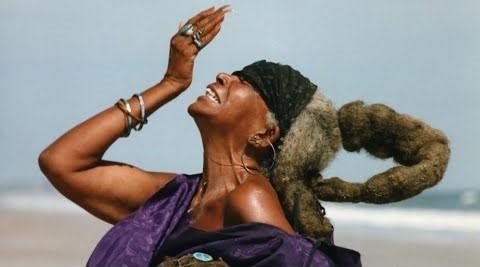
Joy Harjo, American poet, musician, playwright, and author. She served as 23rd US Poet Laureate, the first Native American to hold that honor. (Wikipedia) Learn more at joyharjo.com.

As I re-read Fuller’s account, I think about something former US Poet Laureate Joy Harjo said when she joined us a few years back at Flagler College in St Augustine, Florida for a virtual event. I don’t remember the exact question one of the listeners asked, but I’ll never forget Harjo’s response. She answered, “Every job is a service job.”

The truth in this statement struck me. I’d never considered my many jobs over the years, both inside and outside the home, as service jobs, but indeed they were.

Continue reading “Margaret Fuller (1810-1850): A Thanksgiving Revelation by Maria Dintino”

Female Wisdom in Eden: A Guide for Faith-Formed Feminists By Susie Austin

If you were taught that “men lead” is God’s design, this is your permission slip to ask a harder question: what if that teaching was never Eden’s plan — but a wound the world mistook for a rule?

Many of us grew up inside churches that loved us, baptized us, and gave us language for hope—while also wrapping womanhood in shrinking instructions: be agreeable, be modest, be quiet, be helpful. We learned to make ourselves small so that men could feel large. We learned to translate our leadership as “support,” our wisdom as “intuition,” and our authority as “being difficult.” We learned to carry the room’s temperature without ever touching the thermostat.

Feminism — and the women who lived it before it had a name — has always asked religion to remember itself. Not to abandon Scripture or tradition, but to recover what was true before fear called itself theology. Before we rewrite our lives, let’s reread the beginning.

A forgotten reading of the oldest story

Look again at Genesis: the woman sees that the fruit is “desirable to make one wise” (Gen. 3:6). In Scripture’s own poetry, Wisdom is feminine—personified as Lady Wisdom (Hebrew: Chokma) calling us to life (Prov. 8:1-4, 22-31). And Genesis 3:6 ends with four words we usually skip: “who was with her.” Translation: she leads; he lingers.

Continue reading “Female Wisdom in Eden: A Guide for Faith-Formed Feminists By Susie Austin”

tough shit – a few words by Arianne MacBean

Cover Design by Kathleen Henrion

Before I knew what form my self-reflection and somatic journal for women would take, I knew what its title had to be. Through my work as a somatic psychotherapist, I understand how repressed anger, fear, sadness and hurt affects the psyche and the body. At best, suppressed emotional pain can show up as sensations that limit pleasure in daily life. At worst, unprocessed trauma can lead to chronic and debilitating illness. I wanted to create a journal that was not only anti-oppressive but also subverted the misnomer that divisive feelings are negative and should be stifled. Mostly, I wanted to expose how emotional censorship has its roots in its chief proponent: patriarchy.

Tough Shit. – the angry woman’s guide to embodying change is a journal that supports consciously tracing difficult feelings to understand one’s true self and make positive change. The title isn’t about being provocative or crass. I chose it because the phrase “tough shit” has a long history related to gender stereotyping and dominance—all of which my journal actively challenges. But the phrase is not just cultural; it’s personal. An iteration of this phrase was used against me growing up. As the concept of the journal became clearer, I felt my body insist on throwing “tough shit” back out, not as a degrading echo, but as a reclamation—a fierce refusal to silence valid emotional pain.

Continue reading “tough shit – a few words by Arianne MacBean”

The Gospel of Salome by Kaethe Schwehn, Book Review by Michelle Bodle

What would happen if you were a disciple of Jesus and you had an encounter with someone who told you a different narrative than what you had heard in the past? How would you react? What would you preserve? How would you reconcile the stories you have been told and have told others as an apostle with what someone is now proclaiming?

            The Gospel of Salome is a work of Biblical fiction focused on Salome, a character who we hear of being present at the crucifixion and the empty tomb in the Gospel of Mark. Some scholars have connected her with “the mother of Zebedee’s children” in the Gospel of Matthew or “his mother’s sister” (i.e. Mary’s sister) in the Gospel of John. Schwehn takes a different approach, portraying Salome as a woman who was sought out for her skills in medicine, finds herself in the presence of John Mark, one of Jesus’s disciples who has come to Alexandria.

            Going back and forth between speaking to John Mark in the present and living in her memories of the past, Salome tells the apostle that she is the true mother of Jesus. However, there is another factor to consider in her proclamation – Salome’s dementia, which is threatening to steal her memories. Memories about Salome’s agreements with Mary about Jesus’s desire to learn how to heal or Mary asking Salome to not be present in Jesus’s life. Memories of being at the cross and the empty tomb.

Continue reading “The Gospel of Salome by Kaethe Schwehn, Book Review by Michelle Bodle”

What the Woodpeckers are Trying to Tell Me by Sara Wright

Pileated Woodpecker

Every morning, I awaken to the chirp of woodpeckers. Sapsuckers, downy and hairy woodpeckers are constant visitors climbing up and down the crabapple trees. The chickadees can’t get to the feeder because as soon as one species leaves another arrives.

At first, I enjoyed woodpecker presence and their antics but during the last week I have found the escalating chirps disturbing.  Some days especially around 4 PM a pileated woodpecker joins the other three; this one is drilling a hole in the side of the cabin.

When my pileated friend started drilling on the house, I was forced to acknowledge that undealt with personal issues were being  highlighted by the behavior of these birds, and that someone in me was stuck in denial.

Since my relationship with nature is deeply personal too many sightings of any creature indicate the need to pay closer attention.

Continue reading “What the Woodpeckers are Trying to Tell Me by Sara Wright”

God is a Midwife by Halley Kim

It was four in the morning in the north Georgia mountains. A woman labored quietly but powerfully in her home, with her partner at her side. Her watchful midwife hovered nearby. I was a nursing student and a zealous “birth junkie,” tickled pink by the invitation to observe childbirth. At just the right time, the mother delivered her child from her womb to the world. The sun rose with a new soul suddenly among us, and I knew I would never be the same.

Feminist theology has long-invoked the image of God as a laboring mother, and progressive theologian Marcus Borg suggested that humanity is God’s midwife. But less has been written about the opposite metaphor. Imagine that we are in labor, in pain, and God is our midwife. 

The word “midwife” means “with woman,” and that’s what midwives do: they are with birthing people through it all. They empower and guide, safeguard and witness, but they do not save. Midwives facilitate the birth process, but they don’t—they can’t—take the pain away. They don’t deliver babies; that honor belongs to their clients. Like physicians, they monitor the health of parent and baby, and can deftly manage a cord around a baby’s neck or stop a postpartum hemorrhage. But they mostly rely on the power of presence to bring babies earth-side. 

Continue reading “God is a Midwife by Halley Kim”

Of Cruelty and Compassion: Jane Goodall: Messenger of Hope by Beth Bartlett

Mark Schierbecker, Wikimedia Commons

During the last week of September I had the opportunity to spend a few days in solitude in a place that is my soul’s home.  I spent part of my time reflecting on questions posed by ecotheologian Mary DeJong to mark the autumnal equinox.  The first question was “What is a desire you carry into the autumn season? What are you seeking?”  After much contemplation, the words that came were, “I wish for a change in government – to be rid of Trump and company – for freedom, equality, respect, for the dignity of all, for an end to the suffering in Gaza and the reign of terror of ICE in this country – the horrors of those being abducted and imprisoned – for an end to cruelty. Yes, for an end to cruelty everywhere.  Why is this country so cruel? I do not understand cruelty. Where does it come from? Why would anyone want to be cruel? How could anyone even stomach the suffering of another?  How does that happen? Yes, I desire an end to cruelty.”

A few days after writing those words, on October 1st, scientist, environmentalist, and humanitarian Jane Goodall passed away in her sleep, prompting me to re-read her book, Reason for Hope. There I found her words echoing my own, “To me, cruelty is the worst of human sins. . . “[i] And while she had not set out to study human cruelty, how we become cruel and how we might move beyond our worst impulses, her work with chimpanzees eventually would lead her to this.

Continue reading “Of Cruelty and Compassion: Jane Goodall: Messenger of Hope by Beth Bartlett”

The Second Skin: Lipstick, Lies and Lead part 2 by Sabahat Fida

part 1 appeared yesterday

It is mind-boggling to consider how standards for women’s bodies have been normalized over time. Centuries ago, practices like binding women’s feet in ancient China or forcing the use of corsets to narrow the waist which are now universally condemned as cruel and uncivilized. Throughout history, women have been subjected to extreme and often harmful beauty standards.  Foot binding created tiny “lotus feet,” causing lifelong pain and disability, while in Europe, tightly laced corsets compressed ribs and displaced organs to produce an exaggerated hourglass figure. In parts of Southeast Asia, neck rings elongated the neck but weakened muscles over time, and in Africa, South America, and Asia, lip and ear stretching permanently altered tissue as a marker of beauty or status. Pale skin was prized in ancient Egypt, Asia, and Europe, often achieved through toxic powders containing lead or arsenic, while teeth were filed, blackened, or inlaid to meet local ideals. Women were also expected to meticulously shape or remove hair and conform to strict weight norms, whether forced thinness or fattening, depending on the era. Across centuries, these practices reveal a clear pattern: women’s bodies were controlled, altered, and harmed in the name of beauty ,  a coercion that, in many ways, continues today through cosmetic interventions and socially enforced aesthetic standards.

Continue reading “The Second Skin: Lipstick, Lies and Lead part 2 by Sabahat Fida”