FREE OUR CHILDREN by Esther Nelson

I remember a poignant conversation with my sister when our children were young.  Our biggest fear at the time? How would we ever manage if one (or several) of our children refused to speak to us as they grew into young adulthood? Stories swirled around our social circles about a son or daughter who wanted nothing to do with their family of origin. These estranged children frequently put physical distance between themselves and their parents.

That fear eventually became my reality.  I despaired.

Like many parents, I lacked experience and maturity while raising my children. I didn’t have the wisdom to understand, trust, and apply the message of the Lebanese-American writer/poet, Kahlil Gibran (1883-1931). Had I done so, not only would I have avoided a lot of grief, but my children would probably have had an easier transition from childhood towards independent adulthood.

Continue reading “FREE OUR CHILDREN by Esther Nelson”

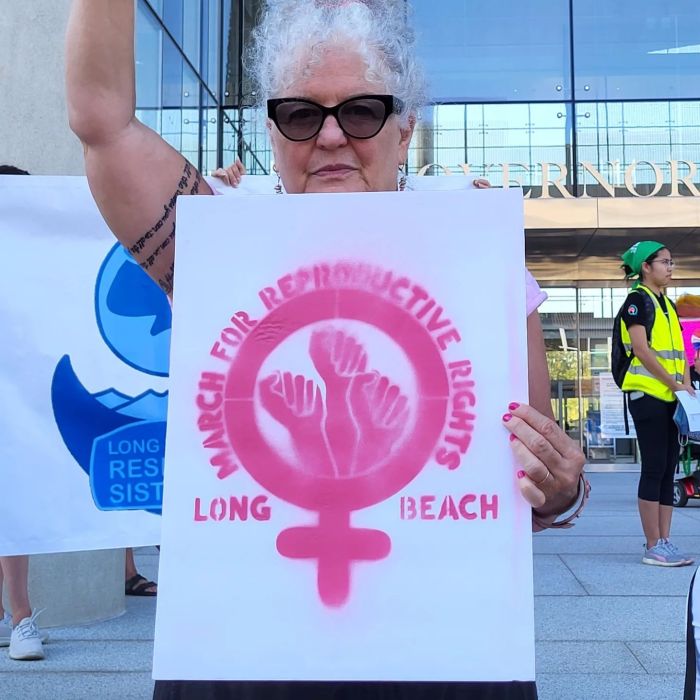
A Poem for Our Abortion Rights by Marie Cartier

Fecundity: the ability to produce an abundance of new growth, but also the ability to produce new ideas

And now in the hour of our discontent, we are asked to worry about

fecundity. I suppose we can call it that—have we made enough babies yet?

As a people. A people ruled by patriarchy. No small thing. “A social system in which males dominate and hold primary power.”

Oh my god—am I sick of it? Anyone with a brain is sick of it…I want to think.

But they have brains, right? The afore mentioned patriarchs? Who are

creating this new social system?

A meme goes out on social media—I’m not pro-murder I’m pro-Ellen, thirteen years old and pregnant by her father

I’m pro-Margaret, with five kids and I cannot to afford to feed another

I’m pro-Eliza, pregnant with a baby known to have serious birth defects

I’m pro– you get the idea.

Continue reading “A Poem for Our Abortion Rights by Marie Cartier”

Voice-ing the HEaRt: The Sixty-Six Books of the Bible by Margot Van Sluytman

Wall of Welcome, photo by Troy Gonsalves

When Reverend Anne Hines of Roncesvalles United Church in Toronto invited me to write a poem for Easter Sunday 2020, I had no idea that this invitation would become a dance with Word via words, that would alter my very own relating and relationship with my métier: poetry. A relationship that began to take me back into reading The Bible in a manner that shone a powerful light on the fact of that book’s capacity to shake, quake, challenge, and enlighten from the place of love, Wisdom, and indeed, inclusivity.

Each Monday I receive three to four words or phrases based on the book around which the Sunday sharing will be grounded. I read the chapter. I read with the HEaRt of womyn’s voice-ing. I read to unearth, to divine, to HEaR what is being invited, and how. The underpinning of my HEaRt’s listening, is the question: how does Godde wish for us to love?

Continue reading “Voice-ing the HEaRt: The Sixty-Six Books of the Bible by Margot Van Sluytman”

Sheep – Gentle Wisdom by Judith Shaw

Sheep – soft-footed, fluffy creatures – graze and amble along with frolicking lambs by their sides. Know worldwide as docile and friendly, sheep – in particular the female ewes and their lambs – have come to symbolize innocence, gentleness and peacefulness. The symbolism of rams takes on a slightly different, more masculine tone and will be looked at separately. 

Continue reading “Sheep – Gentle Wisdom by Judith Shaw”

The Bang Bang Boys by Sara Wright

Mad wolf boys bay
a waxing solstice moon 
to Bloom

PTSD 
Violence
is the Gateway
Nowhere to hide

Bang Bang

Warblers sing on


Fright
fragments
innocence
Nerves strung too tight
contract
Guns batter
Forest Peace

Bang Bang

Continue reading “The Bang Bang Boys by Sara Wright”

The Legacy of Carol P. Christ: June 25th or “June Unteenth”: A Sad Day For All Americans

This was originally posted on July 1, 2013

Kelly Brown Douglas wrote recently on Feminism and Religion about the celebrations in black communities on Juneteeth when the emancipation of slaves became a reality in the formerly Confederate states.  Sadly, on June 25th 2013 the Supreme Court announced its decision striking down section 4 of the Voting Rights act of 1965, the most important Civil Rights legislation of the 20th century.  The Supreme Court gave a “green light” to states with previous and on-going records of introducing laws with the effect of preventing minority voters from voting to “proceed straight ahead.”  I name this day June Unteenth and call on all Americans to mourn it in sackcloth and ashes.

For every American concerned with Civil Rights this indeed is a sad day. It means states and municipalities—particularly those in the former Confederacy—will in the days following the decision be introducing new legislation which will have the effect of disenfranchising black voters.  Those of us who consider the right to vote fundamental in a democracy must rise up, with time, with money, and if necessary with our bodies in peaceful protest.

Continue reading “The Legacy of Carol P. Christ: June 25th or “June Unteenth”: A Sad Day For All Americans”

From the Archives: The Story of Juneteenth by Kelly Brown Douglas

This was originally posted June 18, 2013

Tomorrow is a special day for me. It is Juneteenth.  On June 19, 1865, news finally reached Galveston, Texas that slavery had been abolished. This was of course two and a half years after Lincoln issued the Emancipation Proclamation. While the actual impact of the emancipation for the enslaved remains a source of historical discussion if not debate, the fact of the matter  is that the proclamation of emancipation and the reality of freedom for black women and men did not necessarily coincide. To be sure, for a variety of reasons, the Emancipation Proclamation did not have an immediate impact on the daily lives of enslaved women, men and children.  While the “official” historical records marks   January 1, 1863 as a day of emancipation, the historical record for the descendants of enslaved men and women marks June 19, 1865 as the day of freedom. For, it was on this day that the last slaves were free

.

Continue reading “From the Archives: The Story of Juneteenth by Kelly Brown Douglas”

In Memoriam: Rosemary Radford Ruether by Elizabeth Ann Bartlett

Yet another of my great feminist and spiritual teachers has died.  Rosemary Radford Ruether, ecofeminist Catholic theologian, died on May 21st.  Her work challenged my thinking and gave me new understandings and perspectives. She was a prolific writer, authoring hundreds of articles and 36 books, and was the quintessential scholar and historian of world religions and ecofeminist thought and theologies. A scholar of the scholastics, she examined the three strains of Western thought: the Hebraic tradition; Platonic-Gnostic; and Pauline-Augustinian in all their complexities to develop an understanding of the nature of Western thought and its implications for the domination of women, nature, and colonized others. As she described her own approach, she drew out the contradictions and complexities in these theologies, careful “to see both negative and positive aspects . . . and to be skeptical of exclusivist views on either side.”[i] Her thought and writing was ever-expanding, and always striving “to see the dominant system of patriarchy, including its racism, classism, and colonialism, in critical perspective,” and to put herself “in places where in solidarity with its victims, I can see it from its underside.”[ii]To this end, she brought together the ecofeminist theologies of women from around the globe, particularly the global south.[iii] Her thought also grew to include critiques of militarism and corporate globalization.  Needless to say, I cannot begin to encompass all of her contributions here. So I will focus on the ways her thought has most deeply influenced and inspired my own, as well as my students’.

Continue reading “In Memoriam: Rosemary Radford Ruether by Elizabeth Ann Bartlett”

Return to the Wild by Caryn MacGrandle

Everything is connected.

My son is into Alan Watts. He was speaking about him to me yesterday.  It made me think of an old blog I had from 2014 where I quoted Alan Watts.  

“Advice? I don’t have advice. Stop aspiring and start writing. If you’re writing, you’re a writer. Write like you’re a goddamn death row inmate and the governor is out of the country and there’s no chance for a pardon. Write like you’re clinging to the edge of a cliff, white knuckles, on your last breath, and you’ve got just one last thing to say, like you’re a bird flying over us and you can see everything, and please, for God’s sake, tell us something that will save us from ourselves. Take a deep breath and tell us your deepest, darkest secret, so we can wipe our brow and know that we’re not alone.”

– Alan Wilson Watts | 29 Best Quotes about Writing: We are Legion

Continue reading “Return to the Wild by Caryn MacGrandle”

Oakness as a Metaphor for the Wild Soul: the Dance Between Life Force, Personality and Original Nature by Eline Kieft

The process of fitting in and learning what is required to participate in society teaches us many useful skills such as math and language. All too often, this happens at the expense of developing expressive and intuitive abilities and trust in our unique contributions and points of view, or what I call the ‘Wild Soul’. This represents our original blueprint or essential spark that makes us into who we are.

Drawing on the well-known metaphor of the acorn that already carries the majestic fullness of the oak tree inside it, I distinguish three characteristics in the process of acorn becoming oak:

Continue reading “Oakness as a Metaphor for the Wild Soul: the Dance Between Life Force, Personality and Original Nature by Eline Kieft”