 When I set out two years ago to create a nonprofit, based on a small, unexpected inheritance, I thought a lot about the role of giving — both to grantees and to myself as a prime donor. My overall goal was to empower women and girls in the developing world through new projects dealing with their health and education.
I was uncomfortable with the word “philanthropy.” I knew from speaking Modern Greek that “anthropos” means “person” or “man” but what I wanted to do was completely woman-centered. So, I created the word “philogyny” or “loving and caring for women” as a way to draw attention to the impact that support for women can have.
Why women, especially women in developing countries? First, we know from years of research that women are the main caretakers and caregivers in their families and communities. When a woman in a developing country has income, she is likely to spend 95 percent on her own family while a man will typically spend a third to a half of his income on family, the rest, on himself. Secondly, contributions to women’s and girls’ education and health have a significant impact on a community resulting in higher employment, lower fertility rates, and healthier populations.
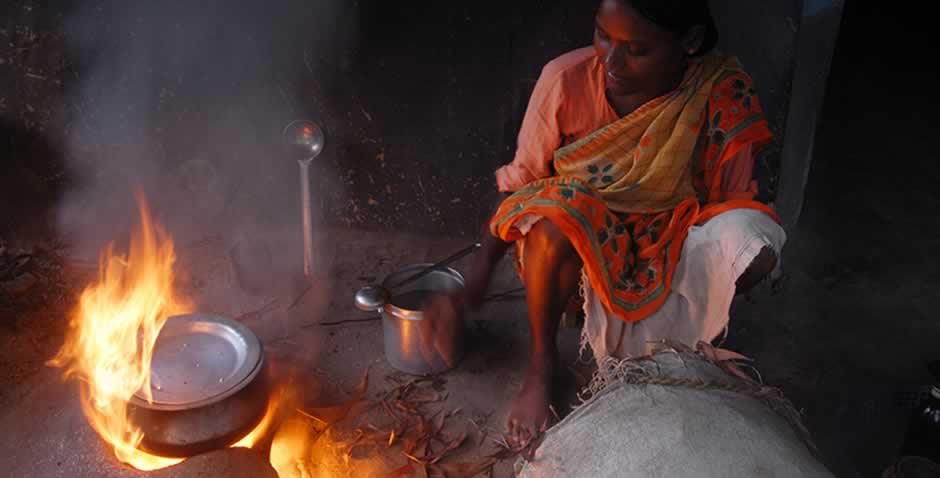
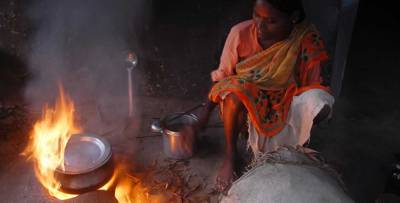 As a new philogynist, I also needed a name for my nonprofit. I wanted to avoid the words most often used in such endeavors — gender, sex, development, empowerment, etc. — and to come up with something memorable that captured the lives of women in the developing world. Thus, LIGHT MY FIRE was born, an image that captures the lives of the two billion women globally who light a fire every day or evening to cook for their families.
What has Light My Fire accomplished in two years? We have given small grants, usually around $5000, to women’s and community organizations in Africa, Asia, Central and South America, and the Middle East. We believe a small grant goes a long way in a resource-poor country. Our total over two years is about $100,000 to 28 programs with some grants made to the same program in both years.
Rather than list all our projects, let me provide an idea of the range of our activities. We have supported programs dealing with: sexual abuse of children in Bolivia; production by women of soya oil in Malawi; girls’ education in Nepal, India and Kenya; health training of Bedouin and Palestinian women and Guatemalan girls; agricultural training of Kenyan women; financial literacy of Ugandan women; employment training for Haitian single mothers. And there is a lot more.
Clearly, Light My Fire seeks practical outcomes. At the same time, however, philogyny has a strongly spiritual element. Giving to women all over the world offers a sense of connection to our planet. We don’t just talk about global sisterhood, we do it. Philogyny also connects the donor to live-giving and life-saving efforts. It is a practice that touches the soul more deeply than the checkbook. To put it simply, giving to women has made me feel good, in fact, better than in any other life work I have done. The gift of philogyny is giving to women and also giving oneself a spiritual boost.
Anyone interested in joining our community of philogynists is welcome to join us: making a donation will make you feel good! Even the smallest amounts can make a big difference in the developing world– our global sisters and our circle at Light My Fire will be deeply grateful.
Ellen Boneparth has enjoyed a range of careers from academia to diplomacy to work in nonprofits dealings with women’s issues. Currently, she is the Director of Light My Fire, a nonprofit promoting women’s and girls’ health and education in developing countries. Her passion for writing has generated 7 novels and 2 memoirs. Her most recent novels, available on Amazon or at Author House, include DO NOT HURRY THE JOURNEY, a love story revolving around Alzheimer’s, and POSITIVE WOMEN, a tale about HIV-positive women in Africa and the obstacles raised by Pharma.


 Society has created this vortex of fear surrounding women aging. Yet, as I turn 30, I am only feeling awe. Awe over everything I accomplished in my twenties and awe in all the things yet to be realized in my thirties. The interesting thing is how other people are experiencing me turning thirty. Some are reminiscent of their twenties or how their experienced their thirties. Others start to bring up certain things which are apparently still lacking in my life. The biggest ones are a husband and children. They look at my eve of thirty-hood as the clock ticking away on me finding love and most definitely on my biological clock.
 One of the most exciting times of the semester occurs when we watch “Sita Sings the Blues” in class. This film by Nina Paley – one she has made available to the public by withholding copyright – is a wonderful addition to what has come to be known as the Ramayana tradition. Unlike a few decades ago when scholarship focused on only pan-Indian literary Ramayanas, scholars today are beginning to acknowledge that most people get to know of Rama and Sita through folk and oral tales, women’s songs and local and regional tellings.
 What follows is an excerpt from my current project—a novel I have been working on for over ten years. It is finished—sort of— in various journals and I am currently trying to pull them all together. These are the opening pages. Thank you so much for your support of my work. The novel is called- That Christmas Morning Feeling.
 As my life ambles along, some things change, some things are surprisingly persistent. As a young person, the last thing I would have predicted about my future would have been developing even a mild interest in sports, but now I have a mild interest in sports. Mild, but there. So, that’s a surprise element in my life story. But while developments arise, I’ve found that in the growth of my faith, the word “God” has settled into all the movements of my being, taken root in my bones, provides many well-worn neural pathways that make the day go on. It sometimes seems like it would be easier to let the word go for the sake of communicating with a culture that turns more and more to science for cultural coherence, but the word “God” is as there in my psyche the laptop is there beneath my fingers.
 Don’t urge me to leave you or turn back from you.
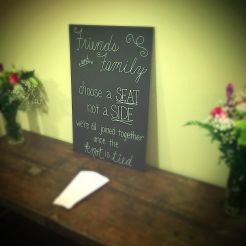 ea and Cindy in holy matrimony in Appleton, WI. Having been ordained since 2009, I truly never thought I’d ever get the chance to use these credentials until they asked me a few months back. Although my answer was an automatic yes, I sought to make sure that my homily and the words of advice I gave them on their special day were something unique, not always heard at wedding ceremonies.
 Mormon feminists experience what most
  On August 20, Alexandra Dyer, a Roman Catholic WomanPriest was the victim of a targeted acid attack to her face. Dyer had just left a meeting at
