Remember the Sabbath Day: The Cost of Difference by Linn Marie Tonstad

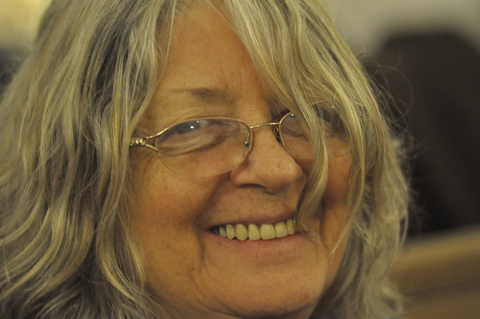
Linn Marie TonstadI grew up Seventh-day Adventist and was educated at Seventh-day Adventist schools all the way through college. I can tell endless quirky stories about growing up – about the time my parents gave me The Lion, the Witch, and the Wardrobe to read at the age of seven and I was certain, certain, that they had no idea what devilish literature they had given me (all those horrible hags and werewolves), so I promised myself never to tell them because they would feel so bad for having led me astray. (I figured it out when I reread the story at the age of nine.) About my joy in meeting missionaries from the Church of Jesus Christ of Latter-day Saints, or Jehovah’s Witnesses, at the train station on my way to and from school, so that we could proof text against each other. I was always certain that my marked Bible (marked with Sabbath texts, carefully traced with different colored pens, based on a pamphlet I had picked up somewhere) would eventually lead someone to the truth. (Again, I was nine.) As I entered adolescence, I became increasingly worried about the early Adventist dictum that the degree of responsibility you have as a believer is proportional to the degree of light you have been given – after all, I had a lot of light! In fact, I knew the truth.

But no stories like this will tell the truth of my relationship with the church. Yes, I grew up in ways that seem strange to many people: keeping Saturday holy starting Friday at sundown, without TV or movies until about the age of eleven, as a life-long vegetarian (although I became a pescetarian in my twenties), believing that Jesus Christ will return soon, having read the Bible cover to cover by the age of nine (do you see a pattern emerging?), and so on. Having spent the last decade plus outside Adventist institutions, I know much more than I did then about the ways in which my upbringing and beliefs were unusual by mainstream standards. Yet unlike many people who become theologians, and unlike many women who become feminist theologians, I never experienced the church as a particularly repressive site, even though the external forms of my life look very different now. I loved the church, and despite some unfortunate experiences with authority during my high school and college years, the church gave me gifts that I have valued ever since. Continue reading “Remember the Sabbath Day: The Cost of Difference by Linn Marie Tonstad”

Is My Baha’i Faith Compatible with Feminism? by Saba Farbodkia

I am a Ph.D student of Neuroscience at Queen's University, Kingston, Ontario. I was born in Iran into a Baha'i family, adopted the Baha'i Faith at 15, and did my B.Sc in biology and M.Sc in Neuroscience in Iran, at the Baha'i Institute for Higher Education (BIHE), an institute founded by Baha'is after the Islamic Republic of Iran (IRI) stopped Baha'i students to higher education at the formal universities of the country.  My interest in feminism started as a response to the influence of a woman-suppressive culture that I was surrounded by, even before I knew the word existed. Before I move to Canada and get to know progressive readings of Islam that begged to differ from how IRI reads Islam, I mostly blamed Islam for the sexist environment that I suffered from, and my questions about the Baha'i Faith and feminism started to rise in response to such thoughts: I kept asking myself, if one day the Baha'i Faith finds majority, or if it gets an opportunity to influence the culture as widely as Islam has in Iran, will it become a source of sexism, as well?As a Baha’i woman, I often ask myself if feminism is compatible with religion. And most of the times, I tend to answer no. Feminism is defined as a movement to end sexism, which is further defined as prejudice, stereotyping, or discrimination, typically against women, on the basis of sex. Any such movement should attempt to eradicate the social norms and religious and cultural values that pressure people into adopting certain roles, attributes or duties, or limit their rights and responsibilities, based on their sex.  Religions, on the other hand, very often do assign roles, duties and rights to people based on their sex. A religion can be compatible with feminism only if it is silent on the subject of people’s sex, unless it asserts that sex is not a factor in determining people’s roles or lifestyles.

The Baha’i Faith is definitely not so. Born around 170 years ago in Iran, the Baha’i faith is a somewhat new religion, supposedly meant for the current time. Still, there are particular cases of assignment of different roles to women and men at the level of individual life, family, and society. Men are, for example, required to do a pilgrimage if they are financially capable of it, and women have the right to choose it, though are not required. Women can choose between fasting or not, and saying obligatory prayers or an alternative prayer, during menstruation. Women are deprived the right to be elected as members of the Universal House of Justice. Mothers have a right for financial support from their husbands, but not the opposite, while they still retain their other rights. A dowry is required to be given from man to woman for a marriage. In cases where there is no ‘last will and testament’ of a deceased person (which is not supposed to happen very often, since Baha’is are required by Bahaullah to write a will to determine how to dispose their property as they wish), some of their female relatives receive an inheritance slightly less than the male relatives. Girls get the priority in education if the opportunities for educating all children are limited. Continue reading “Is My Baha’i Faith Compatible with Feminism? by Saba Farbodkia”

Women, Religion, and Whiskey by Phil Conner

Women, Religion, and WhiskeyAt some point in most of my days, I will center myself down with a glass of whiskey.  It is not the effects of the wonderful spirit that draw me to it so much as the myriad of flavors contained therein.  A good whiskey is like a good person; it will unfold with layers over time.  A good whiskey is always the same, always reminding you of why you loved it in the first place, but always fresh, exciting, and nuanced.  The experience of whiskey is a deeply spiritual one for me, and one that helps inform the way I move in the world.  Despite the fact that many whiskey-lovers experience whiskey in similar ways, whiskey brings with it negative binaries, especially in the United States.  Chief among these binary stereotypes are the two myths I despise the most: whiskey is a man’s drink and whiskey is antithetical to religion.  As someone who tends bar for a living, I see these myths perpetuated all too often.  “I don’t want that fruity drink; do I look like a chick to you?”  “Of course I want another drink.  What am I?  A Christian?”  Statements like these motivated me to start writing about whiskey in the first place, and Fred Minnick’s recent book, Whiskey Women: The Untold Story of How Women Saved Bourbon, Scotch, and Irish Whiskey, and the increasingly progressive whiskey-blogging community have helped me gain the courage to spread the gospel of the history and meaning of whiskey especially as it relates to women and religion. Continue reading “Women, Religion, and Whiskey by Phil Conner”

Why I Need the Goddess by Judith Shaw

judith shaw photoI have been drawn to the Goddess for a variety of reasons.  Initially, as a young woman, She spoke to me of my own power, self-worth, self-determination and my/every woman’s inherent beauty. She lent Her hand to my emerging sense of independence from male domination.

Over the years my experience of Goddess deepened.  At times I feel Her as manifest in me and as a symbol of my own power.  At other times She is who I pray to for both personal and community help.

Continue reading “Why I Need the Goddess by Judith Shaw”

Let Us Give Thanks for Feminism and Religion Dot Com by Carol P. Christ

carol-christFeminism and Religion was founded in the late spring of 2011. Throughout the summer Gina Messina-Dysert hounded me about submitting a blog while I ignored her emails because I didn’t think I wanted to take on a new project.  Gina was persistent nonetheless. Finally I decided that it would be easier to take an excerpt from a book review I had recently written than to explain why I didn’t want to write something for the blog, and so “Exciting New Research on Matriarchal Societies” became my first contribution.

I must have enjoyed writing the blog or reading the responses to it, because my FAR archives show that I was soon contributing a blog every other week and not long after that, every week.  Continue reading “Let Us Give Thanks for Feminism and Religion Dot Com by Carol P. Christ”

Who Are the Pagans? by Barbara Ardinger

Barbara ArdingerIt has occurred to me that it’s possible that some of the bloggers and readers of this site may not know very much about pagans, so here’s a little New Year’s lesson. The first thing to know is that pagans are almost by definition rebels. That means any generalization anyone may make will almost certainly have a thousand exceptions. You may have heard what Will Rogers wrote in 1932: “I am not a member of any organized political party. I am a Democrat.” Well, the same goes for pagans: many of us joke that we don’t belong to an organized religion. “Pagan,” by the way, is the generic term. Witches, Wiccans, and eclectics (among others, see below) are specific terms. Many of us belong to what are called traditions, which are somewhat analogous to the Protestant denominations. Some traditions are said to go back to the Middle Ages (or further back), but this is generally nonsense. Paganism as it is practiced today is a modern religion looking for (and—voilà! finding!) roots in the ancient and classical pantheons or in Old Europe, where archaeology shows us that the Goddess was worshipped thousands of years before Abraham met his god, ca. 2000 BCE (see Marija Gimbutas’ text for more information on this). Continue reading “Who Are the Pagans? by Barbara Ardinger”

Does Masculinity Have to Be the Opposite of Femininity? by Carol P. Christ

“Furthermore, like Obama, [de Blasio] projects a masculinity that is empathic and introspective — anathema to the patriarchal attitudes that dominate hierarchal institutions like the police.”

I wish the analysis that accompanies this quote had been mine, but maybe I should be glad that it comes from aninsightful young man who goes by the name liamcdg. He who argues that the real beef the New York police have with Bill de Blasio is his challenge to their definition of masculinity as dominance, or shall we say white male dominance.

As noted by liamcdg, in the NYPD version of reality, parents should teach children to comply “to comply with New York City police officers even if they think it’s unjust.” In terms of competing definitions of masculinity, the NYPD version is that men in power should be respected simply in virtue of their position, even if they are acting or appearing to act unjustly. In other words we should respect the powerful because they are powerful.

To be empathetic is to be able to put yourself in another person’s place, and in its literal meaning, to feel the feelings of another. In the recent public conversations about race and the police, both Obama and de Blasio have invited white Americans to put themselves in the place of a black man stopped by the police for little or no reason and to ask themselves how they would feel in that situation.

In so doing, liamcdg asserts, Obama and de Blasio were not simply trying to explain the feelings of those on the other side of the racial divide, they were also redefining masculinity. We all know that according to traditional stereotypes, the realm of feeling is the realm of women. And of course we also know that real men don’t cry. Yet what is happening to black men is enough to make anyone who feels their feelings want to cry.

The conflicts between de Blasio and the police and Obama and a large segment of the older white male voting public may have as much to do with the challenge to white male privilege as it has to do with any particular event or issue. White male privilege involves a complex interconnection of race and sex. It is about the power that comes or is expected to come to one simply by virtue of being born into a white male body.

In recent weeks I have been asking myself why the police are so upset. After all there is room for improvement in any profession. Over the past few years I have also struggled to understand why some people object so strongly to the idea that women have a right to control their own bodies, to choose birth control or abortion. I am coming to the conclusion that the vehemence of the protest is rooted in the perception that the patriarchal edifice is crumbling.

Forty years ago, inspired by the feminist movement, men began to speak about redefining masculinity. This was easier said than done. It is so easy to accuse men who criticize male power as domination of being “sissies,” “girls,” or “gay.” Even men who might of wanted to discuss the subject were all too often afraid of being labeled.

I say the fact that the NYPD is turning its back on de Blasio is one measure of how far we have come. I suggest that the NYPD recognizes that a different definition of masculinity and male power is being born right before their eyes. And it is this that they cannot bear to see.

We have been taught that feeling and feeling the feelings of others belongs in the feminine realm. What if it doesn’t? What if in the end male power and female power are much the same? And what if they both begin with empathy?

Perhaps we really have “come a long way baby.”

According to Heide Goettner-Abendroth, whose work I am fond of quoting in FAR, matriarchal societies defined the power of males and the power of females similarly.

What if Freud got it wrong? What if males do not have to differentiate themselves from their mothers by becoming “not like” women and girls? What if masculinity and feminity are not polar opposites? What if all any of us have to do is to learn to embody the qualities of those who nurture us?

We are beginning to glimpse a different world. Any thoughts on how to bring the NYPD and other older white males into a new world along with us?

5 Interesting Facts about Religion and Modern Society by Kile Jones

Kile

Following up on an older (and my most popular) post, 5 Interesting Facts about Women and Religion, I am going to draw your attention to 5 other telling facts.

1: Women clergy are blowing up in the Anglican Church!

In U.K. Church Statistics, 2005-2015, Dr. Peter Brierly shows that out of 9,615 Anglican ministers, 1,928 are women.  This is a radical spike since 2005.  That is 20.05% of all Anglican ministers.  This is about double compared to lead pastoral roles in U.S. Protestant Churches (see here).  The year of 2010 showed the first time women outnumbered men in Anglican ordination, and it continues to rise up to the present day.  And although they are growing as ministers, they are still blocked from becoming Bishops.  The vote for allowing female bishops at a General Synod in 2012 failed to get the 2/3 support BY 6 VOTES! Continue reading “5 Interesting Facts about Religion and Modern Society by Kile Jones”

An LDS Girlhood by Amy Wright Glenn

Utah native Amy Wright Glenn will talk about her book: "Birth, Breath, & Death: Meditations on Motherhood, Chaplaincy, and Life as a Doula." Courtesy Amy Wright GlennThis story is written from the point of view of my childhood self growing up in the LDS church…

This is what I said in church yesterday. I messed up and instead of saying “I’d like to bear my testimony,” I said “I’d like to bear my family.”

The reason I said this is because after you say, “I’d like to bear my testimony, I know this church is true,” you are supposed to say, “I am grateful for my family.” Well, I just stood there saying I would like to bear them. I felt so embarrassed especially when I saw my mom looking at me funny.

Mom always gets serious in church. I try to focus and be serious too. After all, I know Heavenly Father is watching me. But sometimes I giggle and daydream too much. Then I get in trouble because I’m the oldest and I should know better. Continue reading “An LDS Girlhood by Amy Wright Glenn”

Vipassana 3 by amina wadud

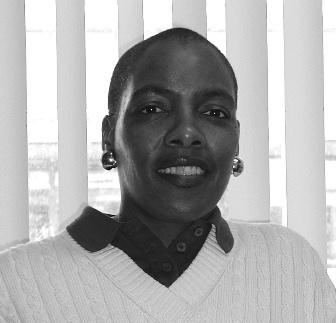
Amina Wadud 2 I am Muslim, by choice, practice and vocationI really learned a lot from my Vipassana experience.  I embraced the challenge to meditate for 10 hours a day and to keep noble silence in between.  These were par for the course.  However, in this last blog, I will bring attention to some of the negative consequences of choosing my Vipassana in India at a small, out of the way place in the state of Rajastan.

You should know I make no bones about my American (of African descent) baby boomer status.  I am a child of the universe.  Yep, the 70’s marked my character and all of my life pursuits from then on.  I still wear blue jeans at 60 and over weight.  I still decorate my hair (in dreadlocks!) People who know me appreciate the hippy-gypsy personality.  I appreciate it.

So let me be honest, I went to find enlightenment in India.  That I also went to find it in Indonesia between 2008 and 2010 or Malaysia in 1989 is no less so than my efforts to find it also in my own America for the days in between traveling the world over.  I want to KNOW the meaning of life and to SEE the purpose of my existence.

Let me also make no bones about this: I hated India; some days actively so. Meanwhile, some days were experiences of sheer awe and wonder in being there.  Thus, most days were a kind of love-hate emotional roller coaster. India was the dirtiest place I have ever been (and that is approximately 55 countries).  Most importantly India has the worst gender dynamics I have ever experienced (and YES, I have been to Saudi Arabia; I’ve been to Afghanistan; I have lived in parts of the Middle East and Africa).  So my conclusions are based on extensive personal experience.

There are also many, many good things about India, hence my love-hate relationship.  In this blog it is my hate of India that feeds into my let down at Vipassana.  What I describe here is NOT an intentional part of the Vipassana experience as organized by its founder and his students.  Mr. Goenka never said anything even subtly misogynistic in our daily lessons—and trust me, I listen as intently as I observe other dimensions of gender inequality.

One of the features of the ten day retreat was gender separation.  No problem. I have lived and traveled extensively in Muslim circles where this is par for the course. Nothing new, nothing exceptional and nothing I could not abide with.  What I could not handle was the ways in which the conditions FOR the women, as separate from the men, also slipped into that under-stated gender disparity with no means to alleviate it.  None of these are gross or abusive, but they had an impact on my experience which is why I mention them.

Our dormitory did not have a hot water heater (and the temperatures were cool to cold, as opposed to hot summers when tepid water is more than comfortable, it is preferred.) The rooms were cold too.   To remedy this problem (supposedly) they gave us access to an empty room in the dormitory across from us that had a hardly-working hot water heater.  By “hardly” I mean of 11 days I bathed there, for only one of them was the water actually hot.  Hot enough that when we hauled it to our own bathrooms we had to add cold water to take a warm ladle-bath. Otherwise, we would haul tepid water daily, because it was slightly better than the cold water that ran from our own taps.  Every day we would line up to “test” if the water was more than tepid.  This meant that we had to communicate to the other women.  By far the most frequent occasion for breaking noble silence was in our indications about the water temperature in that spare room.

The women’s dining hall could only be accessed by walking off the pavement into the dirt, dog-do and cow dung around over-grown bushes to get to the back of the main building.  Once we arrived at the door, we had to climb stairs with no first step but rather two flat bricks precariously laid out.  Then we came through a door that was sometimes locked from the inside.  We were like beggars seeking permission to do what the men walked up freely to do in the same building through a broad lighted stairway and double doors.  On one occasion a few additional women joined our ranks but no effort was made to add to the number of eating utensils causing the need for someone(me) to walk up to the kitchen door (through the men’s section) and solicit, silently, for additional plates so everyone could eat.

The men entered the meditation hall through an outer room in which they left their shoes.  The women entered from the other side and were told to put our shoes on the porch.  From there, the dogs hauled off the shoes.  My sandals happened to be leather, so they were chewed on and bitten.  In the end, I left them in the trash in India.  I am NOT a shoe person. I wear only flat practical shoes.  I only own a few pair at time, which I keep for years.

Now, here’s the thing.  I’ve worked my entire adult life to distinguish between gender oppressions that are manifest because of patriarchal perspectives and practices and the fundamentals and values or principles of my faith system.  I also note that religions often use the double talk of “piety” to condition women’s acquiescence to their own oppressions.  As the days of Vipassana unfolded, I became more aware of my own anger regarding a life time of working to end gender inequities.  Meanwhile, I was continually bombarded with them at this center.  In the end, I felt that if I let my guard down, by fully buying into the discourse about love, compassion, peace and liberation I would also have to ignore these violations.  I didn’t wish anyone harm, but I was so leery that a request for benevolence would camouflage my need for resilience against gender oppressions that were being condoned under the guise of religious transcendence.

In the end resistance to manifest forms of oppression interfered with my ability to surrender to the demands for benevolence.  A simple sharing of both benevolent and adverse conditions by both women and men could have gone a long way to change what was so inequitable about a practice that demanded equanimity.

amina wadud is Professor Emerita of Islamic Studies, now traveling the world over seeking  answers to the questions that move many of us through our lives.  Author of Qur’an and Woman: Rereading the Sacred Text from a Woman’s Perspective and Inside the Gender Jihad, she will blog on her life journey and anything that moves her about Islam, gender and justice, especially as these intersect with the rest of the universe.