Legacy of Carol P. Christ: The Morning After Pill and Obama’s Daughters

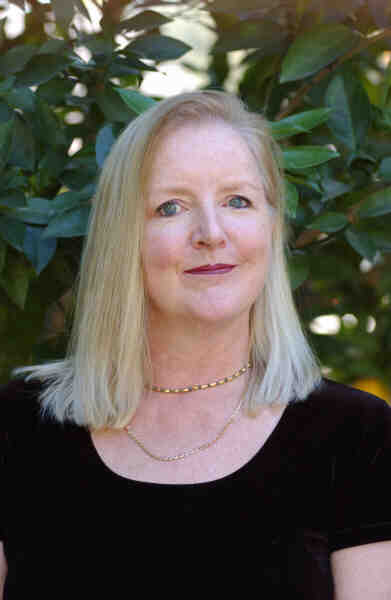
carol p. christ 2002 colorThis post was originally published on May 13th, 2013

By now it should be clear to feminists that when Barack Obama thinks about women, he does not view us as independent individuals, but rather as he said in his 2nd term inauguration address–to my consternation—as “our” mothers, wives, and daughters.  Obama does not address us–he addresses the men he expects to make decisions for us.  I almost wrote a blog on this egregious error in perception and judgment on the part of the President in January, but in order not to be seen as nit-picking, I held my tongue.  The recent decision of the White House to continue to restrict the availability of the Plan B , brings this question to the fore again.

Plan B is a brand name for the “morning after pill.”  If taken within 3 days of unprotected intercourse, it will prevent conception.  There is now a much cheaper generic version as well.

After reviewing the effects and side effects of Plan B, the Federal Drug Administration found it safe and reliable and advised the US Department of Health and Human Services that it should be made available without prescription or age restrictions.  In late 2011, the Obama administration and Kathleen Sibelius made the unprecedented decision to overturn the recommendations of the FDA and to allow Plan B to be purchased without prescription only by women age 17 or older.  Just over a month ago, US District Court Justice Edward Korman of New York ruled that the Plan B and the generic alternatives should be made available without restriction.  Before the ruling could take effect, the Obama administration lowered the age restriction to 15, while announcing that it would appeal Justice Korman’s decision to make the morning after pill as available as aspirin.

“Current and former White House aides said Obama’s approach to the issue has been heavily influenced by his experience as the father of two school-age daughters.”   Continue reading “Legacy of Carol P. Christ: The Morning After Pill and Obama’s Daughters”

Legacy of Carol P. Christ: What Does It Mean to Say that All White Feminists Are Racist? (Questions Posed to White Women/Myself about Our Part in the Dialogue with Women of Color)

This post was originally published on Oct. 7th, 2011

Carol P. Christ, a founding mother in the study of Women and Religion and Feminist Theo/a/logy, has been active in anti-racist, anti-poverty, anti-war, feminist, pro-gay and lesbian, anti-nuclear, and environmental causes (in that order) for many years.  All of these issues have informed her teaching, her scholarship, and her politics.

The recent posting of Mary Daly’s letter to Audre Lorde on the Feminism and Religion blog is a correction of a piece of feminist history that is important in its own right and because of the way Lorde’s letter has shaped feminist discourse and politics up to the present day.  Knowledge of the existence of Daly’s letter and the facts surrounding Lorde’s distortion of history has been in the public domain since the 2004 publication of Alexis DeVeaux’s Warrior Poet, but when I searched the internet for a copy of “Mary Daly’s letter to Audre Lorde” a few days ago, what came up was Lorde’s letter to Daly — not Daly’s letter to Lorde.

I often hear younger feminists say that “all white feminists” of the older generations “were racist.” Sometimes Mary Daly is mentioned. Finding the more detailed record about Mary Daly is one step in retelling the history of feminism in a more complex way. 

Continue reading “Legacy of Carol P. Christ: What Does It Mean to Say that All White Feminists Are Racist? (Questions Posed to White Women/Myself about Our Part in the Dialogue with Women of Color)”

Legacy of Carol P. Christ: “Mermaid, Goddess Of The Sea”

carol-christ

This post was originally posted on Nov. 4th, 2013

On the recent Goddess Pilgrimage to Crete, I visited the Historical Museum in Heraklion where I saw a beautiful embroidered silk panel of a mermaid identified only as having come from Koustogerako, a village in western Crete. As it is unlikely that a man in a Cretan village would have been talented in embroidery, in this case “Anonymous” most definitely “was a woman.”

In this thread painting a mermaid surrounded by fish is holding the anchor of a ship in one hand and a fish in the other. In Greece the mermaid is the protectress of sailors. In a well-known legend, a mermaid said to be the sister of Alexander the Great, emerges from the sea in front of a ship during a storm and asks: “Is Alexander the Great still living?” If the sailors answer, “Yes, he lives and reigns,” the ship is saved.

mermaid greek0001

In this image the mermaid–who does not much resemble “the little mermaid” of recent lore—is identified by the woman who embroidered her as: “GORGONA, H THEA TIS THALASSIS,” MERMAID GODDESS OF THE SEA.” Assuming that the woman who created this embroidery was probably a Christian, I was surprised to see that she nonetheless referred to the mermaid as a Goddess. Was this phrase passed on to her down to her from pre-Christian times? Did she see any contradiction between her Christian beliefs and the “Goddess of the Sea?” Continue reading “Legacy of Carol P. Christ: “Mermaid, Goddess Of The Sea””

Legacy of Carol P. Christ: Staying In or Leaving the Religious Community of Your Birth- The Dialogue Continues

carol p. christ 2002 color

This post was originally published on June 24th, 2013

This blog is part of an on-going discussion between me and my friend Jewish feminist theologian Judith Plaskow about the differences in our choices to stay in and leave traditional religious communities, which is part of our forthcoming book Goddess and God since Feminism: Body, Nature, and Power.

When you (Judith) discuss the reasons I left Christianity while you stayed Jewish, I think you hit upon a crucial difference between us when you say that I am more “idealistic” than you are.  I agree that this does not mean that I am more ethical than you are.  When you say that I require more “purity of thought” or perhaps more accurately more “purity of ritual symbolism” than you, I think you have hit the nail on the head.  I simply cannot participate in a religious symbol system that I feel has done and continues to do great harm in the world.

I reiterate that for me this “problem” is not limited to the ways in which the maleness of God justifies male domination—including violence against and rape of women.  Equally important to me are the ways that religious symbolisms justify the violence of warfare and conquest.    I simply will not and cannot participate in religious rituals that justify domination and violence in the name of “God.”  If that makes me a “purist” or an “idealist,” I am willing to accept those terms.  Continue reading “Legacy of Carol P. Christ: Staying In or Leaving the Religious Community of Your Birth- The Dialogue Continues”

Legacy of Carol P. Christ: Shadows Of The Goddess In Greek Orthodox Tradition: Easter And The Dormition Of The Virgin

This post was originally published on Aug. 13th, 2012

While I would not wish to argue that Greek Orthodoxy is in any way a “feminist” tradition, the shadow of the Goddess falls long over the two great festivals of spring and midsummer.

In Greek Othodox tradition, there are two major spiritual holidays– Easter in the spring and the Dormition/Assumption of the Virgin at midsummer.  The Panagia, She Who is All Holy, also known as Mother of God, Virgin, and Mary, is a central figure in people’s faith–dethroned neither by the Reformation nor by Vatican II.  Indeed when I speak of the need for the “rebirth of the Goddess” in Greece, I am often told, “the Panagia is our Goddess.”  This may not be theological orthodoxy, but it expresses a truth of practice. Continue reading “Legacy of Carol P. Christ: Shadows Of The Goddess In Greek Orthodox Tradition: Easter And The Dormition Of The Virgin”

Legacy of Carol P. Christ: WHAT DOES “GOD INTEND”?


This post was originally published on Oct. 29, 2012 

Indiana Republican candidate Richard Mourdock’s statement that pregnancies resulting from rape are “something God intended” not only shows an appalling lack of empathy and distain for the experiences of raped women, it also is bad theology.

The controversy ignited by Mourdock provides a good opportunity to discuss the theological mistake of “divine omnipotence” also known as the “zero fallacy.”  Mourdock’s belief that God intends the pregnancies of raped women is rooted in the notion that “whatever happens” is the will of God.

The theological category of “divine omnipotence” means that God is all-powerful.  It also means that God has all the power. From this it is said to follow that everything that happens must in some way be the will of God.  Such views are held not only by many devout believers, but also by everyone else who asserts that “there must be a reason” when bad things happen.

The notion that a good God is responsible for all the events that occur in the world is rendered questionable by every bad thing that happens–particularly by bad things that happen to good people. This was the question of Job, and there has never been a satisfactory answer to it. If God can intervene to stop the innocent from being harmed, why does he not do so?  God’s failure to stop rape suggests that either that God is not good, or that a good God chooses a really bad outcome, or that God is not the cause of everything that happens in the world.

Charles Hartshorne called the notion of divine omnipotence the “zero fallacy.” Continue reading “Legacy of Carol P. Christ: WHAT DOES “GOD INTEND”?”

Legacy of Carol P. Christ: Women For Peace–Take To The Streets

This post was originally published on Nov. 19th, 2012

Sometimes we are told that domination and violence and war are innate in human nature; therefore, it is futile to protest war.  But this is not true.

I oppose war because I oppose all forms of power-over, domination, and violence.  As a radical feminist and ecofeminist I believe that power can and should always be power-with, the power that nurtures the growth and development of self and others.  The power of Goddess/God is always and everywhere power-with and not ever power-over. 

Are violence and domination innate in human nature?  We have been told that we are the “naked ape” descended from “apes” who, like the chimpanzees with whom we share 98% of our DNA, were male dominant and violent. Do we, then, have any hope not to be violent and dominant?

Franz de Waal’s studies of the other “ape” species that shares 98% of our DNA, the bonobo, debunks this popular myth.  The bonobo live in peaceful matriarchal clans, and their response to conflict is to rub each others’ genitals until the desire to fight goes away.  They are living proof that species very much like us can choose to “make love not war.” De Waal says that the most we can conclude from studies of our ape relatives is that ancestors of human beings, chimpanzees, and bonobos had the capacity to evolve toward dominance enforced by violence, or toward more peaceful ways of resolving conflict.

Continue reading “Legacy of Carol P. Christ: Women For Peace–Take To The Streets”

Legacy of Carol P. Christ: Connection to Ancestors in Earth-based Theology

carol p. christ 2002 color

This post was originally published on Jan. 14th, 2013

“I am Carol Patrice Christ, daughter of Jane Claire Bergman, daughter of Lena Marie Searing, daughter of Dora Sofia Bahlke, daughter of Mary Hundt who came to Michigan from Mecklenburg, Germany in 1854.  I come from a long line of women, known and unknown, stretching back to Africa.”

Like many Americans, my ancestral history was lost and fragmented due to emigration, religious and ethnic intermarriage, and movement within the United States.  Though one of my grandmothers spoke proudly of her Irish Catholic heritage and one of my grandfathers acknowledged his Swedish ancestry, I was raised to think of myself simply as “American,” “Christian” and “middle class.”  Ethnic and religious differences were erased, and few stories were told.

Over the past two years, I have begun to discover details of my ancestral journey, which began in Africa, continued in the clan of Tara, and was marked by the Indo-European invasions.  In more recent times, my roots are in France, Holland, England, Germany, Ireland, Scotland, and Sweden.  In the United States, my family has lived in tenements in New York City and Brooklyn, in poverty in Kansas City, and on farms in Long Island, Connecticut, upstate New York, Michigan, and Pennsylvania.  My parents and grandparents settled in northern and southern California during the 1930s.  I have lived in southern and northern California, Italy, Connecticut, New York, Boston, and now Greece.

Learning details about family journeys has created a shift in my sense of who I am.  Continue reading “Legacy of Carol P. Christ: Connection to Ancestors in Earth-based Theology”

Legacy of Carol P. Christ: “The Divine Mystery”?

carol-christ

This post was originally published on Nov. 11th, 2013

“The mystery of God in feminist theological discourse” is the subtitle of Elizabeth Johnson’s widely read She Who Is. The notion that God is “a mystery” is rarely questioned in feminist theologies. But maybe it should be.

Although it is true that the finite cannot encompass the infinite, and that all knowledge is rooted in particular standpoints, I do not agree that the first and last thing to be said about the divine power is that it is “a mystery.” Indeed as I will argue here, speaking about God as “a mystery” obscures more than it “reveals.”

christina's loveThe notion that Goddess or God is “a mystery” is rooted in notions of “a God out there” that most spiritual feminists reject. Goddess or God “in” the world is, I suggest, not unknown, but known, not hidden, but revealed–in the beauty of the world and in ordinary acts of love and generosity.

The notion that God is “a mystery” is a well-worn trope in Roman Catholic theology. Protestants make similar claims when they speak of  the hiddenness of God Continue reading “Legacy of Carol P. Christ: “The Divine Mystery”?”

Legacy of Carol P. Christ: Of Human Life*

This post was originally published on July 2nd, 2012like many of Carol’s other posts, it is eerily poignant for today.

Watching the last episode of the Australian series Brides of Christ in which Catherine leaves the sisterhood of the convent because of her disagreement with Humanae Vitae brought me right back to the Yale Roman Catholic chapel and the folk mass I attended regularly.  In 1968 just after the publication of Humanae Vitae, priest and co-graduate student Bob Imbelli preached a sermon on the doctrine of conscience, arguing that though it was incumbent on Catholics to think carefully about the papal encyclical on birth control, it was also the responsibility of every Catholic to follow her or his conscience on the matter.  In the episode, Sister Catherine encourages a Roman Catholic mother of six who has already self-induced more than one abortion to take the pill, but the woman decides she cannot go against the church’s teachings.  Catherine allows an editorial against Humanae Vitae to be published in the school newspaper even though she knows it will probably lead to the expulsion of one of her favorite students.

Continue reading “Legacy of Carol P. Christ: Of Human Life*”