When “The Storm Left No Flowers” – A Review by Sara Wright

During the last year I have been struggling with the  catastrophic effects of Climate Change like never before as I witness the continuation of a drought that is withering plants, starving tree roots, shriveling our wildflowers and wild grasses, leaving our mountains barren of snow, and changing the face of the high desert for the foreseeable future. With forest fires leaving me literally breathless from plumes of thick smoke that turn the sun into a ball of orange flames at dawn, unable to cope with 100 plus degree heat, my body forces me to surrender: I will not be able to make my permanent home here. Instead I will migrate like the birds do – from south to north and back again.

Coming to terms with the ravages of Climate Change  brought me to my knees; it has been one of the most difficult adjustments I have ever had to make. I mourn the death of the trees, plants, the loss of precious frogs and toads, insects, birds, lizards – every plant and creature is under attack and few of us can thrive (let alone survive) in such an unforgiving climate. Continue reading “When “The Storm Left No Flowers” – A Review by Sara Wright”

We Have 12 Years. Luckily, Climate Lovers Are Usually Feminist by Tallessyn Grenfell-Lee

Climate scientists have been screaming the alarm for literally decades. Despite global efforts, they now say we have 12 years left to contain the damage: the difference between 1.5°C and 2°C warming means tens of millions of lives lost, not to mention the death of all coral reefs and half the world’s plants and insects. In the USA, our oligarchic, oil-funded government seems determined to drive our country off a cliff and take the rest of the world with us. What on this good, green Earth are we to do?

I have been thinking about this a while. Below is a seven-fold strategy that I pray may bring help, comfort, and inspiration to those who, like me, can feel utterly overwhelmed.

Face Reality

It astonishes me to have to include this, but so much money has poured into distractions and strategies to discredit climatology that we must still spread the word. We now know which approaches actually bring people along; a little bit of doom and gloom goes a very long way. Focus on empowerment, action, and most importantly, connection: how do climate issues affect people directly? How do they intersect with issues people already care about? (Hint: the climate affects all life and every place on Earth!) Continue reading “We Have 12 Years. Luckily, Climate Lovers Are Usually Feminist by Tallessyn Grenfell-Lee”

A View from the Chute by Charlene Spretnak

Charlene SpretnakRecently I was hurled across the existential divide that separates the millions of people around the world who have experienced a life-threatening extreme weather event from those who have not. In December 2017 unseasonal Santa Ana winds roared off a California desert across two drought-parched counties, not for the usual 48 hours but for more than a week, blowing a brush fire across 440 square miles. It was named the Thomas fire, the largest in California history.

The two mountain ranges forming the walls of the Ojai Valley were incinerated as the town on the valley floor was evacuated but, in the end, was saved. A month later 23 people were killed in nearby Montecito by mudslides that brought boulders and debris crashing down from the burned out mountainside after only one hour of an unusually intense rainstorm. The ground shook as a thunderous roar arose. The impact of the fast-moving debris flow obliterated many houses, splintering them instantly and sweeping the remains into the growing torrent that ran to the sea.   Continue reading “A View from the Chute by Charlene Spretnak”

Just South of Ventura by Sara Frykenberg

For those of us living in Southern California, it has been a tense week to say the least: flames ravaging up and down the coast, homes lost, thousands displaced, freeway and school closures, smoke thick in the air, and ash raining from the sky.

And the fires are still raging. 

Whether or not one is directly impacted by the wildfires here in Ventura and Los Angeles County, you can’t walk through the grocery store, turn on the radio, or get a cup of coffee without engaging the fear and concern, or hearing about the devastation left behind. We are sharing a trauma, howbeit differently, and with different levels of need.

I have been lucky during the fires.  I live just south of Ventura. My work is on the Getty side of the 405: it was threatened, but not in flames.  I spent the week checking in with family and friends, offering my home, and breathing the toxic air. I also made dinner, picked my brother up from the airport, attended a baby shower, and graded papers. … This is a strange juxtaposition, and like many Californians, I have had a hard time processing what’s going on.

On Sunday afternoon, surrounded by the unnatural darkness of an ash filled sky while traveling down the 101 freeway, I wrote the following. This is my effort to make sense.  And I offer it to you all here, in case this helps you make sense too.  Continue reading “Just South of Ventura by Sara Frykenberg”

Gratitude – A Salve to Heal Our Wounds by Judith Shaw

judith shaw photoTomorrow being Thanksgiving in the United States offers an opportunity to reflect on gratitude. With so much anger bubbling up on all fronts is it possible that gratitude could be the salve to heal our wounds?

Continue reading “Gratitude – A Salve to Heal Our Wounds by Judith Shaw”

Hidden Seeds in Laudato Si by Peg Conway

Peg Conway headshot2

The opening two paragraphs of the recent environment encyclical just might be saying even more than the pope intended. Beginning with a quote from the famous Canticle of the Creatures by St. Francis of Assisi, Laudato Si refers to “our sister, Mother Earth,” and compares the earth to “a sister with whom we share our life and a beautiful mother who opens her arms to embrace us”. Sister and mother are seen here as two separate images. But some translations of the Canticle read “Sister Mother Earth” without commas, consistent with the style of the rest of that text, which names Brother Sun and Sister Moon, etc.

Does a little punctuation difference matter? I think it does.

The single term Sister Mother Earth suggests a seamless linkage between all female bodies, whether our sisters, our mothers, our planet. We are brothers and sisters to one another as Christians (and members of the human family), every person has a biological mother, and the earth sustains us all. “Sister Mother Earth” means there are no distinctions among the three; they are one body. This interpretation lends even greater impact to the second paragraph, where the pope speaks of “this sister who now cries out to us” because of abusive treatment:

Continue reading “Hidden Seeds in Laudato Si by Peg Conway”

Ecofeminism is in the House (at the AAR) by Grace Yia-Hei Kao

Grace Yia-Hei KaoMy social media accounts have recently been ablaze with announcements of meetings, sessions, and receptions to attend for those of us who study or work in religion/theology in the U.S. Some 12,000-15,000 scholars and students will descend upon San Diego this weekend for the annual American Academy of Religion/Society of Biblical Literature (AAR/SBL) conference.

While as a theological and philosophical ethicist I attend this gathering every year regardless of venue or conference theme, I’m particularly excited about this year’s focus on climate change.

Sessions devoted to the topic include a panel on the release of the Public Religion Research Institute/AAR National Survey on Religion, Values, and Climate Change (Sat, 9-11:30am, CC-20D) presentations by the Intergovernmental Panel on Climate Change (IPCC) (Sat, 11:45-12:45, CC-20D), a talk by environmentalist Bil McKibben (Sat, 7:30-8:30pm, CC-20D),  the AAR Presidential Address by Laurie Zoloth (an eminent bioethics and Jewish Studies scholar; Sun 11:45-12:45,CC-20D), and remarks by former president Jimmy Carter on “The Role of Religion in Mediating Conflicts and Imagining Futures: The Cases of Climate Change and Equality for Women” (Mon, 4-5:30pm, CC-20) among others.

Ecofeminism

Beyond that, I’m especially excited about the number of sessions I see devoted to discussing ecofeminism–the scholarly and activist movement that takes seriously the interconnections between the oppression of women and the exploitation of nature. Let me enumerate a few of these (n.b. the following is a non-exhaustive list):

– On Friday, 1:30-3:30pm (CC-14A), the Women’s Lounge Roundtable will entail a pre-conference luncheon on “Ecofeminism and Earth Healing” featuring emerging scholars from Claremont Graduate University.

– On Sunday, 9-11:30am (CC-3), the Feminist Theory and Religious Reflection Group will feature a panel of papers on “ecological, epistemological, and ethical habitations.”

– On Sunday, 1-2:30pm (CC-30A), the Feminist Theory & Religious Reflection Group will sponsor another session tied to the conference theme: “Strategic Negotiations with Feminism on the Borders: Rhetoric in American Homiletics, ‘On the Move’ Ethics in Ecofeminism.”

– On Sunday, 3-4:30pm (CC-26), the Womanist Approaches to Religion and Society Group will convene a session entitled “Ecowomanism 101: A Roundtable Discussing Vital Themes and Trajectories.”

I’m looking forward to this conference and wish all AAR/SBL attendees an enriching and eventful time as well!

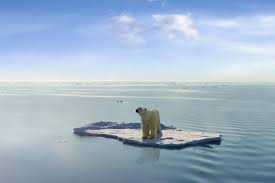
Climate change (Polar Bear on Melting Ice)

Grace Yia-Hei Kao is Associate Professor of Ethics and co-director of the Center for Sexuality, Gender, and Religion at Claremont School of TheologyShe is the author of Grounding Human Rights in a Pluralist World (Georgetown University Press, 2011), has a forthcoming co-edited anthology with Ilsup Ahn on Asian American Christian Ethics (Baylor University Press), and is working with Rebecca Todd Peters on anthology of women’s theological lives. Read more about her work on her website.

IN THE NEWS: Global Climate Change by Carol P. Christ

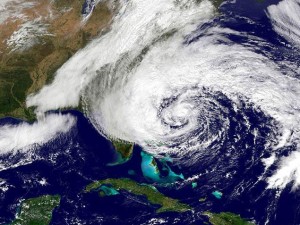
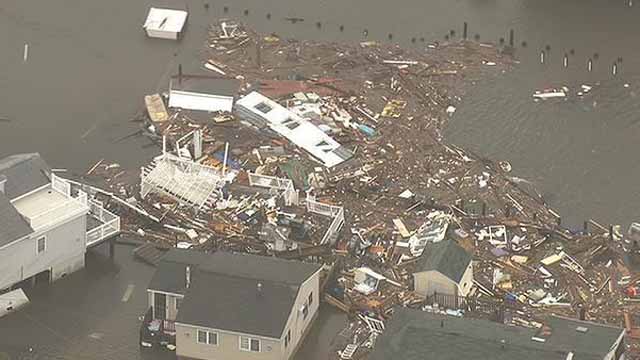
Climate change is in the news again due to the devasting storm known as Hurricane Sandy.  Scientists, activists, journalists, and politicians are telling us that Sandy is not just another “unpredictable event” brought to us by “Mother Nature.”  Will we listen this time?

Hurricane Sandy is a human-made and entirely predictable and sure to be repeated environmental consequence of the use of fossil fuels, especially oil and coal. Burning fossil fuels puts carbon dioxide into the atmosphere. This raises the global temperature in the air, land, and sea. Melting of polar ice caps is a result of the rise in global temperatures. This will cause a 3 foot or more rise in the seas, leading to the permanent flooding of the seacoasts and sea coast constructions, including homes, restaurants and shops, office buildings, and harbors and ports.

The warming of the seas is also producing extreme weather conditions, including high winds and hurricanes, along with colder winters and hotter summers.  Extreme weather conditions will lead to regular storm-related flooding of rivers and sea coasts, erosion of hills and mountains in winter, followed by catastrophic fires in summer.  Prolonged droughts and unseasonal rains will devastate farms and food production. Wildlife habitats will be destroyed. Places where people live will become too hot, too cold, too wet, and generally unfriendly to life.

Continue reading “IN THE NEWS: Global Climate Change by Carol P. Christ”

Cry The Beloved Country by Carol P. Christ

With the final day of voting in the US election less than 24 hours away, I feel a deep sadness descending on my soul. 

This election will have far-reaching consequences in relation to a number of issues I care deeply about. Among them are health care, social services, a social safety net, a graduated tax structure that taxes the rich and to a lesser extent the middle classes in order to provide services for the poor, equal pay for equal work, a woman’s right to choose, and gay rights.  On these issues there is a clear choice between the two candidates for President and the two parties. 

Democrats believe that health care is a human right, that social services should be provided for those who need them, that taxes should be paid by those who can afford to do so, that women have a right to equal pay and control of our own bodies, and that gays and lesbians should have all the rights of other citizens. Republicans believe that government does not need to provide or control health care, that social services are largely unnecessary, that it is unfair to tax the rich, that equal pay is not important if women have husbands, that the church and state should be making decisions about women’s bodies, and that homosexuality is a unnatural.  There is a clear choice on these issues. 

For this reason, I urge all of you who have not voted yet—and those of you who are considering not voting–to vote, no matter how long the lines are, no matter what intimidation you may face, and no matter what discouragement and disappointment you may be feeling.*

Nevertheless I feel like crying.

I feel sad that just about half of all Americans who intend to vote will be voting for the rich, against the poor, and against women’s—my–independence.  Continue reading “Cry The Beloved Country by Carol P. Christ”