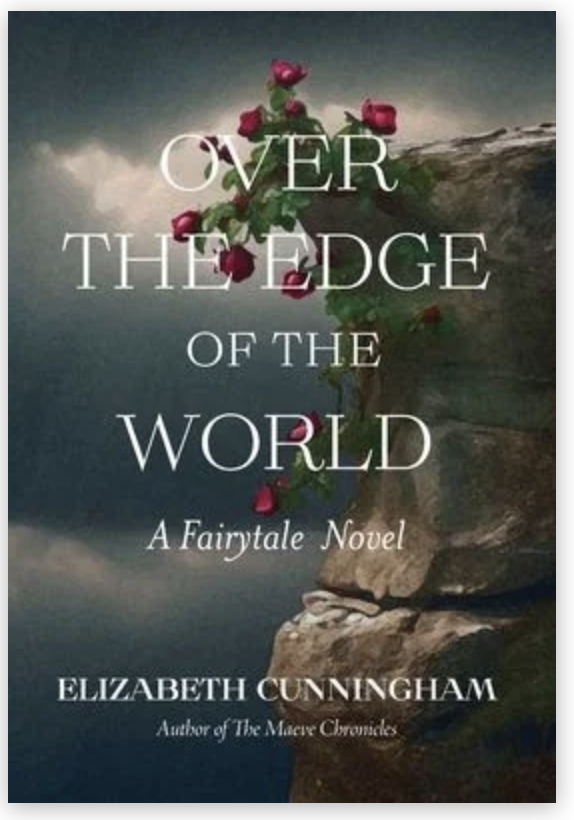
Elemental Grannies: Snippets from Over the Edge of the World, A Fairytale Novel by Elizabeth Cunningham

Introduction: An old woman, Rose begins spinning the tale the children never tire of hearing. Grannies Sweep, Spark, Dirt, and Brine, were old, so old, they forgot who they were and how they came to live where they did: a sheer pinnacle, a walking forest, an old shoe, a ship moored off a hidden shore.

But Rose has never told the whole story—to anyone. The story of a world these children have never seen, where the rich lived inside a vast dome, protected from heat and cold, rain, wind—and hunger. Nor do the children know about madness or cruelty. She has never told them about Noone, the power behind the dome, his obsession with immortality.

If she never tells these stories, who will remember the bravery of the beauty singers who daily risked the ultimate penalty—being thrown over the edge of world. Who will remember the intrepid children who danced defiantly on the dung heaps. If Rose does not tell her own story, who could imagine her birth deep inside the dome, the dangerous secret of her existence. A secret guarded her two huge aunties, once ragged outside boys, who became outrageous bodyguards in towering wigs and heels. To protect the new world and the people she loves, it is time for Rose to tell…

Continue reading “Elemental Grannies: Snippets from Over the Edge of the World, A Fairytale Novel by Elizabeth Cunningham”

Reweaving the Great Round: A Winter Solstice Story by Sara Wright

The scent of balsam wafts through the room as I cut the boughs to make my annual wreath to honor all trees, those that still stand, those who are slaughtered. My intention each year is twofold – acknowledge my love for these sentient beings and to participate in the unfolding of the Great Round. Other intentions vary from year to year until recently when a prayer for protection from the dark forces that permeate the psyches of so many peoples of this earth becomes a yearly part of this winter ceremony, even as a multitude of others suffer intolerable losses.

Today’s American culture creates endless non-religious festivals to celebrate the entrance into this winter season that are totally devoid of meaning beyond consumerism – buy more ‘stuff’ – chop down more trees. These devourers can never be satiated because the chasm is too wide and deep.

Continue reading “Reweaving the Great Round: A Winter Solstice Story by Sara Wright”

Herstory Profiles: The Season of the Witch by Anjeanette LeBoeuf

Throughout the modern ages there have been stories, legends, myths, and historical accounts of threatening people, mainly women, who have been linked with the supernatural, with containing powers, engaging with elements that go beyond the natural world, and who decentralize, shake up, and counter mainstream patriarchal systems and groups. And the predominate word which can be translated and transcend languages is that of WITCH. And since we are in the month of October, when it becomes somewhat acceptable for people to deck their houses with items long been associated with witchcraft, this month’s herstory profiles is diving into all things witchy.

So, lets deconstruct what witches do and how they function in history and in modern times. When we look at the origins of magic – at the very core- is the manipulation of the natural world for supernatural outcomings. Those outcomes can be a range – from conversing with supernatural beings, healings, prophecy, alchemy, transformation, and to even holding secret knowledge. The word magic has origins in Ancient Persian and Proto-Indo-European languages with concepts of “being able to” and to “have power.” If we look at ancient cultures, civilizations, and religions we found multiple variations of people and roles being able to contain, control, and weld magic.

Continue reading “Herstory Profiles: The Season of the Witch by Anjeanette LeBoeuf”

Once Upon a Time Women Storytellers Spun the World by Carolyn Lee Boyd

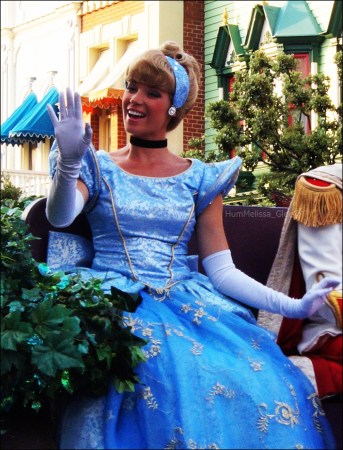
Cinderella-Magic on Parade: By HumMelissa_Glee – Cinderella – Magic On Parade, CC BY 2.0

Cinderella helped make me a pint-sized feminist. Well, of course my strong and rebellious mother and grandmothers were my primary influences, but at age five, Cinderella was definitely up there. I learned in my own little girl way from Disney’s Cinderella that women could forge their own destiny (of sorts), older women can be powerful for good and evil, magic pervades the universe, and whether other women support you is key to success. I completely missed the message about marrying Prince Charming.  How did this story get from its origins millennia ago to a little suburban American girl in the 1960s?

Once upon a time, all over the globe, women practiced the inspiring, transformative art of storytelling. In Europe, as their world was overtaken by more patriarchal cultures, they kept alive fairy tales that spoke of their traditional world infused with magical energy and spirit beings and shared with each other new tales of their lives and troubles. In many western cultures from ancient times till very recently, however, storytelling was strictly segregated by gender, with men gathering in taverns or homes to hear epic hero tales while women gathered to sing or tell stories to each other of supernatural beings, local events, and their lives while doing tasks like spinning (hence, “spinning a yarn”) and weaving. Not surprisingly, male folklore scholars have for decades overlooked women storytellers who were also often devalued and denigrated in their own communities. More recently, largely female folklore scholars have brought to light a rich and important tradition of European women storytellers.

Continue reading “Once Upon a Time Women Storytellers Spun the World by Carolyn Lee Boyd”

From the Archives: Sleeping Beauty: An ancient tale for these challenging times by Diane Perazzo

This was originally posted on April 24, 2021

Fairy tales are intwined in our imagination and our spirituality. As Jane Yolan writes, one of the subtlest and yet most important functions of myth and fantasy is to “provide a framework or model for an individual’s belief system.” (1)

In the Reclaiming spiritual tradition, we often use fairy tales in healing and self development work. These stories act as warp and weft as we weave and spin complex ritual arcs and other events that take place at extended Witch Camp sessions. In Twelve Wild Swans, Starhawk points out that fairy stories are “more than just encouraging and inspiring. They are also templates for soul healing from Europe’s ancestral wise women and healers. When the ancient Earth-based cultures of Europe were destroyed, these stories remained.” (2)

Continue reading “From the Archives: Sleeping Beauty: An ancient tale for these challenging times by Diane Perazzo”

Witches Butter by Sara Wright

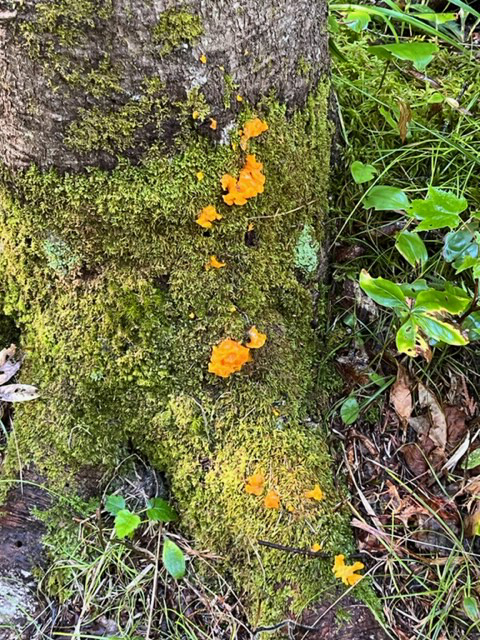
The other day I found the most beautiful fungus on an aging white pine set against deep green moss that was almost arcing over the brook. When I looked up Dacrymyces palmatis I discovered that it’s common name was “Witches Butter.” That figures I thought – this must mean that this plant has medicinal qualities, and of course it does along with the fact that the fungus is edible.

Any time I see the word witch associated with a plant if I am not familiar with it I start digging into research inevitably coming up with the same kind of information – the plant/ tree/ fungus/slime mold is edible and has medicinal value.

The word witch as many of us know has at its root to bend or shape. Shape -shifting by non –ordinary means.

Continue reading “Witches Butter by Sara Wright”

Through a Dark Forest: Fairy Tales as Women’s Stories


My first brush with raw and authentic fairy tales took place nearly thirty years when I was teaching English to Japanese children in Munich, Germany, where I lived from 1989 – 2000.

Intending to stock up on children’s literature, I discovered the a whole section of the Munich City Library was devoted to fairy tales from different cultures. It contained literally thousands of volumes, some of them ornate and leather-bound, as beautiful to hold as they were to read. I loved the Russian fairy tales the best, for they were the most haunting and evocative for me.

The fairy tales held me in thrall and would not let me go. They got under my skin and rooted themselves in my writing and my life. I was hooked.

Fairy tales are the domain of women. In past centuries, the traditional European storytellers were women sitting at their hearths and spinning at their spinning wheels–spinning a yarn, if you will. Telling old wives’ tales.

The original fairy tales were not romantic children’s stories. Only very recently with Walt Disney have these raw and very ominous stories been reduced to little more than cute cartoons. Until the 17th century, fairy tales were adult entertainment, the way of passing a dark winter’s evening. Many older fairy tales are quite bawdy. Allocation of fairy tales to the nursery took place in the 18th century when the educated upper classes rejected the irrational and supernatural aspects of the tales in favor of a more rational and scientific world view, thus dismissing these tales as nonsense and only good for amusing young children.

Yet, as the enduring popularity of Clarissa Pinkola Estes’ Women Who Run with the Wolves attests, fairy tales are meaningful and relevant for contemporary women seeking deep guiding archetypes and images of female strength.

These centuries-old stories bristle with wild and sometimes terrifying women who possess amazing powers. The witches and sorceresses who inhabit the dark forests of fairy tales offer a stark and startling contrast to the innocent maiden protagonists.

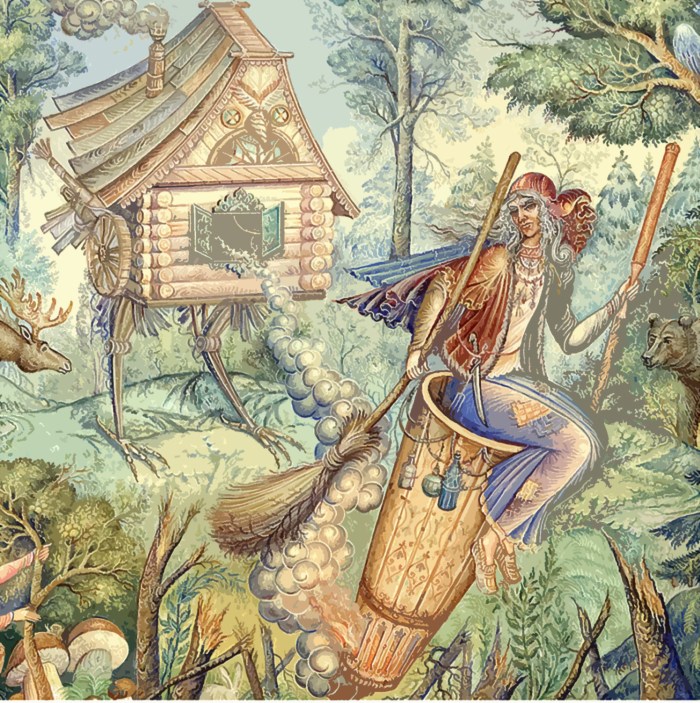
What I find most fascinating about fairy tales is not the young girl’s encounter with the prince, but with the witch. Baba Yaga in the Russian tradition and Frau Holle in the German tradition are both sorceresses of intimidating dimensions.

Baba Yaga eats human flesh and flies around in a cauldron. Her house dances on hen’s feet. Frau Holle lives in a house in a beautiful underground meadow and she showers young girls with either pure gold or filth, depending on how they have served her.

Both these figures are ancient archetypes of female sovereignty that had their origins as pagan goddesses. Baba Yaga was once a great mother goddess of the Slavonic peoples. According to ethnographer Sonja Ruettner-Cova, Frau Holle was originally a solar goddess and a weather goddess. When she shook out her featherbed, it snowed.

Ironically Baba Yaga and Frau Holle have lived on in fairy tales even after the old myths and religions that honored them were banished, precisely because fairy tales have been dismissed as children’s stories. The tales’ deep magic lies hidden in their deceptive simplicity.

The naive young girl must go into the woods on the darkest night to face Baba Yaga. She must leap down a well to find her way to Frau Holle’s house and serve her for a year and a day. Once the young heroine encounters the sorceress, she will be completely and utterly transformed–a girl no longer but a woman with secret powers of her own.

Fairy tales are full of images of women who both challenge and empower other women.

The culmination of the heroine’s journey a deep inner rootedness. It is finding and claiming that house in the forest deep in your soul.


Mary Sharratt is on a mission to write women back into history. Her most recent novel Ecstasy is about the composer Alma Schindler Mahler. If you enjoyed this article, sign up for Mary’s newsletter or visit her website.

 

Updating our Fairy Tales by Anjeanette LeBoeuf

Anjeanette

The rising voices of female empowerment, consciousness, and position has been an undertaking in the last two centuries. Yet societies are still using fairy tales; tales that were written at least 500 years ago. Many of the fairy tales can be read in a 21st Feminism lens as being harmful and products of a patriarchal society. The movement can only gain more strength and momentum if we start from the ground up – reworking the stories, fables, and myths we teach our children, we make into movies, and that children want to dress up as.

Continue reading “Updating our Fairy Tales by Anjeanette LeBoeuf”

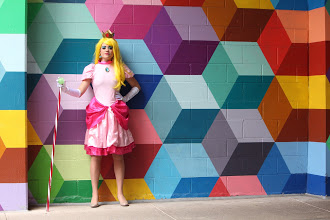
Princess Peach from The Goddess Project: Made in Her Image by Colette Numajiri

Toy stores and department store aisles are decked with pink and purple princess paraphernalia. Disney has provided an array of princesses for little girls to choose their birthday party or bedroom decor from. But as we all know, there’s a deeper secret hidden in the FAIRY TALES that high powered media execs have made their fortunes on: THE GODDESS.

Every hero’s tale, be it in video games or romantic movies sets out to do one thing: SAVE THE PRINCESS.  When I was a child I saved Her myself on my little Nintendo system never knowing why She was in trouble in the first place. And was I the only one who ever wondered why NONE of the PRINCESSES HAD MOTHERS!?

In the early Centuries during the Christianization of Europe, Pagans (which means “people of the land”) hid truths right under the nose of the newly forming Christian Church in their folklore, games and children’s rhymes to avoid being burnt at the stake. These simple people tried to covertly keep the Wisdom of the Sacred Feminine that they’d been honoring since the beginning of time, ALIVE.

Continue reading “Princess Peach from The Goddess Project: Made in Her Image by Colette Numajiri”

The Grimm Brothers’ “The White Snake”: A Feminist’s “Adam & Eve”? by Jeri Studebaker

Me, 2013I was trying not to fidget as I sat on the hard, unforgiving walnut pew.  It was a gorgeous summer day out, and I was locked inside breathing stale air and with nothing to look at but the dreary speaker, and, behind him, a life-sized, picture of a sweet-looking man about to be hung from nails driven through his hands.  I was visiting my parents, who love to take me to church, and I just wasn’t able to say no.

As I sat I daydreamed about our indigenous European ancestors.  They did “church” outdoors, in fragrant, airy forests with wild bluebells, warbling birds, and gentle breezes caressing their skin, ears and eyes.  Instead of doing hard time on walnut benches, they got to dance, chant, hold hands and jump through fires.

Continue reading “The Grimm Brothers’ “The White Snake”: A Feminist’s “Adam & Eve”? by Jeri Studebaker”