

 Some years ago, womanist theologian Karen Baker–Fletcher asked about ancestors following a lecture I gave on the body and nature. I have since come to realize that ancestors are a missing link between the two: we cannot speak adequately of embodiment and interdependence in the web of life without recognizing the ancestors whose lives made ours possible. Our mothers quite literally gave us our bodies. All of our ancestors gave us their genes. Care and callousness with origins going back longer than conscious memory was imprinted on the psyches of our parents and grandparents and transmitted to us. All of our ancestors give us connections to place. While many black people in America can recite oral histories that begin with slavery in the United States, I come from a family where stories of origin for the most part were not valued or told. Both of my father’s parents lost their fathers when they were very young, and my father, who was raised Catholic at a time when Catholics were discriminated against, preferred to think of our family as “American now.” Like the hero of the film Lost in America, most members of my family dreamed of “melting right into that pot.” In the process we lost stories we need to help us to understand ourselves and the complex realities that “becoming American” involved. Continue reading “Body, Nature, Ancestors by Carol P. Christ”
Tag: Feminism
Feminism and Religion: Where Do Nontheists Fit? By Bridget Ludwa
 What is a woman to do when she no longer finds any type of theism relevant to her, but as a human being still needs community, ritual and sense of the sacred that theistic religion inherently provides? The most vocal representatives of atheists are men, such as the voices of Richard Dawkins, Sam Harris, and the late Christopher Hitchens. I’m happy to have these voices, because they’re brilliant and well-spoken, but where are the women? My partner shares the same belief system as I do, but he does not feel the same need for community as I do. Is it gender? What ratio of women to men do you observe when you look at who is spending their time and energy making sure your local Catholic Church functions? In questioning if women are more spiritual than men, Caroline Kline observed that women outnumber men in religious observance. For the sake of argument, let’s accept for a moment that women are more inclined than men to seek community, ritual and a sense of the sacred. What is a nontheist woman to do?
I wanted to go through some articles posted on here before diving into this question, maybe I would find a satisfying answer and that would be the end of it. Carol Christ consistently poses the divine gender question, and admittedly I’ve been very drawn to a feminine manifestation of the divine. The idea of Mother resonates with me more than Father (a father whom many believe could only “save” humanity via human sacrifice). Part of my rejection of theism does indeed stem from this issue of gender. For many who find traditional theistic concepts unnerving, Christ’s reevaluation of the divine is gratifying and empowering. As empowering as this reevaluation is, however, the concept of any deity, male or female, still did not settle with me. Continue reading “Feminism and Religion: Where Do Nontheists Fit? By Bridget Ludwa”
A Room of One’s Own: Sacred Women’s Space by Amy Levin
 I normally don’t get too personal in my blog posts. I figure if I’m going to take up space on the blog I might as well offer up something other than me, my voice, my body, and instead some good old fashioned commentary on those categories of feminism and religion “out there.”
I’ve been thinking a lot about sacred space over the past year (occupy wall street, Durkheim, the public sphere, Park51) and only recently have I begun to really think about personal sacred space. This week, I haven’t been able to avoid it. My long-time boyfriend and I recently broke up not-so-amicably. In the past few days he has contacted all of my friends and relatives in order to say “goodbye.” I began receiving a swarm of confused questions from close friends, who informed me of the texts, messages, and phone calls they were receiving. While I won’t dwell on the details, as you can imagine, these acts have intruded on my mental and physical space to the point where space in my immediate world has been temporarily possessed by someone else. As dated as first wave feminism is, Virginia Woolf’s salient message in A Room of One’s Own is exactly what I need. I realize that though my affective, physical, emotional, and mental spaces are conjoined and cajoled by my cultural and material surroundings, it’s vital that I feel that, in some way, these spaces are mine. This is what agency is for me. And I would call it sacred. Continue reading “A Room of One’s Own: Sacred Women’s Space by Amy Levin”
Privileged Feminist By Xochitl Alvizo
 I have the privilege of having radical lesbian feminism ‘work’ for me. I can’t explain why it does – but it does – it just works for me. I am not of the same generation as most feminists who experienced and awakened to radical feminism during the women’s movement of the 70s and 80s in the United States. I am not white nor was I middle-class when I encountered it (though I probably am middle class now). But nonetheless, as I encountered radical lesbian feminist writing, and eventually some of the women who wrote them, it spoke to me in the depths of my being and rattled my very core. Radical lesbian feminism liberated me and birthed me into a whole new way of Be-ing…and that is a privilege I must not take for granted and must hold loosely. Continue reading “Privileged Feminist By Xochitl Alvizo”
Engaging Twilight By Lisa Galek
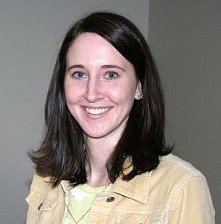
The following is a guest post by Lisa Galek, a professional writer and editor who earned her masters degree Religious Studies from John Carroll University. In her spare time, she loves to read and write young adult fiction. She is currently hard at work on several novels, none of which involve vampires.
It would be easy to write a post bashing Twilight. As we await the release of Breaking Dawn: Part 1, the penultimate chapter in the Twilight movie saga, countless feminist critics, reviewers, and bloggers have weighed in the troubling messages in the series. The books are poorly-written. They reinforce antiquated, patriarchal gender norms. They have a not-so-thinly-veiled abstinence message.
I read all four books over the course of a week and I can tell you, every single one of these criticisms is dead on. I can also tell you
that, upon finishing the last book in the series, Breaking Dawn, I stumbled dizzily into my local bookstore, my head spinning with thoughts of sexy, sparkly vampires, and breathlessly asked the clerk, “Do you have anything else like Twilight?” Continue reading “Engaging Twilight By Lisa Galek”
On being an imperfect feminist: releasing definitions built in shame By Sara Frykenberg
 A few weeks ago, a very interesting and in some places, tense discussion arose from John Erickson’s post, “Hands Off,” some of which related to the difference between what it means to be a liberal feminist and what it means to identify as radical. Since then, I have been thinking a lot about what the identification “feminist” means to me, what it means to be an ally and how I am defining these categories. Rather, I mean to say, against what kind of a standard am I applying this definition.
I think I have asked myself these questions many times in my life, in different ways, but perhaps most significantly I asked myself “am I a feminist?” when I started graduate school. I was sitting in a classroom, set up like a circle, and all the women and two men in my… I think, “Gender and Education,” class were introducing themselves. “Hello, I am so and so, and I have been a feminist for X number of years and I do this, etc.” “Hello, I am so and so, and I am a feminist ally and I do such and such, etc.”—as I remember, some classmates identified more as allies. When it came time for me to introduce myself, I said, “Hello, my name is Sara, and I am not sure if I am a feminist or not. I thought I was, but I don’t know now.” Continue reading “On being an imperfect feminist: releasing definitions built in shame By Sara Frykenberg”
Mary Daly: My Springboard Into Critical Feminist Thought By Katie Driscoll
 This post is written in conjunction with the Feminist Ethics Course Dialogue project sponsored by Claremont School of Theology in the Claremont Lincoln University Consortium, Claremont Graduate University, and directed by Grace Yia-Hei Kao.
Katie Driscoll is pursuing an MA in the Applied Women’s Studies Program at Claremont Graduate University and is participating in the Feminist Ethics Course Dialogue project.
Mary Daly, a professor of theology at Boston College, is known as a radical feminist, one who is widely understood to have epitomized the stereotypical “man-hating femi-nazi.” Daly earned the latter title as the result of a dispute with Boston College concerning her supposed refusal to grant male students admittance into her classes. This dispute ultimately resulted in Daly’s retirement from Boston College in 1999. Somehow, Daly remained a presence on campus, attending panels and other events for years to follow. I had the privilege of meeting her twice while attending BC between 2002 and 2006. I cannot claim that she was particularly warm or personable. She was actually quite cold and demanding. While I was never close to Mary Daly, I feel that I owe her my deepest gratitude for her role in my Self-discovery. I would like to take this opportunity to reflect upon her influence in my life and, utilizing the insights of some of Daly’s former colleagues and students, to set the record straight regarding her alleged refusal to allow men into her classes. Continue reading “Mary Daly: My Springboard Into Critical Feminist Thought By Katie Driscoll”
Idealistic, Cynical, and Pragmatic Mormon Feminists: Who Stays, Who Goes
 One of my Mormon feminist friends once made an observation to me about feminists who were able to stay and even thrive within the Mormon Church, versus the ones who left or were forced to leave. She saw that the more pragmatic and cynical feminists seemed to be able to remain practicing, whereas the idealistic feminists were the ones who didn’t stay.
I thought this was an intriguing framework: the idealistic ones who can’t endure the dissonance between what they know in their heart is right/just and what the Church teaches about gender eventually leave the Church, whereas the pragmatic or cynical ones who see patriarchy as inescapably infusing almost all institutions (universities, corporations, etc.) or who decide to weigh the pros and cons and stay for various reasons including community, family, heritage, and root belief in core Mormon teachings tend to be able to make Mormonism work for them.
This gave me pause. Where do I fall in this framework? Continue reading “Idealistic, Cynical, and Pragmatic Mormon Feminists: Who Stays, Who Goes”
Telling the Truth By Ellen Blue
 Ellen Blue, Ph.D., is the author of St. Mark’s and the Social Gospel: Methodist Women and Civil Rights in New Orleans, a story of white Southern women who worked for racial understanding in the early 20th century. She teaches at Phillips Theological Seminary.
In And the Gates Opened, a film about the first US women rabbis, one commented that women’s presence in the rabbinate has allowed questions to be raised that went unspoken before. One example was how miscarriage should be ritually observed. A colleague told her he had been in the rabbinate for many years, and no one had ever asked him that question. She responded that although she had been a rabbi only a few years, she had already been asked several times. The presence of women makes space for the speaking of certain “unspeakable” things and questioning what God might have to do with them, precisely because it is women to whom such things happen.
Women willing to speak openly in other public forums also matter. When Betty Ford died, many voiced gratitude for her helping to dismantle the cultural norm that “nice” women didn’t talk about breast cancer or addiction. Continue reading “Telling the Truth By Ellen Blue”
Feminism and Process Theology By Jeremy Fackenthal
 The following is a guest post written by Jeremy Fackenthal, Ph.D. candidate in the philosophy of religion program at Claremont Graduate University. His work focuses on process theology and philosophy, critical theory, and post-Holocaust thought.
One of my good friends taught an undergrad course on feminism in religion several years ago and assigned a book of John Cobb’s. The class read it, loved it, and began a conversation about whether or not men could be feminists. They decided that they could and that John Cobb surely must be a feminist. And so they sent him one of the “This is what a feminist looks like” t-shirts, which he happily received and reportedly still has to this day. I tell this story not only to demonstrate that John Cobb is a feminist and cares deeply about feminist issues, but also as a way of pointing out that the process theology that Cobb has been so instrumental in developing and that has become his academic trademark is itself strongly supportive of and compatible with feminist thought.
Continue reading “Feminism and Process Theology By Jeremy Fackenthal”
 Feminism and Religion