Prophetic Publishing, Feminist Publishing: 2024 Goals by Dr. Angela Yarber

Queer Chicana feminist author, Gloria Anzaldúa, once claimed, “The world I create in my writing compensates for what the real world does not give me.” I’ve long connected with the revolutionary Anzaldúa, believing in the prophetic power of the written word to create new worlds, worlds big and wide and just and beautiful enough for all people. Worlds where the perspectives of the marginalized are brought to the center.

This is what I aim to do as a publisher and writer myself. It was a meandering path to get here, but on the cusp of a new year, I find myself finally in place with my calling and vocation where all my skills as an activist, writer, professor, artist, and pastoral presence are coming together.

Continue reading “Prophetic Publishing, Feminist Publishing: 2024 Goals by Dr. Angela Yarber”

Authenticity by Beth Bartlett

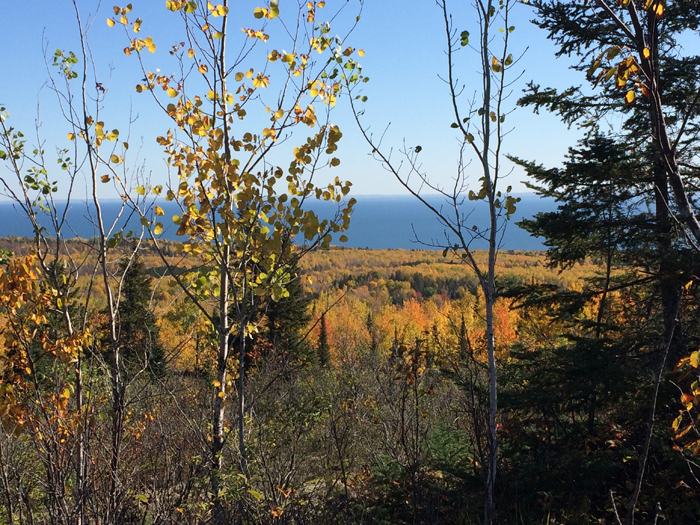
The leaves have finally begun to turn. I’ve been longing for the trees to reveal their true beauty in all their colorful array, and am glad for this beginning. Soon the woods will be filled with the golden, amber, scarlet, and orange glow of the maples, aspen, birch, and oaks of the northern forest.

Hawk Ridge

It is the time of year I would take my Women and Spirituality students to a sacred spot on a ridge high above Lake Superior to explore their spiritual connections with the earth. They would share a particular way they felt a connection to the natural world – often a lake, or a place from their childhood, a tree they loved to climb, their dog, or a stone they carried.   We would circle the large pine and invoke Starhawk’s “Open-Eyed Grounding” practice.[i] They would read and comment on their favorite passages from the readings – selections from Susan Griffin’s Woman and Nature and Carol Christ’s “Rethinking Theology and Nature.”[ii] Then they would disperse across the ridge for their solo encounters with nature, before gathering together again, each returning with something they had discovered during that time.  Then we would talk about the changing colors of the leaves surrounding us and talk about how these were the true colors of the leaves, finally emerging now that the chlorophyll that had disguised them in green was beginning to wane. Taking our cue from the leaves, we would talk about authenticity – about their coming into their own true colors. For that is the work of spiritual growth and transformation — to emerge as our own true selves. Yet, how often our unique and precious beings are taught to mask our true color, blend in — be “green” like everyone else.  What a vivid and beautiful world when we come into our own and share our unique gifts and being with the world.

Continue reading “Authenticity by Beth Bartlett”

Queering the American Dream by Angela Yarber

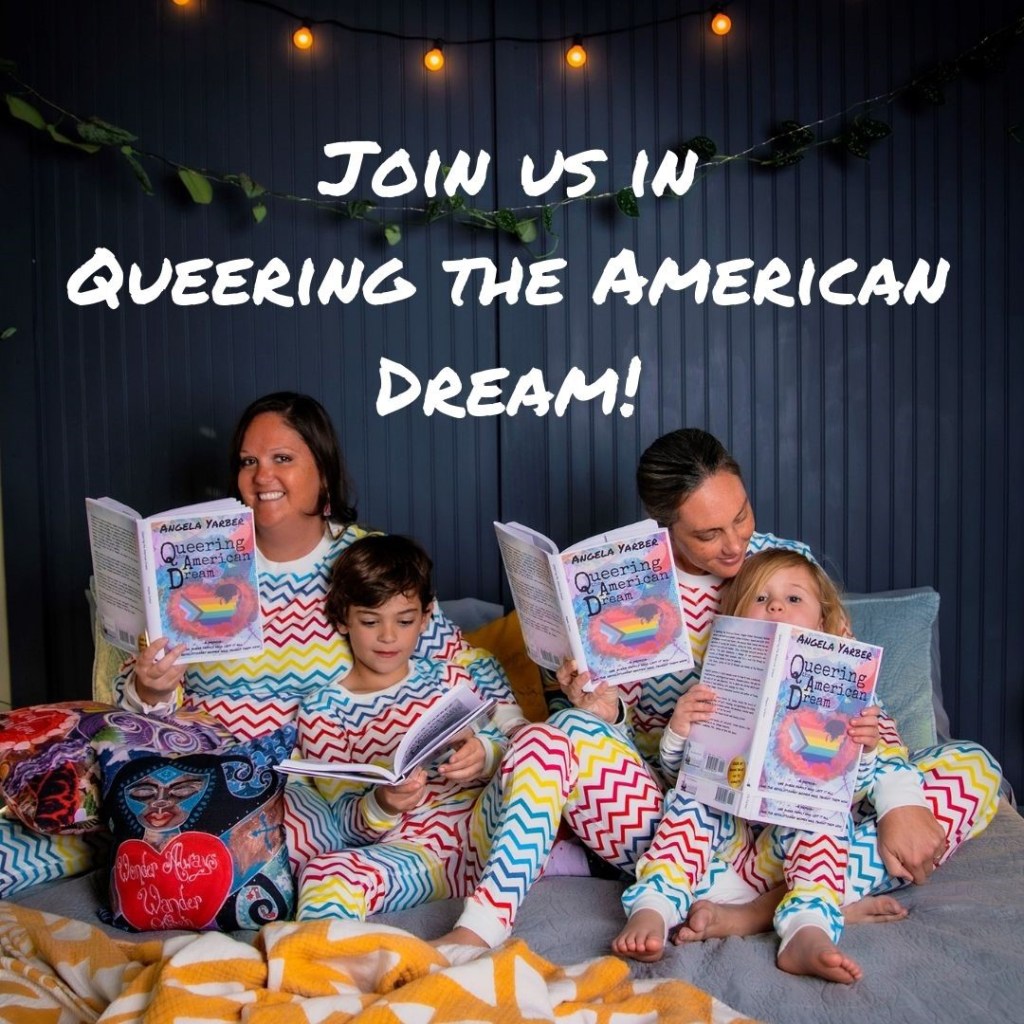
As Florida politicians try to ban teachers from including LGBTQ+ issues in the curriculum, admonishing them, “Don’t Say Gay” at school, I’m shouting “GAY!” from the rooftops. Because I’m celebrating the release of my eighth book and first memoir, Queering the American Dream. It’s my queer family’s story of leaving it all and the revolutionary women who taught us how.

Our story began the day the Supreme Court ruled our marriage legal and ended the moment my younger brother’s addiction spiraled into a deadly overdose. In-between were eighteen months of full-time travel with a toddler in tow. Criss-crossing the American landscape, my wife and I came face to face with jaw dropping natural beauty on the one hand, which contrasted with the politics, policies, and people who continued to discriminate against marginalized families like ours on the other. At each stop along the way, a different revolutionary woman from history or mythology guided our footsteps, reminding us that it’s not simply our family who dared to queer the American dream, but a subversive sisterhood of saints who have upended the status quo for centuries. From Vermont to Hawai’i, and everywhere in between, the beauty of the American landscape bore witness to a queer clergywoman whose faith tradition was not enough to sustain her. But the revolutionary women were.

Continue reading “Queering the American Dream by Angela Yarber”

Holy Women of Pride: Queer Spirituality and Worship Resources by Angela Yarber

As we enter Pride month, do you ever finding yourself wishing there were unabashedly queer resources to aid clergy and people of faith in nurturing spirituality, celebrating queer families, or offering liturgies that celebrated revolutionary queer women? Look no farther! The Holy Women Icons Project—a non-profit seeking to empower marginalized women by telling the stories of revolutionary holy women through art, writing, and special events—has created three such resources. Thanks to a generous grant from The BTS Center, these affordable and accessible online retreats and resources are available for clergy and laity alike. Check out these three offerings, along with the revolutionary seven queer women of color who inspired them!
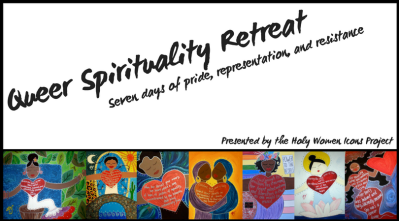
HWIP’s 7-Day Online Queer Spirituality Retreat is an opportunity to subversively queer your spirituality, and for the LGBTQ+ community to celebrate our spirituality without having to translate it through the lens of heteronormativity. Open to everyone, the Queer Spirituality Retreat features seven different queer women of color: Pauli Murray, Frida Kahlo, Perpetua and Felicity, the Shulamite, Marsha P Johnson, Guanyin, and Gloria Anzaldúa. The most important part of the retreat is, of course, the revolutionary queer women who make it possible. So, allow me to briefly introduce you to seven queer women of color… Continue reading “Holy Women of Pride: Queer Spirituality and Worship Resources by Angela Yarber”

Knowing my Voice through Writing by Elise M. Edwards

elise-edwardsOver the summer, I’ve been writing more than I do during the traditional academic year when other tasks consume the bulk of my workday.  I have spent more time experiencing the joy of creative discovery and production, but I’ve also had more time confronting the difficulties of creative work as I’ve wrestled with some of its unique challenges.  One of those challenges has been to refine my academic writing voice. I’ve approaches the challenge of developing my voice as both a spiritual and feminist practice and this has helped me find confidence in my work.

Continue reading “Knowing my Voice through Writing by Elise M. Edwards”

Priestess at the Crossroads by Joyce Zonana

In order to transform what is happening at the Mexico/U.S. “border” (and elsewhere) we must first break down the borders within our heads—all the borders in all our heads. Mr. Trump tells us “If you don’t have Borders, you don’t have a Country”; my response today is: “Who needs countries? Who needs genders? Who needs races or competing religions? What we need is Coatlicue.”

jz-headshotAs so many of us recoil in horror at the Trump administration’s cruel attempts  to enforce an impenetrable border between the U.S. and Mexico, I find myself struggling to understand what he and his supporters mean by “borders,” and why they are so invested in maintaining them. The administration’s vicious immigration policy, recently epitomized in a brief tweet on June 19th, 2018—Juneteenth, the day in 1865 when slaves were finally freed throughout the U.S. at the end of the Civil War—“If you don’t have Borders, you don’t have a Country” has sent me back to Gloria Anzaldúa’s visionary 1987 book, Borderlands/La Frontera: The New Mestiza.

Grounded in her experience as a queer mestiza raised in the Texas/Mexico borderlands, Anzaldúa’s bilingual, cross-genre manifesto argues for the transformative role of the mestiza, no longer “sacrificial goat” but “officiating priestess at the crossroads”:

Continue reading “Priestess at the Crossroads by Joyce Zonana”

Bridging Beyond Binaries: Painting Gloria Anzaldúa by Angela Yarber

One of the great joys of being an artist and writer is working on commissions, enlivening in paint, canvas, and word the stories of revolutionary holy women who have emboldened and inspired the one commissioning the Holy Woman Icon. Gloria Anzaldúa was on my list of holy women for a while when Dr. Robyn Henderson-Espinoza finally gave me the nudge to paint her by commissioning an icon. Anzaldúa gave Robyn—and so many others—the framework, the bridgework, for dismantling the binaries of difference, for finding the beauty that resides at the borderlands of race, gender, and sexuality. As a scholar-activist, Robyn speaks of Anzaldúa as a patron saint, saying:

“Anzaldúa has always been for me the bridge between theory and action, and her work, both in writing and teaching, compels me to live into my vocation as a public theologian, which at root is bridging across lines of radical difference. Without Anzaldúa and without her bridging frame, I am unable to do the work that I now do. This icon offers me a visual reminder of the ways in which I’m called to be a bridge in curating communities of radical difference.”

Queer borderlands. Chicana borderlands. Feminist borderlands. Gloria Anzaldúa (September 26, 1942 – May 15, 2004) was an American scholar who focused on the intersections among queer theory, feminist theory, and Chicana cultural theory. Born in the Rio Grande Valley of south Texas, Anzaldúa also bridged the borders of personal and academic writing, weaving together theory with lived experience, English with Spanish, and inviting readers into a new world—Mundo Zurdo—that transcended these seeming binaries. Continue reading “Bridging Beyond Binaries: Painting Gloria Anzaldúa by Angela Yarber”

Religious Mestizaje by Xochitl Alvizo

Some have said that all theology is autobiographical. Whether this is always the case or not, in my case, it is absolutely true. I came to the topic of religious mestizaje because of my own need to make sense of the fact that I fully identify as a Goddess loving person as well as a Christian-identified one. I have made reference to this before on this blog; I have admitted that even after my feminist awakening, even after coming to love and practice Goddess spirituality, even after reading all of Mary Daly’s books (some of them more than once), I have chosen to affiliate with Christianity all while also maintaining my Goddess devotion nonetheless. Therefore, Gloria Anzaldua’s understanding of mestijaze, and religious mestizaje in particular, has contributed to the ongoing revision of my religious identity.

The word mestiza or mestizo is born of the incarnation of hybridity and diversity.[1] Historically mestizaje is the new hybrid race, a reference to Mexicans who are the mixed people born of Indian and Spanish blood in the 16th century.[2] The Spanish invaded the land now called Mexico, and in partnership with rival tribes, conquered the Aztec people. Oscar Garcia-Johnson, in his book A Mestiza Community of the Spirit, states that mestizaje “represents a hub of dehumanizing stories and self-empowering templates.”[3] Thus, there is an inherent violence implied in mestizaje as the word originated, and this violence is also implied in my Goddess Loving Christian mestizaje. Christianity has been the cause of much harm and dehumanizing violence, especially in its relationship to women, and really is in need of transformation and self-empowering templates. The origin of mestizaje implies the violence of one tradition or people dominating and suppressing another and the reality that new life, a new people and tradition, find a way nonetheless; I think this is part of what leads to my religious mestizaje. The new ‘way’ that I have found has taken form in a Goddess Loving Christian religious practice that reflects the concrete embodied reality of my experience – a religious practice that is always negotiated with a community of people. .

Continue reading “Religious Mestizaje by Xochitl Alvizo”