
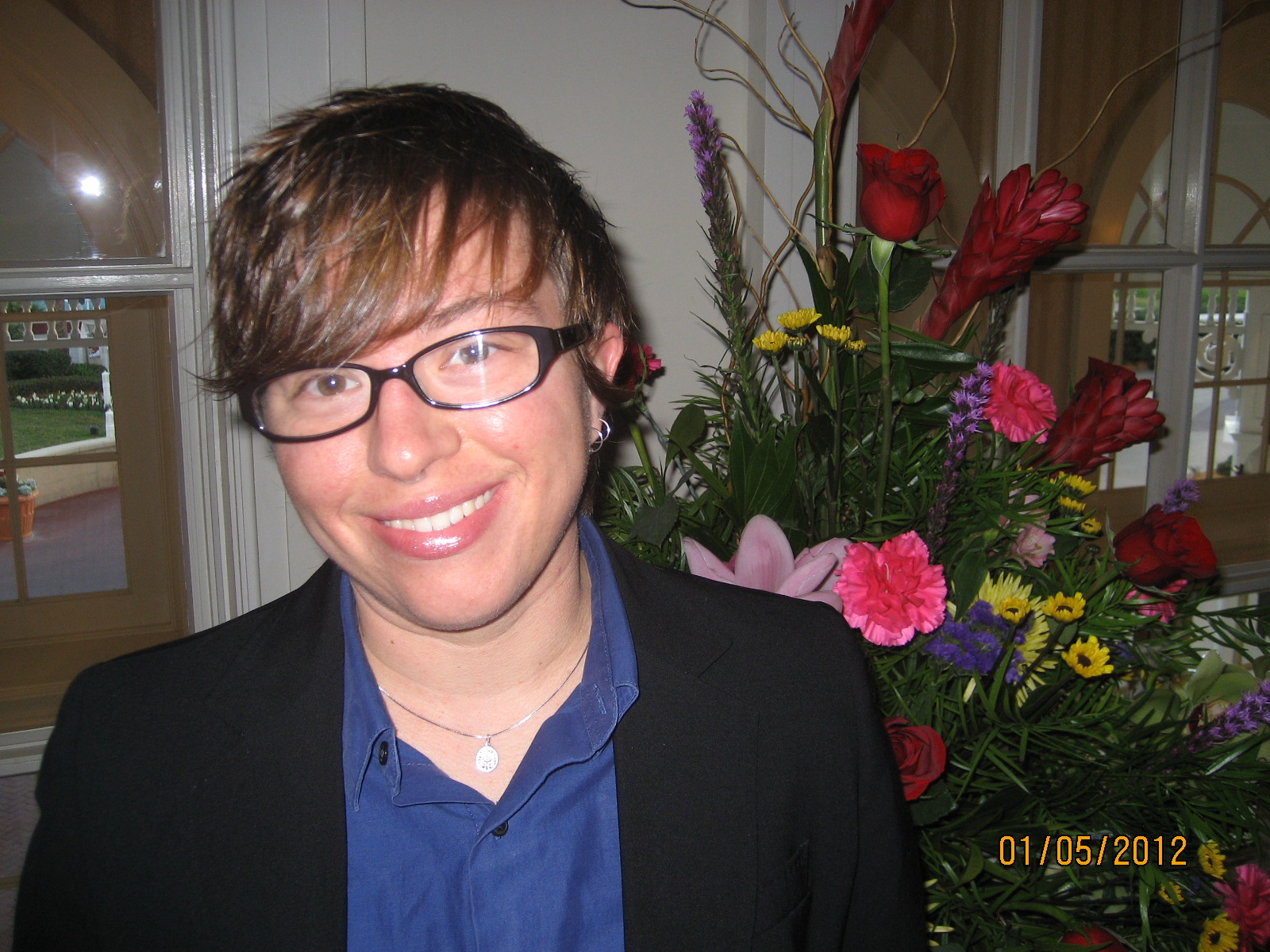
RE-SOULING ON SHABBAT BY IVY HELMAN

I attended a service at Congregation Shalom in Chelmsford, MA two Fridays ago.  During the service, Rabbi Shoshana Perry spent a few minutes addressing the last word of a Hebrew prayer found in the Reform siddur, Mishkan T’filah.  It was translated in the siddur as “God rested” but the Hebrew word used was vayinafash, which comes from the word nefesh, or soul.  The prayer emphasizes on the seventh day that God did not rest as much as God took time out to re-soul.  Rabbi Perry believes that our Shabbat should be spent doing things that help us also re-soul.

Initially, I spent quite a long time considering why God would need to re-soul and what exactly God would do to re-soul.  When I realized the futility of trying to sort that out, I moved a little closer to home: what do I do on Shabbat to re-soul?  I was quite overwhelmed trying to answer this question as well.

Traditionally, Shabbat is about study, rest, prayer and family among other things.  In fact, many Jews avoid creative processes like writing, cooking, painting, driving and working because God rested from creative work on the seventh day.  (Incidentally, our creativity is also how we are considered to be made in the image of God).  Part of the reason this idea struck me so deeply is because I often find painting, cooking and writing rejuvenating. Continue reading “RE-SOULING ON SHABBAT BY IVY HELMAN”

Hagar: A Portrait of a Victim of Domestic Violence and Rape

This week Twitter has been a flurry with information for victims of   domestic violence and rape.  This ranges from the U.S. redefinition of rape to include men to Nigeria’s first anti-rape toll free hotline for women.  There is even a male movement to stand against rape.  This problem is an ongoing issue, one that shows no sign of diminishing or going away.  According to Amnesty International, one in three women worldwide have been beaten, coerced into sex, or otherwise abused and their abuser is normally someone they know.  As I contemplate this very difficult issue, I am reminded of the Biblical Hagar in Genesis 16. The story of Hagar and Sarai is abundant

Men Can Stop Rape (http://www.mencanstoprape.org/)

in ethical situations that draw in the reader and presents complex issues that can be very troublesome.  If you take the text hermeneutically, through an ideological examination in its English translation, we have an Egyptian woman, who is also referred to as slave or concubine, forced to engage into sex with her owner’s husband for producing an heir.  Here the abuser is a woman with a docile and obedient husband portrayed by Abram.  What can we  glean from such a story for today’s battered women?  Hope or horrific defeat? Continue reading “Hagar: A Portrait of a Victim of Domestic Violence and Rape”

Does Humor Have a Place in Religion? by Barbara Ardinger

Is there anything funny about the divine? Any joke-telling gods? From the days of Abraham until today, the gods and their preachers are a very earnest lot intent on saving us from our sins and building congregations.

Like it or not, we neopagans are still children of the society we’re endeavoring to change. Some of us seem to want to switch patriarchy to matriarchy, but that’s just swapping Big Daddy for Big Momma. It’s still a hierarchical arrangement with the deity at the top of the mountain. Immediately below the “arch” are angels, men, eagles, lions, and other superior beasts. At the bottom of the mountain are women, mud, and matter. (In case you don’t recognize it, this is the 18th-century Great Chain of Being.)

Any humor in spiritual and religious writing? The Hebrew Bible (which Christians refer to as the Old Testament) is a collection of laws, canonically approved versions of history, prophetical preachings, and poetry. The Christian Bible (aka New Testament) give us different approved versions of history, plus further preaching, plus myth and mysticism. The writings of the medieval Fathers of the Church are famously grim and misogynistic. The Qur’an offers ethical guidance and moral preaching. In the Far East, the Tao is also profound, as are the preachings of the Buddha. The writings of Confucius present instructions for maintaining the correct social order (another version of that Great Chain). The great stories of Hinduism are filled with wonder, adventures, and philosophy. But they’re not very funny. Continue reading “Does Humor Have a Place in Religion? by Barbara Ardinger”

How to Talk to a Deity* By Barbara Ardinger, Ph.D.

Originally, when ritual was still part of everyday life and everybody talked to gods and goddesses all the time, we spoke to them in everyday words. As time went on and priests assumed more power, however, exalted language and fulsome invocations arose, and pretty soon only the High Priest could speak to God Most High. We common folks were allowed to pray, of course, but the important prayers were uttered by the priests.

During the European Renaissance and all the way up to the 19th-century occult revival, it was thought that the gods spoke Hebrew and Latin. Ceremonial magicians wrote rituals in these languages or made up other highly esoteric languages like crypto-Egyptian, quasi-Sanskrit, and Enochian (the “angelic language” of the Elizabethan Dr. Dee). If you read books on high occultism, you’ll see scripts in these languages. Trying to pronounce the words can be like trying to unscrew the inscrutable.

Fortunately, we discovered that it can be dangerous to invoke an invisible power in a language we can neither understand nor enunciate properly nor improvise in. As anyone who has ever studied a foreign language knows, boners come easily and can be very embarrassing. Worse, some powers may become angry if we mispronounce their names … or we may not get who we intended to call. Like the modern Roman Catholic Church, occultists, ceremonial magicians, and witches have generally adopted the vernacular. Continue reading “How to Talk to a Deity* By Barbara Ardinger, Ph.D.”