A Cave Story by Arianne MacBean

A few years ago, I took a pilgrimage to Crete with the hope of meeting the Great Goddess. I was yearning from something undeniable, proof that would allow me to be a card-carrying believer. Although our group was led to powerful ancient sites where we enacted sincere rituals and dances, each time I failed to feel greeted by Her universal power.

Except once. And I almost missed it.
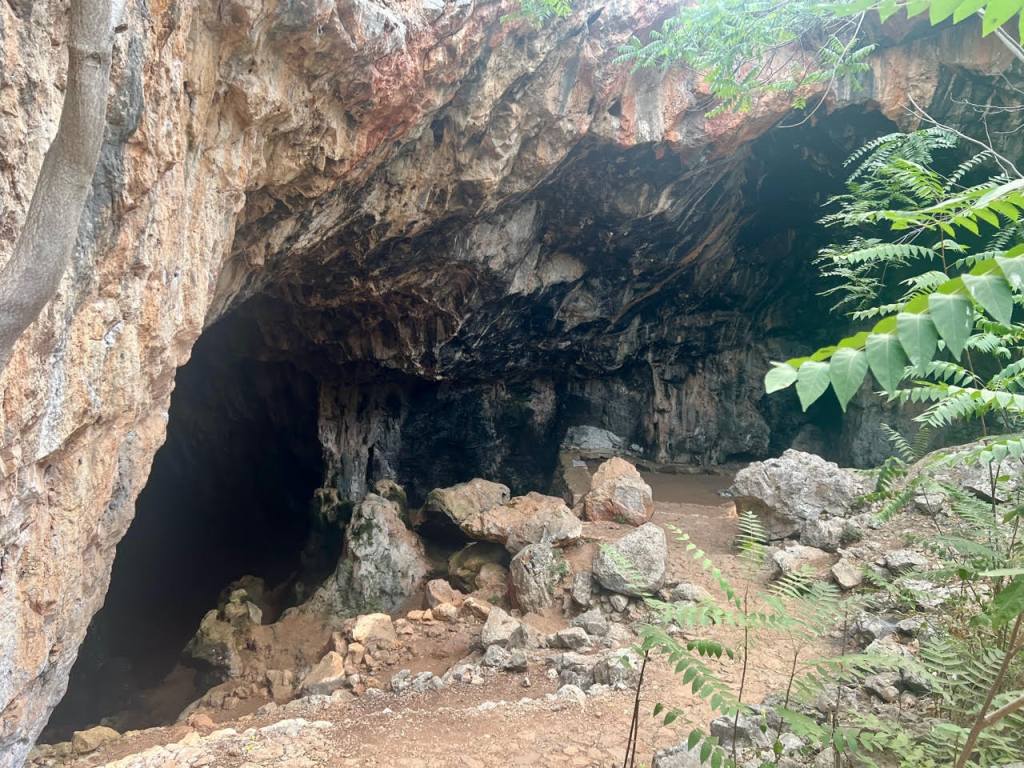
The great cavern, Skotino (Photo by Helen Marie Traglia)

One day, a small but determined group of women took it upon us to co-lead a ritual at Skotino cave, an ancient site used for sacred purposes from the Bronze Age through the Roman era. The collaborative approach to facilitating a ritual was new to us, so we all felt especially ignited and giddy. Before we descended into the depths of the cave, I sang, (something I NEVER do). I had been provided lyrics, but I made up my own melody, which my fellow initiates sang back to me, as a call and response.

Continue reading “A Cave Story by Arianne MacBean”
Legacy of Carol P. Christ: Is the Spirit of Great Generosity in Crete a Survival of Ancient Matriarchal Values?

This was originally posted on October 28, 2013

carol-christAt a coffee shop in Agios Thomas, Crete last month a perfect stranger offered to pay for the coffees and sodas of the 16 women on the Goddess Pilgrimage to Crete. This spirit of great generosity is rarely experienced in the United States or other parts of Europe, but it is still common in rural Crete and some parts of Greece.

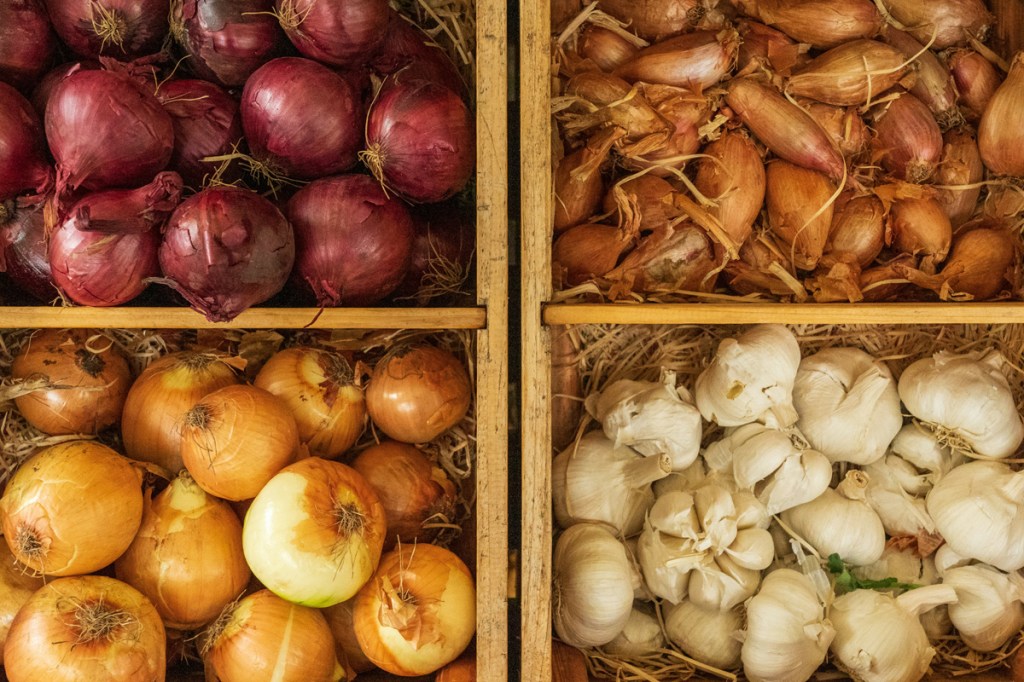
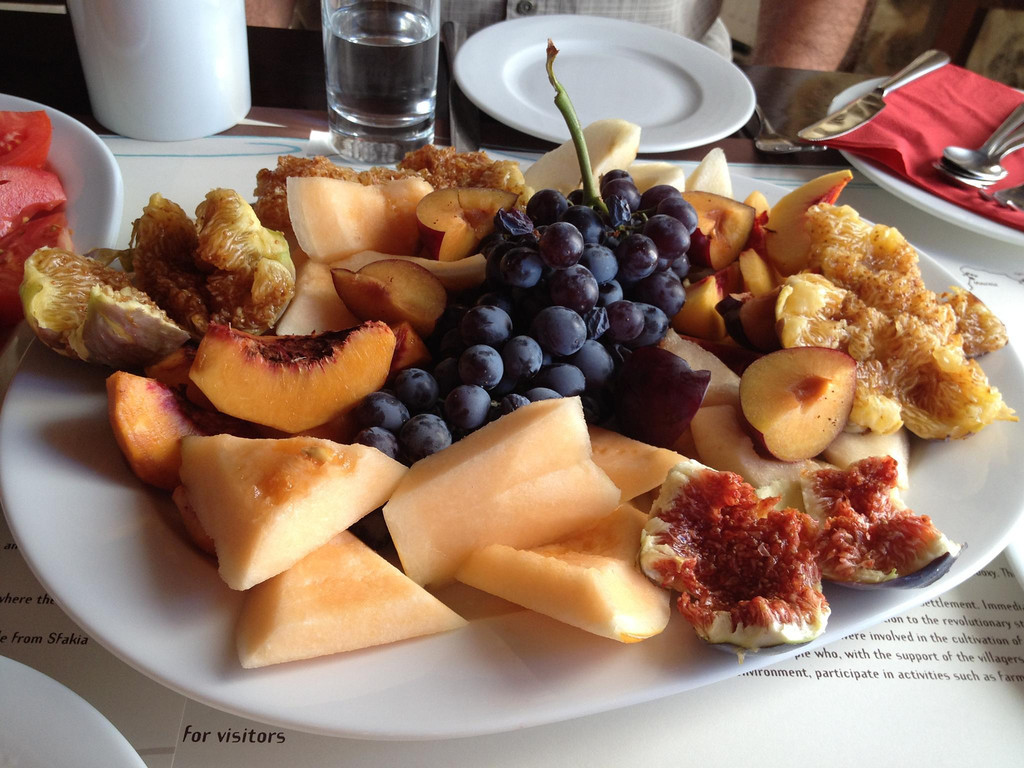
 In fact our group was in Agios Thomas because our bus driver Babis, also in a spirit of great generosity, insisted on stopping to show us his village when we were passing nearby. He guided us to see Roman rock cut tombs and arranged for the early Byzantine church to be opened. At the end of the our pilgrimage, Babis stopped the bus at a wooded glen beside a small church where he offered us his own homemake raki, wine, and olives, accompanied by local sheep cheese he had purchased while we were climbing a mountain. After every meal that we ate in local tavernas, we were offered bottles of cold raki, fruit, and sweets.

crete fruitsThis spirit of great generosity has long been commented on by travelers in Greece, who often speak of it as unexpected (for them) hospitality to the stranger or traveler. That it is, of course. Through the work of Heidi Goettner-Abendroth, I now understand that the famous Greek hospitality to the stranger has deep roots in matriarchal cultures. According to Goettner-Abendroth, equality of wealth is assured through the widely-practiced custom of gift-giving in matriarchal cultures. Continue reading “Legacy of Carol P. Christ: Is the Spirit of Great Generosity in Crete a Survival of Ancient Matriarchal Values?”

Legacy of Carol P. Christ: IS THE SPIRIT OF GREAT GENEROSITY IN CRETE A SURVIVAL OF ANCIENT MATRIARCHAL VALUES?

carol-christ

This post was originally published on Oct. 28th, 2013

At a coffee shop in Agios Thomas, Crete last month a perfect stranger offered to pay for the coffees and sodas of the 16 women on the Goddess Pilgrimage to Crete. This spirit of great generosity is rarely experienced in the United States or other parts of Europe, but it is still common in rural Crete and some parts of Greece.

 In fact our group was in Agios Thomas because our bus driver Babis, also in a spirit of great generosity, insisted on stopping to show us his village when we were passing nearby. He guided us to see Roman rock cut tombs and arranged for the early Byzantine church to be opened. At the end of the our pilgrimage, Babis stopped the bus at a wooded glen beside a small church where he offered us his own homemake raki, wine, and olives, accompanied by local sheep cheese he had purchased while we were climbing a mountain. After every meal that we ate in local tavernas, we were offered bottles of cold raki, fruit, and sweets.

crete fruitsThis spirit of great generosity has long been commented on by travelers in Greece, who often speak of it as unexpected (for them) hospitality to the stranger or traveler. That it is, of course. Through the work of Heidi Goettner-Abendroth, I now understand that the famous Greek hospitality to the stranger has deep roots in matriarchal cultures. According to Goettner-Abendroth, equality of wealth is assured through the widely-practiced custom of gift-giving in matriarchal cultures. Continue reading “Legacy of Carol P. Christ: IS THE SPIRIT OF GREAT GENEROSITY IN CRETE A SURVIVAL OF ANCIENT MATRIARCHAL VALUES?”

Legacy of Carol P. Christ: “The Language of the Goddess” In Minoan Crete


This post was originally published on Oct. 8, 2012

While the “war against Marija Gimbutas,” rooted in what my friend Mara Keller calls “theaphobia,” is being waged in the academy, her theories continue to unlock the meaning of hundreds of thousands of artifacts from the culture she named “Old Europe.”

According to Gimbutas, the Neolithic and Chalcolithic cultures of Old Europe c. 6500-3500 BCE were peaceful, sedentary, agricultural, matrifocal and probably matrilineal, egalitarian, and worshipped the Goddess as the power of birth, death, and regeneration in human and all forms of life.  The cultures of the Old Europe contrasted with the Bronze Age cultures of the Indo-Europeans who brought the Indo-European languages and value systems to Europe and India and to all of the European colonies.  The Indo-European cultures were patriarchal, patrilineal, nomadic, horse-riding, and warlike, and worshipped the shining Gods of the sky. 

“The language of the Goddess” includes a series of signs and symbols that the people of Old Europe could “read” as surely as you and I know that a cross on top of a building marks it as Christian or that a woman wearing a star of David pendant is Jewish.  Gimbutas identified the meaning of these symbols through a painstaking process that involved comparison of artifacts, attention to where they were found, and clues from the recurrence of similar symbols in later cultures.  In twenty years of leading Goddess Pilgrimages to Crete, I have found Gimbutas’ theories an indispensible “hermeneutical principle” which unlocks the meanings of the artifacts we encounter.

  Continue reading “Legacy of Carol P. Christ: “The Language of the Goddess” In Minoan Crete”

Legacy of Carol P. Christ: The Turtle Goddess from Myrtos in Ancient Crete

This was originally posted on October 15, 2012

“As we bless the Source of Life, so we are blessed.” Song by Faith Rogow

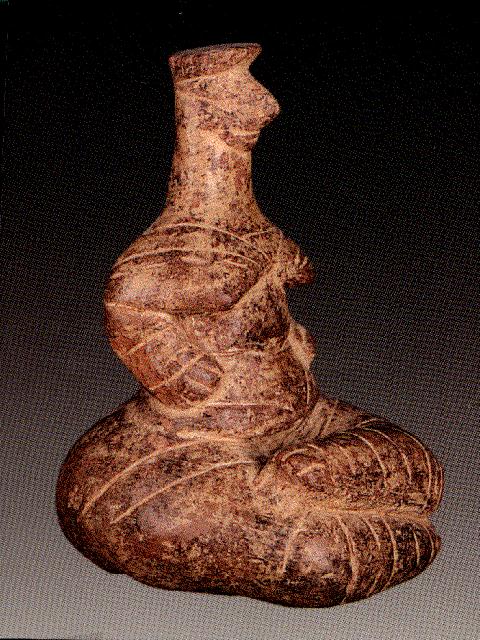
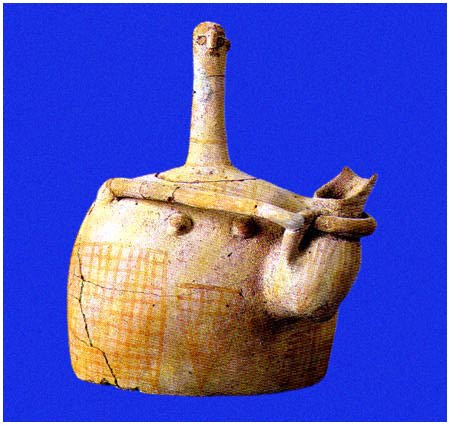
The strange and cheerful figure portrayed in this ancient Cretan vessel comes from the site known as Fournou Korifi near Myrtos, in Crete.  Dated before 2000 BCE, she was called the “Goddess of Myrtos” by the excavator, Peter Warren.  This little Goddess was found on an altar in a small room in the ritual area of a complex of small rooms on a hill above the sea that was home to up to 120 people.  The Goddess of Myrtos is a vessel holding a vessel.  In ritual libations, liquid would have been poured from the pitcher she holds onto an altar.

.She is obviously female, with breasts and a sacred triangle.

The cross-hatching on her sacred triangle and on the squares drawn on her body perhaps symbolize woven cloth and the important roles of women as weavers in the community that created her.  A side view shows that she is “stitched together” along her sides.  The many spindle whorls and loom weights recovered from the site provide material proof of the importance of weaving at Myrtos.

Continue reading “Legacy of Carol P. Christ: The Turtle Goddess from Myrtos in Ancient Crete”

Why Ritual in Turbulent Times? by Terry Folks

Nick Fewings, Unsplash

It is Autumnal Equinox. Five women gather equidistant apart beneath a giant avocado tree in the garden at Evi’s place near the village of Zaros. This little hamlet is under the watchful loving eye of Psiloritis (Mount Idi) on the Island of Crete in Greece. We leave the solitude of our individual cottages where we have been quarantined to co-create an Autumnal Equinox ritual I have initiated for this occasion. Since we are still testing positive for COVID, we maintain our distance. I have a nasty strain as I’m exhausted, foggy, my nose bleeds, and I’m coughing so much my head hurts. Still … this ritual is important as our morale seriously needs a boost. We are dubbed the five “Corona Sisters” or the “COVID Girls” whose Goddess Pilgrimage on Crete was cut short when we contracted the virus somewhere between our homes in Australia, Canada and the United States, and our arrival in Heraklion a few short days ago. We have renamed ourselves the “Avocado Sisterhood” to acknowledge the blessing of our togetherness, and we represent a quarter of the women participating in Carol Christ’s Goddess Pilgrimage to Crete in 2023.

Continue reading “Why Ritual in Turbulent Times? by Terry Folks”

Legacy of Carol P. Christ: A Gift Economy: Could It Be Better To Give Than To Receive?

This was originally posted on April 15, 2013

In a gift economy inequalities are balanced out by the cultural practice of gift-giving. If you have more, then you give more, if you have little, you still feel it is better to give than to receive.  A person who hoards wealth is not viewed positively.

The worldview of a gift-giving economy is so far from our own that we can barely comprehend it.

marika's raki

In Skoteino, Crete, eighty-seven year old Marika awaits eagerly for the arrival of our group. She does not come empty-handed to join us after we have finished a meal lovingly prepared by Christina.  Marika brings a bottle of raki and urges us all to join her in downing a small glass of her homemade moonshine.  Often she offers us nuts she has cracked or raisins she has prepared as well .  She has almost nothing and lives without many modern conveniences, but she would not consider joining us without bringing a gift.

Continue reading “Legacy of Carol P. Christ: A Gift Economy: Could It Be Better To Give Than To Receive?”

Mountain Mother: Earth, Woman, Goddess (Part 2) by Jeanne F. Neath

Part 1 was posted yesterday.

In Part 2 we’ll complete our travels into Mountain Mother’s realms, as we explore female-centered economics and spiritualities as a means toward creating earth- and female-centered communities and small-scale societies.

Imagine living on Turtle Island prior to 1492. At that time Indigenous peoples had been living in respectful relationship to nature, tending her for thousands of years. European invaders and colonists were amazed by the abundance, but assumed they were seeing wild nature. These were subsistence societies! People’s needs were met by the Earth, her plants, animals, waters, and human efforts. No one charged a fee. Everything was a gift.

Continue reading “Mountain Mother: Earth, Woman, Goddess (Part 2) by Jeanne F. Neath”

Ariadne and Me – Stumbling Toward the Divine by Arianne MacBean

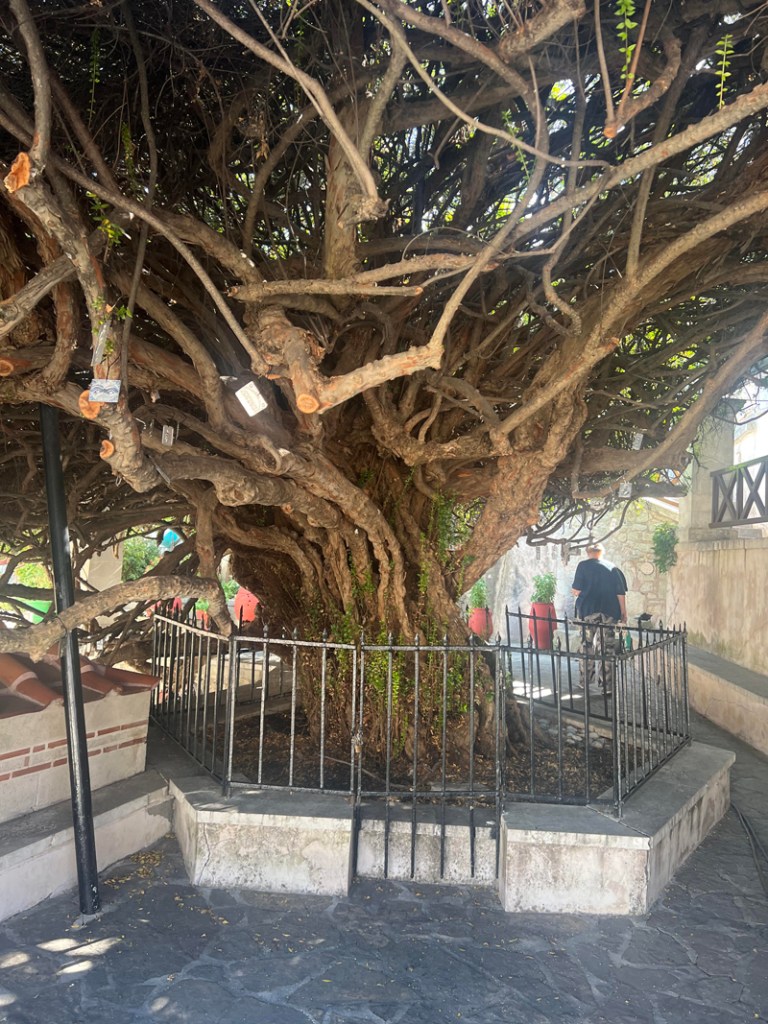
The Sacred Myrtle Tree with its protective fence at Paliani Monastery

I went to Crete because I longed for some kind of communion with Ariadne. Each time I gathered in ritual with the women on my trip, I hoped She would speak to me, or that I would feel something and know that She was in me, or I within Her. At Paliani, I had these same wishes as I walked toward the over-1000-year-old sacred myrtle tree. Set back in the corner of the quiet convent, I was struck by the contrast between the tree’s black bark and surrounding black fence set against the hopeful flickering of silver ex-votos that filled each branch. I walked around the back of the tree on a slight upper landing and searched for a branch within reach. Finding a spot where I could rest my forearm, albeit awkwardly, I leaned in and waited for Her.

Continue reading “Ariadne and Me – Stumbling Toward the Divine by Arianne MacBean”

Mountain Mother: Symbol from the Past, Beacon for the Future by Jeanne F. Neath

Dreaming of and working toward creating an earth- and female-centered future is proving to be my best strategy for surviving and enjoying the ecologically and politically problematic present. Current realities and predictions for the future, such as those made by climate scientists, are certainly grim. What else can we expect in a global society that puts male power and profit above the needs of people and planet?

Those in power cannot possibly undo today’s polycrisis as they are too invested, personally and financially, in the status quo. They cannot even begin to dream of the transformations called for. This is something that we women can do that they cannot. We are the ones who give birth, create new life. We can certainly dream up and create new ways of living.

Continue reading “Mountain Mother: Symbol from the Past, Beacon for the Future by Jeanne F. Neath”