When I moved to Maine from New Orleans 15 years ago, I was delighted to discover how many birch trees were on the property where I lived with my new partner. Previously I had had little contact with these beautiful white trees, other than in pictures and stories. The name always evoked images of birch bark canoes and messages to fate scrawled with bits of burnt wood.
Face to face, birch trees were as marvelous as I had imagined. I loved their shape against the blue sky, their beautiful white bark, the graceful way they swayed in the wind, the delicate tracery of their branches in mid-winter. Once I even saw a pair of mating dragon flies clinging to a branch, using their delicate wings to maintain harmony with the movement of the gentle breeze. Continue reading “Lessons From Birch & Mother Earth—Grace, Resilience, and Rebirth by Mary Gelfand”
Even though I realized at least 17 years ago that it makes no theological sense to limit our symbols of the Divine to male symbols – Lord, God, Father – it took several years for this idea to embed itself into my subconscious. Over time, male language moved from ‘unnoticed’ to ‘noticed’ to ‘distracting’ to, eventually, ‘oppressively violent when used exclusively, without female images to balance out millennia of the idolatry of maleness.’
One of my favorite ways to dislodge this subconscious, internalized patriarchy has involved rewriting favorite old hymns. I usually try to incorporate a combination of images, to represent the incarnate divinity of all genders and all Creation. But let’s be honest: female terms for the Divine remain startling in many religious and secular, cultural contexts. In my own Methodist tradition, even though progressive Methodists sign up on paper to the idea that “God” (there we go again with the male terms) is bigger than any symbol or gender, I’ve as yet only ever been to one Christian church that used balanced gender images of the Divine, and that was a queer welcoming Methodist ministry with intentionally inclusive theology and liturgy.
I think that church saved my life. Some days, I also think it ruined my life. It showed us all what Methodism can be; and then, its time ended, and we alums drifted into the diaspora to try to take the hope and healing we experienced there into our own journeys. Some of us remain within Methodism and continue to work for the vision of welcome, of the kin-dom, that we sought together there. Personally, I love being Methodist. Grace, the journey, grace, the quadrilateral, grace.
This has been another hard month. I don’t feel it to be hard. I just know objectively that it is. The typical challenge of balancing my work with the children’s needs and the management of a household has been intensified by the onset of a serious medical condition in my family. I now enter that phase of elder care, which I understand is more or less bound to bankrupt the average household. I have become the much-begrudged adult child, compelled to make decisions for other people’s lives and regarded in the fog of suspicion. My intentions are now under scrutiny; my time is usurped; my efforts are thankless. I’m not complaining really. I am just describing.
In the midst of things, I have managed to take my older son to the seeming ends of the earth to visit potential high schools. I am managing a Destination Imagination team for my fourth grade son’s class. I am teaching six courses, and my home is relatively clean. I am running a weekly lecture series, I volunteered at the Church this month, and no one has missed any meals. I even managed to sew a blanket for a friend’s new baby. There are many more serious family, medical, and economic issues that underlie my day-to-day, but along with everyone else, and perhaps a little more so than some others, I just accept that I am amazingly over-extended.
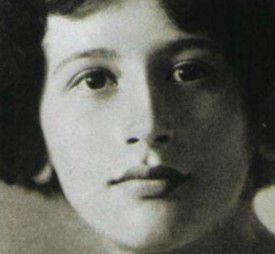
French philosopher and mystic Simone Weil, in Gravity and Grace, says forgiveness is knowing I am other than what I imagine myself to be (9). For Weil, our true selves seem to be inextricably intertwined with each other, with the universe; knowing this can bring compassion for the self and world.
Upholding the constructed self that needs to be justified, protected, and admired can cause a lot of stress within our bodies and perhaps violence in relationships. Weil says that the cause of war is that we do not know we have access to the universe in our own bodies (86). Sometimes I feel that we avoid each other, looking in to each other’s eyes, because we cannot bear the weight of energy, the collision of spinning vortex that might occur the closer we move. Our DNA might hold memories, shared vibrations with ancient mountains, and the bodies we inhabit feel so intensely. Every cell seems alive with sensation, and most of us want to avoid the pain that cannot always be extracted from the pleasure that is also ready to be encountered.
One of my students asked me, as we discussed Weil in class, why we should improve, try to become better people, what the point was of anything. I don’t always know the answer to these questions or what might prompt them, but what I think for the time being is that we get up off the floor because there are these moments of intimacy where the universe is felt through our veins, and to experience that, even occasionally, might be worth everything. To do what we might be destined to do, to co-create and do that in healing, pleasurable ways, is to align with something beyond, but not excluding, ourselves.
When I was 19, I fell hard into the kind of deep depression that hits college kids whose unstable upbringings, rife with inconsistency and trauma, left them ill-prepared to face the self-direction and responsibility of independence. I didn’t grow up religious despite my father’s attempts to turn visitation weeks into conversions, but had started attending the local Episcopal cathedral months earlier after seeing its stunningly beautiful windows on a historic tour. Having taken basic stained glass courses when I was 18, I’d been mesmerized by the artistry and would sit in a different pew each week, drifting into and out of awareness of the service, eyes trained on the nearest window, lost in contemplation, love pouring in.
When the darkness became too much and I sought more of that love through spiritual care and reflection, I walked into the church library and thumbed through the directory looking for resources, and was hopeful to discover that the Episcopal Church had convents. That afternoon, I dialed the number for the nearest convent, and in that especially dramatic way of depressed 19-year-old artist types with backgrounds in theater, I declared that I couldn’t handle life in the world anymore and that I might want to become a nun. Sister Ann told me that their order was less an escape from the world than a new way of being fully present in it, but invited me to spend Christmas at the convent.
Decorating the tree in the guest house
What started out as a holiday visit became several months of me spending every day that I wasn’t in class or at work at the convent, living in the guest house, attending five services a day, helping with maintaining the grounds, and spending as many waking hours as I could in the library, face buried in the works of medieval women mystics. Over the coming years, I’d spend many long weekends in retreat at the convent, and the sisters became my second family. I visited with women I was dating and later with a Muslim boyfriend, and everyone was always welcomed with love. When my first child almost died as a newborn and I called to ask for prayer, two sisters drove to be with me in the hospital. I still cry now, twenty years later, when I tell people the story of a parish priest leading the small group gathered in my hospital room in prayer after my son’s first surgery, and how my heart swelled when halfway through the Lord’s Prayer, teary eyes closed, I began to hear the familiar lilt of women’s chanting over our soft-speaking voices. Continue reading “On Being an Occasion of Joy by Chris Ash”


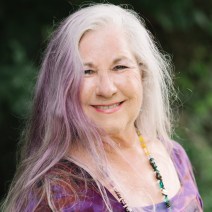 When I moved to Maine from New Orleans 15 years ago, I was delighted to discover how many birch trees were on the property where I lived with my new partner. Previously I had had little contact with these beautiful white trees, other than in pictures and stories. The name always evoked images of birch bark canoes and messages to fate scrawled with bits of burnt wood.

 When I was 19, I fell hard into the kind of deep depression that hits college kids whose unstable upbringings, rife with inconsistency and trauma, left them ill-prepared to face the self-direction and responsibility of independence. I didn’t grow up religious despite my father’s attempts to turn visitation weeks into conversions, but had started attending the local Episcopal cathedral months earlier after seeing its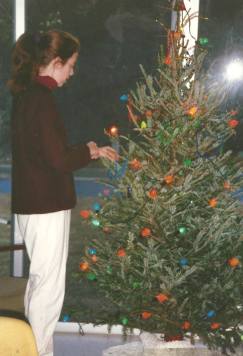
 Feminism and Religion