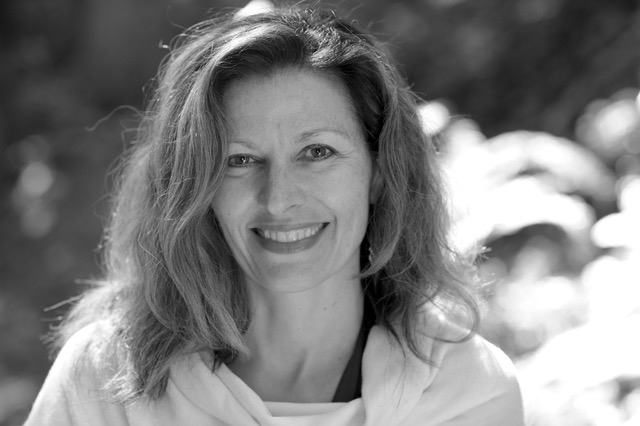
Mothering, Society, and The Goddess by Jennifer Eva Pillau

In what I believe was an attempt by my daughter to ease my “mother guilt” for the ways I felt I had let my kids down, she once told me that “the world’s problems can’t be attributed to crappy mothering.”  While I appreciated her apparent effort to soothe my inner turmoiI, I can make a solid case that to a significant degree, they can be.  In fact, the most critical issues we face in the modern world have everything to do with the fact that our social, economic, and cultural structures are materially thwarting, rather than effectively supporting and nurturing, the human animal – our entire species – and particularly children, in our efforts to survive and thrive. 

It is true that mothers are not to blame for all of the ills of the world (though popular psychology can certainly make us feel as if everything is our fault).  Nonetheless, in real and profoundly palpable ways, there are aspects of the human condition that are not receiving the attention, tenderness, and nourishment that we know very well – both by instinct and science – are crucial for physical, emotional, and spiritual resilience.  Predictably, the Earth Herself is suffering in much the same way. 

Continue reading “Mothering, Society, and The Goddess by Jennifer Eva Pillau”

From the Archives: Forty Days After Childbirth, Mary Returns to the World by Laura Shannon

This was originally posted on Feb 6, 2021

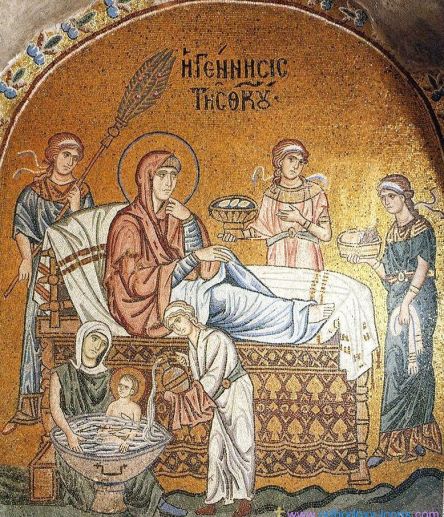
image of Mosaic of the Nativity

Mosaic of the Nativity

All week we have been warming our spirits at the sacred fire of Candlemas / Imbolc, the Celtic holiday in honour of Brighde, Irish saint and Goddess of poetry, smithcraft and healing. Imbolc falls approximately 6 weeks between the winter solstice and the spring equinox, one of the 8 festivals of the Celtic year.

In the Greek Orthodox Church, February 2 is celebrated as Ypopantis, the presentation of Jesus at the Temple, 40 days after his birth, in accordance with Mosaic law. This day also marks Mary’s ritual return to the world after forty days of postpartum seclusion. This practice was known in the Western Church as ‘churching’ or blessing a new mother after 40 days; Hindu tradition also recommends women spend up to 40 days in rest and isolation after childbirth.

Continue reading “From the Archives: Forty Days After Childbirth, Mary Returns to the World by Laura Shannon”

Carol P. Christ’s Legacy: Great Goddess, Mother Goddess, Creatrix, Source of Life

This post was originally posted on February 5, 2018

The symbol of the Goddess is as old as human history. The most ancient images of the Goddesses from the Paleolithic era are neither pregnant nor holding a child. In Neolithic Old Europe the Goddess was most commonly linked with birds or snakes and only rarely portrayed as mother. Yet we tend to equate the Goddess with the Mother Goddess. I suspect that images of the Virgin Mary with Jesus on her lap and prayers to God as Father have fused in our minds, leading us to think that the Goddess must be a Mother Goddess and primarily a Mother.

In a recent blog, Christy Croft reminded us that in our culture, women’s experiences of mothering and motherhood are not always positive:

[The mother] doesn’t always appear in our stories in simple or easy ways. Some of us mother children we did not or could not grow in our bodies; some of us birth babies who are now mothered by others. Some of us are not mothers at all. Some of us had mothers who could not love us unconditionally, or did not have mothers in our lives, or had mothers who brought us more pain and humiliation than comfort, from whose effects we are still recovering, are still healing.

Continue reading “Carol P. Christ’s Legacy: Great Goddess, Mother Goddess, Creatrix, Source of Life”

Carol P. Christ’s Legacy: Patriarchy as a System of Male Dominance Created at the Intersection of the Control of Women, Private Property, and War, Part 2 by Carol P. Christ

Moderator’s Note: We here at FAR have been so fortunate to work along side Carol Christ for many years. She died from cancer in July, 2021. Her work continues through her non-profit foundation, the Ariadne Institute for the Study of Myth and Ritual and the Goddess Pilgrimage to Crete. To honor her legacy, as well as allow as many people as possible to read her thought-provoking and important blogs, we are pleased to offer this new column to highlight her work. We will be picking out special blogs for reposting. This blog was originally posted February 25, 2013. You can read it long with its original comments here. It was the second in an important 3 part series. We will be posting part 3 next week (or you can read it earlier by going to the original post). Part 1 can be read here:

Patriarchy is a system of male dominance, rooted in the ethos of war which legitimates violence, sanctified by religious symbols, in which men dominate women through the control of female sexuality, with the intent of passing property to male heirs, and in which men who are heroes of war are told to kill men, and are permitted to rape women, to seize land and treasures, to exploit resources, and to own or otherwise dominate conquered people.*

In last week’s blog, I explained patriarchy as a system in which men dominate women through the control of female sexuality with the intent of passing property to male heirs. How did a system that identifies a man’s essence with his property and the ability to pass it on to sons come about? I suggest that the answer to this question is war and the confiscation of “property” by warriors in war. Patriarchy is rooted in the ethos of war which legitimates violence, and in which men who are heroes of war are told to kill men, and are permitted to rape women, seize land and treasures, to exploit resources, and to own or otherwise dominate conquered people.

Continue reading “Carol P. Christ’s Legacy: Patriarchy as a System of Male Dominance Created at the Intersection of the Control of Women, Private Property, and War, Part 2 by Carol P. Christ”

Carol P. Christ’s Legacy: Patriarchy as a System of Male Dominance Created at the Intersection of the Control of Women, Private Property, and War, Part 1 by Carol P. Christ

Moderator’s Note: We here at FAR have been so fortunate to work along side Carol Christ for many years. She died from cancer in July, 2021. Her work continues through her non-profit foundation, the Ariadne Institute for the Study of Myth and Ritual and the Goddess Pilgrimage to Crete. To honor her legacy, as well as allow as many people as possible to read her thought-provoking and important blogs, we are pleased to offer this new column to highlight her work. We will be picking out special blogs for reposting. This blog was originally posted February 18, 2013. You can read it long with its original comments here. It was the first in an important 3 part series. We will be posting the next 2 parts in subsequent weeks (or you can read it earlier by going to the original post).

Recently feminist scholar Vicki Noble commented that this is the best definition of patriarchy she has read–but she hadn’t read it earlier. I am reposting it now in the hopes that all of you will share it with your social media so that it will be more widely known.

Patriarchy is often defined as a system of male dominance. This definition does not illuminate, but rather obscures, the complex set of factors that function together in the patriarchal system.  We need more complex definition if we are to understand and challenge the the patriarchal system in all of its aspects.

Patriarchy is a system of male dominance, rooted in the ethos of war which legitimates violence, sanctified by religious symbols, in which men dominate women through the control of female sexuality, with the intent of passing property to male heirs, and in which men who are heroes of war are told to kill men, and are permitted to rape women, to seize land and treasures, to exploit resources, and to own or otherwise dominate conquered people.*

Continue reading “Carol P. Christ’s Legacy: Patriarchy as a System of Male Dominance Created at the Intersection of the Control of Women, Private Property, and War, Part 1 by Carol P. Christ”

Matriarchal Politics The Vision of an Egalitarian Society (Part 3): Global Structures by Heide Goettner-Abendroth

To solve global problems, these steps from below must nevertheless be supplemented with more comprehensive structures. These are not „above,“ as there is no „above“ in this sense in matriarchal societies; they are simple more comprehensive.

National states no longer fit the bill: they are too big for humane, transparent political processes. At the same time, they are too small to solve global problems that the current patriarchy creates and leaves behind for posterity; this is especially true regarding problems related to advanced destruction of the biosphere on earth. It is no longer possible for national governments, or even regional ones, to solve these problems. They affect all of humanity, so global strategies are needed to solve them.

No more national states

Existing national governments must be dissolved in two directions: on one hand, in the direction of the autonomous regions, which are the basis for life; on the other hand, in the direction of a global structure with a purely executive status which has no state power. Such a structure could be a Global Council, which will be formed by the two halves of a Women’s Global Council and a Men’s Global Council. Today, the U.N.O. tries to form such a global council, but because of its patriarchal structure which excludes the issues of women and of many peoples, and because of the power plays of the super-powers on this level, fails to fulfill its ideals. They just continue the patriarchal status quo.

New distribution of national wealth

An initial and fundamental challenge is therefore to dissolve the financial wealth of each national state, first to the regions, and in the regions to the communities. Of course, it does not mean that the money goes to individuals or patriarchal institutions, rather it is only distributed for matriarchal communities. Exactly half of this wealth, that is 50 %, must go to women and the other half, that is 50 %, must go to the men of the communities, and not more to the men, as it is common in patriarchy. In that way, each sex can develop their respective area of the society and region. As there is already a double-occupancy of every agency in a new matriarchal society, this can be independently accomplished by each sex.

However, this money is not a paying for motherhood and women’s work – which in fact cannot be paid –, but it belongs to them as half of humanity. It is their modest share for all what women had done for free through long periods of time. This equitable division of wealth would enable women to stop begging for state aid, which for them is notoriously scanty anyway. And it should start just now for women’s communal and cultural projects!

The constant social and economic unbalance in which all of today’s national states find themselves would come to an end. The current horrendous flow of money into male projects – the military, multinational corporations, monumental prestige-buildings and ego-architecture, huge sports stadiums and events costing hundreds of millions of dollars – means that there is nothing left but pitifully small amounts for social services, as women are expected to provide these for free. It is the usual situation of exploiting women. With the equal division of financial national wealth, women would probably establish infrastructures to fulfil social needs, with the likely result that communities, healthcare, culture and education would flourish. And women would establish their own schools and universities, because their knowledge is never respected in patriarchal societies. But even men are not free to do what they want with their share of money, for the projects of women and men in the communities and regions would be agreed upon by the local and regional consensus councils, according to maternal values.

Global structures for global problems 

The other direction in which the public wealth of national states should be dissolved would be the structures of the Women’s Global Council and the Men’s Global Council. An agreed-upon percentage of women’s and men’s wealth from all the regions would go to these two halves of the Global Council, conducted by delegates of both sexes. The Global Council’s assets would be used exclusively to solve the global problems of the polluted air and water and soil and the damaged life on earth, that means, to clean up the technology-caused legacy of pollution by military powers and industrial corporations.

Members of the Women’s Global Council and the Men’s Global Council are always elected delegates from each region, and are responsible to their region; they have no power to make decisions independently of their region’s determinations. They moderate and coordinate the decisions of all regions of the world in precisely the same sense that a regional or local council coordinates the decisions of the matri-clans.

With these structures, what we call a “state” dissolves, regardless of whether it is a monarchy, an autocracy, a so-called democratic national state, an empire or a super-power. The concept and image of the hierarchical “state,” no matter how constituted, have become redundant. Patriarchal history of established domination began with the formation of “states” every time. With the development of new matriarchal societies, which are free of domination, a new, humane history of cultures could begin.

Dr. Heide Goettner-Abendroth is a mother and a grandmother. She earned her Ph.D. in philosophy of science at the University of Munich where she taught for ten years (1973-1983). She has published extensively on philosophy of science, in addition to various books on matriarchal society and culture, and is a founder of Modern Matriarchal Studies.  Her magnum opus: Matriarchal Societies. Studies on Indigenous Cultures across the Globe, (Lang 2012, New York) defines the topic and provides a world tour of examples of contemporary matriarchal cultures. She has been visiting professor at the University of Montreal in Canada, and the University of Innsbruck in Austria. In 1986, she founded the International ACADEMY HAGIA for Matriarchal Studies and Matriarchal Spirituality in Germany is its director. In 2003, 2005 and 2011 she organized three World Congresses on Matriarchal Studies in Europe and the U.S.A. In 2005, she was elected by the international initiative “1000 Peace Women Across the Globe” as a nominee for the Nobel Peace.

Matriarchal Politics The Vision of an Egalitarian Society (Part 2): Macrostructures by Heide Goettner-Abendroth

Regionalism

In a new matriarchal society, “bigger” is not necessarily “better.” The smaller units of society, responsible for engendering person-to-person and transparent politics, are given preference. They must not become so big that people cannot see through them, and cannot participate in their decisions, as is the case in so many of today’s national states and super-powers. But they must be big enough to safeguard their self-sufficiency by a subsistence economy, and the diversity of their handiwork, technologies and arts. The ideal dimension is that of the region.

The borders of a region are not random, like national borders are; rather they have developed out of the conditions of the landscape and out of cultural traditions. Regional borders are formed by the decisions of the people themselves who want to live together on the basis of common cultural and spiritual traditions; this avoids any war of culture or of religion. Often the landscape corresponds to these cultural borders, because natural borders can be formed by mountain ranges, rivers, big lakes, or the sea which bind and bound people into their regional places. Continue reading “Matriarchal Politics The Vision of an Egalitarian Society (Part 2): Macrostructures by Heide Goettner-Abendroth”

Matriarchal Politics: The Vision of an Egalitarian Society (Part 1) by Heide Goettner-Abendroth

Matriarchies are not just a reversal of patriarchy, with women ruling over men – as the usual misinterpretation would have it. Matriarchies are mother-centered societies: they are based on maternal values: care-taking, nurturing, motherliness, mutual support, peace keeping and building by negotiation, which holds for everybody: for mothers and those who are not mothers, for women and men alike. Matriarchal societies are consciously built upon the maternal values and motherly work, and this is why they are much more realistic than patriarchies. They are, on principle, need-oriented and not power-oriented, they are gender-egalitarian societies, and most of them are fully egalitarian. Their precepts aim to meet everyone’s needs with the greatest benefit. So, in matriarchies, motherhood – which originates as a biological fact – is transformed into a cultural model.

It is becoming increasingly clear that this radically different cultural model of matriarchy will have great significance for the future of women and mothers, and of humankind in general. We can gain much stimulation and insights from them, which – unlike abstract utopias – have been lived over millennia. Continue reading “Matriarchal Politics: The Vision of an Egalitarian Society (Part 1) by Heide Goettner-Abendroth”

Matriarchal Politics by Heide Goettner-Abendroth

Today’s blog is a sequel to: “Matriarchies Are Not Just a Reversal of Patriarchies: A Structural Analysis.”

On the basis of modern Matriarchal Studies, we can develop the vision of a new matriarchal, egalitarian form of society. This is called “Matriarchal Politics.”

The path to such a society has to combine matriarchal spirituality with politics, to create another kind of economy and another society. How this can be achieved is clearly portrayed by traditional matriarchal societies. Their economy, politics, social life and spirituality are inseparably connected: their goal is to provide a good life for all and this is assured through their structure and conventions.

Of course, we cannot go back and simply transfer historical patterns to the present.  It is unlikely that we will return to societies based on the blood-relatedness of clans or sole dependence on agriculture. History and its social development cannot be turned backwards. But for our own path into new matriarchal, egalitarian societies, we can gain much stimulation and great insights from patterns which have been tried and tested for millennia. Continue reading “Matriarchal Politics by Heide Goettner-Abendroth”

Matriarchies Are Not Just a Reversal of Patriarchies: A Structural Analysis by Heide Goettner-Abendroth

Matriarchies are not just a reversal of patriarchies, with women ruling over men – as the usual misinterpretation would have it. Matriarchies are mother-centered societies. They are based on maternal values: care-taking, nurturing, mothering. This holds for everybody: for mothers and those who are not mothers, for women and men alike.

Matriarchal societies are consciously built upon maternal values and motherly work, and this is why they are much more realistic than patriarchies. They are, on principle, need-oriented. They aim to meet everyone’s needs with the greatest benefit. So, in matriarchies, mothering – which originates as a biological fact – is transformed into a cultural model. This model is much more appropriate to the human condition than the patriarchal conception of motherhood which is used to make women, and especially mothers, into slaves.

Within matriarchal cultures, equality means more than just a levelling of differences. Natural differences between the genders and the generations are respected and honoured, but they never serve to create hierarchies, as is common in patriarchy. The different genders and generations each have their own dignity, and through complementary areas of activity, they function in concert one other. More precisely, matriarchies are societies with complementary equality, where great care is taken to provide a balance. This applies to the balance between genders, among generations, and between humans and nature. Maternal values as ethical principles pervade all areas of a matriarchal society. This creates an attitude of care-taking, nurturing, and peacemaking. Continue reading “Matriarchies Are Not Just a Reversal of Patriarchies: A Structural Analysis by Heide Goettner-Abendroth”