A Celebration of Gender Studies for the First Night of Ḥanukah.

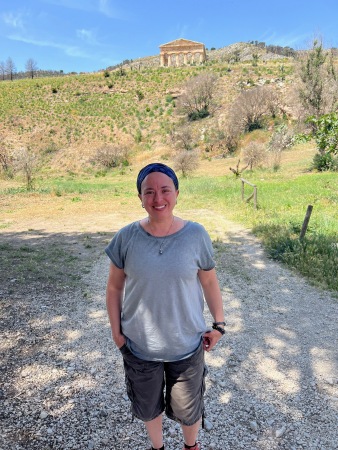
On the 21st of November, I took part in a faculty panel as part of the 20th anniversary celebration of the Gender Studies Master’s Program, the program in which I teach, at the Faculty of Humanities (FHS) at Charles University in Prague, Czech Republic.  The event featured the afore-mentioned faculty panel, a panel of program graduates, and an invited lecture entitled “Care as Taking Part,” by Prof. Estelle Ferrarese of the Institut Universitaire de France, organized in cooperation with CEFRES and CETE-P.  After the formal part of the program, we all enjoyed refreshments and socializing with current and former students, faculty, and staff.

Perhaps the reader of this blog has not heard about the existence of a Gender Studies Master’s Program in the heart of Central Europe.  I would like to take some time in my post this month to explain what we do and why we are, in the spirit of Ḥanukah, bringing more light into the world.

Continue reading “A Celebration of Gender Studies for the First Night of Ḥanukah.”

On the Term Gender Order: Ignoring Feminist Insights.

A few months ago at a Gender Studies M.A. Program’s state exam, my colleagues and I had an intriguing discussion about the term gender order.  The sociologist within our examining group was adamant that it was a better term than patriarchy as it was more neutral and could describe various gender orders in addition to patriarchal ones.  They also said that it is, more or less, the term now used instead of patriarchy in their discipline and in Gender Studies, as it is considered to be a more accurate description of the gender situation.  Another colleague and I countered that they were incorrect.  Gender order was not a term used throughout all of Gender Studies to replace patriarchy.  We both agreed that in our fields (literary analysis and religious studies), gender order is not used.  At least, I have never encountered it.  

Continue reading “On the Term Gender Order: Ignoring Feminist Insights.”

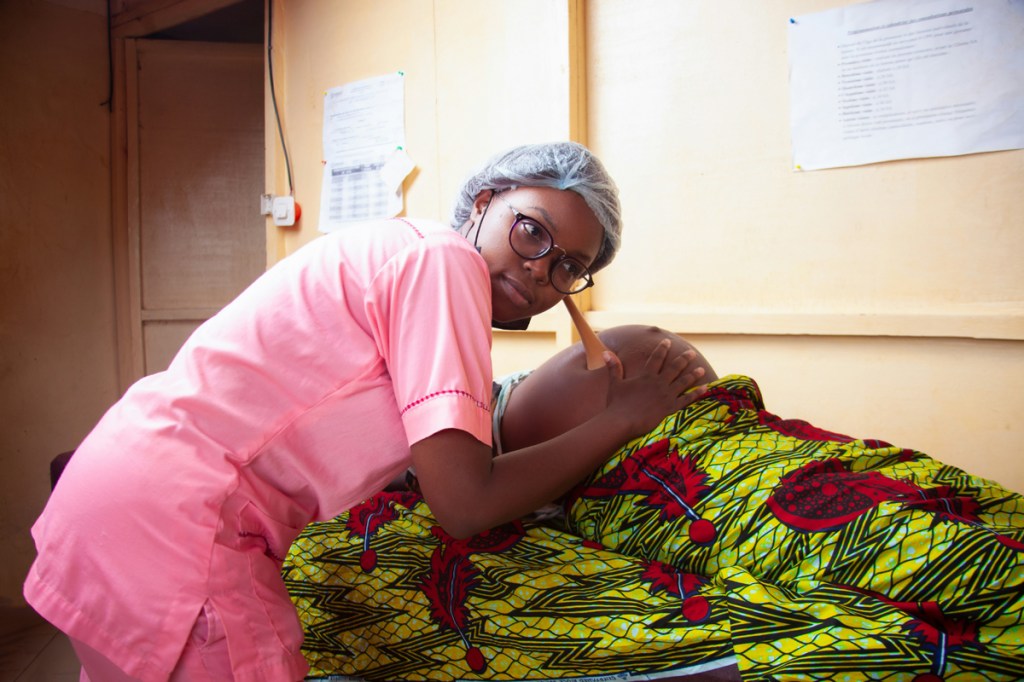
God is a Midwife by Halley Kim

It was four in the morning in the north Georgia mountains. A woman labored quietly but powerfully in her home, with her partner at her side. Her watchful midwife hovered nearby. I was a nursing student and a zealous “birth junkie,” tickled pink by the invitation to observe childbirth. At just the right time, the mother delivered her child from her womb to the world. The sun rose with a new soul suddenly among us, and I knew I would never be the same.

Feminist theology has long-invoked the image of God as a laboring mother, and progressive theologian Marcus Borg suggested that humanity is God’s midwife. But less has been written about the opposite metaphor. Imagine that we are in labor, in pain, and God is our midwife. 

The word “midwife” means “with woman,” and that’s what midwives do: they are with birthing people through it all. They empower and guide, safeguard and witness, but they do not save. Midwives facilitate the birth process, but they don’t—they can’t—take the pain away. They don’t deliver babies; that honor belongs to their clients. Like physicians, they monitor the health of parent and baby, and can deftly manage a cord around a baby’s neck or stop a postpartum hemorrhage. But they mostly rely on the power of presence to bring babies earth-side. 

Continue reading “God is a Midwife by Halley Kim”

On Korach and Power-Over

This month’s blog will explore Korach, Numbers 16:1-18:32.  It was the Torah portion for June 28, 2025.  The portion contains a rebellion from a segment of the Israelite people, led by Korach, who insisted on the holiness of the entirety of the Israelites (16:3) and their fitness to give offerings in the Tent of Meeting, which challenges the establishment of the Aaronic high priesthood.  The protest is met by the divine with earth-splitting rage and divinely-sanctioned disease.  Over 15,000 Israelites are recorded to have died on account of this “blasphemous” rebellion against the divine and the divine’s proclamation of the chosen status of Aaron and his descendants (17:14).  From a feminist point of view, this incident in Korach reads as an exercise of power-over and sadly bolsters images of the divine that go counter to a liberating presence, dwelling among the entire community.

Continue reading “On Korach and Power-Over”

From the Archives: “Be the Donkey: On Parshah Balak” by Ivy Helman

Author’s note: This post was originally published on this website on July, 10, 2022. This year, Balak was read in synagogues yesterday.

The Torah portion for July 16, 2022 is Balak (Numbers 22:2 -25:9).  Some of what happens in Balak is familiar: idolatry, divinely-sanctioned death penalties, and a plague.  But, did you know that this parshah has a talking female donkey who stands up to abusive behavior?  Perhaps not.  That talking donkey and the larger story of Balak’s attempt to curse the Israelites raises questions about gender, how we treat animals, choices, free will, violence, courage, and having one’s eyes open to what is really happening around one’s self. All of which is what we will be looking at today.

Balak begins with this story about Balaam.  The Moabite king, Balak, wishes to curse the Israelites because he is worried about their size and their impact on the land and its current inhabitants (22:3-4).  He sends representatives to bring  Balaam, a powerful man whose curses and blessings have tangible effects on their recipients (22:6), to him.  Balaam meets with those representatives and tells them to wait; he has to talk to the deity in order to know what to do.  The deity commands Balaam to stay put and to not curse the Israelites, for they are blessed (22:12). Indeed, a first in quite a while. 

Continue reading “From the Archives: “Be the Donkey: On Parshah Balak” by Ivy Helman”

On Bechukotai and the Valuing of Females

Bechukotai, Leviticus 26:3-27:34, was read in synagogues around the world on May 24, 2025.  As I have mentioned in past blogs, my timing is somewhat off in my attempt to finish my (eco)feminist commentary on all 54 of the parshot.  Bechukotai discusses the consequences of both following and ignoring the commandments.  For those of you who have been following along with these commentaries, you could probably already tell me how this parshah is going to go.  If you have guessed follow the rules and live and eat well in the land or don’t and be exiled, sick, starving, and so on, then you have guessed correctly.  As this is the case, this thinking betrays a certain logic, common to the ancient world and its understanding of flourishing or lack thereof.  I have written about this numerous times on this site (see here for what is perhaps my most thorough explanation).  Yet, Bechutokai also makes some rather interesting comments about women, and that will be my focus for today’s post.

Continue reading “On Bechukotai and the Valuing of Females”

Kedoshim: On Women, Patriarchy, and Respect.

The Torah portion for today’s blog is Kedoshim (Leviticus 19:1-20:27), which was read by Jewish communities yesterday, May 10, 2025.  Among scholars, it is part of what is often referred to as the Holiness Code, Leviticus 17-26 (Note 1).  Kedoshim covers all manner of topics: from what fabric to wear to how to treat one’s neighbor and from keeping Shabbat to when one can eat the fruit of newly planted trees.  These, what I will call prescriptions, all fall under the general reasoning that one does these things so that one can be holy like the deity is holy.  In a way, the Holiness Code then is an apt name for this section.  But, what can we take from this parshah from a (eco)feminist point of view?  To answer this question, I will be using the methodology I have laid out in a previous blog and ask three questions.

Continue reading “Kedoshim: On Women, Patriarchy, and Respect.”

Pedukei: A Complex Interplay of Human, Divine, and Nature.


The Torah portion for March 29, 2025 was Pekudei.  Quite often this parshah is read with Vayakhel.  In fact, I have written about the double parshah Vayakhel-Pekudei before, but focused on only Vayakhel.  Now, it is Pekudei’s turn.  

Like parshot Vayakhel and Terumah as well as other parts of the book of Exodus, Pekudei focuses on haMishkan, the Tent of Meeting or Tabernacle.  We read about calculations concerning the costs of the constructions, instructions for the high priest’s garb, ritual washing of hands and feet, when to construct and when to deconstruct the traveling tent, and the divine presence as cloud and fire.  In Pekudei, we have no mention of women and no mention of any Israelite men barring the religious elite: Moses, Aaron, and Aaron’s sons.  Therefore, in this commentary, I want to discuss contradictions in the text that speak to (1) a consistent divine presence that seems to argue against animal sacrifices and (2) the ways in which the natural world and Israelite religion went hand-in-hand.

Continue reading “Pedukei: A Complex Interplay of Human, Divine, and Nature.”

On Terumah: (Eco)Feminist Reflections on the Tent of Meeting.

The Torah portion for March 1, 2025 is Terumah, consisting of Exodus 25:1-27:19. Terumah in Hebrew means contribution, and the parshah begins with the deity requesting donations from the willing hearts of men (yes, only men) of precious metals and stones as well as dyes, linens, wools, and skins.  Terumah then provides the instructions for how to build the Tent of Meeting and all of its components.  In this post, I want to focus on four aspects of the post from the perspective of ecofeminism and feminism: beauty; the misuse of nature, the concept of home, and the indwelling or immanence of the divine.

Continue reading “On Terumah: (Eco)Feminist Reflections on the Tent of Meeting.”

From the Archives: “Shemot: Women’s Misbehaving and Disobeying as the Key to Liberation.”

Author’s Note: This blog was originally published five years ago to the day (12 January 2020). It rings as true then as it does today.

Shemot will be read in synagogues on 18 January 2025.

This week’s Torah portion, or parshah, is Shemot (Exodus 1:1-6:1).  This parshah sets the scene for the liberation of the Israelites from slavery both by introducing main characters and elaborating on just how difficult life was for the Isrealites under Pharoah’s rule.  The parshah contains many noteworthy aspects: the death of Joseph and the multiplication of the Isrealites in Egypt; the increasing wrath of the Egptians; the birth and adoption of Moses; Moses’ encounter with the Divine in the form of a burning, yet unconsumed, bush; the revelation of the divine name, G-d’s plan for Moses’ role in the liberation of the Israelites from slavery; Moses’ attempts to get out of his assigned role; and Moses’ first confrontation with Pharoah.   

In addition, there are many women, who are integral to the salvation of the Israelites, in this parshah.  For the most part, Jewish tradition has acknowledged their part when it comes to discussions of this parshah, especially Shifra and Puah.  Yet, their role is often overshadowed by Moses’ varied miracles, the mighty power of the divine, the revelation of the Torah, the wanderings in the desert, and so on.  However, the Israelites’ liberation from slavery would have looked quite different without women.  

Continue reading “From the Archives: “Shemot: Women’s Misbehaving and Disobeying as the Key to Liberation.””