In Zeeland, the southern, sea-kissed part of the Netherlands, a severe storm in January 1647 exposed a sanctuary to the Goddess Nehalennia. The altars and images found a new home in Domburg ’s church, until that burned down in a fire in 1848. Water, wind, fire, weren’t kind to the Goddess! Years went by, until a fisherman hauled up stone fragments from the depths in 1970 near Colijnsplaat.
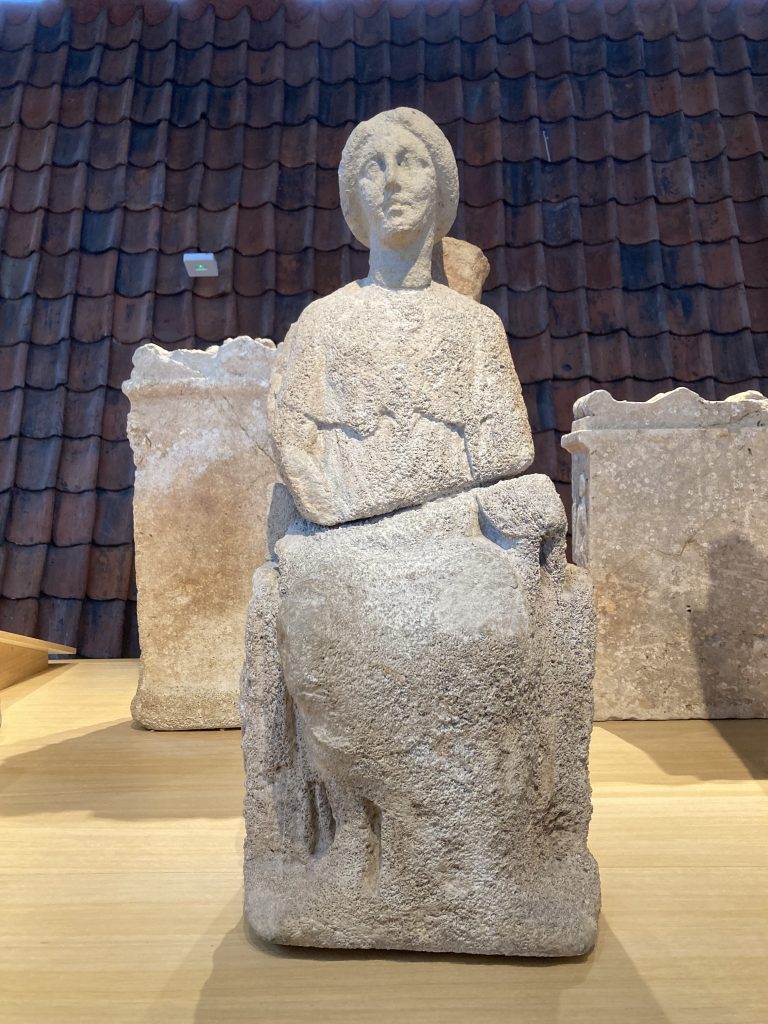
This lead to a large research project by the University of Leiden in collaboration with The Museum of Antiquities (Rijksmuseum van Oudheden, or RMO) that since recovered around 300 objects including altars, sculptures and roof tiles. Based on this, they were able to reconstruct a full Nehalennia temple at Colijnsplaat in 2005. 1)
Read on about my journey of meeting her, some of her background, and how she set me on my path of goddess archetypes…
 This week’s Torah portion is Vayikra (Leviticus 1:1 – 5:26). Vayikra is essentially one long discourse on animal sacrifice with an occasional grain or oil offering included. This killing of animals, their subsequent burning and the shared eating of their flesh was the predominate way deities were worshipped in ancient Canaan. It was believed that the smell of cooking meat appeased the gods and most importantly stifled their anger. It is no wonder then that the ancient Israelites so integrated within the surrounding culture adopted similar methods of worship.