Jewish Folklore and Women’s Clothing: When Things are the Text by Jill Hammer

Two weekends ago, I had the pleasure of visiting the Jewish Museum on Fifth Avenue in Manhattan.  The Jewish Museum has long been a favorite museum for me.  My wife and I took our daughter to this particular exhibit because we knew she’d like it.  The exhibit is entitled “Veiled Meanings: Fashioning Jewish Dress from the Collection of the Israel Museum, Jerusalem.”  It consists of many, many garments created and worn by Jews, from Moroccan wedding clothes to German prayer shawls to Yemenite amuletic (meant to protect the wearer) dresses.  Accompanying the garments were placards explaining the folk traditions giving rise to the various garments.  What I realized (again) after viewing the exhibition was how much I could learn about the culture of Jewish women, and Jewish culture in general, by looking at things, not texts.

The sacred texts and laws central to Jewish life, while they certainly discuss Jewish women, tend not to be created by or for Jewish women.  This means many aspects of how Jewish women thought or acted (before the present day) are obscured. However, these garments were created by and often for Jewish women, and their shapes and symbols tell a great deal.  For example, the Moroccan Jewish wedding clothes I mentioned were embroidered with spirals, representing (according to the accompanying written material) the spiral of life.  These spirals were also found on Jewish tombstones. The spirals resembled, to me, the spirals I’d seen carved on stone at Newgrange and Knowth in Ireland—the ancient symbols of life and journey.  I was amazed to see them in a Jewish context.  Another dress that mixed Sephardic and Moroccan style also had spirals featured prominently.

Continue reading “Jewish Folklore and Women’s Clothing: When Things are the Text by Jill Hammer”

Miriam the Prophetess as Guardian and Healer by Jill Hammer

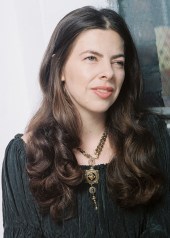
jill hammer cropped

The biblical traditions of Miriam the prophetess have captured the imaginations of Bible-readers throughout the ages.  Miriam, Moses’ sister, watches over Moses in his cradle (Exodus 2), and leads the Hebrew women in dance at the shore of the Sea of Reeds to celebrate redemption  (Exodus 15).  Rabbinic lore identifies Miriam with Puah, the midwife who saved Hebrew babies from Pharaoh, and depicts her as the herald of Moses’ birth (Exodus Rabbah 1:13; Babylonian Talmud, Sotah 12a). Contemporary Jewish feminists have established traditions of singing to Miriam the prophetess on Saturday night, parallel to the tradition of singing to Elijah the prophet at that time.   It has also become popular among some feminist/egalitarian Jews to place a cup of Miriam on the seder table at the time of Passover.  This cup is usually filled with water in order to recall the ancient legend that a well of water followed Miriam through the wilderness, quenching the thirst of the wandering people (cf: Babylonian Talmud, Taanit 9a).  It was even said that healing herbs grew near this well, so that Miriam’s prophetic power became a source of healing.

The veneration of Miriam is especially deep in Sephardic Jewish traditions—those Jewish traditions stemming from the Spanish Jewish diaspora, which may be found everywhere from North Africa to Holland to Greece and Bulgaria.  Sephardic women used incantations along with various rituals involving salt, herbs, and other substances, as healing for various ailments and troubles; women skilled in these practices were called precanteras or precantadoras.  Some of their healing incantations invoke Miriam as the ancestress of all women healers, as in the following prayer:

Continue reading “Miriam the Prophetess as Guardian and Healer by Jill Hammer”

Meeting Phrike: Feminist Theology and the Experience of Horror by Jill Hammer

Myself, I saw the numb pools amidst the shadows; myself, the wan gods and night in very truth.  My frozen blood stood still and clogged my veins.  Forth leaped a savage cohort… Then grim Erinys (Vengeance) shrieked, and blind Furor (Fury), and Horror (Phrike), and all the forms which spawn and lurk amidst the eternal shades.

Seneca, Oedipus (trans. Frank Justus Miller)

Horror is not a cognitive but a physiological or affective extra-discursive state of being. Not unlike the state of, say, feeling nausea, horror is a state of being, whose manifestation, based on the etymologies of the Greek φρiκη [phrike] and the Latin horror, may be described, as Adriana Cavarero writes, as “a state of paralysis, reinforced by the feeling of growing stiff on the part of someone who is freezing,” and further, through her mythological reference to the prototypical figure of horror, Medusa, as a state of “petrification” …

205. Kiarina Kordela, “Monsters of Biopower: Terror(ism) and Horror in the Era of Affect”, Philosophy Today 60(1), 2016, p. 193-205.

Surging anti-Semitism in the United States, as witnessed by many news reports and also anecdotes related by friends and acquaintances, holds a particular horror for Jews of my generation.  Some of us thought that we were relatively safe from that age-old bigotry.  It’s disorienting to be reminded that we are not.  My wife, whose father (alone of all his relatives) survived Auschwitz, has the skin-crawling sense as she reads the news that somehow we have gone back to that time.  Twenty-eight Jewish community centers have been evacuated in the last two weeks because of bomb threats, and a rabbi in the Midwest has received death threats for protesting neo-Nazi activities. A midwife/rabbi friend in Toronto had her house vandalized with swastikas.  A judge of my acquaintance in the New York area saw a statue of Martin Luther King vandalized with Nazi symbols.  Walking down the street in New York City, I myself heard someone exclaim gleefully: “Trump is going to get rid of the Jews!”  

While I hope that is not anywhere near true, the horror evoked by hearing such words is a real entity: a physiological state of being.  The Greeks personified the feeling of horror as a daimona (spirit) or goddess called Phrike.  The word phrike implies shivers, goosebumps: a physicalized emotion. The Romans called her Horror.  There are no stories about her, but the ancient Greeks used the word phrike when speaking about theater, believing that the pity and terror evoked by a play effected a catharsis for the viewers.  Via their beliefs about theater, the Greeks gifted Phrike to the world.  Lately I feel that Phrike is living in my house.   Continue reading “Meeting Phrike: Feminist Theology and the Experience of Horror by Jill Hammer”

Can Good Theology Change the World? Part 2 by Carol P. Christ

Carol P. Christ by Michael Bakas high resoultionIn the first blog in this series, I argued that one of the hallmarks of a good theology is recognizing that the source of authority must be located in individuals and communities who interpret texts and traditions as they encounter divinity anew in the present. In our new book Goddess and God World, Judith Plaskow and I suggest that a second hallmark of good theology is the “turn to the world.” What we mean by this is not only that divinity is immanent in the world, but also that the purpose of human life is to be found in this world—not the next.

The God of traditional theologies is pictured as an old man with a long white beard who rules the world from heaven. It is commonly assumed by those familiar with this picture that the purpose and meaning of human life is not to be found in this world—but rather in heaven. This assumption is increasingly being challenged. Many people no longer believe in life after death. The purpose of morality is increasingly being understood as improving the conditions for the flourishing of human and other forms of life—not on gaining the approval of a God who has the power to assign individuals to heaven or hell in the next world. Continue reading “Can Good Theology Change the World? Part 2 by Carol P. Christ”

Thinking about Goddess and God by Judith Plaskow and Carol P. Christ

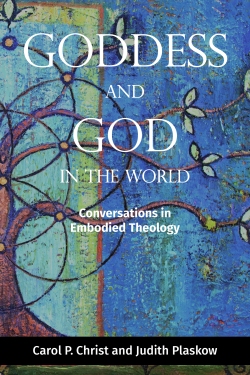
Goddess and God in the World final cover design

Talking about our deepest beliefs and feelings can be surprisingly intimate. In our new book Goddess and God in the World, we discuss our different theologies and challenge each other’s views. In the conclusion, we consider whether there is any way to judge between our positions. While we believe that theologies are rooted in experience, we also insist that they must make sense of the world we share and provide the orientation we need as we face the social, political, and environmental crises of our time.

Theologically, we disagree on two fundamental issues: whether divinity is personal or impersonal; and whether divinity is good or inclusive of good and evil. Does one of our views meet our criteria for adequacy more fully than other?

Does the notion of a personal or impersonal deity make more sense of our experience of the world? Carol argues that if consciousness and intelligence is a fundamental aspect of human existence and is found in varying degrees throughout the web of life, then it makes sense to think of divinity as also having consciousness and intelligence. Judith responds that the notion of a personal deity seems to her a holdover from the biblical picture of God and that she can find no evidence in her experience or reflection that a divine individual who is conscious and intelligent exists. We seem to be at a standoff here. There is some consolation in recognizing that this is a fundamental divide in the history of religions, but this insight does not resolve our disagreement.

Does one or the other of our views offer better guidance in making moral decisions? Judith argues that her view places moral responsibility firmly in human hands, which is where it belongs. Carol agrees with Judith that humans and other individuals are the ones whose decisions will determine the fate of the world, and she finds recognition of the interdependence in the web of life sufficient grounds for moral decision-making. But she would add that the love and understanding of a divine individual inspires her to love and understand the world and to promote its flourishing. Judith believes that the idea of one divine presence that enlivens and unites the universe is a sufficient basis for ethical action.

Our other major theological difference concerns whether divinity is good or inclusive of good and evil. Judith argues that if divinity is inclusive of the world, it must be inclusive of both good and evil. Carol counters that if divinity is reflective of what is best in ourselves and in other individuals in the world, then divinity must be good, not evil.

Does one of our views provide better moral guidance? Carol argues that a divinity who is good inspires us to try to make the world better. Judith replies that the notion that divinity is good leads us to idealize ourselves and to forget or deny our capacity to do evil. Carol feels that a clear focus on the world is sufficient to remind us of our capacity for evil.

Does one of our views offer a more adequate account of the existence of evil in the world? Judith asserts that the idea that divinity is the ground of both good and evil provides a better answer to the problem of evil: the potential for both good and evil are inherent in the creative process that is the foundation of life. Carol believes that the world is created by a multiplicity of individuals, including the divinity. The capacity for good and evil is inherent in the creative process that structures the world. The divinity is good but not omnipotent. What we call evil is created by individuals other than the divinity. Judith replies that this view does not adequately account for the origin of evil.

Is there any way to choose between our different positions? Each of us is firmly convinced that her view is clear, consistent, coherent, and comprehensive, that it takes full account of the complexity of human experience, and that it provides the moral orientation we seek….Each of us has tried without success to win the other over to her perspective. In the process, we have gained a deeper appreciation of each other’s views and clarified our own. This is as far as we have been able to go. We acknowledge that, in the end, we cannot know which, if either, of our theologies expresses the nature of ultimate reality or provides the crucial ethical guidance we need. Our views have been shaped by our standpoints, including personal, communal, cultural, and historical factors, and this means that they are relative and partial. Because we cannot see into the future, we cannot know the long-term effects of either of our theological worldviews.

At the same time, we are unwilling to throw up our hands and declare that all theological perspectives are of equal value. We firmly reject the fundamentalist insistence that particular texts, traditions, or truths are universally and eternally valid. This position denies that people create and interpret traditions, and it has repeatedly led to intolerance and violence. We continue to insist that the views of divinity we have articulated make more sense of the world as we know it and provide better orientation as we face the problems of our time than the traditional views we have criticized. On the one hand, all theologies—and all worldviews—are relative to experience and limited by human finitude. On the other hand, they can be examined, evaluated, and debated in relation to their understanding of the world and the kind of life they make possible for both the self and others.

Excerpted from Goddess and God in the World: Conversations in Embodied Theology–order now. Ask for a review copy (for blog or print) or exam or desk copy. Post a review on Amazon.  Share with your friends on social media using the links below.

carol p. christ photo michael bakas

Carol P. Christ and Judith Plaskow are co-authors of Goddess and God in the World and co-editors of Womanspirit Rising and Weaving the Visions. Judith wrote the first Jewish feminist theology, Standing Again at Sinai, while Carol wrote the first Goddess feminist theology, Rebirth of the Goddess. Judith is co-founder of the Journal of Feminist Studies in Religion. Carol leads the Goddess Pilgrimage to Crete. Space available on the fall tour!

Embodied Theology: Goddess and God in the World by Carol P. Christ and Judith Plaskow

Goddess and God in the World final cover designToday is the official release date for Goddess and God in the World: Conversations in Embodied Theology. It just so happens that August 1 is also a day for celebrating the harvest. An excerpt from the Introduction introduces the embodied theological method” we hope will turn the field of theology upside down.

People who reject the popular image of God as an old white man who rules the world from outside it often find themselves at a loss for words when they try to articulate new meanings and images of divinity. Speaking about God or Goddess is no as longer simple as it once was. Given the variety of spiritual paths and practices people follow today, theological discussions do not always begin with shared assumptions about the nature of ultimate reality. In the United States, the intrusion of religion into politics has led many people to avoid the subject of religion altogether. In families and among friends, discussions of religion often culminate in judgment, anger, or tears. Sometimes the conversation is halted before it even begins when someone voices the opinion that anyone who is interested in religion or spirituality is naïve, unthinking, or backward—or, alternatively, that religious views are a matter of personal preference and not worth discussing at all.

Talking about divinity is also surprisingly intimate. Continue reading “Embodied Theology: Goddess and God in the World by Carol P. Christ and Judith Plaskow”

The Emergence of Feminist Theology: Remembering our Roots by Judith Plaskow and Carol P. Christ

Goddess and God in the World final cover designThis blog is an excerpt from our new book Goddess and God in the World which will be published by Fortress Press in just one week — on August 1. As we look forward to its release, we remember the critical works that started us on a journey of discovery that continues to unfold. In a jointly written chapter, we describe the beginnings of feminist theology.

Feminism was welling up from under during [the late 1960s]. We became feminists early in graduate school but did not discover feminist theology until we were preparing for our comprehensive exams. As Judith was later to write, feminism placed a question mark over absolutely everything for us: the maleness of God, the male authorship of the Bible, and the male perspectives from which virtually all theologies had been written. Three key essays set the stage for future work in the field, including our own. We have already mentioned these essays, but it is important to address the challenges they posed to traditional theology, and our own responses to them, in more detail here. Continue reading “The Emergence of Feminist Theology: Remembering our Roots by Judith Plaskow and Carol P. Christ”

A New Covenant by Joyce Zonana

4
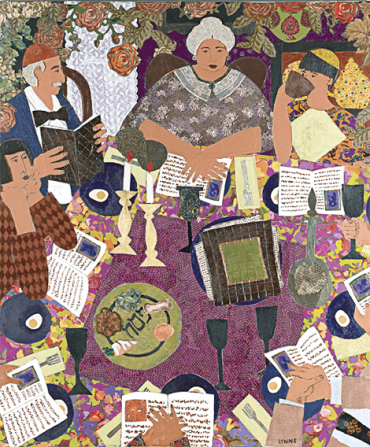
“The Seder Table” by Lynne Feldman

As the Jewish High Holiday of Passover draws to a close, I have been reflecting on this seasonal ritual so central to collective Jewish identity and so significant to me personally.

The Haggadah, the script for the Seder gathering, enjoins all Jews to experience the Exodus—the liberation of the ancient Hebrews from slavery in Egypt —as if it were happening to each of us in our own time.  Because I was born in Cairo to an Arab Jewish family that left Egypt when I was two, I always felt Passover to be mine.  No need for “as if”: our Exodus was all too real. Yet, from my parents’ accounts, life in Egypt had been delightful. I could not reconcile the Haggadah’s dreadful representation of ancient Egypt with my family’s treasured memories of contemporary Cairo: I could not understand why we celebrated deliverance from an Egypt we loved.

Continue reading “A New Covenant by Joyce Zonana”

Stealing the Yarn: Jewish Women and the Art of Feminist Dreaming (Part 2) by Jill Hammer

Jill HammerIn my last post, I discussed the uses of dreamwork for Jewish women who are uncovering their own spiritual language. The protagonists of recorded Jewish dreams, from Joseph to the dream interpreters of the Talmud to the kabbalists, tend to be male. Yet there is a legacy of Jewish women dreaming, occasionally documented, and painstakingly uncovered by researchers. This hidden history offers us resources for understanding the women of the past, and for connecting to women in the present.

The Roman poet Juvenal (2nd. cent. CE) mocks a poor Jewish woman of his time for sitting under a tree and telling the meaning of dreams, calling her “high priestess with a tree as temple.” Much later in history, Hayyim Vital, the disciple of master kabbalist Isaac Luria, records in his diary that Jewish women in the city of Sfat (Jewish holy city in Galilee known as a center for Kabbalah) in the early 17th century were actively engaged (along with men) in recording, sharing, and interpreting dreams. Vital mainly records women’s dreams when the women dream about him! He saves these dreams from the dustbin of history, ironically, because he sees the dreams as prophecies of his greatness.

For example, Vital records the dream of a friend and patron, Rachel Aberlin. In the dream, Aberlin watches Vital eat a feast of vegetables at a table full of sacred books. Behind Vital, a fire rages, yet does not consume the pile of straw in which it burns. When Aberlin shares the dream, Vital understands this dream to be a manifestation of a biblical verse: “The house of Jacob shall be fire, and the house of Joseph flame, but the house of Esau shall be straw” (Obadiah 1:18). Aberlin, however, responds to Vital’s interpretation: “You quote me the words as they are written, but I see them as a reality.” (Between Worlds: Dybbuks, Exorcists, and Early Modern Judaism, p. 106ff).

Vital sees the dream’s fire as his own spiritual fire, witnessed by Aberlin. Yet we might read the dream differently. In our dream of Aberlin’s dream, we might imagine that Aberlin’s dream encodes her experience of watching Vital consume the nourishment of sacred books, which she, as a woman, is denied. Yet, the dream suggests, the fire of revelation is behind Vital, eluding him. Within the dream and in waking life, Vital is focused on text, but Aberlin, like Moses, perceives the fire that does not consume. Aberlin, not Vital, is the prophet in the dream— and the waking Aberlin says so. Vital records the dream, without recognizing Aberlin’s implicit criticism of his way of knowing.

Continue reading “Stealing the Yarn: Jewish Women and the Art of Feminist Dreaming (Part 2) by Jill Hammer”

Entering The Cave: Jewish Women and the Art of Feminist Dreaming (Part 1) by Jill Hammer

Jill HammerDreams are my window on my wildest self. They are also a way to observe the conflicts within, and therefore they are a feminist practice, teaching me about my relationship to power, gentleness, love, and brokenness. Claiming my dreams is a way of claiming all the parts of myself. I am inspired in my dream practice by my own Jewish tradition, which has many dream practices, as well as by contemporary knowledge about dreams. Frequently in my dreams, I am able to observe my own longing for the company of women and for the presence of Goddess—deity in a female mode—in my life. Frequently, I learn about my experience as a woman by watching my dreams.

In one recent dream, I found myself in a town called Ursula, visiting a cave. Inside the cave were statues of holy women. After my visit, I expressed a desire to move to this town, Ursula. When I woke up, I remembered a painting I had seen in London when I was young: a depiction of St. Ursula, a fourth-century Catholic saint said to have led eleven thousand women on pilgrimage. Ursula is also the she-bear, an archetype of the sacred feminine. The desire to live in the town of Ursula could be read as a desire to live in the realm of the she-bear: in the company of women. The town of Ursula is also a town of the ancestors: the priestesses, prophetesses and wise women of old, represented by the statues in the cave. Though the imagery in my dream comes from a variety of cultures, the dream reminds me of my desire to connect to the women my tradition through dreams.

I teach Jewish dreamwork (based on biblical, Talmudic, kabbalistic and contemporary texts) to rabbinical and cantorial students at the Academy for Jewish Religion. I have seen how deeply it adds to my students’ spiritual lives. And, as one of the co-founders of the Kohenet Hebrew Priestess Institute, I have seen dreamwork transform the lives of women who are becoming ritual leaders and healers. Kohenet’s dream practice includes dream circles in which each participant offers a different reading of each dream, beginning with “In my dream of this dream.” We begin this way because each of us has a different understanding, influenced by who we are.

At Kohenet retreats, we often find that the dream of one person provides powerful healing for the whole community. For example, one woman dreamed of finding a bearded father-figure in a house. When she went into the basement, she found her mother working and writing next to a goddess shrine (Jill Hammer and Taya Shere, The Hebrew Priestess: Ancient and New Visions of Jewish Women’s Spiritual Leadership, p. 70). The dream expressed an experience many of us shared: the process of unearthing the power of women and the mythic feminine in our own lives.

Continue reading “Entering The Cave: Jewish Women and the Art of Feminist Dreaming (Part 1) by Jill Hammer”