Legacy of Carol P. Christ: Sacred Marriage or Unholy Cover-up?

This was originally posted on November 7, 2016

Many women are drawn to the image of the Sacred Marriage—perhaps especially those raised in Roman Catholic or Protestant traditions where sex is viewed as necessary for procreation but nothing more, and who learn that the naked female body as symbolized by Eve is the source of sin and evil. In this context, the positive valuing of sexuality and the female body found in symbols of the Sacred Marriage can feel and even be liberating.

Jungians have claimed that the Sacred Marriage is an archetype of the wedding between the “masculine” and the “feminine.” Many women have been attracted to this idea as well. It “softens” the radical feminist critique of patriarchy and male dominance. Rather than “castrating” the “phallocracy” as Mary Daly urged, we can think in terms of the “marriage” of qualities traditionally associated with male and female roles. Women, it is said, can use a good dose of ego and assertiveness traditionally associated with the masculine, while men need to have their dominating rational egos tempered by feminine qualities like care and compassion.

Continue reading “Legacy of Carol P. Christ: Sacred Marriage or Unholy Cover-up?”

Legacy of Carol P. Christ: Argument from “Absence” and Absence of Dialogue

This was originally posted August 31, 2015

Recently in a conversation with a noted archaeologist and his male graduate student assistant, I proposed that the absence of war and the trappings of war, including images of larger than life-size warrior kings, suggested to me that we should not understand the social structure of ancient Crete on the model of patriarchal kingship. “Kings are always warriors,” I said, “yet there is no clear and convincing evidence of organized warfare in ancient Crete. And,” I continued, “because warrior kingship is not a ‘natural state,’ but one achieved through warfare and domination, kings must legitimate and celebrate their power through larger than life-size images of themselves. Such images were common in ancient Sumer and in ancient Egypt, but are not found in ancient Crete.”

The response I received was unexpected: both archaeologists seemed dumbfounded. “Is kingship always associated with war?” they asked. “Yes,” I responded, “this is a conclusion I reached many years ago while studying the cultures of ancient Greece and ancient Israel, and I have recently elaborated this theory in a series of essays on the blog Feminism and Religion ( See “Patriarchy as a System of Male Dominance Created at the Intersection of the the Control of Women, Private Property, and War”).”

Continue reading “Legacy of Carol P. Christ: Argument from “Absence” and Absence of Dialogue”

Carol P Christ’s Legacy: What Might It Be Like To Live In A Matriarchal Society Of Peace? Can You Imagine?

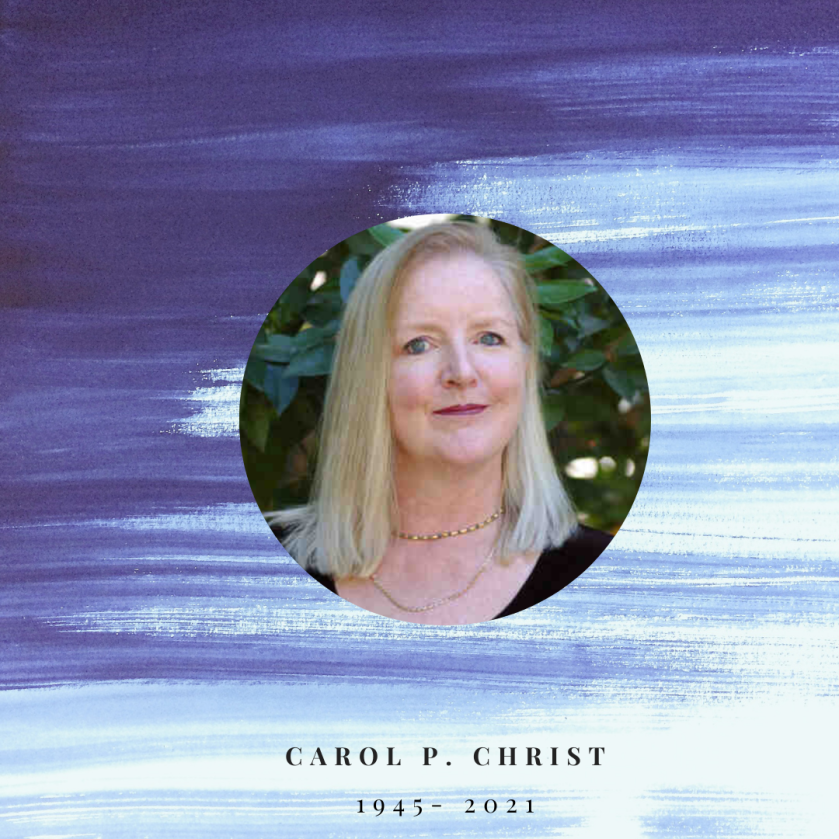
Moderator’s Note: We here at FAR have been so fortunate to work along side Carol Christ for many years. She died from cancer in July, 2021. Her work continues through her non-profit foundation, the Ariadne Institute for the Study of Myth and Ritual and the Goddess Pilgrimage to Crete. To honor her legacy, as well as allow as many people as possible to read her thought-provoking and important blogs, we are pleased to offer this new column to highlight her work. We will be picking out special blogs for reposting. This blog was originally posted March 23, 2013. You can read it long with its original comments here. Carol provides links to the three posts of hers that we have reposted recently.

There are many reasons for women, slaves, and the poor to rebel against domination and unjust authorities in patriarchal societies. But we should not assume that there are any reasons to rebel against domination where no domination exists or to rebel against unjust authority in societies where there are no unjust authorities.

In response to my recent series of blogs on patriarchy as a system of male dominance created at the intersection of the control of female sexuality, private property, and war (Part 1, Part 2, Part 3), I was asked if there is an injustice inherent in matriarchal societies that caused men to rebel and create patriarchy.

Continue reading “Carol P Christ’s Legacy: What Might It Be Like To Live In A Matriarchal Society Of Peace? Can You Imagine?”

Carol P. Christ’s Legacy: Patriarchy as a System of Male Dominance Created at the Intersection of the Control of Women, Private Property, and War, Part 2 by Carol P. Christ

Moderator’s Note: We here at FAR have been so fortunate to work along side Carol Christ for many years. She died from cancer in July, 2021. Her work continues through her non-profit foundation, the Ariadne Institute for the Study of Myth and Ritual and the Goddess Pilgrimage to Crete. To honor her legacy, as well as allow as many people as possible to read her thought-provoking and important blogs, we are pleased to offer this new column to highlight her work. We will be picking out special blogs for reposting. This blog was originally posted February 25, 2013. You can read it long with its original comments here. It was the second in an important 3 part series. We will be posting part 3 next week (or you can read it earlier by going to the original post). Part 1 can be read here:

Patriarchy is a system of male dominance, rooted in the ethos of war which legitimates violence, sanctified by religious symbols, in which men dominate women through the control of female sexuality, with the intent of passing property to male heirs, and in which men who are heroes of war are told to kill men, and are permitted to rape women, to seize land and treasures, to exploit resources, and to own or otherwise dominate conquered people.*

In last week’s blog, I explained patriarchy as a system in which men dominate women through the control of female sexuality with the intent of passing property to male heirs. How did a system that identifies a man’s essence with his property and the ability to pass it on to sons come about? I suggest that the answer to this question is war and the confiscation of “property” by warriors in war. Patriarchy is rooted in the ethos of war which legitimates violence, and in which men who are heroes of war are told to kill men, and are permitted to rape women, seize land and treasures, to exploit resources, and to own or otherwise dominate conquered people.

Continue reading “Carol P. Christ’s Legacy: Patriarchy as a System of Male Dominance Created at the Intersection of the Control of Women, Private Property, and War, Part 2 by Carol P. Christ”

Carol P. Christ’s Legacy: Patriarchy as a System of Male Dominance Created at the Intersection of the Control of Women, Private Property, and War, Part 1 by Carol P. Christ

Moderator’s Note: We here at FAR have been so fortunate to work along side Carol Christ for many years. She died from cancer in July, 2021. Her work continues through her non-profit foundation, the Ariadne Institute for the Study of Myth and Ritual and the Goddess Pilgrimage to Crete. To honor her legacy, as well as allow as many people as possible to read her thought-provoking and important blogs, we are pleased to offer this new column to highlight her work. We will be picking out special blogs for reposting. This blog was originally posted February 18, 2013. You can read it long with its original comments here. It was the first in an important 3 part series. We will be posting the next 2 parts in subsequent weeks (or you can read it earlier by going to the original post).

Recently feminist scholar Vicki Noble commented that this is the best definition of patriarchy she has read–but she hadn’t read it earlier. I am reposting it now in the hopes that all of you will share it with your social media so that it will be more widely known.

Patriarchy is often defined as a system of male dominance. This definition does not illuminate, but rather obscures, the complex set of factors that function together in the patriarchal system.  We need more complex definition if we are to understand and challenge the the patriarchal system in all of its aspects.

Patriarchy is a system of male dominance, rooted in the ethos of war which legitimates violence, sanctified by religious symbols, in which men dominate women through the control of female sexuality, with the intent of passing property to male heirs, and in which men who are heroes of war are told to kill men, and are permitted to rape women, to seize land and treasures, to exploit resources, and to own or otherwise dominate conquered people.*

Continue reading “Carol P. Christ’s Legacy: Patriarchy as a System of Male Dominance Created at the Intersection of the Control of Women, Private Property, and War, Part 1 by Carol P. Christ”

What If We Begin from the Hypothesis that Ancient Crete Was Matriarchal, Matrifocal, and Matrilineal? by Carol P. Christ

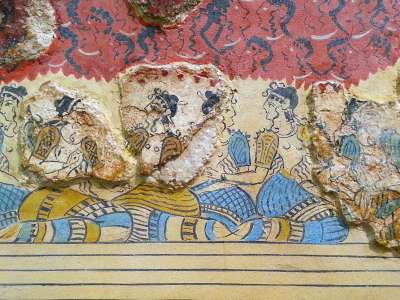
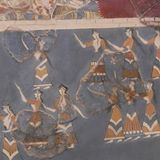
If we begin from the hypothesis ancient Crete was matriarchal, matrifocal, and matrilineal, what would we expect to be the central focus of the its religion?* Harriet Boyd Hawes and her colleague Blanche E. Williams presented an incipiently feminist, woman-centered, analysis of the religion of ancient Crete in Gournia, the book describing their excavation of a Minoan village at the beginning of the twentieth century. Boyd Hawes argued that the archaeological evidence showed not only the pre-eminence of the Goddess, a conclusion with which Williams agreed, but also the strength and independence of women in a culture she defined as matriarchal and matrilineal, centered around the Mother family. If ancient Crete was matrilineal, matrifocal, and matriarchal, we should expect to find evidence that women were not only strong and independent, but also that they had leadership roles in religion and culture. Williams noted the presence of priestesses. The miniature frescoes from Knossos show a group of older women sitting in the place of honor and a group of women performing a ritual dance. Where evidence concerning leadership roles is lacking, it should not be assumed that leadership must have been in the hands of men.
We should not be surprised to find the Goddess or mother earth to be at the center of rituals and ceremonies in ancient Crete. However, to say that the Goddess is central begs the question of what we mean when we say Goddess. In the west, deity is understood to be transcendent of the world, imaged as a dominant male other, and as the judge of the living and the dead. Citing the Oxford English Dictionary, archaeologist Colin Renfrew bases his discussion of Minoan religion on the idea of divine transcendence. But if we accept Marija Gimbutas’ insight that the Goddess represents the powers of birth, death, and regeneration in all forms of life, a different picture emerges. The Goddess is immanent in, rather than transcendent of the world. She is the enlivening force in human beings and all of nature. She is not the judge of the living and the dead, for the dead are returned to her body. Unlike later Greek deities, the Goddesses of Old Europe and ancient Crete are not generally portrayed as idealized human beings. Though they often have eyes, breasts, and sacred triangles, they also have beaks and wings, are shaped like mountains, and decorated with flowing lines symbolizing rivers or streams. These hybrid forms suggest that all of life is in the image of divinity and that humans are not higher, better, or separate from other life forms. Hybrid images celebrate the connection of all beings in the web of life and call human beings to participate in and enjoy this world, not to seek to escape or rise above it. A religion centered around gratitude for life in this world is very different from one that centers around fear and judgment and a longing for life after death. Jacquetta Hawkes’ insight that the religion of ancient Crete celebrated “the grace of life” is exactly right.
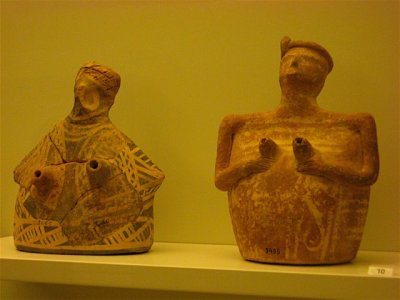
Is the Old European or Minoan Goddess one or many? Monotheists have insisted that there can be only one God, yet polytheists revere a plurality of images, while animists celebrate the spirits of (perceived) living beings such as rivers and trees, mountains and caves. The terms monotheism and polytheism are not neutral. Both were developed by monotheists: monotheism describes the correct beliefs of the self; polytheism, the false beliefs of the other. I find theologian and liturgist Marcia Falk’s distinction between exclusive and inclusive monotheism helpful in resolving the question of the one and the many. According to Falk, inclusive monotheism is an intuition of the unity of being within the diversity of the world: celebrating the unity of being, it welcomes a plurality of images to represent diversity and difference in the world. From this point of view, the boundaries between monotheism and polytheism are porous. When Gimbutas spoke of the powers of birth, death, and regeneration in all of life, she was referring to the unity of being underlying the diversity of life forms, including plants, animals, and human beings. Similarly, when indigenous peoples speak of mother earth as the giver of all and all beings as relatives, they recognize that all life is sustained by a single source. The fact that ancient Cretans imaged divinity in different ways and with different characteristics does not require the conclusion that they worshipped many discrete deities as some archaeologists argue: I suggest that they intuited a unity of being while celebrating the diversity of life. This appears to have been the conclusion of Williams who wrote of “the prominence of a goddess under various aspects.”

If matrilineal, matrifocal, and matriarchal cultures tend to view the earth as a great and giving mother, we can expect this insight to be expressed in rituals and ceremonies. Gratitude is the appropriate response to gifts freely given. I suggest that gratitude for the gift and gifts of life was not only a focus, but the central focus, of religion in ancient Crete. If this is so, we should expect to find rituals celebrating the gift of life in the birth of babies, the coming-of-age of girls, as well as in as well as in death rituals honoring the ancestors. We can also expect to find rituals honoring the mother line and expressing gratitude for the wisdom of ancestors. Many of these rituals would have taken place in the matrilineal House as archaeologist Jan Driessen suggests. Rituals for the ancestors might also have taken place in cemeteries. We should also expect to find rituals expressing gratitude for the food that sustains life, for example, in offerings of first fruits to mother earth and in the pouring of libations that are absorbed back into her body. If, women invented agriculture, and if as Gimbutas argued, Old European religion celebrated the processes of birth, death, and regeneration in all of life, we should find rituals focused on planting, harvesting, and storing seeds. Some of these rituals might have taken place in the matrilineal Houses, while others surely took place in nature and in the fields. If pottery-making and weaving were understood to be mysteries of transformation involving birth, death, and regeneration, we might find evidence of rituals associated with these activities in the Houses or in workshops. It is known that rites in ancient Crete involved trees, mountains, and caves, as well as water sources. We must ask if and how such ceremonies expressed gratitude to the mother earth, the source of life, and the cycles of birth, death, and regeneration.

*These musings are part of an early draft of the methodological prologue to an essay I have been asked to write on Religion in a Minoan Village to be published in the archaeological report on recent excavations at Gournia. In the preceding part of the prologue, I discuss the theories about matriarchal, matrifocal, and matrilineal cultures of Harriet Boyd Hawes, Blanche E. Williams, Marija Gimbutas, Heide Goettner-Abendroth, and others.

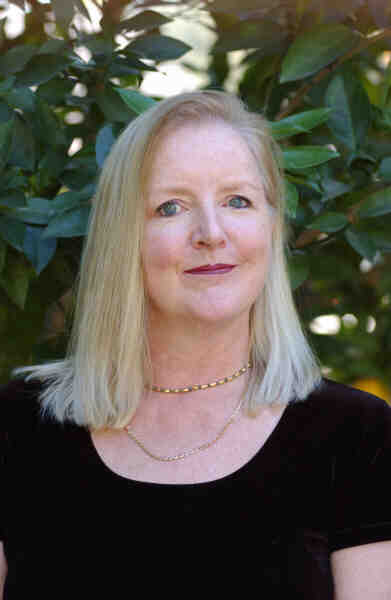
Carol P. Christ is an internationally known feminist and ecofeminist writer, activist, and educator who lives in Heraklion, Crete. Carol’s recent book is Goddess and God in the World: Conversations in Embodied Theology. Carol has been leading Goddess Pilgrimage to Crete for over twenty years: join her in Crete. Carol’s photo by Michael Honneger.

Listen to Carol’s a-mazing interview with Mary Hynes on CBC’s Tapestry recorded in conjunction with her keynote address to the Parliament of World’s Religions.

Matriarchal Manifesta by Heide Goettner-Abendroth

What is the STATUS of WOMEN today?

To cite a brief summary of the 1980 UN Report:

 WOMEN make up half of the world population, work nearly two thirds of all hours worked, receive one tenth of worldwide income, and own less than one hundredth of worldwide property.                             (United Nations Report 1980)

What a SCANDAL that is! Yet no one seems to get worked up about it.

But if we women believe a lot has changed in the meantime, then we are mistaken.

In 2010, the President of the UN Economic and Social Council cited the following figures:

WOMEN work 66% of all hours worked worldwide and produce 50% of the  food.  But they get 10% of the world income, own 1% of the property and represent 60% of the world’s poorest.” (Hamidon Ali, UN Press Conference on June 25, 2010)

This was the sitaution in 2000, in 2010, in 2018. The U.N.report is published annually, but nothing changes.  The SCANDAL continues, and we are outraged! Continue reading “Matriarchal Manifesta by Heide Goettner-Abendroth”

Patriarchy as a System of Male Dominance Created at the Intersection of the Control of Women, Private Property, and War by Carol P. Christ


Recently feminist scholar Vicki Noble said this is the best definition of patriarchy she has read–but she hadn’t known of it earlier! I am am republishing it now in hopes that all of you will share it on your social media so that it becomes more widely known. Thanks!

Patriarchy is often defined as a system of male dominance. This definition does not illuminate, but rather obscures, the complex set of factors that function together in the patriarchal system.  We need more complex definition if we are to understand and challenge the the patriarchal system in all of its aspects.

Patriarchy is a system of male dominance, rooted in the ethos of war which legitimates violence, sanctified by religious symbols, in which men dominate women through the control of female sexuality, with the intent of passing property to male heirs, and in which men who are heroes of war are told to kill men, and are permitted to rape women, to seize land and treasures, to exploit resources, and to own or otherwise dominate conquered people.* Continue reading “Patriarchy as a System of Male Dominance Created at the Intersection of the Control of Women, Private Property, and War by Carol P. Christ”

Matriarchal Politics The Vision of an Egalitarian Society (Part 2): Macrostructures by Heide Goettner-Abendroth

Regionalism

In a new matriarchal society, “bigger” is not necessarily “better.” The smaller units of society, responsible for engendering person-to-person and transparent politics, are given preference. They must not become so big that people cannot see through them, and cannot participate in their decisions, as is the case in so many of today’s national states and super-powers. But they must be big enough to safeguard their self-sufficiency by a subsistence economy, and the diversity of their handiwork, technologies and arts. The ideal dimension is that of the region.

The borders of a region are not random, like national borders are; rather they have developed out of the conditions of the landscape and out of cultural traditions. Regional borders are formed by the decisions of the people themselves who want to live together on the basis of common cultural and spiritual traditions; this avoids any war of culture or of religion. Often the landscape corresponds to these cultural borders, because natural borders can be formed by mountain ranges, rivers, big lakes, or the sea which bind and bound people into their regional places. Continue reading “Matriarchal Politics The Vision of an Egalitarian Society (Part 2): Macrostructures by Heide Goettner-Abendroth”

Matriarchal Politics: The Vision of an Egalitarian Society (Part 1) by Heide Goettner-Abendroth

Matriarchies are not just a reversal of patriarchy, with women ruling over men – as the usual misinterpretation would have it. Matriarchies are mother-centered societies: they are based on maternal values: care-taking, nurturing, motherliness, mutual support, peace keeping and building by negotiation, which holds for everybody: for mothers and those who are not mothers, for women and men alike. Matriarchal societies are consciously built upon the maternal values and motherly work, and this is why they are much more realistic than patriarchies. They are, on principle, need-oriented and not power-oriented, they are gender-egalitarian societies, and most of them are fully egalitarian. Their precepts aim to meet everyone’s needs with the greatest benefit. So, in matriarchies, motherhood – which originates as a biological fact – is transformed into a cultural model.

It is becoming increasingly clear that this radically different cultural model of matriarchy will have great significance for the future of women and mothers, and of humankind in general. We can gain much stimulation and insights from them, which – unlike abstract utopias – have been lived over millennia. Continue reading “Matriarchal Politics: The Vision of an Egalitarian Society (Part 1) by Heide Goettner-Abendroth”