WOMEN FOR PEACE–TAKE TO THE STREETS by Carol P. Christ

Sometimes we are told that domination and violence and war are innate in human nature; therefore, it is futile to protest war.  But this is not true.

I oppose war because I oppose all forms of power-over, domination, and violence.  As a radical feminist and ecofeminist I believe that power can and should always be power-with, the power that nurtures the growth and development of self and others.  The power of Goddess/God is always and everywhere power-with and not ever power-over. 

Are violence and domination innate in human nature?  We have been told that we are the “naked ape” descended from “apes” who, like the chimpanzees with whom we share 98% of our DNA, were male dominant and violent. Do we, then, have any hope not to be violent and dominant?

Franz de Waal’s studies of the other “ape” species that shares 98% of our DNA, the bonobo, debunks this popular myth.  The bonobo live in peaceful matriarchal clans, and their response to conflict is to rub each others’ genitals until the desire to fight goes away.  They are living proof that species very much like us can choose to “make love not war.” De Waal says that the most we can conclude from studies of our ape relatives is that ancestors of human beings, chimpanzees, and bonobos had the capacity to evolve toward dominance enforced by violence, or toward more peaceful ways of resolving conflict.

Continue reading “WOMEN FOR PEACE–TAKE TO THE STREETS by Carol P. Christ”
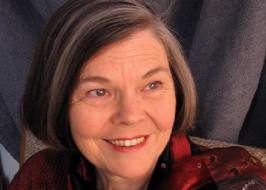
In the Beginning was . . . The Mother By Carol Flinders

The following is a guest post written by Carol Flinders, Ph.D.  Carol received her Ph.D. in Comparative Literature from the University of California at Berkeley and has authored multiple books including Enduring Grace: Living Portraits of Seven Women MysticsAt the Root of This Longing: Reconciling a Spiritual Hunger and a Feminist Thirst;  Rebalancing the World; and Enduring Lives. She has taught at UC, Berkeley, and at the Graduate Theological Union in Berkeley and gives workshops and lectures nationally and internationally. Carol is a Fellow of the Spirituality and Health Institute, Santa Clara University and is currently adjunct faculty at the Sophia Center in Culture and Spirituality, Holy Names University, Oakland, CA.

The word matrix  comes, of course, from the Latin root mater. Its literal meaning is “womb,” but it can also refer to the fine-grained portion of aggregate rock, the “glue” that holds the rest together.

It was probably this latter sense of the word that a resident of Littleton, Colorado, had in mind when she was interviewed after the Columbine shootings in 1999 and spoke about “the stunning erosion of our social matrix.”

When we get it right, she seemed to be saying, in the family, or community, or nation, an invisible container or force field comes into being that keeps everyone safe.  Something like this was implicit in the definition of matriarchy Peggy Sanday offered here a few weeks ago: “A balanced social system in which both sexes play key roles founded on maternal social principles.”  Continue reading “In the Beginning was . . . The Mother By Carol Flinders”

Exciting New Research on Matriarchal Societies By Carol P. Christ

The following is a guest post written by Carol Christ, Ph.D., a pioneer and founding mother of the Goddess, women’s spirituality, and feminist theology movements, and director of the Ariadne Institute.  She is also the author of multiple books including Rebirth of the Goddess.

Although there are some of us who disagree, the “party line” in the fields of Religious Studies and Archaeology—even among feminists– is that there never were any matriarchies and that claims about peaceful, matrifocal, sedentary, agricultural, Goddess-worshipping societies in Old Europe or elsewhere have been manufactured out of utopian longing.

I myself and most other English-speaking scholars defending Marija Gimbutas’s theories about Old Europe have studiously avoided the word “matriarchy” (speaking rather of “matrifocal, matrilineal, and matrilocal” societies) because the very word “matriarchy” conjures up the image of female-dominated societies where women ruled, waged wars, held men as slaves, and raped and abused men and boys. In fact, this fantasy tells us far more about patriarchy than about it does about matriarchy. Continue reading “Exciting New Research on Matriarchal Societies By Carol P. Christ”

Matriarchy By Peggy Reeves Sanday

The following is a guest post written by Peggy Reeves Sanday, Professor of Anthropology at the University of Pennsylvania. She is one of the founders of the anthropology of sex and gender and author of several foundational books including Women at the Center: Life in a Modern Matriarchy.

2008. Oxford Encyclopedia of Women in World History. See below for full citation at end of article.

Matriarchy

The role of matriarchy in women’s history has been obscured by the stereotypes used within male-centered Western social theory regarding the nature of power. In the late nineteenth century the concept of matriarchy played a role in discussions of presumed stages in the cultural evolution of society from “primitive” female rule to more advanced male rule. In the late twentieth century this definition of matriarchy was rejected in favor of a comparative and ethnographically based approach that yielded a more nuanced understanding of the logic of gendered responsibilities in particular societies. By the beginning of the twenty-first century, this new approach was the basis of the burgeoning field of matriarchal studies.

Matriarchy has changed from being thought of as merely a prepatriarchal evolutionary stage to being applied to women-centered societies founded on principles of gender balance and a gift-giving economy. This new definition reflects a maternal social philosophy for a global culture that seeks peace and stresses the importance of nurturing the young, the old, the sick, and the poor. Continue reading “Matriarchy By Peggy Reeves Sanday”