Honeysuckle Jewels and Women with Wings by Sara Wright

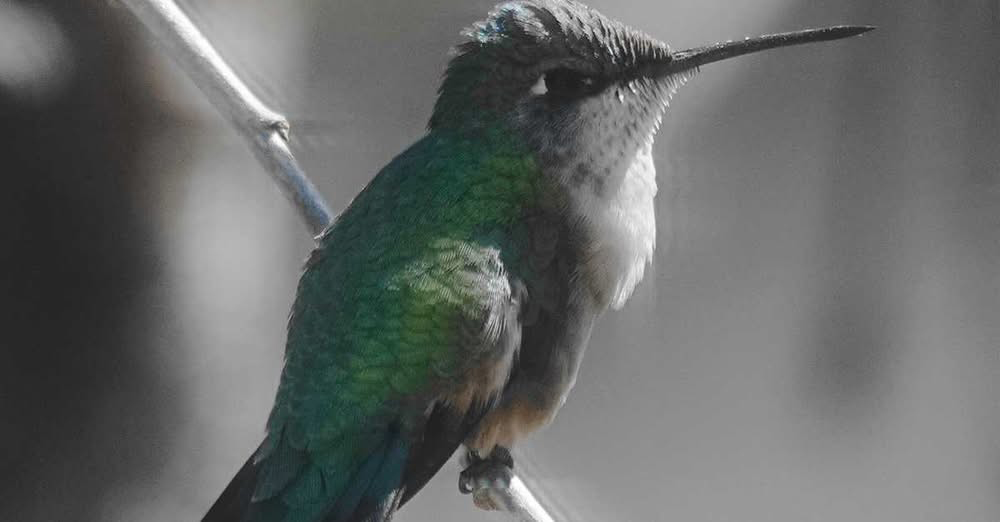
Female Hummingbird in Maine, April 26

Initially I wrote this article for publication at a plant site but was forcibly struck by the reality that what we are doing to plants is exactly the same thing we are doing to humans, women in particular. Separating, Othering, Judging, Dismissing, Eradicating. I could go on here. When you read this article about invasives think about how we are being treated as women. It alarms me that no matter I turn I see the same story played out with humans (women and children suffer most overall), trees, plants, and the animals we are so busy annihilating if not physically then in some other monstrous way. Fill in the blank with your own story.  Then imagine yourself as a bird with wings who carries the seeds of new life into unexpected places.

When I first moved to this area many years ago, I used to spend most of the time in the forests that surrounded my house except in the spring. Then I walked along what used to be a country road to see the wild trilliums, arbutus, lady slippers, bunch berry, violets and columbine that peppered the road edges. 

All the trees and flowers were so plentiful and so beautiful that it took me a few years to pay closer attention to the bushes like the various pussy willows and wild cherries, beaked hazelnut, witch hazel and hobblebush that I also came to love. 

Continue reading “Honeysuckle Jewels and Women with Wings by Sara Wright”
Why Ritual in Turbulent Times? by Terry Folks

Nick Fewings, Unsplash

It is Autumnal Equinox. Five women gather equidistant apart beneath a giant avocado tree in the garden at Evi’s place near the village of Zaros. This little hamlet is under the watchful loving eye of Psiloritis (Mount Idi) on the Island of Crete in Greece. We leave the solitude of our individual cottages where we have been quarantined to co-create an Autumnal Equinox ritual I have initiated for this occasion. Since we are still testing positive for COVID, we maintain our distance. I have a nasty strain as I’m exhausted, foggy, my nose bleeds, and I’m coughing so much my head hurts. Still … this ritual is important as our morale seriously needs a boost. We are dubbed the five “Corona Sisters” or the “COVID Girls” whose Goddess Pilgrimage on Crete was cut short when we contracted the virus somewhere between our homes in Australia, Canada and the United States, and our arrival in Heraklion a few short days ago. We have renamed ourselves the “Avocado Sisterhood” to acknowledge the blessing of our togetherness, and we represent a quarter of the women participating in Carol Christ’s Goddess Pilgrimage to Crete in 2023.

Continue reading “Why Ritual in Turbulent Times? by Terry Folks”

Seeds of Life by Sara Wright

Seeds from Jack in the Pulpit

 I have been involved with plants since I was a toddler. My first word was ‘fower’ for bright yellow buttercups, a nickname I was given by my grandfather that stuck.

I guess it’s no surprise that I started out with gardening as a three-year-old under my grandmother’s tutelage. Her large vegetable plot fed us for most of the year. I seeded my first yellow summer squash into rich moist earth and watched with wonder as the seed emerged with two emerald ears.

In college when students were decorating their rooms with drapes and bedspreads, I bought a pepper plant to brighten my cement surroundings and soon had a windowsill full of plants.

As a young adult I grew many house plants and often talked to them, noting that we seemed to have an uncanny personal relationship, a childhood reality that I had been educated out of. I also gardened with herbs outside my back door, because I loved to cook and needed tasty condiments. Soon I moved on to planting a full – fledged vegetable plot. I canned what I could like my grandmother still longing for the bountiful flower gardens of my dreams. I come from a lineage of female flower gardeners and farmers that stretched back three generations (that I know of) but as a young single mother who worked and one who was frozen from loss, I didn’t make the time.

Continue reading “Seeds of Life by Sara Wright”

The Circle of Giving and Receiving by Sara Wright

Yesterday my Vet and I created our version of the Indigenous Tewa Seed Ceremony, something I have not done since living in New Mexico (except to honor the Seed Moon). We didn’t plan to make an exchange of plants and seeds on earth day because neither of us believe or thought about it – (either do Indigenous peoples) – every day is earth day – so it just ‘happened’ on the day before the Seed Moon becomes full.

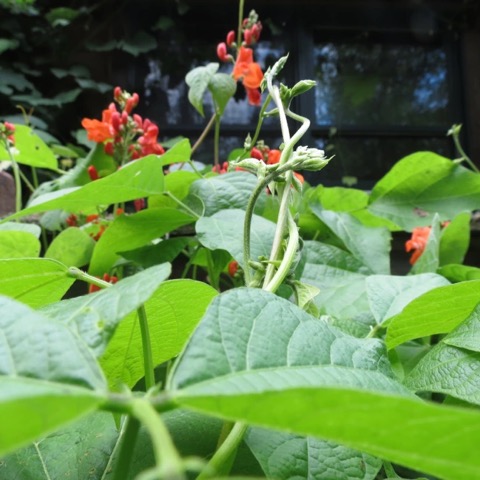
After giving Gary a very special heirloom scarlet runner bean sprout of mine (and seeds) along with the rest of ‘his’ plants that I had been nurturing for months, we also split up a sedum to share, one that he had given me in the hospital last fall, closing another circle of giving and receiving.

It wasn’t until after we parted that I was struck by lightning. Visceral memories surfaced as I relived the Tewa Sacred Seed Ceremonies I had attended in NM, gradually coming to the realization that we had unwittingly participated in an ancient ceremonial exchange that may have originally extended back to Neolithic times.

Continue reading “The Circle of Giving and Receiving by Sara Wright”

A Plant that would Feed the World by Marie Cartier

I have thought a lot about planting seeds—seeds I want to plant and of course grow– the new varietal of blue mustard green, for instance.

It’s the thing to think about in fall– harvesting and planting.

But what else? What if I could plant—anything. Anything at all.

What would I want to grow? What would I want to plant?

Continue reading “A Plant that would Feed the World by Marie Cartier”

Mayflower Memories by Sara Wright

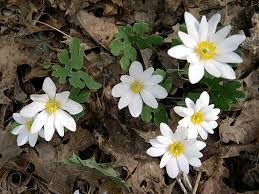
Introduction to MAYFLOWER MEMORIES (‘Blood – Root’)

For the past two weeks I have been obsessed by the thought of emerging bloodroot, a wildflower I have loved since childhood that grows just outside my door (among other places). This obsession, and I take each one seriously, always provokes the same question: what’s really going on here? Bloodroot does not bloom under four feet of snow, and my guess is that this year one of my favorite wildflowers won’t burst with white stars until June.

Today, I also remembered with astonishment that in the old ways, Mother’s Day occurred on March 25th, the time when ‘Becoming’ begins, long before the snow recedes. I’m struck by the difference between the two mothers’ days, this one seems so much more authentic, no room for sentimentality when we face this messy, muddy turning from winter to spring (at least in the Northeast).

Continue reading “Mayflower Memories by Sara Wright”

Resurrection by Sara Wright

Experts quiped
you would
not rise
Too old
they said
Abandoned
Pink and Rose
No one
imagined
resilience,
pattern
birthing
form
to vine.
Gray green
veins
swell,
pulse,
pump
sugars
skyward,
powered
by a
single root.
Bowed blade
circles
round to
Beginning
Buried deep.
Spiral loosens,
ascends
seeking sun
star heat.

Continue reading “Resurrection by Sara Wright”

Magic Seed Moon Meanderings by Sara Wright

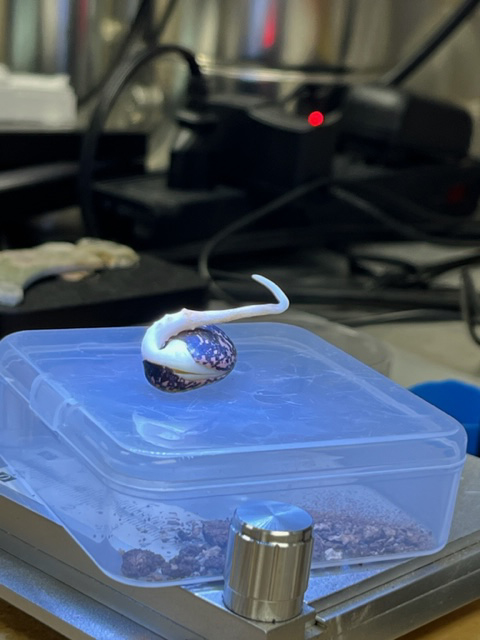
Without thinking I threw the old seed into a bag of moist liverworts that I would be looking at under a powerful microscope with my scientist friend Al in a couple of days. I have no idea why I added the seed. The scarlet runner was one I kept in a winter bouquet that I had recently dismantled. The purple and rose bean had to be four or five years old. It would not germinate now …

Imagine my astonishment when I opened the bag in the lab. The bean had sprouted! The fat twisted root was hunting for earth. Carefully I re – wrapped the bean and put it in a little container until I could get home and plant it, but not before we looked at it under the microscope. More about that later.

Continue reading “Magic Seed Moon Meanderings by Sara Wright”

Seeding Up by Sara Wright

Every spring it’s the same… the hunger to begin starting seeds. As a woman and an eco -feminist I am convinced that this need to work with seeds and soil is an ancient pattern that stretches back to our egalitarian matriarchal beginnings.

Some of us like me come from a family of gardeners so there is something to say about the influence of our ancestors directing this process on a personal level. Both patterning and ancestral influences seem to work together. Another “both and”.

After I broke my foot last year I was forced to cease gardening altogether out of necessity because I could no longer use a shovel. If I am really honest I can say I was more than ready to let go. I have grown both vegetables and flowers since I was a child, then while raising a family. At mid – life when I moved to the mountains I made (what seems today) a radical decision. I decided to plant trees, plants and flowers primarily for non – humans in a small area around my house. Nature determined what grew and thrived on the rest of my land. Today people call this re-wilding but then my intention was simple. I wanted to give back to nature what S/he had given to me. I wanted nature to be the receiver.

Continue reading “Seeding Up by Sara Wright”

Seeds of Hope: Part Two by Beth Bartlett

You can read part 1 here.

The patenting of seeds[i] has made the thousands-year-old practice of seed saving illegal, as is the sharing of seeds from farmer to farmer. The most notorious case is that of Canadian farmer Percy Schmeiser, whose canola crops were contaminated with Roundup Ready canola pollen blown into his fields from neighboring corporate farms. When Monsanto trespassed onto his fields, took samples, and found Roundup Ready canola plants mixed in with Schmeiser’s own canola plants, they sued him for violation of patents. Ultimately, the Canadian Supreme Court ruled in favor of Monsanto, but also ruled that Schmeiser owed Monsanto nothing.

In my own city, seed sharing became an issue when in 2013 our local library decided to start a seed library. The project was begun with great hopes that patrons could check out seeds for their home gardens, with the understanding that they would save a portion of their seeds and return these to the library for next year’s use. [ii] Project leaders hoped this would preserve locally adapted seed varieties. Unfortunately, after the seed library came to the public’s attention, the Minnesota Department of Agriculture informed the library that they were in violation of a Minnesota statute that prohibited the exchange of non-commercial seeds. [iii] Library Manager Carla Powers commented, “ . . . the law went so far as to make it illegal for gardeners to exchange a handful of seeds with one another.”[iv] But this did not end the library’s efforts.  Several ally organizations[v] stepped up to create an amendment to the statute that exempted the exchange of non-commercial seeds from testing, labeling and licensing laws. This inspired a state-wide effort to change the law, which was successfully accomplished in that year’s legislative session.[vi]

Continue reading “Seeds of Hope: Part Two by Beth Bartlett”