
Archives from the FAR Founders: Extending Compassion and Vegetarianism by Xochitl Alvizo

This was originally posted on June 26, 2013 and continues to be a story I love retelling!

“I did not know to recognize you as individuals when I bought you, but I know to recognize you as individuals now…”

I had been a vegetarian, and sometimes pescatarian, for more than 10 years before becoming vegan. Despite the length of my vegetarianism, in all that time I had not been inclined to go vegan. First, I really didn’t know too much about veganism and only began meeting a few vegans about five or six years ago here in Boston, none of whom had shared a compelling enough reason for their choice (at least not compelling to me). Further, I had no imagination for life without cheese or Cherry Garcia ice cream(!), and so I happily continued with my vegetarian ways. Then enters Carol Adams…

Continue reading “Archives from the FAR Founders: Extending Compassion and Vegetarianism by Xochitl Alvizo”

From the Archives: The Found Goddesses of Good Eats by Barbara Ardinger

This was originally posted on August 1, 2013. We usually do Carol Christ’s legacy posts on Mondays. Given the closeness of Lughnasadh, it felt appropriate to share the work of one of our other long-time writers today. Carol’s legacy posts will be back next week.

Lughnasadh (pronounced LOON-us-uh) or Lammas—is the first of the three traditional harvest festivals of the traditional Celtic calendar that most pagans follow today. And what naturally follows harvest? Feasting, fairs, and festivals. To help us celebrate the season, here are two Found Goddesses of good eating. The term “found goddesses” was created in 1987 by Morgan Grey and Julia Penelope, authors of a hilarious book titled Found Goddesses. After reading this book and having never met a pun I didn’t instantly love and being of a naturally satirical state of mind, I started Finding—i.e., inventing—my own goddesses shortly before the turn of the century. After I found a hundred of them, they were published in 2003 in my book, Finding New Goddesses.

Continue reading “From the Archives: The Found Goddesses of Good Eats by Barbara Ardinger”

Drop the sense of entitlement towards life by Oxana Poberejnaia

oxanaAt the time of climate change and crises of capitalism we need to drop our sense of entitlement to comfortable life or even to life at all. Nature will not spare us just because we are humans. When the meltdown of economic and environmental systems occurs, we are all going down: humans and non-humans, women and men, spiritual or not. We have almost run out of time.
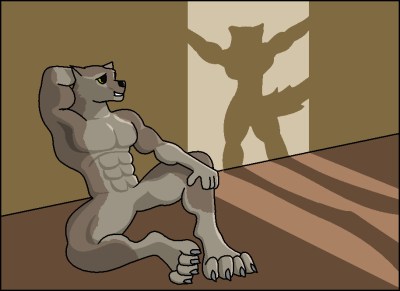
Victor Pelevin, my favourite contemporary Russian author, has a novel called “The Sacred Book of the Werewolf“. I love it in part because, like Kill Bill, it is a rare creation by a male author, which manages to capture the female warrior spirit.

surprise___you__re_a_werewolf_by_mightywarlordIt starts with the main character, a Chinese Buddhist Were Fox who lives in present-day Moscow, consoling herself: “What else (or What the fuck) did you expect from life, A Huli?” A Huli is her name, supposedly meaning Fox A in Chinese. It is also a swear phrase in Russian, meaning “What the fuck?”

Continue reading “Drop the sense of entitlement towards life by Oxana Poberejnaia”

Slouching Towards Justice by Esther Nelson

esther-nelsonKecia Ali, one of the contributors to this Feminism and Religion blog, recently wrote an excellent article titled, “Muslims and Meat-Eating  Vegetarianism, Gender, and Identity,” (Journal of Religious Ethics, Volume 3, Issue 2, June 2015).
In her article, Kecia Ali “…argue[s] that Muslims in the industrialized West–especially those concerned with gender justice–ought to be vegetarians and that feminist ethics provides underutilized resources for Muslim thinking about ethics generally and food ethics in particular.”  She assures the reader that “productive dialogue” is possible when Muslims engage with non-Islamic (not “un-Islamic”) ethics.  The “engaged” parties may “disagree about basic presumptions but agree on desirable outcomes.” Continue reading “Slouching Towards Justice by Esther Nelson”

Do You Eat Animals? Ecofeminism and Our Food System by Ivy Helman

10953174_10152933322533089_8073456879508513260_oCarol Adams in her article “Ecofeminism and the Eating of Animals,” argues that ecofeminists should be vegetarians, since ecofeminism is, among other things, action-based and “one’s actions reveal one’s beliefs,” (129). According to ecofeminism, the patriarchal domination of animals and nature is linked to the oppression of women. For her and many ecofeminists, the survival of our planet rests on two foundations: first, fixing the conditions of women and other oppressed groups and, second, envisioning differently our relationship to the natural world. In other words, a better arrangement of human relationships requires better human relationships with the environment. Vegetarianism and veganism are two ways in which ecofeminists opt out of the patriarchal system of domination and exploitation and help create a better world.

But, does one really? Does adopting a vegetarian or vegan lifestyle really have such an impact on the world? Yes and no. Yes, because it has been shown that raising animals to eat uses exorbitant amounts of fuel, water and land, not to mention, the larger environmental impact of farm run-off in the forms of disease-carrying manure, valuable topsoil and harmful pesticides. Yes, because animals are often inhumanely treated, housed in horrible conditions, genetically and/or hormonally-modified and cruelly killed. Continue reading “Do You Eat Animals? Ecofeminism and Our Food System by Ivy Helman”

Extending Compassion and Vegetarianism by Xochitl Alvizo

“I did not know to recognize you as individuals when I bought you, but I know to recognize you as individuals now…”

I had been a vegetarian, and sometimes pescatarian, for more than 10 years before becoming vegan. Despite the length of my vegetarianism, in all that time I had not been inclined to go vegan. First, I really didn’t know too much about veganism and only began meeting a few vegans about five or six years ago here in Boston, none of whom had shared a compelling enough reason for their choice (at least not compelling to me). Further, I had no imagination for life without cheese or Cherry Garcia ice cream(!), and so I happily continued with my vegetarian ways. Then enters Carol Adams…

In a teleconference that WATER had with Carol Adams on March 14, 2012  (Women’s Alliance for Theology, Ethics and Ritual), the beauty of her veganism moved me to a new understanding of my food choices. I listened to the WATER audio recording some months after the actual event (these teleconference audio recordings are a great resource you should all access), and although I had been familiar with some of her work and had heard her speak before, I had not heard her talk about the compassion element of veganism. Her emphasis on increasing compassion, which I witnessed in action during her conversation with one of the listeners, was what moved me to my new practice. Continue reading “Extending Compassion and Vegetarianism by Xochitl Alvizo”