Celibacy Is the Lynch-Pin of Male Dominance according to Matilda Joslyn Gage by Carol P. Christ

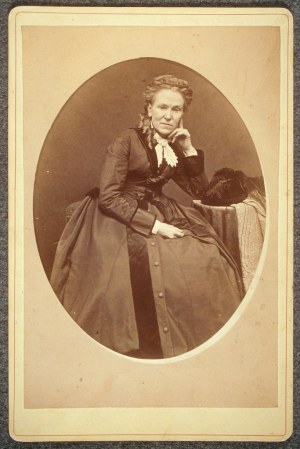
Matilda Joslyn Gage

Matilda Joslyn Gage was an activist in the nineteenth century struggle for women’s rights equal to Susan B. Anthony, and a writer and theorist equal to Elizabeth Cady Stanton. That she is not remembered is due in large part to Susan B. Anthony’s efforts to write her out of history.

Matilda Joslyn Gage was also a scholar of women’s history unrivaled in her time. In Woman Church, and State, Gage argued that “the most grievous wrong ever inflicted upon women was in the Christian teaching that she was not created equal with man.” (page 1) From this it follows that feminists must never lose sight of the role Christian teachings have played and continue to play in the unequal treatment of women.

According to Gage, women’s position in church and state did not improve in the Christian era. To the contrary it declined! Gage proved this thesis in chapters titled: The Matriarchate, Celibacy, Canon Law, Marquette, Witchcraft, Wives, Polygamy, Woman and Work, and The Church of Today. Continue reading “Celibacy Is the Lynch-Pin of Male Dominance according to Matilda Joslyn Gage by Carol P. Christ”

Solidarity Thy Clothing is a Black Gown by Anjeanette LeBoeuf

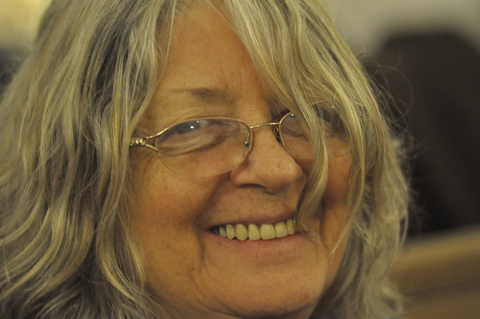
On Sunday, January 7th, a highly visible and poignant protest and stance was made. The 75th Golden Globes was the frontline to which the privileged Hollywood A-Listers took a stance. They collectively drew a line, a call for change.  A straightforward act of wearing the color black, spoke volumes. Gone were the entertainment commentators stating which color was bold or trendy. The focus was on the collective statement that was being made on the red carpet. Countless actors voiced their own stories of #WhyWeWearBlack, they called out executives who are complicit in maintaining pay inequality, in hiding sexual abuse and intimidation, in the unequal job opportunities, and even in the lack of recognition.

Continue reading “Solidarity Thy Clothing is a Black Gown by Anjeanette LeBoeuf”

Woman – The Essential Other by Natalie Weaver

Natalie Weaver editedI am writing from Oxford, England, where I am privileged to be staying this summer while attending an institute on the theme of “Otherness” in medieval Judaism.  Our readings have focused on a variety of topics, including: the development of Christian anti-Jewish polemics; the development of Jewish anti-Christian polemics; the development of medieval Christian visual representations of Jews; and the European medieval expulsions of Jews.  The well-planned program, sponsored by the National Endowment for the Humanities, has been illuminating for all – speakers and participants alike, I think.  It has also been, at least for me, an occasion of intellectual sadness.  It is not that I am surprised by how ugly polemics, pictures, and history can be.  It is that I feel myself coming to a deeper appreciation of the dangerous power dynamics in religion, driven by political and economic aims, that strike me as the underlying cause of practical conflict, yet cloaked as principally theological tensions.

If it were not manifestly obvious that procurement and retention of resources, goods, and position drive personal/familial commitments and tribalistic frameworks for meaning and ultimacy, one of the clues – at least for me – has been the repetition of charges and accusations across polemical perspectives.  And, what is more, one unmistakable commonality in the charges and indictments seems to be the accusation of effeminacy.  This accusation need not be directly stated, such as, “Your people think like women,” or the like.  It comes across in the overlap, speaking specifically concerning Christian writings, between discussions of women and discussions of Jews.  The phenomenon, though, is not unilaterally Christian.  Continue reading “Woman – The Essential Other by Natalie Weaver”

Dog Days, Holly, Spears and Swords by Deanne Quarrie

Deanne QuarrieWe are little more than midway in what are called the “dog days” of summer. Imagine that the ancients thought that Sirius (one of the dog constellations) was the cause of the extra hot and sultry days of summer  because that star rose with the sun each day during this time and they actually thought we received heat from it.  But no, there is no heat from Sirius, only the tilt of the earth, giving us more heat during. Continue reading “Dog Days, Holly, Spears and Swords by Deanne Quarrie”

Meditating on Woman by Oxana Poberejnaia

oxanaI decided to run a little experiment and to explore the notion “woman” from inside meditation. I practice Anapanasati Meditation, or mindfulness of breath. I learnt it from Theravada teachers. However, through my Buddhist career I have studied in various Buddhist centres and from various schools. The latest one with which I went on retreats is the Western Chan Fellowship (Chan is one of the Chinese schools of Buddhism, from which Japanese Zen developed).

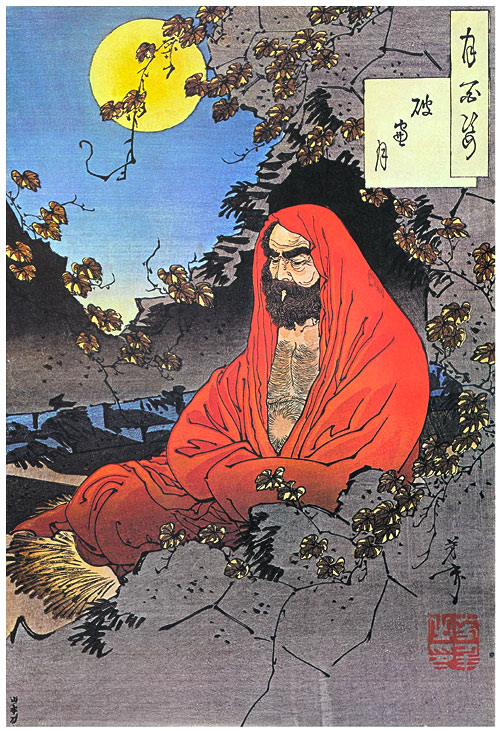
BodhidharmaYoshitoshi1887 Anapanasati meditation involves mindfully staying with your breath and following it as it goes in and out of your body. It is supposed to both quieten the mind and to lead to more clear vision, or insight. In Chan tradition there is also a practice of asking one simple question in meditation, for instance: “What is this?” or “Who am I?” Sometimes exploration of other topics from within the mind which has been quietened and made clearer by meditation is also practiced.

Continue reading “Meditating on Woman by Oxana Poberejnaia”

ADI SHAKTI! : A MEDITATION ON A MANTRA BY Sara Frykenberg, Ph.D.

Aaadee shaktee, namo, namo: I bow to the primal power (which is female and divine).

My Kundalini yoga teacher training required that each student complete a 30 minute daily meditation for forty days straight at some point during our course.  Great!  No problem.  After all, I signed up for teacher training partially because I believed in the physical-spiritual-mental healing powers of meditation.  I chose the Adi Shakti meditation specifically, so I might better understand and embrace myself as a woman and creative being.  My own self-definition of womanhood had been very wounded in my past, so I aimed to embrace this fantastic opportunity.

Aadee shaktee, namo namo—I will bow to the primal female power that I have within me!  I was excited!  I was even eager to do this meditation; but somewhere along the way I discovered that I had underestimated how painful this process would be.  I underestimated my scars and I ultimately found this meditative experience somewhat excruciating.

Aadee Shaktee, namo, namo: I am humbled by her power.

Sarab shaktee, namo, namo: I bow to the all Encompassing Power and Energy.

My initial meditations were fun, exciting and led me to contemplate my sister’s pregnancy.  I enjoyed the mantra and the physical movements the meditation involved.  Very quickly, however, the movement itself became increasingly uncomfortable.  I was sore.  I joked in my journal, “no wonder the mantra engages female creative power; it really targets the abdomen and hips.”  I expected this, as many meditative postures are not exactly “comfortable.”  My response was normal. Continue reading “ADI SHAKTI! : A MEDITATION ON A MANTRA BY Sara Frykenberg, Ph.D.”