Offerings to the Labyrinth on Papoura Hill by Sylvia V. Linsteadt

Rhea, mother of Demeter, is coming down upon the seven mountain ranges of her Crete. Ariadne, granddaughter of Rhea, is coming up from her ten thousand perfect caverns inside those mountains with clear water in her arms. They have been quiet a long time, but they are not quiet now. Between them comes Demeter across the wide plateaus where her stones and soil are being stripped for profit, where her bees are dying from pesticide use in their hives, where her grain and oil are sold out from under her, the farmers who grew them cheated by countries with fatter economies and shinier marketing schemes.

They are gathering on Mt. Juktas and Mt. Dikti and Mt. Ida and on Papoura Hill, on all the old holy mountain places where nereids and kouretes were born, where midwives danced, and the dead were buried, and the priests and queens held night-long vigils to take divinations from the procession of the stars. From those divinations they turned the wheel of Crete’s festivals so that they continued year by year as precisely as Earth turned around her axis, so that Earth knew that she and her gifts were respectfully received, and truly loved.

Continue reading “Offerings to the Labyrinth on Papoura Hill by Sylvia V. Linsteadt”

Me and the All American Girls Baseball League by Winifred Nathan

During my grade school years, I was a passionate fan of the Belles, the Racine, Wisconsin team in the All-American Girls Baseball League. My aunt and I would travel across town to Horlick Field to cheer them on—an experience that took place during the challenging times of World War II. Racine proudly carried the nickname “Belle of the Lake.” I don’t remember the players fitting the conventional idea of “Belles”; what stood out was their competitiveness and the exciting baseball they played.

Later in life, the movie *A League of Their Own* became a cultural touchstone for me, although I formed my connection to it years after its first showing. I first watched it during a twelve-hour flight across the Pacific Ocean in 2023. Expecting only nostalgia, I was surprised to uncover a profound connection to my past as I watched it two or three times during the journey.

The scenes reminded me of the evening games played just a few blocks from Lake Michigan. The cool breezes from the lake enveloped me, and I recalled how the ballpark served as an oasis, providing a blissful escape from the harsh realities of the war effort. There were no distractions—just baseball—a stark contrast to the Brewers games I attended later with my grandson, which were filled with Jumbotrons and entertainment gimmicks. Back then, the focus was solely on the game itself, although I must admit I secretly looked forward to the Brewers’ sausage race.

Continue reading “Me and the All American Girls Baseball League by Winifred Nathan”

The ‘Current’ of Patriarchy: Feminization of Rivers in Indian Mythology by Dhruv Kabra

The Ganga, Yamuna, Saraswati, Kaveri, and Godavari are all goddesses. In contrast, the mountains- Meru, Kailasa, Himalaya are male gods or their celestial abodes. Perhaps this is not just a coincidence but a deliberate gendered imagination that reveals how patriarchal structures flow through the very geography of the sacred.

Indian rivers are predominantly personified as women, with the lone masculine river, Brahmaputra serving as a subversive exception that divulges the somewhat gendered logic of sacred geography.

The Containment of Divine Power

Ganga, the most revered river goddess in India, is born in the heavens, but her descent to earth is mediated by Shiva. His matted locks absorb her torrent, lest her power shatter the earth. Ganga’s sacredness is based on her containment. Feminine energy is revered, but only if domesticated by a male god.

Continue reading “The ‘Current’ of Patriarchy: Feminization of Rivers in Indian Mythology by Dhruv Kabra”

Pasang Lhamu Sherpa: The Fearless Sherpa Lady Who Conquered Everest and Shattered Patriarchy by Bikash Khanal

Introduction: Beyond Being a Mountaineer a Feminist Icon of the Himalayas

Wikimedia common, by Krish Dulal

When we hear the name Mount Everest, the world’s highest mountain, we involuntarily think of rugged, macho explorers battling ice and thin air. Pasang Lhamu Sherpa’s existence defies that stereotype. Not only was she the first Nepali lady to reach the summit of Everest, but she was a living testament to feminine strength, determination, and will. Her life is a stirring affidavit to feminism in its very extreme forms, where gender discrimination is as hard to overcome as the mountains themselves. 

Early Life: A Sherpa Girl Raised Among Giants Dreams beyond Tradition

Born in 1961, in the high-altitude town of Lukla, Pasang Lhamu Sherpa was brought up in the shadow of the Himalayas, under a centuries-long patriarchy-dominated culture. Sherpa women had assumed support roles—cooks, caregivers, assistants to climbing expeditions—while the men assumed the risky climbs.

But ever since childhood, Pasang was captivated by the mountains, her aspirations reaching as high as the mountains themselves. Defying cultural expectations that she seek domesticity, Pasang applied herself diligently and acquired competence which would make her a trailblazer in the years ahead.

Continue reading “Pasang Lhamu Sherpa: The Fearless Sherpa Lady Who Conquered Everest and Shattered Patriarchy by Bikash Khanal”

May Sarton: Leaping the Waterfalls (1912-1995 American Woman Writer), part 2 by Marie Dintino

Part 1 was posted yesterday.

That richness of self may be what May chased her entire life: for herself to be enough. Eight years later in Journal of a Solitude, May further explores her relationship with solitude:

May’s house in Nelson, NH

“Later on in the night I reached quite a different level of being. I was thinking about solitude, its supreme value. Here in Nelson I have been close to suicide more than once, and more than once have been close to a mystical experience of unity with the universe. The two states resemble each other: one has no wall, one is absolutely naked and diminished to essence. Then death would be the rejection of life because we cannot let go what we wish so hard to keep, but have to let go if we are to continue to grow”(57).

But May knew the drill, and wrote such to a friend, “I came to see that my loneliness (acute and awful) was really a loneliness for myself”(Peters 279).

In Journal of a Solitude, May reveals the challenges surrounding the writing of Mrs. Stevens in 1965, the guts it took, the mission she had in mind:

“On the surface my work has not looked radical, but perhaps it will be seen eventually that in a “nice, quiet, noisy way” I have been trying to say radical things gently so that they may penetrate without shock. The fear of homosexuality is so great that it took courage to write Mrs. Stevens, to write a novel about a woman homosexual who is not a sex maniac, a drunkard, a drug-taker, or in any way repulsive; to portray a homosexual who is neither pitiable nor disgusting, without sentimentality; and to face the truth that such a life is rarely happy, a life where art must become the primary motivation, for love is never going to fulfill in the usual sense.

“But I am well aware that I probably could not have “leveled” as I did in that book had I had any family (my parents were dead when I wrote it), and perhaps not if I had had a regular job. I have a great responsibility because I can afford to be honest. The danger is that if you are placed in a sexual context people will read your work from a distorting angle of vision. I did not write Mrs. Stevens until I had written several novels concerned with marriage and family life”(91).

The need to mask in life and art, the patience to slowly roll out the truth, in a “nice, quiet, noisy way.”

Margot Peters weighs in on Mrs. Stevens in May’s biography:

“While Hilary Stevens might outrage those who believe that women artists are not deviants, her claim that women must find their own language and subjects in the dominant world of men’s literature was a radical concept in 1965. Mrs. Stevens’s idea of “woman’s work” also goes far to explain the puzzle of May Sarton’s own oeuvre: how such an aggressive, volatile, and violent person could produce novels and poems that ultimately transcend conflict. Like Hilary Stevens, May believed that her creative demon was masculine, her sensibility feminine”(254).

Mrs. Stevens Hears the Mermaids Singing was a novel before its time. In coming years, as the gathering momentum of the feminist, gay, and civil rights movements raised America’s consciousness and women’s studies departments sprang up on campuses across the nation, Mrs. Stevens brought its author a fame she had sought all her life”(259).

While living in Nelson, May received letter upon letter from women envying her seemingly ideal situation, but May wanted to set the record straight, that her living alone in a small rural town in New Hampshire was not the panacea so many imagined.

“No partner in a love relationship (whether homosexual or heterosexual) should feel that he has to give up an essential part of himself to make it viable. But the fact is that men still do rather consistently undervalue or devalue women’s powers as serious contributors to civilization except as homemakers. And women, no doubt, equally devalue their own powers. But there is something wrong when solitude such as mine can be “envied” by a happily married woman with children.

“Mine is not, I feel sure, the best human solution. Nor have I ever thought it was. In my case it has perhaps made possible the creation of some works of art, but certainly it has done so at a high price in emotional maturity and in happiness. What I have is space around me and time around me. How they can be achieved in marriage is the real question. It is not an easy one to answer”(Journal 123).

Make no mistake, although May was living alone, she was not alone. She had frequent visitors and was often off lecturing, leading workshops and teaching seminars. Nelson was an attempt to extract, one met with mixed results.

May Sarton grappled with life’s intangibles while living as close as possible to tangible pleasures; she struggled with darkness in the greatest sense and basked in full-on light in the intimate moments, where she found peace. Nothing was meaningless; everything was meaningless. She bared her soul and her heart, revealed her gifts and vulnerabilities in a way not many dare.

“Rage is the deprived infant in me but there is also a compassionate mother in me and she will come back with her healing powers in time”(Peters 339). How accurately May’s sums herself up here; for all her crossness and fire, she was generous to a fault, gifting thousands of dollars to friends every single year.

May became a gardener, as was her mother. In Nelson, she planted, weeded, harvested and displayed vibrant, oh-so-necessary flowers. It became a true labor of love, for even if she wasn’t up to doing such work, she forced herself out of doors to commune with the rocky soil, the scent of dirt and plants, the distinct hope of growth and blossoms. This seemed the antidote to starving for love and light:

“For a long time, for years, I have carried in my mind the excruciating image of plants, bulbs, in a cellar, trying to grow without light, putting out white shoots that will inevitably wither. It is time I examined this image. Until now it has simply made me wince and turn away, bury it, as really too terrible to contemplate.”(Journal 57).

May lamented in a letter to a friend,

“My rage and woe come from great and prolonged suffering that the critics have never never given the poems a break. I see the mediocre winning and I suppose to keep going I have to get mad…better than committing suicide. It is a fight to survive somehow against the current. I am a salmon leaping the waterfalls”(Peters 279).

Thank you for passionately and patiently swimming against the current, May.

May Sarton is a #NastyWomanWriter.

(Here’s the post about May’s resting place in the Nelson cemetery: The Phoenix Takes Its Rest: Visiting May Sarton’s Grave.)

©Maria Dintino 2019

Works Cited:

Peters, Margot. May Sarton: a Biography. New York: Alfred A. Knopf, 1997.

Sarton, May. Journal of a Solitude. New York: W.W. Norton & Company, Inc., 1973.

Sarton, May. Mrs. Stevens Hears the Mermaids Singing. New York: W.W. Norton & Company, Inc., 1965.

May Sarton: Leaping the Waterfalls (1912-1995 American Woman Writer), part 1 by Marie Dintino

Moderator’s Note: This piece is in co-operation with The Nasty Women Writers Project, a site dedicated to highlighting and amplifying the voices and visions of powerful women. The site was founded by sisters Theresa and Maria Dintino. To quote Theresa, “by doing this work we are expanding our own writer’s web for nourishment and support.” This was originally posted on their site on July 13, 2021. You can see more of their posts here. 

Spending summer 2021 in New Hampshire, I drive through Nelson quite often these days. Each time I do, I think of May Sarton, her years here, who she was, her art, and all she accomplished. I always glance down the road at the cemetery where she now rests.*

This post is one I wrote about May two years ago and it feels right to run it again since I feel so close to her these days. Enjoy!

May Sarton: Leaping the Waterfalls

I’d been duped. The gray-haired writer who moved to the small town of Nelson, New Hampshire in 1958 was not who I imagined. I only discovered this when I began work on this post. Far from the tranquil woman in my mind, May Sarton was an enigma, even to herself.

At forty-six, May Sarton purchased her first and only house, attempting to extract herself. In a destructive relationship, struggling to reign herself in, she sought to settle, to live where only those she wanted to see or those who really wanted to see her would visit. Plus, the dramatic move would provide fresh writing material.

May, high school graduation, Cambridge, MA 1929

Continue reading “May Sarton: Leaping the Waterfalls (1912-1995 American Woman Writer), part 1 by Marie Dintino”

We Don’t Have to Live Like This by Trista Hendren

A Tribute to Carol P. Christ’s Legacy of Peace

Rawan Anani, The Melody of Freedom, Gaza Palestine

Carol P. Christ was a feminist scholar and thealogian I deeply admired from afar for many years. That changed when I read her post in Feminism and Religion describing “washing wet clothes cast off by refugees who crossed the Sea of Death.”[1]

In that moment, she became a woman I connected with on a soul level. What could be more profound than washing and folding the clothing of tiny dead children? What other metaphor could be more vivid for how desperately we need to change the world?

“A tiny pink long-sleeved shirt with a boat neck, for a girl, size 3 months. 

A pair of leggings with feet, grey with pink, orange, brown, white, and blue polka-dots, to be worn over diapers.” 

The week before, she asserted that “the only ‘solution’ to the problem of people leaving their homes in fear for their lives is TO END WAR.” She continued, “No one takes this suggestion seriously enough to engage it.”[2]

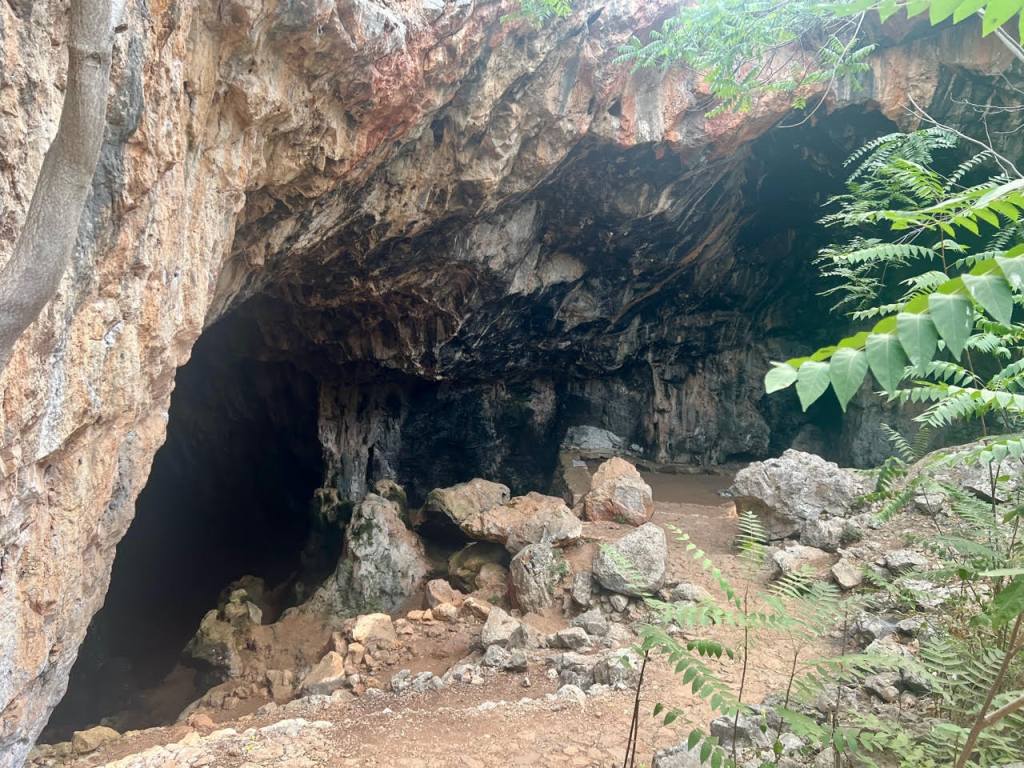
I remember sitting inside the Idean cave with our Goddess Pilgrimage group when Carol read, “We Need a God Who Bleeds Now” by Ntozake Shange. I knew the poem well, but hearing Carolina read it so forcefully shook something deep inside me.

While I have had the privilege of having several wonderful female pastors, they were never particularly affirming of my womanhood—or my divinity. They certainly never celebrated my period.

Continue reading “We Don’t Have to Live Like This by Trista Hendren”

Poetry by Mary Saracino

Mary Saracino’s statement on poetry: Poetry is based on intuition, emotion, something that is not really express-able other than through the poem. It’s a dialogue or conversation between the poet and the Soul (the collective unconscious, in my opinion), which then presents itself to the world. It can be a powerful medium for restoring, reviving, and revitalizing the memories of the Divine Female and reclaiming female sovereignty. Our planet, humankind and our plant and animal kin are in dire need of a paradigm shift, returning us to the time before patriarchy defiled women and usurped the natural order of the world. 

Resurrection By Mary Saracino

Deep in the coils of memory our DNA
sings ancient songs of life, death, regeneration.
We each turn on our own axis,
as the Earth turns through her seasons,
winter’s fallow followed by spring’s eternal greening.
All sacred litanies arise from her soil,
take to the sky, return their blessings
to the wells, the rivers, the oceans.
Why can’t we remember?
Our souls are hung on crosses,
our limbs bound, our hands and feet
nailed to unrelenting dogma,
our tender ribs pierced with thorny spears,
our vulva-wounds ooze with bloody amnesia.
We have forgotten where we come from:
the dank caves of consciousness
littered with the bones of
stone age lovers painted ochre-red
to honor menstrual blood, the original river,
to honor, too, its womb-source, our  primal passageway
the portal from which we all emerged, mouths open, wailing
for our mother’s breast,
seeking the milk that sustains us.
Like spring we are born again and again;
we circumnavigate our lives, spiraling forward,
circling back, orbiting our hearts
until we open to the sun
like red tulips in a once-fallow field,
dancing in the breeze, loose with joy,
sharing our subterranean secret,
reviving the buried bulb’s dormant hopes,
reveling in our resurrection.

Previously published: “Resurrection,” April 5, 2013

Subterranean Rage By Mary Saracino

Deeper than bone
deeper than muscle or sinew
or tenacious tendon
this howl of ages
rivers through bloodlines, ancient as oceans
salty as the primeval seas
this is what happens to women who
out-step their bounds
dare to be bold, brazen
speak up, name the subterfuge
women who grit their warriors’ teeth
fight on, for their children
their lovers, their nation
their homes, their hearts’ desires
branded as heretics: witch, bitch, cunt, whore
they race through forests and fields
trying to outrun the acrid scent of their own sweat
running from the hellish hounds
the priestly proclamations
the wrenching bite of the strappado*
running for their lives
caught between sinner or saint
rarely allowed sovereignty over Self
over mind & womb, over laws meant to undo them
Thousands of straggled cats launched the Plague
tender necks swinging from tree limbs
flaccid, cold paws an omen: the rats will have their day
Crucibles of change, cauldrons
of sorrow, voices stymied for ions by the threat of extinction
womb-wisdom silenced by public outcry
burned at the stake of cultural conditioning
the subterranean outrage
seeps out, sharp as knives
sharp as memory
sharp as justice denied
sharp as the bloodied knives
eviscerating their midnight powers
Deep is this grief
Deep this anger
A dirge of rage lost to the winds of time.
The weeping memory wails, still.
Hear it the moonless night sky,
touch it in the hot light of noon
smell it in the poisoned soil
taste it on your remembering tongue
see it in the burning irises
that bear witness to this unyielding genocide.

* Strappado is a form of torture, employed by the Inquisitional tribunals against women accused of witchcraft. Victims were suspended in the air by means of a rope attached to their hands which were tied behind their backs, causing their arms to be dislocated.

Previously published: “Subterranean Rage,” October 30, 2013

Tharros, Sardegna By Mary Saracino

The stones share their secrets with the sea,
the brilliant blue sky, the tasseled grasses,
the trees—and any humans who will listen—
defying history’s edicts to remain silent.
Parched by the wind and the rain,
the stones speak fiercely of love and of times lost
as outcroppings of brilliant wildflowers
sing sacred songs in the sunlight.
This ancient place is nestled
against a rugged shoreline,
its far-away culture castaway like a forgotten dream,
buried beneath rocks and earth;
here, the outcast souls bloom once more
in the red poppies
whose bloody tongues
whisper: “Remember, remember, remember.”

Author’s note: This poem was inspired by the ruins at Tharros, Sardegna during a visit I made in 2004 as part of a Dark Mother Study tour of that island led by Lucia Chiavola Birnbaum. I think of these ancient places as sanctuaries, containers, wombs, collecting and holding the memory of the Great Cosmic Mother; I see the flowers, the red poppies (sacred to Astarte) sprouting up among the archeological ruins, as Her resurging; blood red poppies, blood lines, blood flow; menstrual memory, carriers of life of memory, of lineage—blood-red, like flowery blooming tongues, telling their stories; reclaiming their truths; waving in the breeze, bending into the wind, but not submitting, allowing the wind to carry their message, carry their poppy seeds of memory out across the fields; kernels of memory—like an amnesic remembering, then speaking.

Previously published: “Tharros”, June 19, 2015

Mary Saracino is a novelist, poet, and memoir writer who lives in New Mexico. Her most recent novel is Heretics: A Love Story (Pearlsong Press 2014). Her novel, The Singing of Swans (Pearlsong Press 2006) was a 2007 Lambda Literary Awards Finalist. She is the author of the novels, No Matter What and Finding Grace, and the memoir Voices of the Soft-bellied Warrior. Mary’s short story, “Vicky’s Secret,” earned the 2007 Glass Woman Prize. Her poetry, fiction and creative nonfiction have been published in a variety of literary and cultural journals and anthologies, online and in print.

Reconsidering the Venus Myth by Lisa SG

Venus.  The Roman Goddess of the third-party situation.  Lady who wouldn’t stay faithful.  Hoochie who couldn’t, or wouldn’t, keep her coochie home.  Or is this viewpoint on the actions of Venus maligned?  (See Ancient-Origins:  Venus: Eroticized Goddess of Love, Fertility, Agriculture… And Infidelity? by Wu Mingren.)

Venus is often conflated with her Greek counterpart, Aphrodite.  Their myths intertwine in such a fashion that the two figures many times seem to be one; we will honor the ancient commingling in this article. 

Venus’ myth starts with the castration of her father by her brother.  Saturn, the Lord of Time and Karma, usurped his father Caelus (Uranus) (See World History Encyclopedia:  The Mutilation of Uranus by Saturn (Cronus) by Giorgio Vasari).  When Saturn used his sacred scythe to castrate his father, some of the seed of Uranus fell upon the sea and Venus was born from the sea foam (See The Internet Archive:  Theogony by Hesiod).  She rose whole and pure from the ocean and fell immediately under her brother’s care as reigning king of the Gods (See Le Gallerie Degli Uffizi:  Birth of Venus by Sandro Botticelli).

Continue reading “Reconsidering the Venus Myth by Lisa SG”

The Furious Sun in Her Mane: Nine Poems to Goddesses by Annie Finch

Poet’s Note: I composed this sequence of poems for performance, for chanting, and for devotion. I wanted people who would hear, read, memorize, and speak each poem to channel the original energetic patterns that the poets who best knew that Goddess used to connect with Her. So for each poem, I researched the meter and prosody of the original language in which that Goddess was first worshipped.  Then I carried the exact rhythmical pulse of Her language into my poem to Her in English.

The sequence was set to music by composer Laura Manning and choreographed by Georgia Bonatis, and I directed and performed a devotional dance collaboration version of it in 1994. That archival video of this performance has just been recovered for the first time in 31 years. It is now posted on my Youtube channel.

Continue reading “The Furious Sun in Her Mane: Nine Poems to Goddesses by Annie Finch”