I began to follow Kimberlé Crenshaw a little more than five years ago when I first learned of her theory of intersectionality as a more concise description of oppressions stemming from race, age, gender, sex/sexual orientation, religion and socio-economic status.
In Delores Williams’ book, Sisters in the Wilderness, there is a closer look at womanist theology as it relates to Intersectionality. The focus on traditions of biblical appropriation that emphasize liberation of the oppressed “showed God relating to men in the liberation struggles,” Williams says in the introduction. “In some African American spiritual songs, in slave narratives and in sermons by black preachers, reference was made to biblical stories and personalities who were involved in liberation struggle.”
In my first blog for Feminism and Religion, I discussed the cognitive and embodied dissonance that some Muslims experience as a result of historically (not eternally) gendered ritual forms. I ended with a promise to share with readers the ways in which el-Tawhid Juma Circle mosques try to create space to break free of those forms. Our mosques affirm all human beings as spiritually, socially, and ritually equal and try to break down the social hierarchy of ritual and theological leadership by opening up a space for all bodies, minds, and hearts to lead and follow as equals among each other.
Breaking out of cognitive and embodied dissonance requires cognitive and embodied habituation to what Amina Wadud names, “The Tawhidic Principle.” Meaning, the space must be one in which human beings can embody divine oneness by recognizing that their relationships with each other are on the horizontal plane and refrain from mediating between any other individual and God on the vertical plane. Wadud has described it as a triangle in which God is at the top with self and other at the two points beneath. Each has an individual relationship with God and a relationship of reciprocitous community with each other. Wadud argues that to mediate between another and God is nothing other than idolatry because the mediator forces another to accept that satisfying his expectations is the same as satisfying God.
This blog has been posted twice before. June 18,2013 and June 19, 2022. Today is Juneteenth in the USA.
Tomorrow is a special day for me. It is Juneteenth. On June 19, 1865, news finally reached Galveston, Texas that slavery had been abolished. This was of course two and a half years after Lincoln issued the Emancipation Proclamation. While the actual impact of the emancipation for the enslaved remains a source of historical discussion if not debate, the fact of the matter is that the proclamation of emancipation and the reality of freedom for black women and men did not necessarily coincide. To be sure, for a variety of reasons, the Emancipation Proclamation did not have an immediate impact on the daily lives of enslaved women, men and children. While the “official” historical records marks January 1, 1863 as a day of emancipation, the historical record for the descendants of enslaved men and women marks June 19, 1865 as the day of freedom. For, it was on this day that the last slaves were free.
While the celebrations of Juneteenth have waxed and waned over the years, it remains a day in which African Americans reflect upon the “mighty long way” we have come as well as the “mighty long way” we have left to go on the pathway toward freedom. As I celebrate Juneteenth, in the words of a black gospel song, “My soul looks back and wonders how they got over.” And so it is that my theological imagination is stirred, for it is clear that it was by faith that they (the enslaved) got over. And so I ask, what kind of faith was it that allowed them to get over, that is, to survive a life of bondage? This question is even more pressing to me each time that I am reminded that there were those who were born into slavery and died in slavery, and thus, as Toni Morrison once exclaimed, “never drew a free breath.” So, what kind of faith was it that carried these people through life?
Women’s National Council of Resistance of Iran (info below)
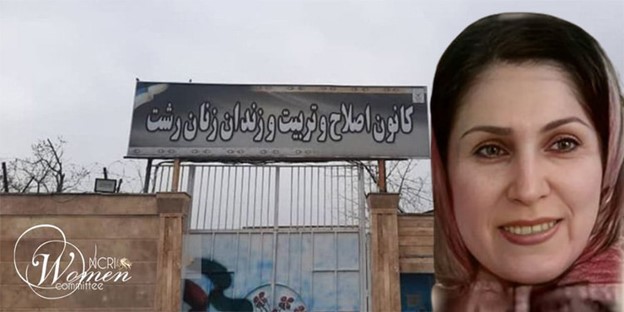
In a continuation of the escalating crackdown on political dissent in Iran, Zahra Shahbaz Tabari, a 67-year-old political prisoner, was sentenced to death by Branch 1 of the Revolutionary Court of Rasht on October 25, 2025. The regime’s judiciary has accused her of “supporting the People’s Mojahedin Organization of Iran (PMOI).”
Who Is Zahra Tabari?
Zahra Tabari, 68, holds a master’s degree in electrical engineering and is a graduate of Isfahan University of Technology and the University of Borås in Sweden, specializing in Sustainable Energy.
She suffers from chronic health conditions, and the poor conditions in Lakan Prison, combined with shortages of medication, medical care, and constant psychological pressure, have severely deteriorated her physical condition.
She was arrested on April 17, 2025, after security forces raided her home in Rasht without presenting a judicial warrant. During the raid, agents searched the house and confiscated her and her daughter’s electronic devices. For weeks, her family had no information about her whereabouts or health condition. She is currently being held in Lakan Prison in Rasht.
“For I am supposing our particular artist to be no gay tourist doing Europe according to guide-books, with perhaps few lessons, here and there, taken only for the name of having been a pupil of some distinguished master, but a thoroughly earnest worker, a lady, and poor, like so many of the profession, wishing to make the most of all opportunities, and the little bag of gold last as long as possible”(6).
In her book, she covers three art hubs, London, Paris, and Rome, providing information on means of travel, places to stay, artists to study with, galleries and museums to frequent, scenic sites for sketching and painting, and even stores to buy art supplies and clothing. A more useful document, I cannot imagine! Julia Dabbs concurs with this assessment in her article Empowering American Women Artists: TheTravel Writings of May Alcott Nieriker:
“Then as now, it is difficult to imagine a reader not being inspired by May’s words of encouragement, her practical advice, and her passion for art.”
Moderator’s Note: This piece is in co-operation with The Nasty Women Writers Project, a site dedicated to highlighting and amplifying the voices and visions of powerful women. The site was founded by sisters Theresa and Maria Dintino. To quote Theresa, “by doing this work we are expanding our own writer’s web for nourishment and support.” This was originally posted on their site on Oct 22, 2024. You can see more of their posts here.
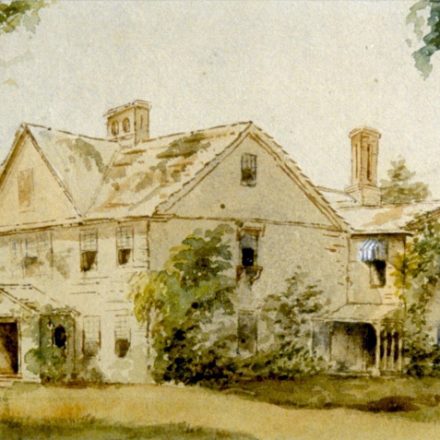
The Orchard House, painted by May Alcott.
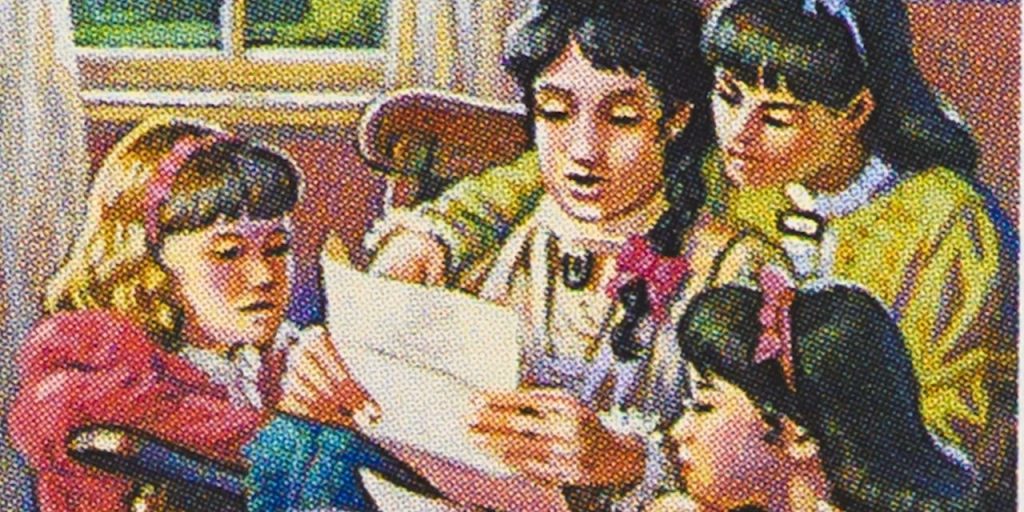
The youngest sister of Little Women author Louisa May Alcott, May Alcott Nieriker, was a successful artist. Her accomplishments were many and her unflappable relationship with her sister Louisa made it all possible. Here’s to sisterhood of all kinds, where unwavering love and support make so much possible!
Visiting the literary houses lining the streets of Concord, Massachusetts, I found myself in the Orchard House, a house and family made famous by Louisa May Alcott’s blockbuster novel Little Women (1868).
Entering an upstairs bedroom, I was struck by the artwork on the walls and was told it is the work of May, the youngest Alcott sister, Amy in Little Women. Her parents, progressives in their time, allowed her to paint and sketch on her bedroom walls. I was informed that most of the artwork displayed in the house is also that of May’s.
War has led to an increase in the number of female-headed households, as many men are killed, go missing, or are forced to migrate. This situation has, more than ever, resulted in a surge in poverty, economic instability, and severe psychological pressure among these women.
In wartime conditions, female heads of household face multifaceted crises. Given that the majority of them are engaged in informal and home-based occupations (such as knitting, tailoring, and food production), the war has dealt a direct blow to their family income by closing marketplaces, disrupting supply chains for raw materials, and reducing the purchasing power of customers.
According to a report by one of the state websites, passengers in a Tehran metro carriage, in response to the street vendors’ advertisements, say they have no money. According to this report, the faces of the female vendors are exhausted. Some of them are over sixty years old and plead with people to buy their goods. (Shafaqna, October 6, 2025)
Moderator’s Note: This post has been posted in cooperation with the NCRI women’s committee. NCRI stands for the National Council of Resistance of Iran. This was first posted on their website on May 18, 2026. You can learn more information as well as see this original article by clicking by link below. A description of their Council can be found at the end of this post. We feel it is especially important to hear women’s voices from Iran esp here in the United States where a lot of misinformation is being disseminated along with the guns and bombs of war.
Introduction
Life for the Iranian people under the religious dictatorship is fraught with hardship and peril from every perspective. Whether through the lens of economic deprivation, poverty, and unemployment; the degradation of the environment and infrastructure; crises involving water, electricity, and air pollution; or devastating floods and earthquakes—the current generations of Iranians are experiencing a living hell. This suffering is further compounded by the comprehensive violation of human rights, characterized by suppression, torture, and executions, as well as the squandering of national wealth on nuclear and missile projects and terrorism, which has effectively led to foreign conflict.
“Spiritual activism is spirituality for social change, spirituality that posits a relational worldview and uses this holistic worldview to transform one’s self and one’s worlds.” – AnaLouise Keating
Spiritual activism offers vital pathways for community care, resistance, and personal transformation and can take many forms. The same is true of witchcraft practices, which can follow a specific lineage, synthesize traditions, be practiced solo, be co-created in a coven of witches, and more. In this article, we’re reflecting on witchcraft as a form of spiritual activism, and approaching both in the most general terms as a starting point. We hold the works of Gloria Anzaldúa, Rachel Ricketts, Starhawk, and many others, including our fellow witches, as influential and present in our thinking. Furthermore, we view witchcraft as an act of cultural, spiritual, and feminist reclamation, enabling us to carry our ancestors into the future.
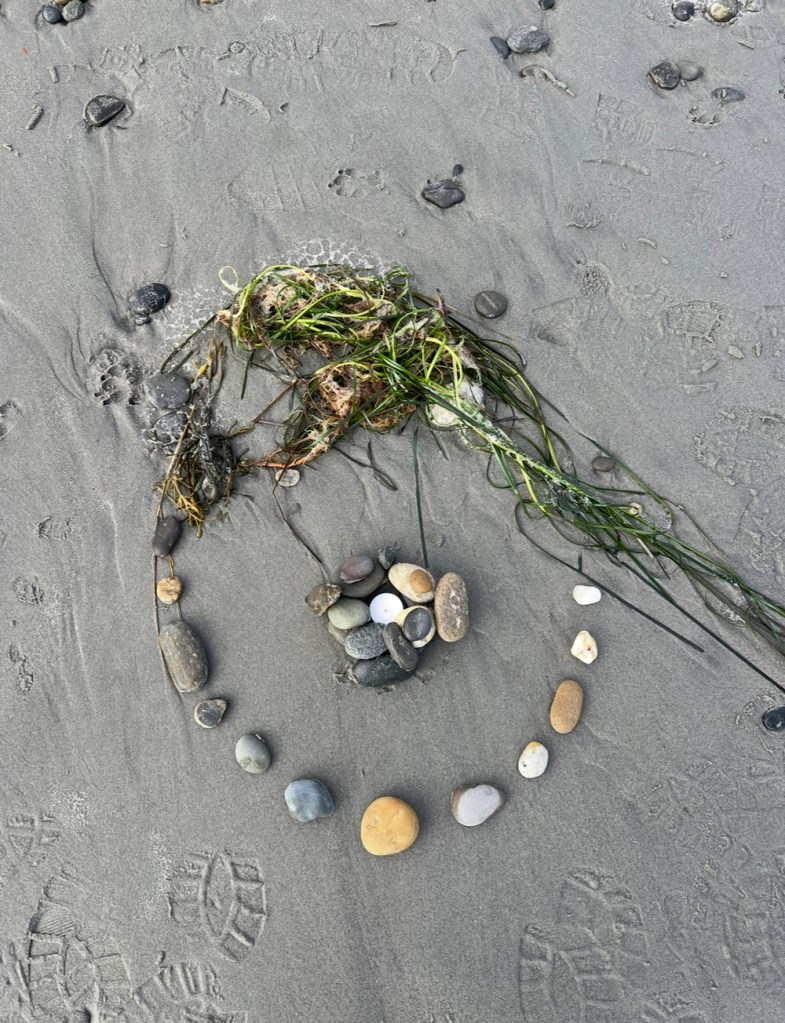
Amie’s ocean ritual for the people of Palestine.
We arrive to the conversation as scholar practitioners, feminists, and co-facilitators of Witch Workshops. Amie is a European-descendant woman of Irish and Scottish ancestry whose work lives at the intersections of decolonizing human-water relationships, spiritual ecology, and healing-centered education. Freia is a European-descendant woman of Norwegian, Irish, and Sámi ancestry whose work seeks to heal colonial ruptures around Indigenous and matrilineal ways of knowing and being through ritual, art, and storytelling. We share these personal details as a way of sharing the standpoints that inform our views, which will of course be different from others. Hopefully our small offering can spark a conversation and ignite more witches into considering themselves spiritual activists, or vice versa.
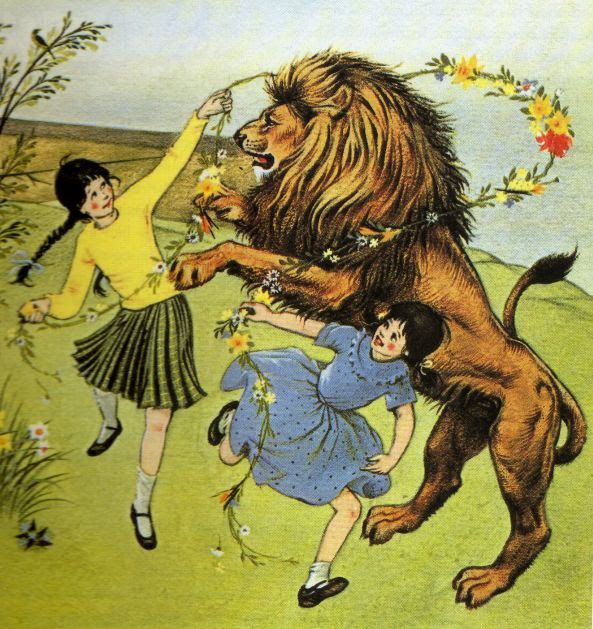
Lewis, C. S. The Lion, the Witch and the Wardrobe. Illustrated by Pauline Baynes, 1950
In the landscape of mid-twentieth-century children’s literature, C.S. Lewis’s The Chronicles of Narnia initially appears remarkably progressive. Long before modern fantasy embraced the trope of the fiercely independent heroine, Lewis gives us the Pevensie sisters, Jill Pole, Aravis, and Polly Plummer. These are active, clear-eyed adventurers. Lucy is the spiritual compass of the entire saga, possessing a theological clarity that routinely eludes her brothers. Jill braves subterranean terrors to rescue a captive prince, while Aravis flees an arranged marriage with the sharp wit of a seasoned survivalist. In Narnia, childhood is a meritocracy of spirit, and Lewis grants his young girls immense pluck, agency, and divine grace.
However, from a feminist and theological perspective, this grace comes with a strict expiration date, and a jarring ideological fracture occurs the moment a female character crosses the threshold into adult womanhood. I find that although Lewis champions the plucky girl, he displays narrative anxiety toward the grown woman. Could it be that in the Narnian universe, female maturity is treated as a spiritual fall from grace, an intersection where Christian purity is compromised by adult desire and bodily autonomy?