Telling the Truth By Ellen Blue

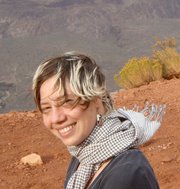
Ellen Blue, Ph.D., is the author of St. Mark’s and the Social Gospel: Methodist Women and Civil Rights in New Orleans, a story of white Southern women who worked for racial understanding in the early 20th century.  She teaches at Phillips Theological Seminary. 

In And the Gates Opened, a film about the first US women rabbis, one commented that women’s presence in the rabbinate has allowed questions to be raised that went unspoken before. One example was how miscarriage should be ritually observed. A colleague told her he had been in the rabbinate for many years, and no one had ever asked him that question.  She responded that although she had been a rabbi only a few years, she had already been asked several times. The presence of women makes space for the speaking of certain “unspeakable” things and questioning what God might have to do with them, precisely because it is women to whom such things happen.

Women willing to speak openly in other public forums also matter. When Betty Ford died, many voiced gratitude for her helping to dismantle the cultural norm that “nice” women didn’t talk about breast cancer or addiction.     Continue reading “Telling the Truth By Ellen Blue”

The Real “Affirmative Action”: Musings on Race, Class, and Gender in the Religious Academy By Egon Cohen

Egon Cohen is completing a Master of Theological Studies at Brite Divinity School in Fort Worth, Texas. His research focuses on gender, sexuality, ethics, hermeneutics, and the intersection of liturgical praxis, politics, and BDSM. Egon likes riding motorcycles and eating Haribo gummibears. He is secretly still 10.

According to the Association of Theological Schools, about 1,100 students enroll in Ph.D. programs at divinity schools and seminaries in theU.S.each year. And hundreds more enroll in graduate religion departments at public and secular universities. However, job postings on theAmericanAcademyof Religion, Society of Biblical Literature, and Chronicle of Higher Education websites suggest that in any given year there are only around 200 tenure track openings in the field. Needless to say, those of us who are pursuing academic careers in religious studies/theology are a bit nervous (and if we aren’t nervous, we should be).

So, when we’re not discussing all the fun God stuff, grad students in theology often spend our time talking about our (lack of) job prospects. And there’s a common refrain that almost invariably surfaces. My friend, Mr. X, put it rather eloquently the other day: “My dad told me that I need to work extra hard—after all, I’m a white male trying to get a job in theology.”  Continue reading “The Real “Affirmative Action”: Musings on Race, Class, and Gender in the Religious Academy By Egon Cohen”

The Intersection of Care Theory and Public Policy By Christopher Carter

This post is written in conjunction with the Feminist Ethics Course Dialogue project sponsored by Claremont School of Theology in the Claremont Lincoln University Consortium,  Claremont Graduate University, and directed by Grace Yia-Hei Kao.

Christopher Carter is a Ph.D. student in Religion, Ethics, and Society at Claremont Lincoln University, and the Senior Pastor at Compton First United Methodist Church. His interests include Ecotheology, Critical Race Theory, and Christian Social Ethics.

“George Bush doesn’t care about black people!” Music artist Kanye West made these scathing remarks during the NBC telethon “A Concert for Hurricane Relief.” West’s anger toward George W. Bush was the result of the frustration that many people had regarding the lackluster federal response to Hurricane Katrina. Five days after Katrina West was asked to lend his star power to the relief effort. In those five days West, like many of us, watched the news broadcasts incessantly hoping to hear something positive; believing that our country – the United States of America – would not abandon any citizen in their time of greatest need. With the help of news broadcasts that portrayed the displaced African Americans of New Orleans as scavengers at best and criminals at worst, whatever hope the African American community had in our government had faded away.  Thus we arrive at West’s assertion that “George Bush [i.e. the government] doesn’t care about black people.” As much as I agreed with this statement at the time it was made, reevaluating it in light of Nel Noddings seminal work Caring: A Feminine Approach to Ethics and Moral Education (1984) has caused me to reverse my opinion. Indeed, George W. Bush through the actions of the Federal Emergency Management Association (FEMA) showed the world that he did care about black people. Continue reading “The Intersection of Care Theory and Public Policy By Christopher Carter”

RESTORE THE REVENUE STREAMS! By Charlene Spretnak

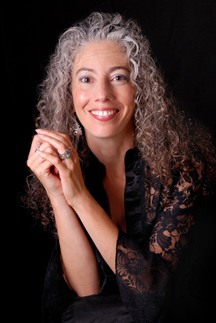
Charlene Spretnak is one of the Founding Mothers of the Women’s Spirituality movement. She is the author of eight books, including most recently Relational Reality. She is a professor in the Women’s Spirituality graduate program in the Philosophy and Religion Department at the California Institute of Integral Studies. For further information about her books, see www.CharleneSpretnak.com. 

In the 1990s a broad coalition of Christian organizations and development NGOs mounted a successful international campaign known as Jubilee 2000, which pushed for a just resolution to a moral issue: the crushing interest payments on “Third World” development loans that had been forced on those countries in ways that had enriched the Northern banks and drained the South for decades. The campaign resulted in the Heavily Indebted Poor Countries (HIPC) initiative, which provides systematic debt relief for the poorest countries as well as new safeguards to assure that aid money is actually spent on the alleviation of poverty, and also the Multilateral Debt Relief Initiative (MDRI), which offers 100% cancellation of multilateral debts owed by HIPC countries to the World Bank, IMF, and African Development Bank. Continue reading “RESTORE THE REVENUE STREAMS! By Charlene Spretnak”

In the Beginning was . . . The Mother By Carol Flinders

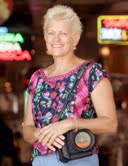
The following is a guest post written by Carol Flinders, Ph.D.  Carol received her Ph.D. in Comparative Literature from the University of California at Berkeley and has authored multiple books including Enduring Grace: Living Portraits of Seven Women MysticsAt the Root of This Longing: Reconciling a Spiritual Hunger and a Feminist Thirst;  Rebalancing the World; and Enduring Lives. She has taught at UC, Berkeley, and at the Graduate Theological Union in Berkeley and gives workshops and lectures nationally and internationally. Carol is a Fellow of the Spirituality and Health Institute, Santa Clara University and is currently adjunct faculty at the Sophia Center in Culture and Spirituality, Holy Names University, Oakland, CA.

The word matrix  comes, of course, from the Latin root mater. Its literal meaning is “womb,” but it can also refer to the fine-grained portion of aggregate rock, the “glue” that holds the rest together.

It was probably this latter sense of the word that a resident of Littleton, Colorado, had in mind when she was interviewed after the Columbine shootings in 1999 and spoke about “the stunning erosion of our social matrix.”

When we get it right, she seemed to be saying, in the family, or community, or nation, an invisible container or force field comes into being that keeps everyone safe.  Something like this was implicit in the definition of matriarchy Peggy Sanday offered here a few weeks ago: “A balanced social system in which both sexes play key roles founded on maternal social principles.”  Continue reading “In the Beginning was . . . The Mother By Carol Flinders”

Reflecting on the Construction of Race as our National Identity Shifts By Helene Slessarev-Jamir

The following is a guest post written by Helen Slessarev-Jamir, Ph.D., Mildred M. Hutchinson Professor of Urban Studies at Claremont School of Theology.  Her research focuses on the character of religiously inspired justice work in response to globalization and American empire.  Helene is a member of the Board of Directors and writes for Sojourners; she has authored multiple articles and books including most recently published Prophetic Activism: Progressive Religious Justice Movements in Contemporary America.

Today my son Stephan celebrates his 31st birthday. In the year Stephan was born he was one of very few bi-racial children in the U.S. I personally knew of no one else who had a bi-racial child. His father and I agreed that given the racial realities of the U.S. in 1980, he needed to be raised as an African-American because that was how he would be perceived. We consciously constructed Stephan’s identity as black.

We lived on the Southside of Chicago in an all-black neighborhood. Yet, when he was ready to enter elementary school, I was advised to register him as “white” so that he would have a better chance of being admitted into the local public magnet school. Having resisted any significant plans to desegregate its public schools, the Chicago Board of Education used racial diversity as one of the main criteria for admission into their magnet schools. As a result, Stephan became one of the “white” children in his 1st grade classroom even though all the faces in his school photo were varying shades of brown. Continue reading “Reflecting on the Construction of Race as our National Identity Shifts By Helene Slessarev-Jamir”

The Scars Were Not Me: Gilligan and Self-Care By Drew Baker

This post is written in conjunction with the Feminist Ethics Course Dialogue project sponsored by Claremont School of Theology in the Claremont Lincoln University Consortium,  Claremont Graduate University, and directed by Grace Yia-Hei Kao.

Drew Baker is a feminist Buddhist-Christian PhD student in Religion, Ethics and Society at Claremont School of Theology. His work engages the interconnections between trauma theory, religious ethics and ghost narratives.

[DISCLAIMER: Sexual violence is contained in the post below]

When I was a freshman in college, I drastically misread Carol Gilligan’s In a Different Voice. I read her book then, and (wrongly) saw a mirror of my own ideals. Selfless care above all else. I see a more complicated and beautiful portrait in her book today. Something changed.

I was raised Buddhist. Like many Buddhists, I learned about the doctrine of no-self and the moral value of compassion. I came to wed the concepts in my mind. Selfless care. There were no virtues in the world beyond the mantra: ‘love others no matter the cost to the self.’

Kenosis can be quite pragmatically valuable to cultivate as a spiritual discipline for those with power. As a white straight man, honestly, there were few instances in my life growing up that should have called this personal virtue into question. Continue reading “The Scars Were Not Me: Gilligan and Self-Care By Drew Baker”

Mary’s Feast Rooted in Lesbian Goddesses Diana and Artemis By Kittredge Cherry

Kittredge Cherry

The following is a guest post written by Rev. Kittredge Cherry, lesbian Christian author and art historian who blogs about LGBT spirituality and the arts at the Jesus in Love Blog.  Her books include “Equal Rites” and “Art That Dares: Gay Jesus, Woman Christ, and More“.

August 15 was once the festival of the lesbian goddess Diana (Artemis), but it has been adapted into a feast day for the Virgin Mary.

Midsummer feasts have celebrated the divine feminine on this date since before the time of Christ.  Now devoted to Mary, August 15 carries the torch of lesbian spiritual power to a new generation.

Saint Mary, mother of Jesus, is honored by churches today in a major feast day marking her death and entrance into heaven.  Catholic and Orthodox churches call it the Feast of the Assumption or Dormition, when Mary was assumed into heaven, body and soul.

The Virgin Mary’s holiday was adapted — some would say appropriated — from an ancient Roman festival for Diana, the virgin goddess of the moon and the hunt.  Diana, or Artemis in Greek, is sometimes called a lesbian goddess because of her love for woman and her vow never to marry a man.  The ancient Roman Festival of Torches (Nemoralia) was held from Aug. 13-15 as Diana’s chief festival. Continue reading “Mary’s Feast Rooted in Lesbian Goddesses Diana and Artemis By Kittredge Cherry”

M’rahemet Shel Olam: The Emwomber of the Universe By Theresa Yugar

The following is a guest post written by Theresa A. Yugar, Ph.D. Candidate in women studies in religion at Claremont Graduate University.

This poem was written modeled on a Hebrew understanding of the world and God. In contrast to an Occidental or Western understanding of God, which elevates the noun of a sentence, a Semitic understanding of God highlights the “verb” of a sentence. In this way, God is a more active presence in the creation of a more just world.

M’rahemet  Shel Olam: The Emwomber of the Universe

In the beginning the primal womb gave birth to all living creatures . . .

She gave birth to us . . . her daughters and her sons.

She is the great mother. Continue reading “M’rahemet Shel Olam: The Emwomber of the Universe By Theresa Yugar”

Artemisia Gentileschi: Baroque artist and rape survivor painted strong Biblical women, By Kittredge Cherry

Kittredge Cherry

The following is a guest post written by Rev. Kittredge Cherry, lesbian Christian author and art historian who blogs about LGBT spirituality and the arts at the Jesus in Love Blog.  Her books include “Equal Rites” and “Art That Dares: Gay Jesus, Woman Christ, and More“.

Originally posted at Jesus in Love.

Baroque artist Artemisia Gentileschi inspires many with her paintings of strong Biblical women — created despite the discrimination and sexual violence that she faced as a woman in 17th-century Italy.

Gentileschi (1593–1652) was successful in her own day, but was mostly written out of art history until the 1970s, when feminist scholars rediscovered her work. Now she is celebrated in many books, films and plays, and her work is widely reproduced. Her greatest paintings include “Judith Beheading Holofernes” and “Susanna and the Elders.”

Many women and queer people can relate to her battles against prejudice and sexual violence, documented in her rape trial in 1612. She could be considered the patron saint of women artists.

"Judith and Her Maidservant" by Artemisia Gentileschi

Although Gentileschi was apparently heterosexual, lesbians have drawn energy from her life and art.

Lesbians who have created tributes to Gentileschi include painter Becki Jayne Harrelson and playwright Carolyn Gage. In the play “Artemisia and Hildegard,” Gage has two of history’s great women artists debate their contrasting survival strategies: Gentileschi battled to achieve in the male-dominated art world while Hildegard of Bingen found support for her art in the women-only community of a medieval German nunnery.

The daughter of a painter, Gentileschi was born in Rome and trained as a painter in her father’s workshop there. She was refused admission to the art academy because she was a woman, so her father arranged for her to have a private painting teacher — who raped her when she was about 19. Gentileschi herself was tortured by thumbscrews during the seven-month rape trial, but she stuck to her testimony. The teacher was convicted, but received a suspended sentence. Continue reading “Artemisia Gentileschi: Baroque artist and rape survivor painted strong Biblical women, By Kittredge Cherry”