Birthing God at the Edges of Life, Death, and Beyond: Reflections on Mary, Motherhood, and Kali Part III By Tracy Sayuki Tiemeier

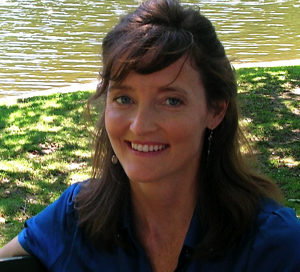
Tracy Sayuki Tiemeier, Ph.D., is Assistant Professor of Theological Studies at Loyola Marymount University in Los Angeles, CA. She teaches and researches in the areas of women and religion, interreligious dialogue, comparative theology, Asian and Asian American theology, and Hindu-Christian studies. Tracy also co-chairs the Los Angeles Hindu-Catholic Dialogue.

When I began my studies of Hinduism, I marveled in a dizzying array of gods and goddesses. While non-Hindus assume that Hinduism is polytheistic because of the multitude of gods and goddesses, the reality is far more interesting and complex. Hinduism really isn’t one religion, but a cluster of them. For some, there is one personal, divine God or Goddess, and all other gods and goddesses are either different forms of the ultimate divine or are lower, created beings (like angels). For others, there is one divine reality, but it isn’t a personal God or Goddess. For them, the different deities illustrate or symbolize different aspects of the divine, but are not themselves the one Ultimate Reality. What all Hindus recognize, however, is that there is one Ultimate, Divine Reality and that that divinity pervades all things. But that divine Oneness is so profound, so deep, so real, that no one image can capture the divine essence. Thus, even as Hindus are more monotheists than polytheists, they resolutely celebrate the multiplicity that inevitably comes when finite humans imagine the infinite divine. Continue reading “Birthing God at the Edges of Life, Death, and Beyond: Reflections on Mary, Motherhood, and Kali Part III By Tracy Sayuki Tiemeier”

Birthing God at the Edges of Life, Death, and Beyond: Reflections on Mary, Motherhood, and Kali Part II By Tracy Sayuki Tiemeier

Tracy Sayuki Tiemeier, Ph.D., is Assistant Professor of Theological Studies at Loyola Marymount University in Los Angeles, CA. She teaches and researches in the areas of women and religion, interreligious dialogue, comparative theology, Asian and Asian American theology, and Hindu-Christian studies. Tracy also co-chairs the Los Angeles Hindu-Catholic Dialogue.

Mary, her purity, and her role as Virgin Mother have become the primary language for talking about women and women’s place in the Church. The late Pope John Paul II held up Mary, both virgin and mother, as the perfect model for women. For the Pope, women’s sexuality and spirituality are united in a vision of woman’s personhood as that of nurturing self-gift. The calling of physical and spiritual motherhood is connected to women’s more receptive and nurturing nature. Men lead the Church, as Christ did, while women receive Christ and others in their homes and in the world, as Mary did. Mary’s receptive openness to God is manifest from the beginning in her consent to Jesus’ conception. Such receptivity is both biologically natural and spiritually essential. Mary as Virgin Mother shows both women and men the value and depth of the receptive, self-giving reality of womanhood. Continue reading “Birthing God at the Edges of Life, Death, and Beyond: Reflections on Mary, Motherhood, and Kali Part II By Tracy Sayuki Tiemeier”

Birthing God at the Edges of Life, Death, and Beyond: Reflections on Mary, Motherhood, and Kali Part I By Tracy Sayuki Tiemeier

Tracy Sayuki Tiemeier, Ph.D., is Assistant Professor of Theological Studies at Loyola Marymount University in Los Angeles, CA. She teaches and researches in the areas of women and religion, interreligious dialogue, comparative theology, Asian and Asian American theology, and Hindu-Christian studies. Tracy also co-chairs the Los Angeles Hindu-Catholic Dialogue.

I grew up in St. Louis, MO, in the decades following Vatican II. My parish, like many at the time, was an odd mash-up of old and new. Contemporary praise music co-existed with smells and bells, informal homilies by hip priests with solemn novenas. It was an exciting time to grow up Catholic. I was on fire for God, but the opportunities for ministry as a little girl were limited. Boys were taught to follow Christ and were groomed to be priests. They got to skip class to receive training as altar boys. We all knew that boys were special. Girls were taught to be like Mary.  While shut out of most ministries at the church, we were essential for the yearly May crowning. Every year, I prayed I would be chosen to crown Mary. I was never chosen; but I nevertheless became incredibly devoted to Mary, talking with her often and leaving little gifts outside my door for her to take to heaven. My favorite game was to pretend to be Mary.  Continue reading “Birthing God at the Edges of Life, Death, and Beyond: Reflections on Mary, Motherhood, and Kali Part I By Tracy Sayuki Tiemeier”

When the Bough Breaks, the Cradle will Fall: Ecofeminism and the Problem of Population Density By Ben Siegel

This  post is written in conjunction with the Feminist Ethics Course Dialogue project sponsored by Claremont School of Theology in the Claremont Lincoln University Consortium,  Claremont Graduate University, and directed by Grace Yia-Hei Kao.

Ben Siegel is a 2nd year graduate student at the Claremont School of Theology, working on his M.A. in Religion, Hebrew Bible and Ancient Near Eastern Studies. He is a loud-mouthed native New Yorker, a Jewish atheist, a passionate feminist, an unapologetic tree-hugger, a raging comic book nerd and long-time lover of punk rock music.

According to the U.S. Census Bureau’s World Population Clock,* the earth sustains the lives of approximately 6,976,289,710 human beings and counting. Unfortunately, the carrying capacity of our planet is anything but unlimited. Unmanaged population growth will demand, among other things, encroachment into more hitherto unindustrialized regions, meaning further despeciation and environmental degradation. A globalized capitalist economy, seemingly undaunted by such paltry concerns as labor laws and emissions standards – with its preference for monocultural farming techniques and yields – threatens to eliminate biodiversity in the pursuit of a broader profit margin. This begs the question: are we demanding too much of Mother Earth?  Continue reading “When the Bough Breaks, the Cradle will Fall: Ecofeminism and the Problem of Population Density By Ben Siegel”

Engaging Twilight By Lisa Galek

The following is a guest post by Lisa Galek, a professional writer and editor who earned her master’s degree Religious Studies from John Carroll University. In her spare time, she loves to read and write young adult fiction. She is currently hard at work on several novels, none of which involve vampires.

It would be easy to write a post bashing Twilight. As we await the release of Breaking Dawn: Part 1, the penultimate chapter in the Twilight movie saga, countless feminist critics, reviewers, and bloggers have weighed in the troubling messages in the series. The books are poorly-written.  They reinforce antiquated, patriarchal gender norms.  They have a not-so-thinly-veiled abstinence message.

I read all four books over the course of a week and I can tell you, every single one of these criticisms is dead on. I can also tell you
that, upon finishing the last book in the series, Breaking Dawn, I stumbled dizzily into my local bookstore, my head spinning with thoughts of sexy, sparkly vampires, and breathlessly asked the clerk, “Do you have anything else like Twilight?” Continue reading “Engaging Twilight By Lisa Galek”

Does My Faith Have Gender? By Brooke Nelson

The following is a guest post by Brooke Nelson, a  Ph.D student in Religion at Claremont Graduate University. She is interested in themes of feminine agency, authority, and textual representation in early Church texts, and how these themes intersect with the contemporary need to create a canon of legitimate examples. Her current research project is focusing on the ways that women were represented as taking control of their lives, their deaths, and their salvation through feminine martyr narratives.

For many people, the academic study of religion may provide an opportunity to pursue (or find) a theology in which women play a major role. I, however, hit the books for a very different reason. I grew up in a “Christmas and Easter” Catholic family that subscribed to the larger sense of the faith without worrying too much about the details. I went to Catholic schools, learned my catechism, memorized the ways to spot a heretic, and associated predominantly with my Roman Catholic schoolmates. I never, however, boldly flew the Papist flag. I often failed to identify with the larger Catholic community because I took a rather free, grab bag approach to the Latin Church, taking what I wanted and leaving behind the strictures that I thought were too backwards to apply to modern life. Continue reading “Does My Faith Have Gender? By Brooke Nelson”

KARAI KASANG: Rebirthing the Non-Patriarchal Image of God in Kachin Culture by Zau Sam

This  post is written in conjunction with the Feminist Ethics Course Dialogue project sponsored by Claremont School of Theology in the Claremont Lincoln University Consortium,  Claremont Graduate University, and directed by Grace Yia-Hei Kao.

Zau Sam is a first year MA student in Feminist Studies with interests in process theology, ecotheology, feminist and ecofeminist theologies.  He is ethnically Kachin (Jinghpaw) and from Myanmar (Burma). Zau is a minister at Yangon Kachin Baptist Church (in Myanmar) and Academic Dean of the Church-based Bible School there.  

Throughout our Feminist Ethics class, I have been thinking about Mary Daly’s concept of “Goddess” in her Gyn/Ecology: The Metaethics of Radical Feminism.  I don’t believe that there is any sound theological argument that the term “God” itself represents patriarchy. Theologically speaking, if we study the Bible systematically, particularly Genesis 1:27, it is unquestionable that God is associated with both feminine and masculine imagery.  God is imaged as both mother and father. In contrast to this nature, Mary Daly does not merely seek to erase masculine imagery from the term “God,” but the word “God” itself.  However, “Goddess” without the masculine imagery can no longer be the Perfect Goddess, just as “God” without the image of the feminine also remains imperfect.

Continue reading “KARAI KASANG: Rebirthing the Non-Patriarchal Image of God in Kachin Culture by Zau Sam”

Can the Students at Penn State Read? Did They Read What I Read? By Paula McGee

The following is a guest post written by Paula McGee, dynamic preacher, writer, and inspirational speaker.  She earned a Master of Divinity from the Interdenominational Theological Center and a Master of Arts in Religion from Vanderbilt University. She is currently a Ph.D. candidate in Women’s Studies in Religion at Claremont Graduate University.  Her personal mission is “to inspire others to recognize, accept, and fulfill their call to greatness.”

“As the graduate assistant put the sneakers in his locker, he looked into the shower. He saw a naked boy, Victim 2, whose age he estimated to be ten years old, with his hands against the wall, being subjected to anal intercourse by a naked Sandusky.”

Can the students at Penn State read? I saw thousands of students rioting in the streets after the Board of Trustees announced the termination of football coaching legend Joe Paterno and President Graham Spanier. I wondered if the students had read page 6 of the 23 page Grand Jury report. The report provides detailed information on 8 victims. So I can’t imagine any student that would question the university’s decision to fire Joe Paterno, if they had read any portion of the report from the Grand Jury’s investigation. The details on page six have caused the most controversy. In 2002, a 28 year old graduate assistant walks in on Jerry Sandusky raping a ten year old boy. Sandusky is now telling people that he only showered with boys.  Continue reading “Can the Students at Penn State Read? Did They Read What I Read? By Paula McGee”

Feminist Awakening By Peggy Ventris

This  post is written in conjunction with the Feminist Ethics Course Dialogue project sponsored by Claremont School of Theology in the Claremont Lincoln University Consortium,  Claremont Graduate University, and directed by Grace Yia-Hei Kao.

Besides being a Feminist Ethics student, Peggy is a Physical Therapy Assistant specializing in Barnes technique myofascial release; Deacon (soon to be priest) in charge under special circumstances at St. Martin-in-the-Fields Episcopal Church, Twentynine Palms; a fourth year joint M. Div. student at ETSC/CST; a multi-moved(while her husband was off flying) military wife 20 of 43  married years; privileged oldest of four daughters of medical professionals; 21-year grateful member of Al-Anon; mother and grandmother; budding feminist;  all in no particular order of importance.

It’s never too late to be something new like a budding feminist. It doesn’t take rocket science to learn that the system oppresses its members, but it does take a clear-eyed look at privilege. “The man” keeping folks down isn’t just an excuse for school or job dropout; it may be a colloquial naming of patriarchal society.  Solidarity is action to name oppression and take steps to push back against injustice. I learned all this in grad school since the big 60th and find in it the best hope for survival of our world. Continue reading “Feminist Awakening By Peggy Ventris”

LGBT Saints: Feminism Leads to a Queer Theology of Sainthood By Kittredge Cherry

Kittredge Cherry

The following is a guest post written by Rev. Kittredge Cherry, lesbian Christian author and art historian who blogs about LGBT spirituality and the arts at the Jesus in Love Blog.  Her books include “Equal Rites” and “Art That Dares: Gay Jesus, Woman Christ, and More“.

Feminists have criticized saints as top-down tools of the dominant morality, but as a lesbian Christian I find that sometimes the opposite is true.  The desire for saints rises from the grassroots, and LGBT saints can shake up the status quo.  Feminist theology is helping me in a quest for new models of sainthood that lead to LGBT and queer saints.  The LGBT saints attract people with the quality of their love.  They show us not only THEIR place in history, but also OUR place — because we are all saints who are meant to embody love. Continue reading “LGBT Saints: Feminism Leads to a Queer Theology of Sainthood By Kittredge Cherry”