


It is overcast and a few drops of rain are falling. I have been out talking to Tree Bear (TB), a yearling who has brightened my life in these dark soul days. Tree Bear comes up the mossy pine strewn path to the clearing and peeks at me from behind his white pine intermittently as he snacks.
There are so many old felled trees full of tasty grubs and ants now that the spring grasses have matured and gone by; soon the berries will ripen and Tree Bear will begin to put on weight. Acorns will be the choice of food for fall. Few people know that Black Bears are 93 percent vegetarian.
The other night I watched TB in the cherry tree, sitting in the branches like a monkey calmly combing out his thick under fur as he munched on cherry leaves and hard green cherries. He is a healthy looking and very beautiful yearling with brown eyebrows and a bump in his nose that is only visible from some angles. He probably weighs 50 – 60 lbs and has some brownish fur in places.

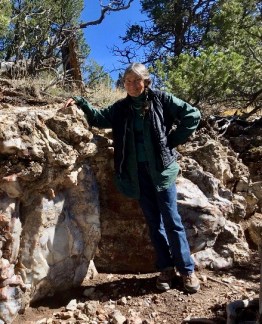 I was writing an article when a sharp crack slammed through the house. I jumped out of bed to identify the frightening sound and found nothing. It wasn’t until I was in the bathroom that I saw that the floor had separated from its molding. Frightened out of my wits I crawled into my cellar to discover a supporting beam had collapsed. Others would follow. I was leaving for New Mexico in a week.
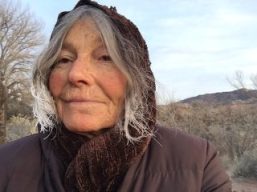 Returning home to Maine in April has allowed me to experience winter turning her ancient wisdom filled face towards the maiden of spring. Although the month has been chilly, and until two days ago snow covered tree stripped mountains still held a dusting of snow, all nature is celebrating renewal.
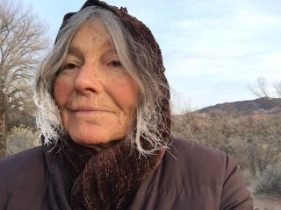 I recently returned to Maine after what can only be called a harrowing journey from the Southwest. Grateful to feel beloved earth under my feet, I walk along the pine strewn woodland paths to keep myself sane. My animals have been ill, my neighbor was hospitalized briefly, other neighbors deliberately destroyed my garden wall crushing a baby balsam, and used this property as their personal ski slope, the threat of the C/virus looms – there are no words to describe this kind of exhaustion. As a PTSD survivor all my senses are on permanent scream. The simplest task has become monumental. And I am only one of so many…
 I awakened this morning to frozen raindrops hanging from trees – jeweled beads, snow capped hills, and a cacophony of spring songs – I was serenaded by robins, chickadees, phoebes, goldfinches, and nuthatch tweets as I walked out the door into the early morning sun. I listened for the cardinals, who for the moment were absent. It was cold! 28 degrees at the end of April speaks to anomalies, or more realistically, Climate Change.
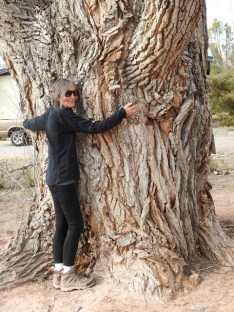 A couple of days ago after an exhausting day of chores I lay out in the sun in my snow pants against the tree I call the “Mother Pine” because she shelters so many creatures from birds to bears. It was late afternoon and the sun was sparkling like a cracked diamond through a myriad of branches over my head. I closed my eyes and listened to an evergreen symphony. The songs produced by pines and other conifers as needles sway and touch soothed me. How much I loved the sound of light winds slipping through the trees.
 Canadian Geese have been on my mind a lot lately. This past winter I have missed the skeins of geese that fly back and forth up and down the river appearing every single morning like clockwork. In Abiquiu when winter turned to spring I noted that the geese were behaving in much the same way the Sandhill cranes did before they migrated, splitting into pairs or groups of three and flying erratically. I was puzzled. I didn’t recall witnessing such behavior before this year. I wondered about migration patterns. Were the geese shifting their flight patterns too? Or perhaps the small groups I saw were staying year round? Some days it almost seemed as if these water birds were confused by something.
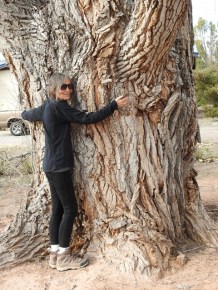 Full Seed Moon 3/9/20
 I have been writing and celebrating ritual for half of my life. The equinoxes and solstices and the cross quarter days (May 1, August 1, All Hallows, and February 2) comprise the eight spokes of the year. What I have learned from my research is that virtually every Indigenous culture follows this calendar in a general way – What I have gleaned from personal experience is that during these ritual periods my body is opened to the Powers of Nature in very specific ways that can be positive or/and negative.
 Feminism and Religion