(((Israel))) by Ivy Helman

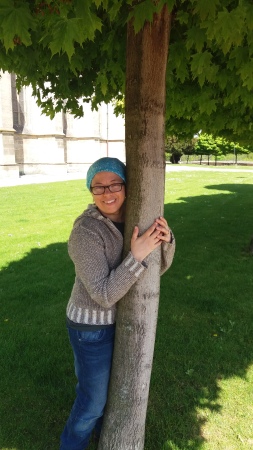
me hugging treeThe BBC just ran a story about white supremacist and neo-Nazi groups targeting Jews by signaling each other to their presence on various social media sites through the use of (((this symbol))).  Of course, this is all based on the assumption that a “typically” Jewish last name signifies the bearer is also Jewish.  Through a Google app (since removed) that could recognize patterns such as ((())), these Jewish people began to receive anti-Semitic comments.  There has been a general outcry of disgust among Jews and other minority groups as to the problematic targeting of Jews in this fashion.

The same cannot be said about the BDS movement and people’s willingness to call it out for what it is.  This to me is hypocritical!  According to its website, the BDS movement, or Boycott, Divestment and Sanctions, seeks to end what it understands to be the colonialism, apartheid and oppression of Palestinians in Israel through various financial, commercial and international means.  It accuses Israel of human rights violations, genocide, ethnic cleansing and other war crimes as well as illegal occupation (of the Palestinian lands, not just the occupied territories). Continue reading “(((Israel))) by Ivy Helman”

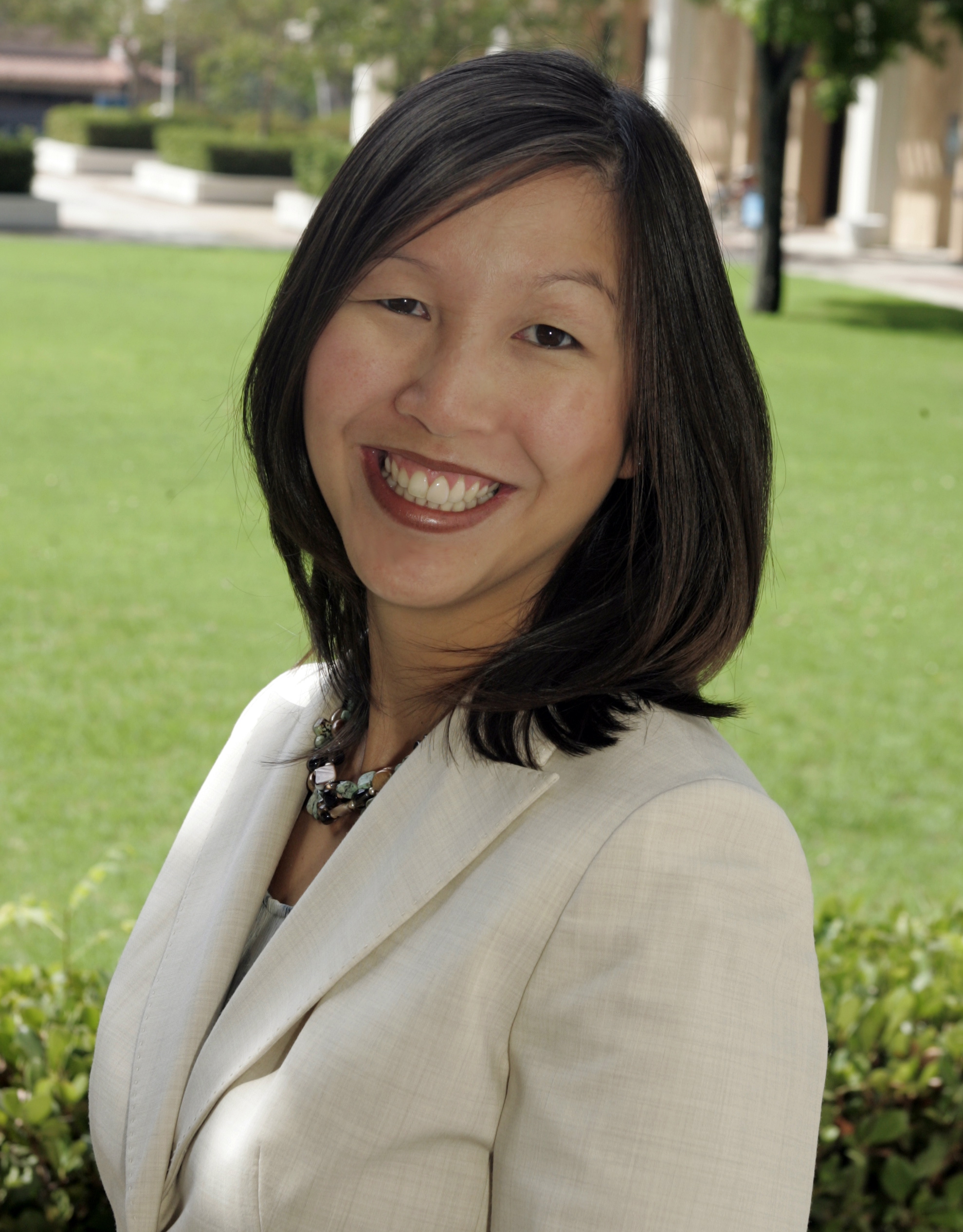
Tipping Points in Academe By Grace Yia-Hei Kao

I’ve been thinking a lot about tipping points of late.

According to Malcolm Gladwell’s debut book, The Tipping Point: How Little Things Can Make a Big Difference (2000), a tipping point is “the moment of critical mass, the threshold, the boiling point” when an “idea, trend, or social behavior crosses a threshold, tips, and spreads like wildfire.”

Continue reading “Tipping Points in Academe By Grace Yia-Hei Kao”

A Short Lesson in Subjugated Knowledges

“We” can give many answers for how to colonize someone; but for many of us, it often takes special training, years of education, reconstructive projects, task forces, books upon book of reading, listening through the loud and ever present static of dominant culture, constant vigilance, one’s own liberation, the liberation of others, etc. to learn how to think otherwise.

Sara FrykenbergIn her Presidential Address at the national meeting of the American Academy of Religion in 2011, Dr. Kwok Pui-lan outlined a history of Religious Studies and its relationship to colonial projects, challenging the membership to apply post-colonial theory and analysis to our scholarship and teaching, think with and relate to our global colleagues, and start asking questions about what studying religion does for us, “rethink[ing], reimagin[ing] and recreat[ing] our discipline.”[1] Responding to this call, I have been slowly working to include postcolonial discourse in each of my classes, lower division, upper division, graduate and undergraduate.

Continue reading “A Short Lesson in Subjugated Knowledges”

STEM and Sexism: Pedagogical Responses to “Chilly Climates” by Sara Frykenberg

Another way to put this: there is nothing inherently competitive about the study of mathematics. The classroom is competitive in order to create a particular kind of graduate—one who engages in a particular [dominant] culture. Liberative pedagogy challenges the ways that classrooms are run in order to challenge the dominant culture.

Sara FrykenbergRecently, a friend of mine sent me a journal article entitled, “Are STEM Syllabi Gendered? A Feminist Critical Discourse Analysis,” and a response to the research from a rather conservative publication, the National Review: “Female Researcher: We Must Make STEM Courses ‘Less Competitive’ to be more ‘Inclusive’ of Women.” Not a feminist or feminist scholar himself, his question to me was whether or not the author of the original research article, Laura Parson, was sexist and/or racist for suggesting that course syllabi needed to be, or rather sound, less “difficult,” less competitive, etc.

For those of you who don’t know, STEM educations refers to education in Science, Technology, Engineering and Mathematics; and within the United States, women are significantly underrepresented within these fields. I share these articles and my friend’s question in this blog because I believe there is a common misconception that feminist and other liberative educators are arguing that we need to make courses “easier” or “less intimidating” in order to create inclusion. The implication here, that somehow women and/or people of color need an easier course, can be understood as a sexist and racist assertion of inferiority. However, this common critique misses its own investment in kyriarchal codes. Conflating masculinist pedagogical practices with academic rigor, this circular logic redirects the responsibility for inclusion onto the oppressed themselves as though the supposedly “intimidated minority,” is deficient, not the exclusivist language and practices that reinscribe power for particular people and particular ways of being. Continue reading “STEM and Sexism: Pedagogical Responses to “Chilly Climates” by Sara Frykenberg”

Social Transformation in the Urban Context (a.k.a. PANAAWTM 2016) By Grace Yia-Hei Kao

In a few days I’ll be heading to Chicago to attend another conference—PANAAWTM to be exact. PANAAAWTM stands for “Pacific, Asian, and North American Asian Women in Theology and Ministry.”  As I’ve explained in a previous blog, PANAAWTM’s deepest roots can be traced back to two groups of women: Continue reading “Social Transformation in the Urban Context (a.k.a. PANAAWTM 2016) By Grace Yia-Hei Kao”

What Happens when Wonder Woman “Leans In” and Winds up in Traction? by Michele Stopera Freyhauf

FreyhaufThey always say in writing – use a title and the first few sentences to grab attention and the reader will want to see what you have to say. By my title, you have probably ascertained that I have made reference to a couple things:  Wonder Woman, Sheryl Sandberg’s “Lean In,” and traction.  While lately, I have suffered from writer’s block and lack of time to work on my writing, I have also found myself in another place of suffering that has me in traction at least thrice weekly.

It is in that spirit that I reflect on my former status as the infallible wonder woman – the mom of 4, who works full time, teaches, writes, supports her family, is in the middle of writing a dissertation and who started this new year as my year to “Lean In” and really excel in my career  – to the current status of fallible woman, mom of 4 trying to stay afloat in all of her obligations, dealing with difficult sibling and teenage bantering as well as (thanks to a begging daughter spouting promises of responsibility) a Siberian Husky puppy and a resident 10 year-old Boston Terrier who now demonstrates the IMG_3984epitome of love-hate relationships, to prioritizing projects in order to keep everyone happy while I try to heal, attend physical therapy, and manage newfound pain and limitations.

In this post,  I offer my [brief] thoughts about aging and struggles when a body, probably abused through pushing too hard, but also enduring the normal wear and tear of aging, begins to betray you while trying to come to terms with to a new normal of limitation within your own being  –  “adapting” if you will – a skill that I believe women have come to master well.

Throughout life, we all face our shares of limitations and encounters with mortality.  Lately, it seems like I have encountered one thing after another.  However, as these events arise, life must inevitably move on – but, moving on does not mean ignoring what just occurred.  Rather, time needs to be taken to understand and appreciate each of these things – even if things do not go our way. Continue reading “What Happens when Wonder Woman “Leans In” and Winds up in Traction? by Michele Stopera Freyhauf”

“God is Not a Man, God Is Not a White Man” by Carol P. Christ

“The pictures that line the halls speak volumes about the history of racism and sexism and they shape the future in powerful ways.”–Simon Timm

The author of these words recently posted a short video on Youtube entitled “Mirror Mirror on the Wall: The Legacies of Sexism and White Supremacy at Yale Divinity School.”* The video begins with a catchy little ditty with the words, “God is not a man, God is not a white man.” It tracks paintings and photographs of professors and other luminaries in the field of theology on the walls of the Yale Divinity School. By Timm’s count: 99 white males, 6 women, and 3 blacks. The single black woman is counted in both categories.

Continue reading ““God is Not a Man, God Is Not a White Man” by Carol P. Christ”

Fear and Loathing in Discussions of Female Power in the Academy by Carol P. Christ

Carol Molivos by Andrea Sarris 2No matter how carefully developed they are, theories of female power in pre-patriarchal societies are dismissed in academic circles as “romantic fantasies” of a “golden age” based in “emotional longings” with “no basis in fact.” I was reminded of this while reviewing three books about the Goddess last week.

In one of the books, the co-authors, who define themselves as feminists, summarily dismiss theories about the origins of Goddess worship in pre-patriarchal prehistory. In another, the author traces the origin of certain Goddess stories and symbols found in recent folklore back to the beginnings of agriculture. Inexplicably, she stops there, not even mentioning the theory that women invented agriculture. Considering that possibility might have suggested that the symbols and stories the she was investigating were developed by women as part of rituals connected to the agricultural cycle. To ask these questions would have raised a further one: the question of female power in prehistory. And this it seems is a question that cannot be asked. This question was addressed in the third (very scholarly) book, which I fear will simply be ignored. Continue reading “Fear and Loathing in Discussions of Female Power in the Academy by Carol P. Christ”

Four Tips for New Students in Seminary By Grace Yia-Hei Kao

Yesterday, the institution at which I work hosted an Orientation for some 50 new students who will begin their graduate theological education imminently. I was asked to provide an informal talk to a smaller group of them about student success. What follows below are the revised and expanded tips I made for how to get the most out of their degree programs, which may or may not have ready application outside of the seminary context (or graduate school in religion) for which they were designed.

Continue reading “Four Tips for New Students in Seminary By Grace Yia-Hei Kao”

A-mazing Grace by Carol P. Christ

carol p. christ photo michael bakasA few days ago I received a message out of the blue on Facebook:

Thank you for your accepting my friend request. I am fighting to find my way out of depression during a life transition as I move into retirement from my years of work as an educator. I look forward to your book this spring. I have long called myself a Goddess feminist having struggled with patriarchal Christianity since my youth, but have felt abandoned by the Goddess for many years now. I’m not sure how I found you today. I stumbled onto a blog from you on your book while googling something else. Your words gave me a spark of hope. Laurel

In my blog I said that when I began to write A Serpentine Path, I felt abandoned by the Goddess. I wrote back, hoping that sharing what I had learned on my journey would be helpful.

The short answer is that the Goddess has never abandoned any of us. However, She does not have the power to make everything turn out as it could be or should be or we wish it would be. Hers is the power to inspire but not to control. If you have been unhappy, She is with you, She understands your pain, and She will be with you as you seek to find your way. I hope this doesn’t sound too preachy. It is from the heart of my experience. Take care of yourself.

I immediately received an answer back.

Thank you. Those were just the words I needed to hear with my heart. I am “too much in my head,” having spent a life in academia.

This interchange got me thinking about how we import toxic ideas from traditional theologies into what we believe are new religious worldviews. In this case the toxic idea is omnipotence—the idea that the Divine Power is in control of everything. It follows from this that the Divine Power can answer our prayers. If the Divine Power does not answer our prayers, there must be a reason. The reasons we give are many, including: because we are sinful and unworthy or because the ways of God are not our ways. We sometimes conclude, as Laurel and I did: the Divine Power simply does not care about me.

The prominence of magic in Wicca, the most widely known form of contemporary Goddess religion, can contribute to this feeling of abandonment. The Western occult or magical tradition teaches that there are practices, including rituals and spells, through which we can manifest our wills and achieve our deepest desires. In Goddess practice rituals and spells are directed to or through the Goddess. In this situation, it can feel logical to blame the Goddess when, after working very hard and doing every ritual and spell we can think of, our will or desire is not manifested. “Why me,” the child within us asks. “Why has the Goddess abandoned me?”

In the story I tell in A Serpentine Path, I felt precisely that. What I learned was that the Goddess had never abandoned me. She had been with me all along. Where I went astray was in believing that the world could become as I wanted it to be.

The world is made up of a multiplicity of wills, including my will and the will of the Goddess, but also the wills of every other individual, human and other than human, who has lived or is living now. If individuals, human and other than human, have the power to affect the world, then even the Divinity cannot have all the power. This means that Her power (and our power) is the power to influence the world, but not to determine or control it. This is one of the key metaphysical insights of process philosophy, but it is also an existential truth.

The Divine Power is not omnipotent. And neither am I. It may seem odd to put these two statements together. Yet they are mirror images: both ideas deny the reality that a multiplicity of wills have shaped and continue to shape the world we experience. The world really is not at my beck and call. Not even the Goddess gets that.

I would never have said that I believed that the world revolved around me. Stating it so baldly makes it clear how silly idea that idea is. For me “enlightenment” came when I realized—really understood—that the world is not “about me.” Once I gave up having to have what I thought I needed to have, I found, felt, and experienced love and beauty all around me. This truly is a-mazing grace. To feel love and beauty is not to deny suffering. Yet much of our suffering is caused by ideas about how life should be, as Laurel recognized, by living too much in the thoughts of our heads.

Email from Laurel Tangen-Foster, Ph.D.

Carol P. Christ is author or editor of eight books in Women and Religion and is one of the Foremothers of the Women’s Spirituality Movement. She leads the Goddess Pilgrimage to Crete in Spring and Fall. Photo of Carol by Michael Bakas.

A Serpentine Path Cover with snakeskin backgroundA Serpentine Path: Mysteries of the Goddess will be published by Far Press in the spring of 2016. A journey from despair to the joy of life.

Goddess and God in the World: Conversations in Embodied Theology with Judith Plaskow will be published by Fortress Press in June 2016. Exploring the connections of theology and autobiography and alternatives to the transcendent, omnipotent male God.