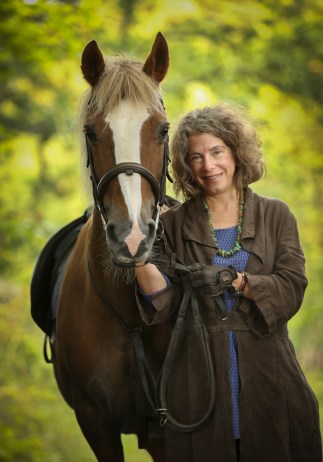
Five years ago, before peer pressure made me reach for the henna.
When I turned forty, my hair started going seriously gray. Fearing that this would make me look “old,” I drank the Koolaid and hopped straight onto the wheel of hair dyeing samsara, getting my hair professionally colored every six to eight weeks. This, alas, proved to be a very expensive and time-consuming obligation. I am not one of those women who views going to the salon as “pampering.” Quite the contrary. I would much rather be writing novels or pampering my pony.
The salon I frequented in those days, which has since gone out of business, had an alarming tendency to play nonstop Miley Cyrus videos. Sitting under a heat lamp with dye on my hair, I was truly a captive audience and could not run away, and the volume was so loud, it was impossible to read or even think. Subjected to such horrors, I could feel my brain cells slowly and painfully dying off, even as my hair was being dyed. I tried changing salons, but they all seemed to have the same loud, annoying soundtrack.
To compound this, my hair grows so fast, the gray roots would be visible two weeks after each dye job and then I had use root concealer to hide the evidence. Finally my scalp would take no more and I developed a skin intolerance to commercial hair dye. That, and one Miley Cyrus video too many, tipped me over the edge. I decided to jump off the hair dyeing merry-go-round and go naturally gray. By this time, I was approaching fifty. Continue reading “Embracing Gray by Mary Sharratt”
My hobbling has made me aware, in a new way, of my vulnerability. When I walk down the street, I notice that very few people actually seem to notice my constraint. And this makes me feel even more vulnerable. I’ve been afraid to take the subway, afraid to be in crowds, uncomfortable even when I am alone at home. I worry about another break, a fall, a misstep—banging into something, or having something drop on my foot.
And I think, with deeper compassion, about my friends and acquaintances—and all the people I don’t know—who bravely endure even greater, often invisible, challenges.
Just a few months ago, not long after turning seventy, I was diagnosed with mild osteoporosis. I had thought that all my yoga, my occasional forays to the gym, my daily walking, my frequently consumed leafy greens and yogurt , my calcium supplements would protect me. I had thought I was different from most other women my age, that I could avoid taking the medication that I knew was sometimes problematic. But the bone density scan revealed what I had feared, and because both of my parents declined and died shortly after hip fractures, because I had once broken an ankle, I decided to accept my doctor’s sober recommendation: that I begin a weekly dose of alendronate. It would be the first chronic medication I would ever be prescribed.
But right before I actually began taking my weekly pill, I noticed a strange new pain across the instep of my left foot. For the first few days I ignored it; I felt it only when I walked, and I assumed it was a strained muscle or tendon. The pain increased; when, after ten days, it persisted even when I was not walking, I decided to see a podiatrist.
At the end of Anita Diamant’s novel, THE RED TENT, Dinah—the same young woman who is only briefly mentioned in the biblical account (Genesis 34)—dies after a long and full life. The biblical text tells us that Dinah “went out to visit the women of the region” and that “Schechem son of Hamor the Hivite, prince of the region, saw her…seized her and lay with her by force” (vss. 1-2). The passage is often titled “The Rape of Dinah.”
In Diamant’s version of the story, Dinah and King Hamor’s son engage in consensual sex. In keeping with the biblical account, the king then attempts to negotiate a bride price with Jacob (Dinah’s father), but Jacob and his sons are reluctant to agree to the marriage. They demand soon thereafter that all the men in Hamor’s kingdom undergo circumcision as a bride price. On the third day after surgery, the sons steal into the city and kill the men.
After just a mere mention of Dinah’s “rape” in Genesis 34, she disappears from the story. In THE RED TENT, Diamant not only gives Dinah a powerful voice, she also weaves a wonderful tale of mothers, daughters, heartache, betrayal, loss, love, and joy. Dinah gives birth to her lover’s son in Egypt, develops a strong bond and working relationship with the midwife, Meryt, and eventually falls in love with Benia, a master carpenter.
In Europe and Mexico, younger women and men of all ages regularly offer me their seats on buses and metros. I usually refuse, although at home in New York City, I’m always a little miffed when no one bothers to make a place for me. Yet cashiers never balk when I ask for a senior ticket at the movies or in museums. At first I was surprised: how do they know, I wondered. But of course it’s the gray hair, along with the wrinkles and sagging skin that now mark me.
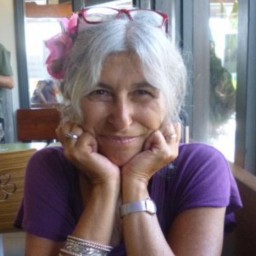
I first decided to let my hair be gray fourteen years ago, in the immediate aftermath of Hurricane Katrina. I was on the road, blindly driving north with my laptop, my passport, two cats, and a friend beside me when I knew it was time to let nature run its course. For some ten years before that, I’d been religiously dying my hair dark brown or black, visiting a hair salon every four to six weeks for long hours of “treatments,” compulsively keeping my hair in a meticulously trimmed pixie cut. But the storm emphatically taught me how life can definitively change us: we are transformed, sometimes in an instant, both internally and externally, by our experiences–and I no longer wanted (or needed) to hide that change. I enjoyed letting my hair return to its natural colors, and took pleasure in the new measure of respect some people gave me. Continue reading “Embracing Elderhood by Joyce Zonana”
Fourteen years ago, I was pregnant with William Valentine. I had no idea what to expect. I knew only that I was in a body, and it was pregnant. Things happened to me, to my body, that seemed extrinsic to my person, so much so that for most of those forty weeks, I felt as though the doctor’s office was having the baby, and I was a mere observer. But, when the time came to deliver the baby, I realized it was my body that was trying to make passage for another’s. The particularities of myself and the baby’s self seemed to fade away into something more vital and primordial in the process of the transmission of life. After a safe delivery, I felt a deep and curious gratitude that was beyond the gratitude I had for my child or for our health. This strange gratitude was born of the passage I had been so fortunate to experience, that is, this novel yet ancient, essential yet unparalleled dimension of human being-ness. I had given live birth, and I was grateful to know what that was like. In that experience, I was more connected to my human brothers and sisters than I had ever been before, including to this new baby, who I knew in my deepest self was more fundamentally a brother human than even he was my own child. I knew that in this transmission, I had helped a fellow traveler, and that transmitting life was simple even while it was giant in scope. The experience was and would always be about walking with each other, from the cradle to the grave, in our vulnerability, in our fragility, in our humility, and in that walk, to find our strength, our dignity, and our luminescence, as persons, as creatures that think and speak and love. To have been a party to another’s coming to be, this was an occasion of the greatest gratitude I had known.
In accompanying my father in this final stage of his life during these challenging and difficult months as he journeyed toward his death, I felt that same vital and primordial passage of being that I had in giving birth. While it was not my body that this time labored and worked, I was party to his experience. I witnessed his courage and another kind of transmission of life. For, I saw a man go from self-concern to other-concern; from hope of getting well to hope to of making things better for others; I witnessed a man move from verbal complaint to silent focus; and I heard his relocation of worry for himself to concern for me because he knew I was hurting as I was watching him, mostly powerless to do anything but sit next to him. I saw a man graduate from a regular man to an elder and then to naked spirt in God’s care, and I was honored to be one of his midwives on that journey. In his final hours, he became full of grace, and he fulfilled the trajectory of becoming the father and man he always intended to be. It was an honor to behold, and I am grateful.
Come with me in your imagination to an old land, a Demi-Olympus, a fabled and possibly invented land to the north of Mount Olympus, home and throne of the fabled Olympian gods. It is to this Other Olympus that the gods have retired. Now they reside in the Divine Rest Home whose proprietor is a black goddess. Not African black, She is as black as space, and if we look closely at Her, we can see galaxies and constellations and comets in Her. She is the Ur-Goddess, the Divine Creatrix, eldest of all, and She answers to the name Mama. (Note: many years ago, I actually saw this goddess after an all-day asthma attack that nearly killed me. She was in the ER with me.)
Helping Mama run the Divine Rest Home are Gaea, the mother of all life, and the Titans and Titanesses, who are older than all the gods who have come to the Divine Rest Home to…well…rest. The Titans and Titanesses held numerous important stations in the primeval universe and should probably retire, too, but they just keep going. That’s probably a good thing, as most of the retired gods need a great deal of attention.
It is October, the veil is thin the year is waning the leaves are turning I am trying to say goodbye to my grandmother she is dying. I do not know what to say.
The leaves are red the sky is blue I saw a crow in the tree behind the house.
The threads of this year are becoming thinner.
The threads of her life too are becoming thinner
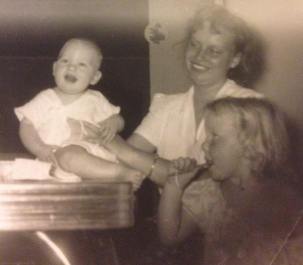
What do I say to the one who breathed life into my father who wove his cells into being who cradled him as a baby who wept into his hair.
Twyla with my dad, Tom, in 1953.
Carrying the cells
of the generations The chain of life
continuing to spiral through time, and place,
and distance and falling leaves.
What do I say as life thins, as breath fades
What do I say when all that remains is the space between us
What do I say
when I catch a glimpse of the swift unraveling of time the wrinkles in eternity
What do I say
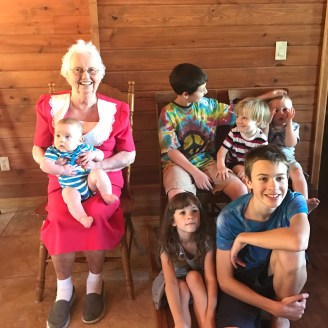
as time folds in on itself and now it is me in the bed and my son, gray-haired, blue-eyed is reading to me in a quiet voice
Grandma Johnson with her great-grandchildren in April, 2017.
as the chapter comes to a close.
Part 2: The Answer
That night, I dreamed of my grandmother she shrank to the size of a small child I picked her up and held her against my body We looked in the mirror cheek to cheek and smiled together I kissed her face and told her: “You are wonderful.” Then we danced around the room together her head against my shoulder I kissed her again on her white hair and no more words were needed.
Part 3: The Memorial
At this time last year, as the leaves fell and the wheel of the year dipped into darkness, my last grandparent died. I recognize that I am fortunate in having reached nearly forty while still having a living grandmother, but there is still such a sensation of finality and ending in saying goodbye to the final grandparent. Twyla was my paternal grandmother and I was not as close to her as I was to my maternal grandmother who died in 2013, but she is the woman who wove my father’s bones into being, and her death left a hole in our family and a sensation of an ended section in the tapestry of generations.
After the dream I write of above, I went back to see her a final time, five hours before she took her last breath. This time, I sat with her alone. I kissed her on her white hair and told her she was wonderful. I played her a song (Beyond the Gates by T. Thorn Coyle and Sharon Knight). I spoke to her of her good work in the world, that she had done it, that she’d finished her work, and that she had given so much and done so well. As a mother myself, the sensation of how powerful it is to have seen all your babies through to adulthood and into grandparenthood themselves filled the room. My dad, her second child and only son, has teenage grandchildren now himself. My grandmother’s youngest child of her five children is in her mid-fifties (and also a grandmother to teenagers). Sitting in the darkened room, listening to the song play, I was staggered by the magnitude of having seen each of your own children through their lives and into grandparenthood. While there are many ways to leave a legacy and it is not a “failure” by any means to not see all of your children into grandparenthood or to not have children yourself, what a gift it must be to bear witness to these generations if it does, in fact, unfold in that way, and to see your own tiniest baby have grandchildren of her own. This is something I hope to see for myself.
My dad holding his youngest grandchild at the memorial.
I then had the blessing, the honor, the privilege of being asked to prepare a memorial service for my grandmother. Five years ago, I was also asked to facilitate the memorial ceremony for my other grandmother. The unique, uncommon blessing of fulfilling this role for both of my grandmothers is not lost on me, as I know no one else who has had the experience of serving both sides of their family of origin in this way. I felt so honored to be trusted to help guide my family through both of these experiences of loss and grief. I spoke to my husband of how humbled, grateful, and fortunate I feel that I have a family who would let me do this, not just for one grandma, but for both of them, and he said, “you know, honey, maybe we should all be grateful to you that you’re willing to do this for us.” So, I received that recognition into my heart with appreciation as well.
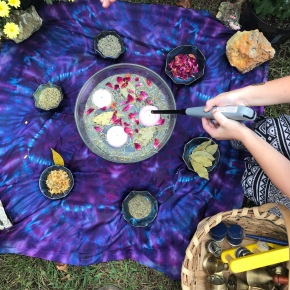
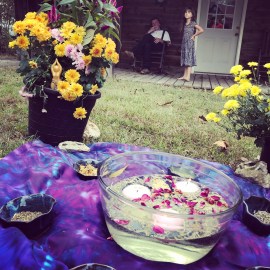
My daughter, then six, keeping the candles lit and tended on the altar space during the memorial.
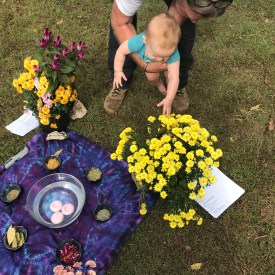
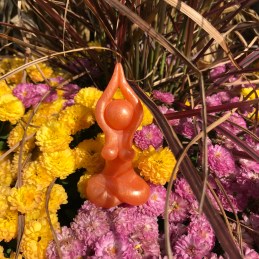
It is powerful to create ceremonies that acknowledge transitions within the life of your family. During this ceremony for my grandmother we each had time to speak of her, I had poems I had written, and readings to share. We had a centerpiece with flowers, floating candles, and photos of her, and we each held handfuls of herbs that we offered into the bowl of water as we shared our stories and memories. Each person took time to do so and spoke with care, tenderness, love, and laughter. Sharing this time and space together and creating a container for people to be heard in their grief and love rather than participating in the type of “canned” or impersonal memorial service that may be more commonly offered by religious groups, was what we needed to say goodbye to this woman who wove a part of our souls. My aunt said: this is the kind of send-off that everyone needs, and that felt very true and real.
My extended family is not pagan or liberal or alternatively religiously minded and as I planned the memorial I was conscious of not wanting it to be “too much” for them. As I typed my outline, I’d first included a song and other practices common to other rituals and retreats I lead and when I heard that my aunts and cousins were coming, I’d removed the song and some ritual elements, fearing making them uncomfortable. They then said they weren’t coming, so I added the singing back in. On the day of the memorial, they did in fact come, and I decided we would sing anyway, whether comfortable and familiar or not. We sang the same song to begin and to end the memorial (“We Are a Circle”) and when I looked around the circle the second time we sang and saw that everyone there holding hands, their faces wet with tears, were all singing too, I knew that it had worked.
If you have the opportunity to create ceremonies and rituals of personal meaning for your own family, please do it. It holds so much value, such life and power and love, in a way that is difficult to create by someone outside of the family. A small group of people who really care and who are willing to connect with each other in a meaningful, connected, vulnerable way, births so much real magic together. This container can be created by you, for you, and for the ones you love the most.
“Everyone can do the life-changing, world-renewing work of magic…the Dalai Lama said, ‘It’s not enough to pray and meditate; you must act if you want to see results.’ We are called to offer real service to others, to the Goddess. That service may take many forms: mopping the floor after the party, priestessing rituals, healing, planning, teaching, carrying the heavy cauldron from the car, sitting with a dying friend, writing up the minutes for a neighborhood meeting, organizing a protest to protect a sacred place from development, writing letters to Congress, training others in nonviolent civil disobedience, growing food, or changing the baby’s diapers. All of these can be life-changing, world-renewing acts of magic…”
—Starhawk and Valentine, The Twelve Wild Swans
There is a companion audio recording available about this memorial service preparation, the death of my grandmother, and about how to weave a strong “ritual basket” to carry a ceremony. The first part is an audio ritual for my online circle with thoughts about claiming your magic, fear of the label of witch, etc., so if you want to skip past that only to the memorial information and ritual theory, skip to 16:20 in the audio:
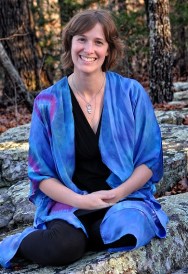
Molly has been “gathering the women” to circle, sing, celebrate, and share since 2008. She plans and facilitates women’s circles, seasonal retreats and rituals, mother-daughter circles, family ceremonies, and red tent circles in rural Missouri and teaches online courses in Red Tent facilitation and Practical Priestessing. She is a priestess who holds MSW, M.Div, and D.Min degrees and wrote her dissertation about contemporary priestessing in the U.S. Molly and her husband Mark co-create Story Goddesses, original goddess sculptures, ceremony kits, and jewelry at Brigid’s Grove. Molly is the author of Womanrunes, Earthprayer, and The Red Tent Resource Kit and she writes about thealogy, nature, practical priestessing, and the goddess at Patreon and at Brigid’s Grove.
A couple of weeks ago I went to see the new Mamma Mia: Here We Go Again! movie. In addition to being a fan of movies inspired by musicals I also loved the emphasis that was placed on the mother/daughter relationship in the first Mamma Mia and had heard that this new installment would continue to focus on that relationship. It definitely didn’t disappoint!
This second movie takes place five years after the original Mamma Mia, and roughly a year after the death of Donna Sheridan, with Donna’s daughter Sophie preparing for the grand reopening of the Hotel Bella Donna. This second movie also features lots of flashbacks where we are able to see a young Donna arrive at the island of Kalokairi as well as see how she first meets Sam, Bill, and Harry, her daughter Sophie’s three possible fathers.
As one might imagine, even if you aren’t familiar with the movie there is a lot going on, but the part that I found most intriguing was the very end of the movie. At this point Sophie has given birth to her own baby and is bringing the child to the church to be baptized. During the ceremony Donna’s spirit is there at the font with her daughter and new grandchild and you could feel this amazing sense of connection and love between not only three generations but across the lines of physical and spiritual presence and space.
A few years back, I turned forty years old. On the cusp of this landmark birthday, I wrote about the stigma of so-called midlife crises. I resisted the idea that changes associated with midlife should be mocked, when indeed many of those changes actually represent something like birth itself. I have come to think, however, that I was perhaps naïve in my wild embrace of midlife self-birthing. I still believe what I said before, basically, which was that midlife occasions opportunity for self-knowledge in a way that is largely inaccessible to babies, children, adolescents, and novice adults. What I could not have known a few years back is how much it costs to answer the waking self’s summons.
In the years since I first started thinking about myself as a person in midlife, I have experienced a trifecta of sweeping changes in work, family, and health. My sense of self has been destabilized, and, even more, what I value has changed. In ways, I do not recognize myself, while in others, I do not recognize the girl in the photographs around my house. It seems like she was always hiding beneath her Mona Lisa smile the woman that would show up in a few decades. All these disillusionments! All these decisions! All this stuff in my kitchen and basement! Continue reading “A Curious Blessing by Natalie Weaver”
Four years ago, as I went to touch up my roots with a shade of red I’d been dying my hair since I was 18, I noticed that what had started as a few random strands of gray amidst my natural reddish brown had become streaks of brilliant silver. I began dying my hair red as a style choice, long before I’d ever even thought of going gray. I loved the way my natural hair reddened in the summers, with copper highlights flashing under the beach sunsets. There was never an intention to hide gray or look younger, but there was a time in my thirties when the first few strands of gray seemed to make my darker roots look muddy, like they were dirty instead of graying.
But brilliant streaks of silver? This, I could do. I switched from my usual permanent henna dye to a temporary red to keep my roots touched up while the henna’d hair grew out, and waited. Three years later, all the permanently red hair had grown out, and I was ready to have fun. I went to the stylist, had him bleach out the parts I’d been dying red, and had him color it all with a wild ombre of colors that would look good with silver. My hair was a darkened nebula, silver roots reaching down into four different shades of purples of blues. After each new dye – a brilliant nebula, each time fading over a few months into a soft mix of gray-blues and silver. Even at the end of the fade-out, people still ask me if I just had my hair colored. Every week, the color seems a new shade.
Currently, I’m at the end of a fade out. Honestly, I probably would have colored it a few weeks ago if I weren’t so busy, but at this point my hair is mostly gray with some slight bluish highlights.
And twice in the last week – TWICE! – I’ve been offered the senior discount by well-meaning cashiers.


 Just a few months ago, not long after turning seventy, I was diagnosed with mild osteoporosis. I had thought that all my yoga, my occasional forays to the gym, my daily walking, my frequently consumed leafy greens and yogurt , my calcium supplements would protect me. I had thought I was different from most other women my age, that I could avoid taking the medication that I knew was sometimes problematic. But the bone density scan revealed what I had feared, and because both of my parents declined and died shortly after hip fractures, because I had once broken an ankle, I decided to accept my doctor’s sober recommendation: that I begin a weekly dose of alendronate. It would be the first chronic medication I would ever be prescribed.
 In Europe and Mexico, younger women and men of all ages regularly offer me their seats on buses and metros. I usually refuse, although at home in New York City, I’m always a little miffed when no one bothers to make a place for me. Yet cashiers never balk when I ask for a senior ticket at the movies or in museums. At first I was surprised: how do they know, I wondered. But of course it’s the gray hair, along with the wrinkles and sagging skin that now mark me.
 comfortable and familiar or not. We sang the same song to begin and to end the memorial (“We Are a Circle”) and when I looked around the circle the second time we sang and saw that everyone there holding hands, their faces wet with tears, were all singing too, I knew that it had worked.
 ‘It’s not enough to pray and meditate; you must act if you want to see results.’ We are called to offer real service to others, to the Goddess. That service may take many forms: mopping the floor after the party, priestessing rituals, healing, planning, teaching, carrying the heavy cauldron from the car, sitting with a dying friend, writing up the minutes for a neighborhood meeting, organizing a protest to protect a sacred place from development, writing letters to Congress, training others in nonviolent civil disobedience, growing food, or changing the baby’s diapers. All of these can be life-changing, world-renewing acts of magic…”
 She plans and facilitates women’s circles, seasonal retreats and rituals, mother-daughter circles, family ceremonies, and red tent circles in rural Missouri and teaches online courses in
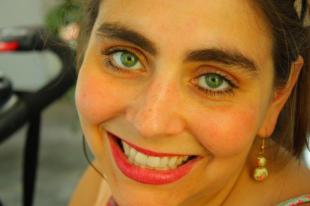 A few years back, I turned forty years old. On the cusp of this landmark birthday, I wrote about the stigma of so-called midlife crises. I resisted the idea that changes associated with midlife should be mocked, when indeed many of those changes actually represent something like birth itself. I have come to think, however, that I was perhaps naïve in my wild embrace of midlife self-birthing. I still believe what I said before, basically, which was that midlife occasions opportunity for self-knowledge in a way that is largely inaccessible to babies, children, adolescents, and novice adults. What I could not have known a few years back is how much it costs to answer the waking self’s summons.
 Four years ago, as I went to touch up my roots with a shade of red I’d been dying my hair since I was 18, I noticed that what had started as a few random strands of gray amidst my natural reddish brown had become streaks of brilliant silver. I began dying my hair red as a style choice, long before I’d ever even thought of going gray. I loved the way my natural hair reddened in the summers, with copper highlights flashing under the beach sunsets. There was never an intention to hide gray or look younger, but there was a time in my thirties when the first few strands of gray seemed to make my darker roots look muddy, like they were dirty instead of graying.
 Feminism and Religion